
12-06-2026 14:50
 François Freléchoux
Bonjour, Voici la brève description d'une Mollis
10-06-2026 21:16
François Freléchoux
Bonsoir,Le dernier du jour, en attendant votre avi
11-06-2026 19:01
 William Slosse
Hello all,In an attempt to make a culture of a sus
11-06-2026 19:03
 Nicolas VAN VOOREN
Chers membres d'Ascofrance,Le site sera placé en

09-06-2026 18:32
Camille MertensSur morceau de roseau immergé 0,5 - 0,7 mm de dia
10-06-2026 12:54
Steve ClementsBonjour encore, Pouvez-vous m'aider, s'il vous pl
10-06-2026 21:07
François Freléchoux
Toutes les tiges de gentianes jaunes de l'an passÃ
10-06-2026 13:41
François Freléchoux
Bonjour à nouveau, Voici une trouvaille d'hier.
Another fungus on Tilia wood
Enrique Rubio,
01-01-2013 18:10
 Hello again and happy new year for all
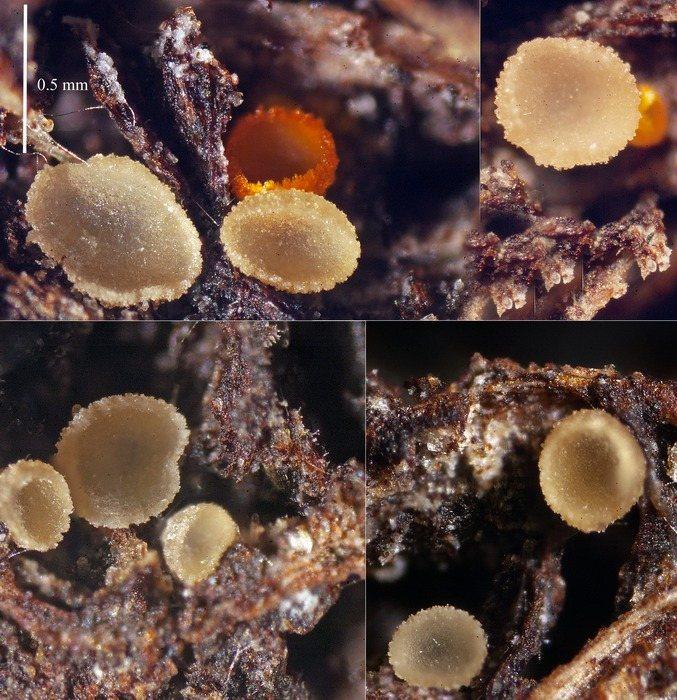
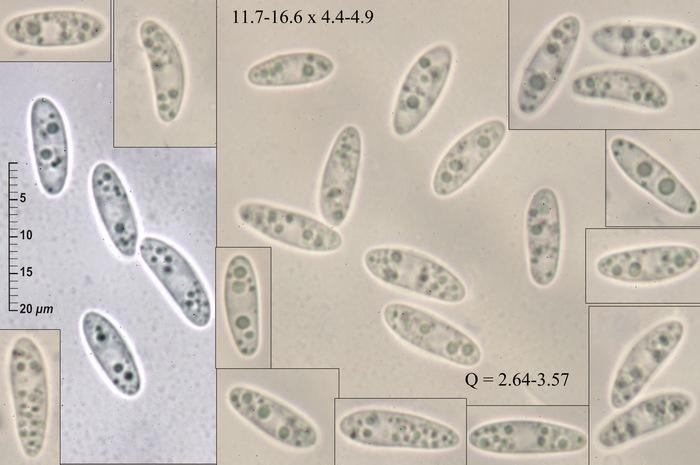
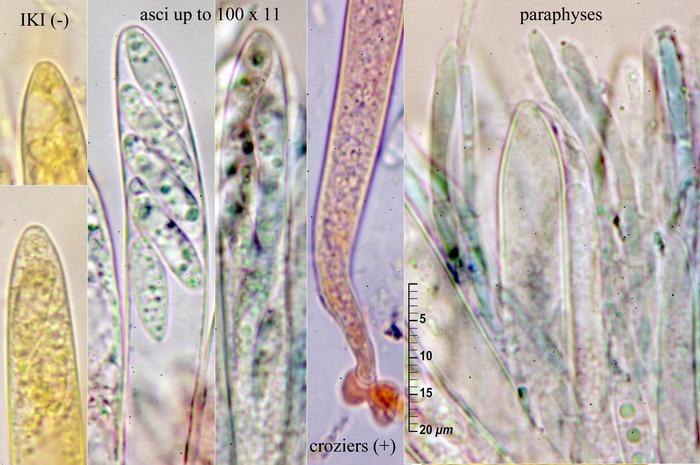
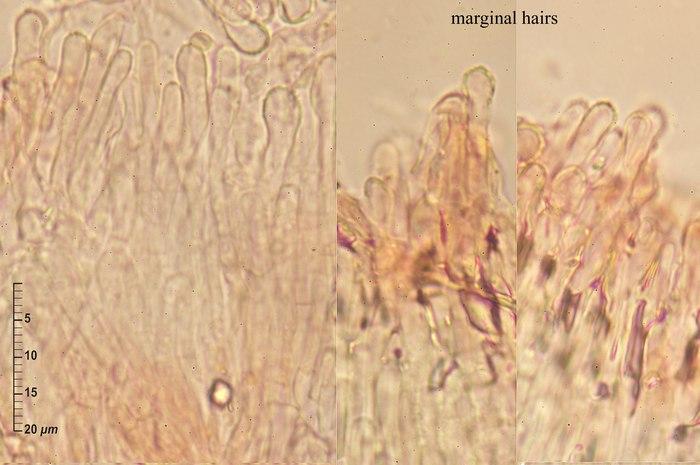
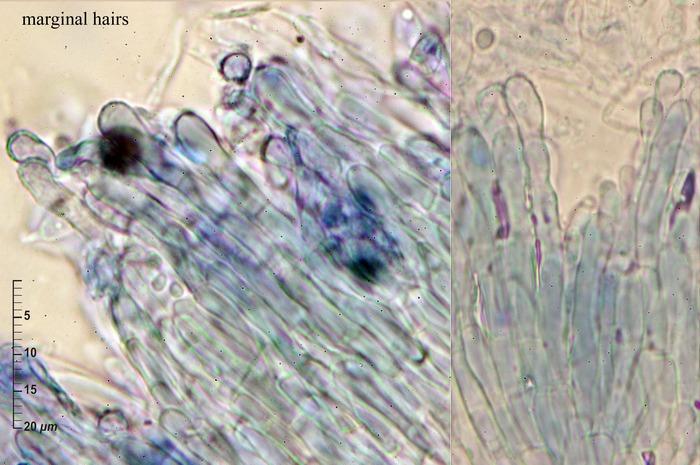
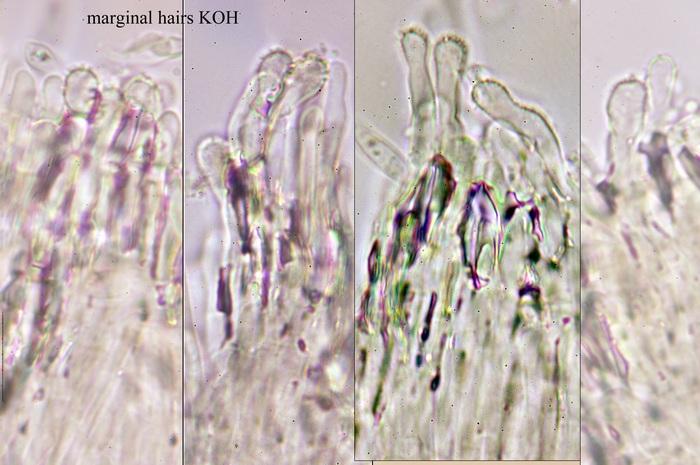
Together with the ascomata of Psilocistella/Psilachnum species on Tilia wood that turns reddish with ammonia vapour (see the macrophoto) they were another witish cupulate ascomata with big 8-spored asci IKI (-) negative and croziers (+) positive. IKI with KOH pret. is negative (-) too.
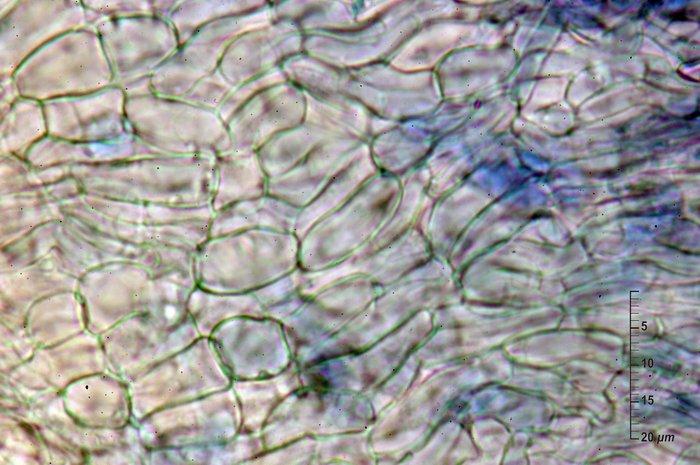
The marginal hairs are very agglutinated and very difficult to segregate. Initially they seem to be smooth but the end cell is very finelly verrucose in KOH. For it, my impression is that this fungus could be a Cistella species that I don't know.
What do you think?
Many thanks again
Hans-Otto Baral,
01-01-2013 18:30

Re : Another fungus on Tilia wood
I once had a Cistella on Tilia bark of an attached branch, together with a strange and new Orbilia (O. jurana) on the calcareous Schwäbische Alb. It has also inamyloid asci but spores much smaller (7-12 x 2-2.8), so I identified it as Cistella cf. mali. Yours has too large spores for mali.
One with such large spores on Populus bark (HB 6930) has faintly hemiamyloid apical rings.
Zotto
One with such large spores on Populus bark (HB 6930) has faintly hemiamyloid apical rings.
Zotto
Guy Garcia,
01-01-2013 18:31
Re : Another fungus on Tilia wood
Bonjour Enrique,
voir peut-être du côté de "Cistella" perparvula mais tes spécimens présentent des spores et des asques plus grands.
Amitiés, Guy
voir peut-être du côté de "Cistella" perparvula mais tes spécimens présentent des spores et des asques plus grands.
Amitiés, Guy
Enrique Rubio,
01-01-2013 21:47
Re : Another fungus on Tilia wood
Thank you to both.
So, Cistella sp.
So, Cistella sp.