
29-05-2026 15:35
daniel FERREBonjour à tous,Je voudrais votre aide pour cette
28-05-2026 16:15
James MitchellHello,Does anyone have the original publication of
28-05-2026 11:06
Thomas Læssøehttps://svampe.databasen.org/observations/10596750
23-05-2026 11:44
 Charles Grapinet
Hello, I am having trouble identifying this copro
25-05-2026 16:44
François BartholomeeusenHi forum members,During an excursion organised by
26-05-2026 21:25
Dirk GerstnerHello everyone, I'm completely stumped by this li
26-05-2026 22:44
Ethan CrensonHi all, I think I have Incrucipulum capitatum her
22-05-2026 14:44
 Lothar Krieglsteiner
in unripe condition citrine yellow, then soon fadi
25-05-2026 16:35
 Bernard CLESSE
Bonjour à toutes et tous,J'ai trouvé récemment,
22-05-2026 13:29
Gernot FriebesHi,I am curious to hear your opinion on this mater
Polydesmia sp.
Nina Filippova,
24-01-2013 13:29
1) probably Polydesmia, but asci with inamyloid pore, and spores nonseptate, otherwise paraphyses propoloid, and if to follow the key of Korf (1978) it may be P. fructicola.
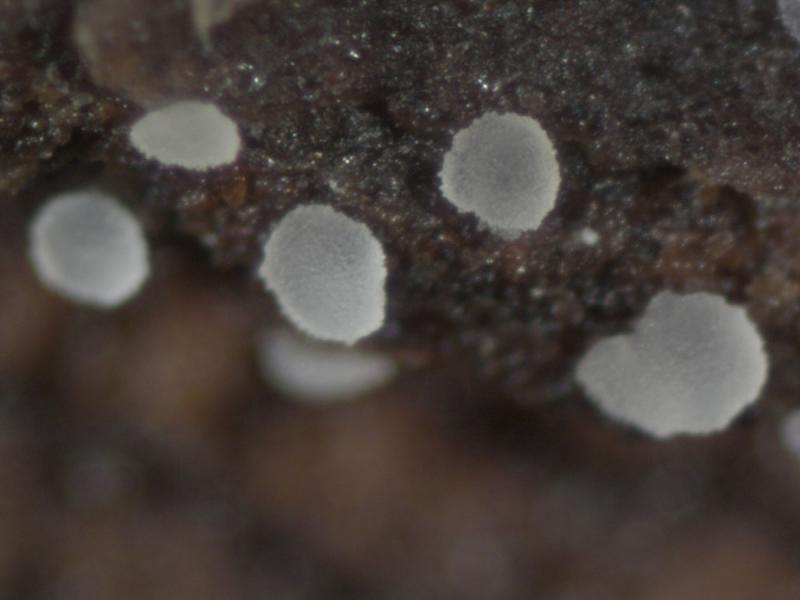
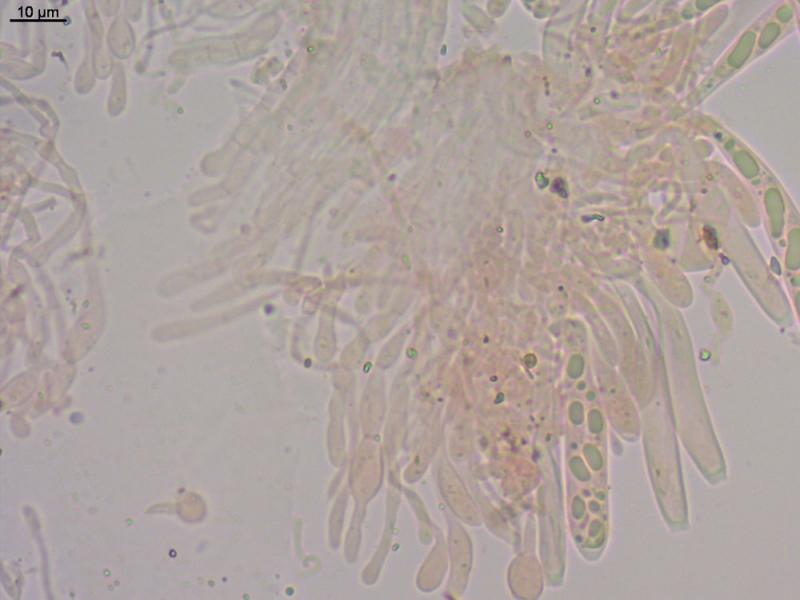
Apothecia pustulate to flat-cupulate, grayish, translucent, up to 400 x 100 mk, hymenium minutely rough, outside and edge appear smooth.
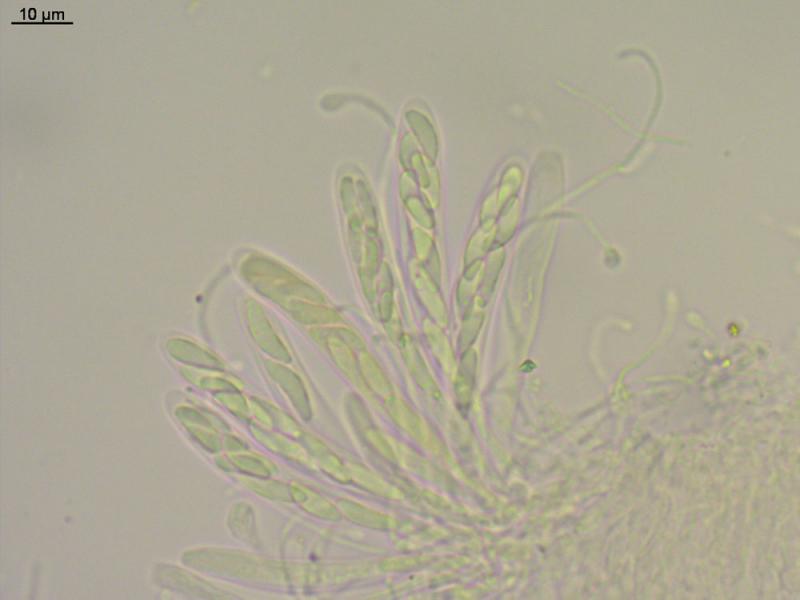
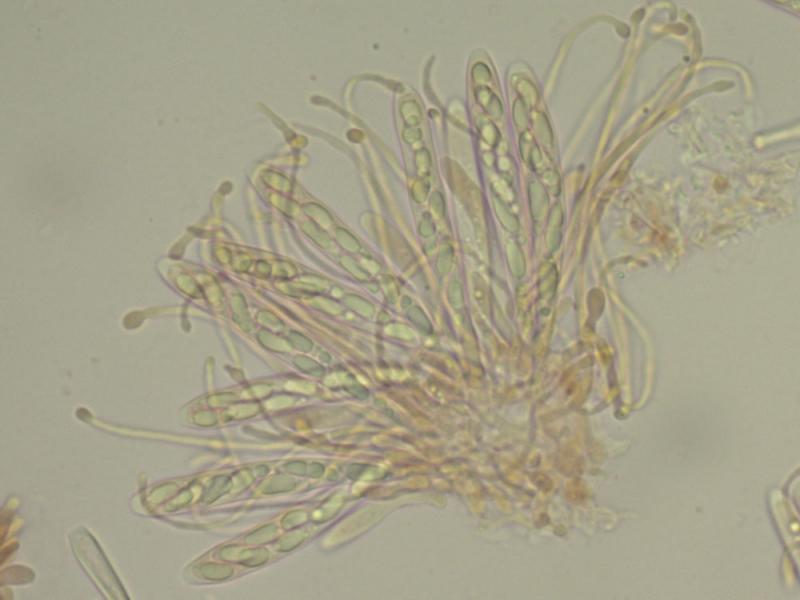
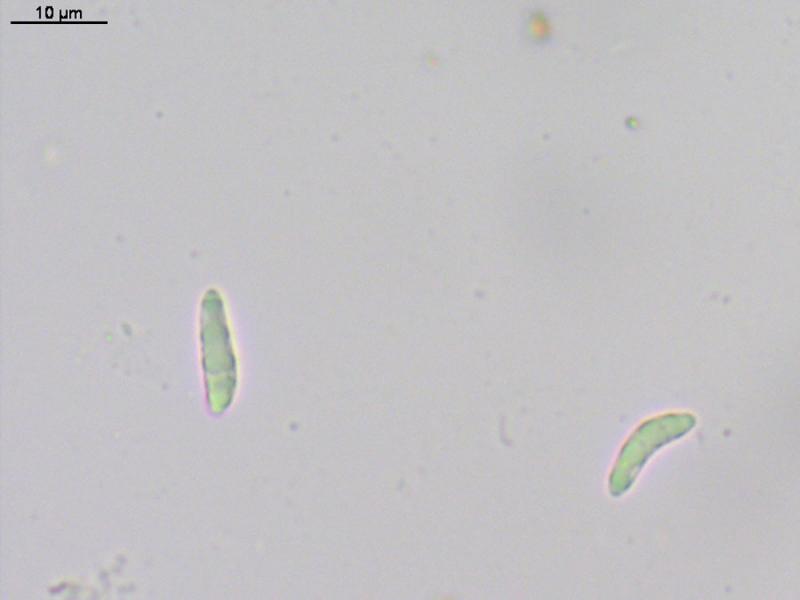
Excipulum textura prismatica, outer hyphae end by ventricose or clavate cells (hairs); asci clavate, clamped, with inamyloid pore, 54 x 7 mk; spores ellipsoid and curved (allantoid), non-septate, with large irregular guttulae, 11,6 (10-13,1) x 3,4 (3,1-3,9) mk; paraphyses irregularly bulged in different parts, branched 2-3 times, curved at the tips.
Hans-Otto Baral,
24-01-2013 15:08

Re : Polydesmia sp.
Dear Nina
Polydesmia has 3-septate spores and amyloid asci, and these apically curved paraphyses are also untypical of that genus.
Do you have the fungus fresh? Please do photos in water, that would greatly help. Possibly there are guttules in the paraphyses that disappear when mounting in such lethal agent.
Zotto
Polydesmia has 3-septate spores and amyloid asci, and these apically curved paraphyses are also untypical of that genus.
Do you have the fungus fresh? Please do photos in water, that would greatly help. Possibly there are guttules in the paraphyses that disappear when mounting in such lethal agent.
Zotto
Nina Filippova,
24-01-2013 21:16
Re : Polydesmia sp.
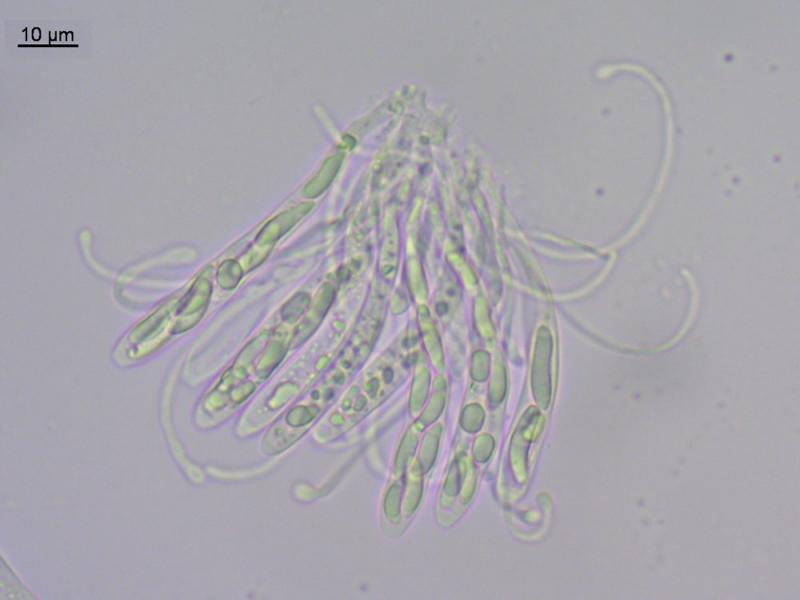
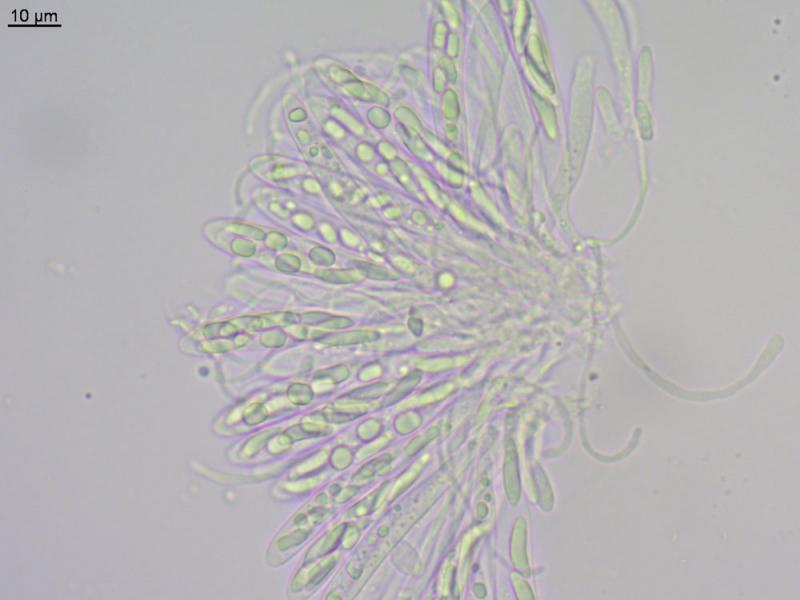
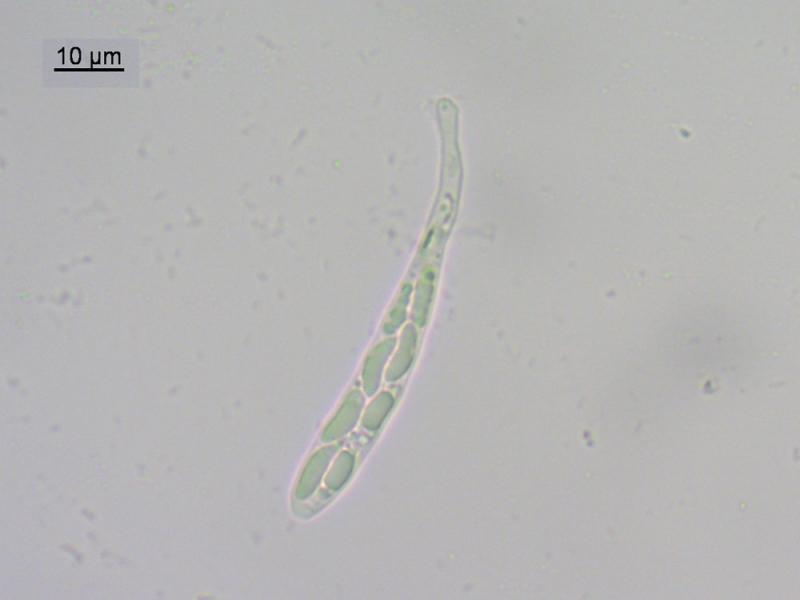
Here some more pictures in water, paraphyses have no guttules, but spores with big oil drops or full oily content. Asci with rather thin stalk, i did not notice it before.
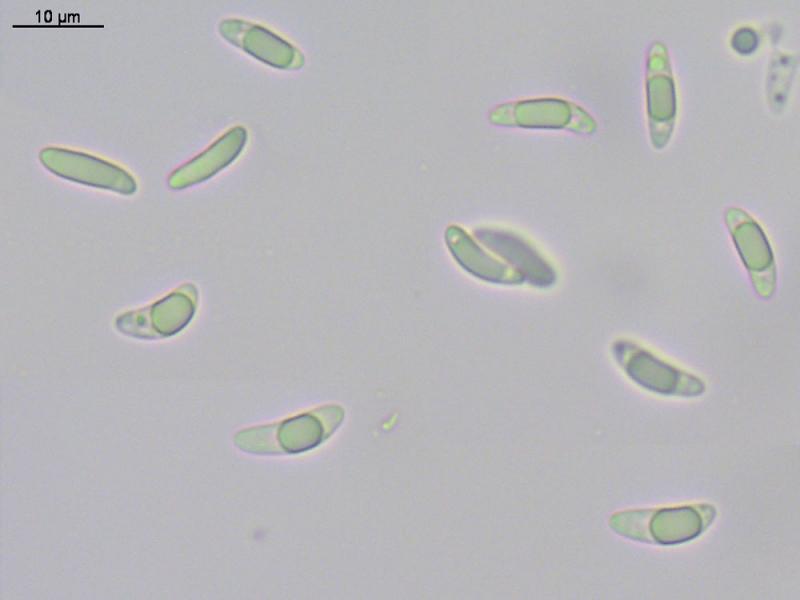
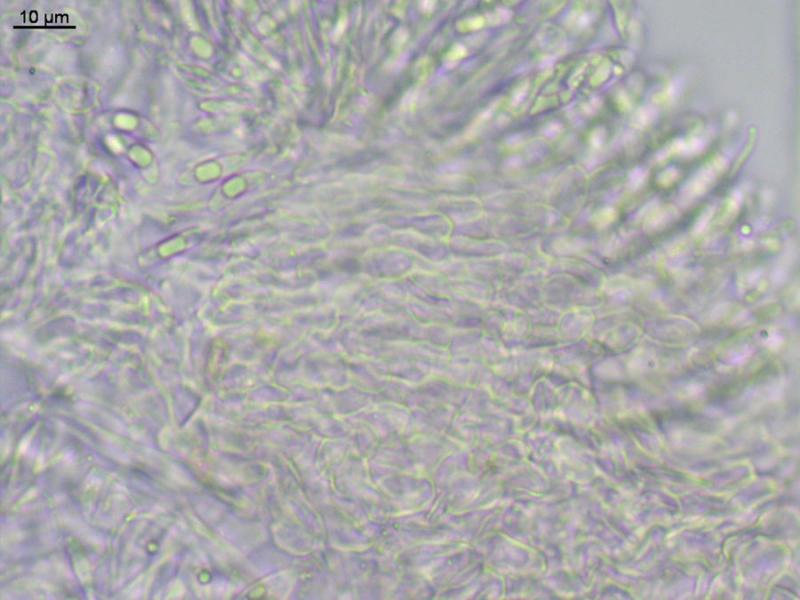
Hans-Otto Baral,
24-01-2013 22:30
Re : Polydesmia sp.
Good photos, but regrettably all in dead state. I assume the fungus was collected some weeks ago and was dried? Then these guttules disappear irreversibly.
I am sorry I have no idea of a genus. My idea was something around Naeviopsis, but I do not believe.
Zotto
I am sorry I have no idea of a genus. My idea was something around Naeviopsis, but I do not believe.
Zotto