25-05-2026 16:35
 Bernard CLESSE
Bonjour à toutes et tous,J'ai trouvé récemment,
29-05-2026 15:35
daniel FERREBonjour à tous,Je voudrais votre aide pour cette
28-05-2026 16:15
James MitchellHello,Does anyone have the original publication of
28-05-2026 11:06
Thomas Læssøehttps://svampe.databasen.org/observations/10596750
23-05-2026 11:44
 Charles Grapinet
Hello, I am having trouble identifying this copro
25-05-2026 16:44
François BartholomeeusenHi forum members,During an excursion organised by
26-05-2026 21:25
Dirk GerstnerHello everyone, I'm completely stumped by this li
26-05-2026 22:44
Ethan CrensonHi all, I think I have Incrucipulum capitatum her
22-05-2026 14:44
 Lothar Krieglsteiner
in unripe condition citrine yellow, then soon fadi
22-05-2026 13:29
Gernot FriebesHi,I am curious to hear your opinion on this mater
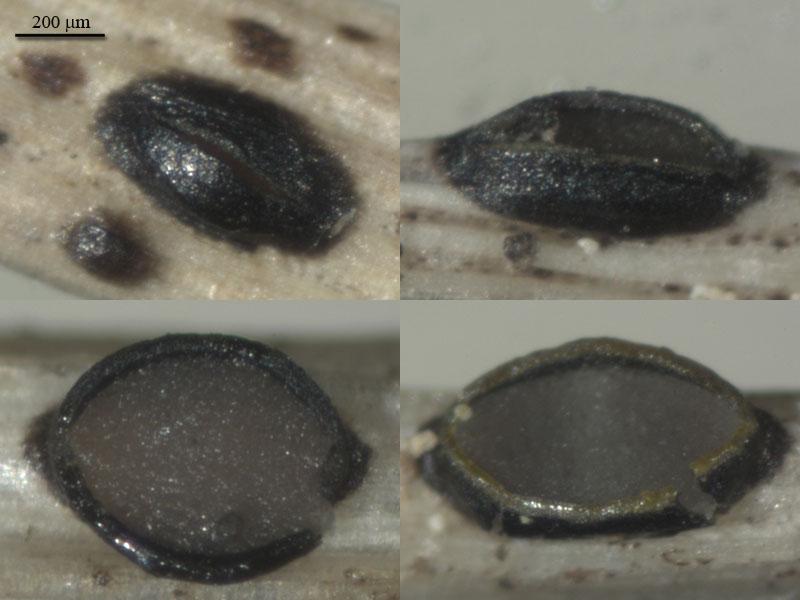
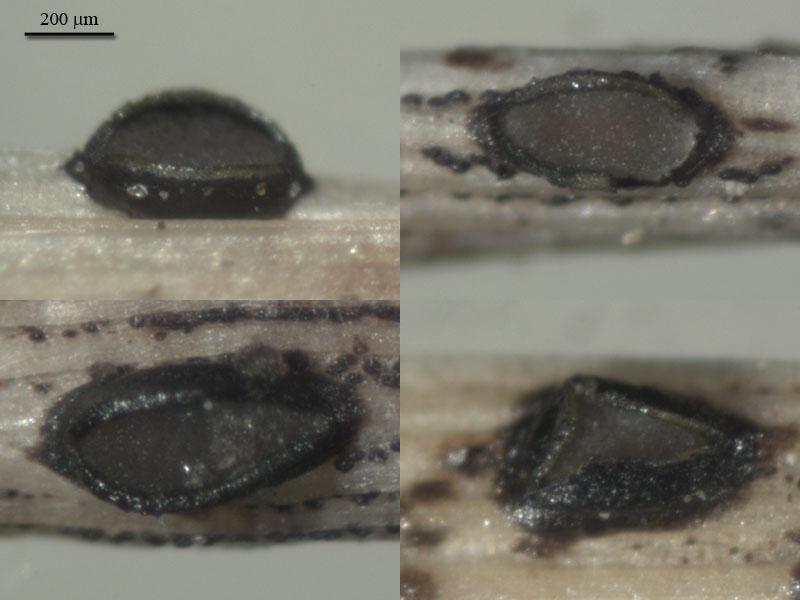
The host plant - Eriophorum vaginatum, at bog. The fungus was fruiting abundantly on several bushes growing nearby. 04.08.2012, N61,065408° E69,455652°.
Hysterothecia ellipsoid (expanding when overmature to circular), to 0,9 x 0,5 mm, first conave with longitudinal slit (rarely irregular bursting by 3-4 lobes), later expanding to short-cylindrical; outer surface black, with more or less pronounced yellow rim at the edge, hymenium grayish.
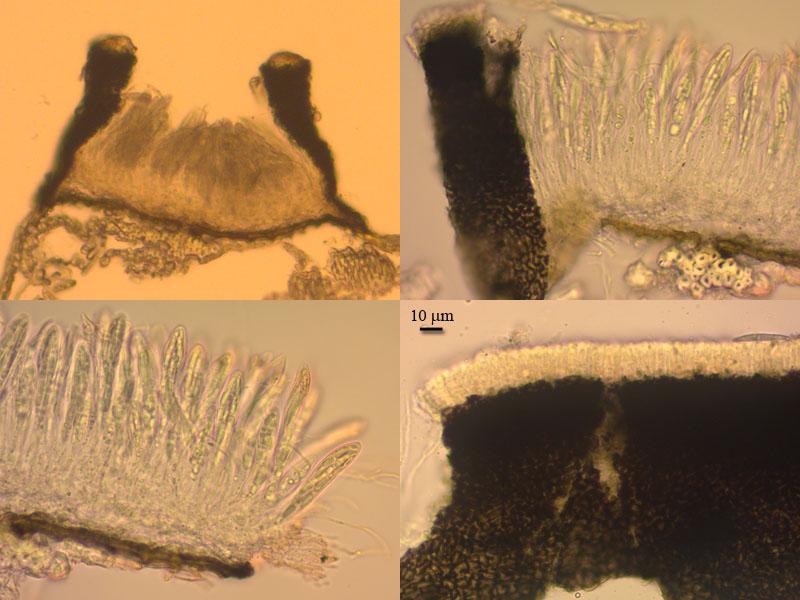
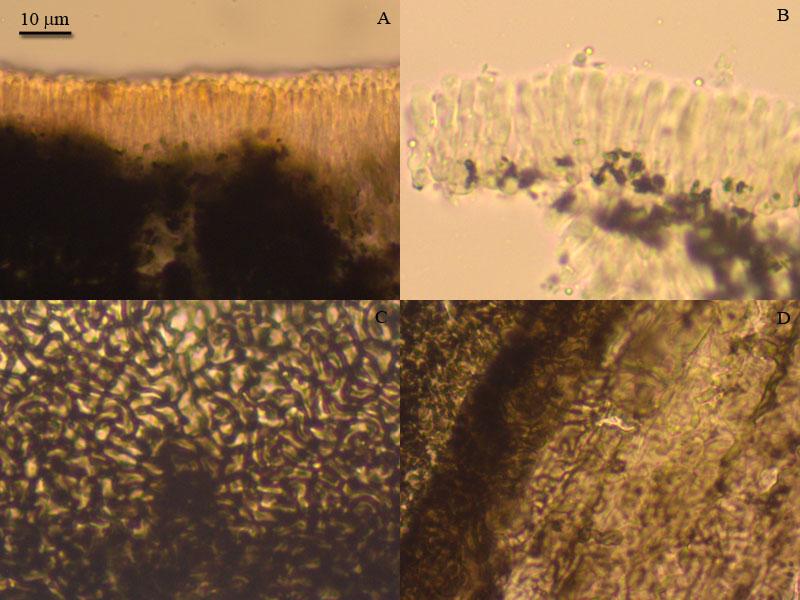
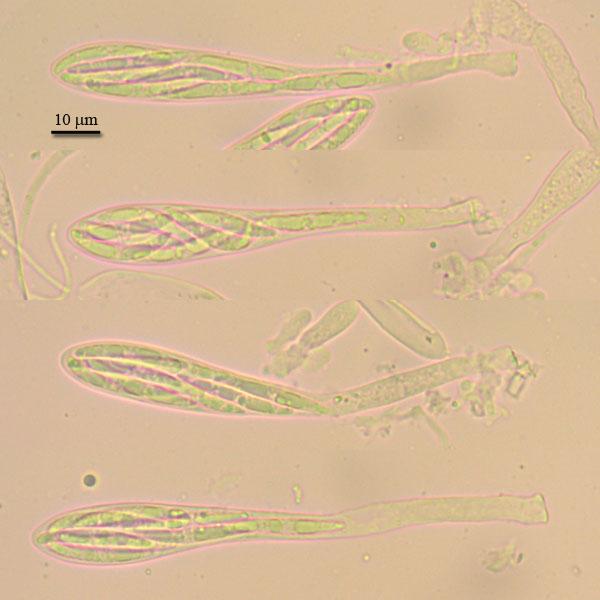
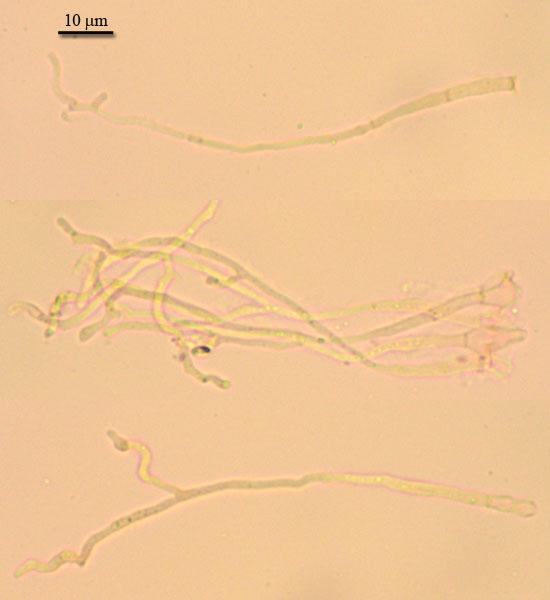
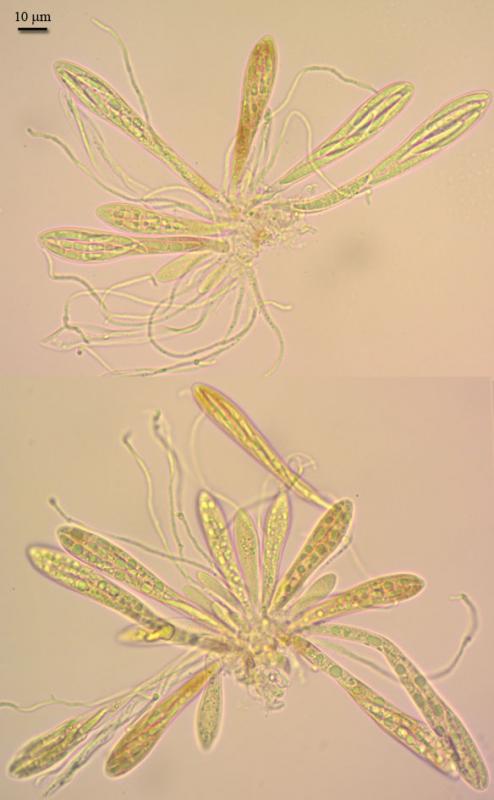
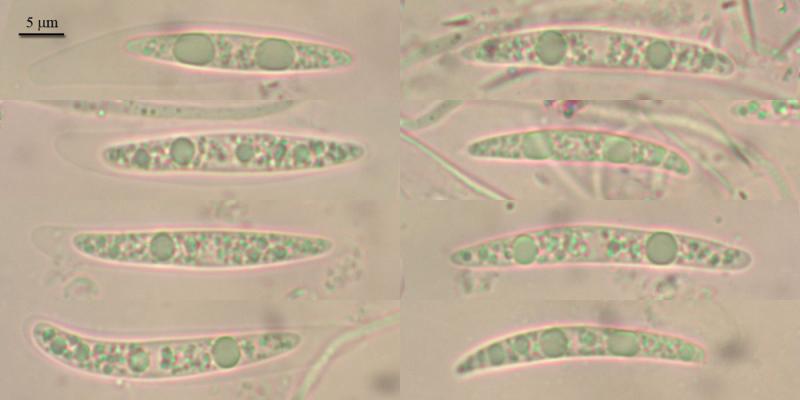
Ectalexcipulum of flanks from textura epidermoidea, inside lays hyaline textura globosa, which exceeding external brown layer at the edge (yellowish collar from cylindrical cells about 15-20 x 4 mk); base of receptacle lined with thin layer of labirinthuloid tissue; subhymenium from parralel hyphae 2,5 mk broad; asci clavate, with clamp, inamyloid, 76-109 x 11,4-13; paraphyses cylindrical (1 mk), circinate, branched in upper part, with broadened base (up to 5 mk) separated from upper part by septa; spores subfusoid, curved, some with gelatinose sheath, with two big guttules and plenty of small, 27,3 (24-33) x 3,9 (3,3-4,4) (Q=7,05; N=17).