12-06-2026 14:50
 François Freléchoux
Bonjour, Voici la brève description d'une Mollis
10-06-2026 21:16
François Freléchoux
Bonsoir,Le dernier du jour, en attendant votre avi
11-06-2026 19:01
 William Slosse
Hello all,In an attempt to make a culture of a sus
11-06-2026 19:03
 Nicolas VAN VOOREN
Chers membres d'Ascofrance,Le site sera placé en

09-06-2026 18:32
Camille MertensSur morceau de roseau immergé 0,5 - 0,7 mm de dia
10-06-2026 12:54
Steve ClementsBonjour encore, Pouvez-vous m'aider, s'il vous pl
10-06-2026 21:07
François Freléchoux
Toutes les tiges de gentianes jaunes de l'an passÃ
10-06-2026 13:41
François Freléchoux
Bonjour à nouveau, Voici une trouvaille d'hier.
Ascomata under epidermis Carex
François Bartholomeeusen,
25-05-2026 16:44
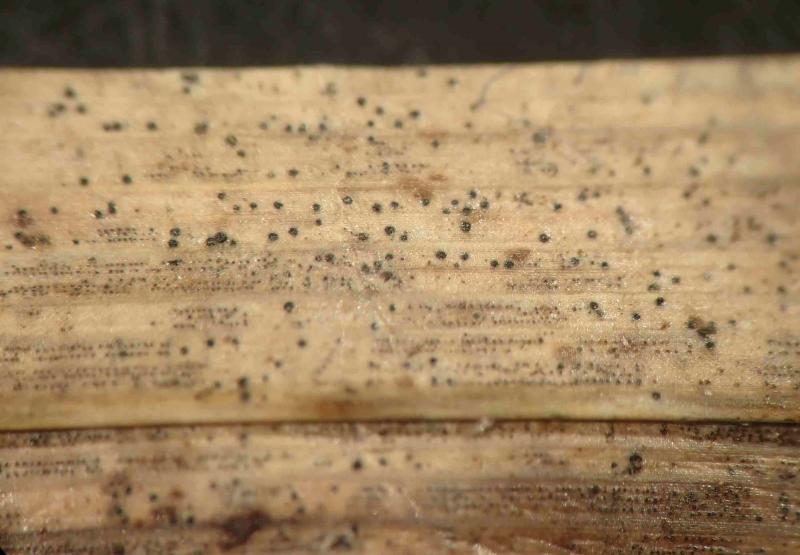
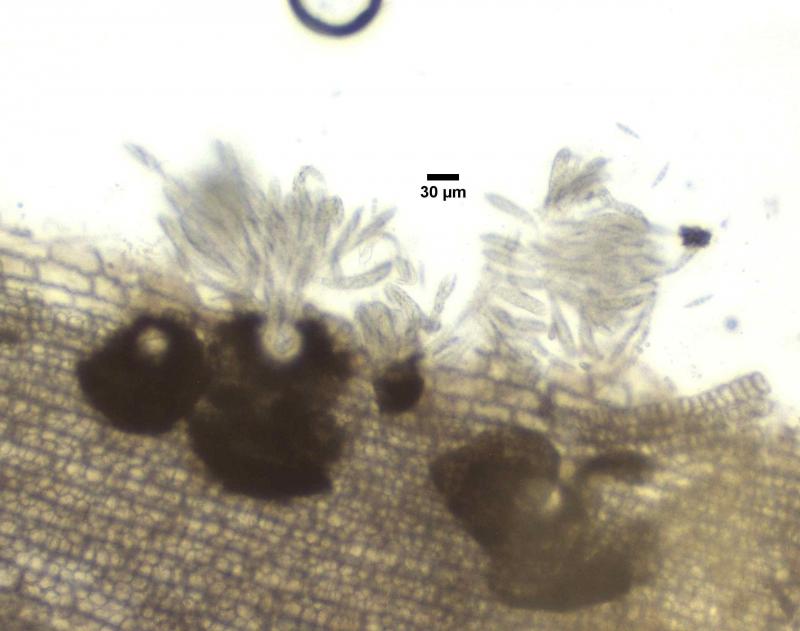
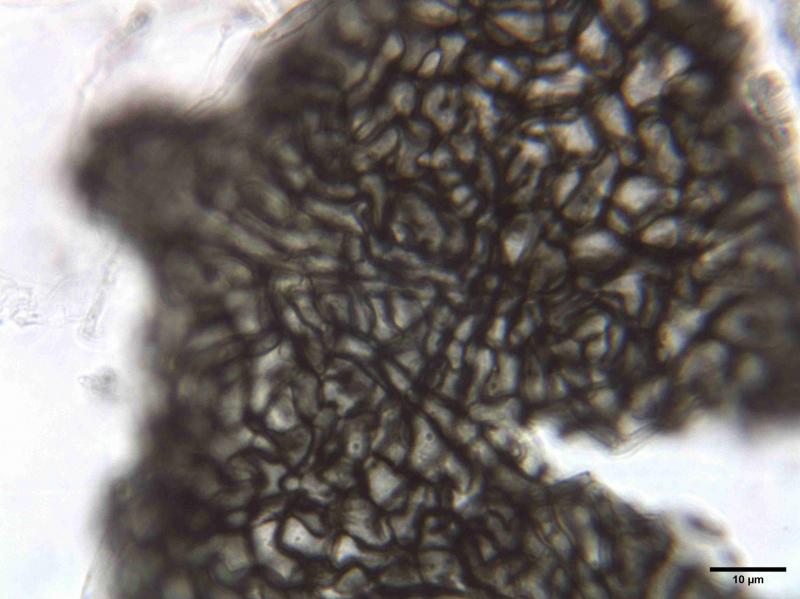
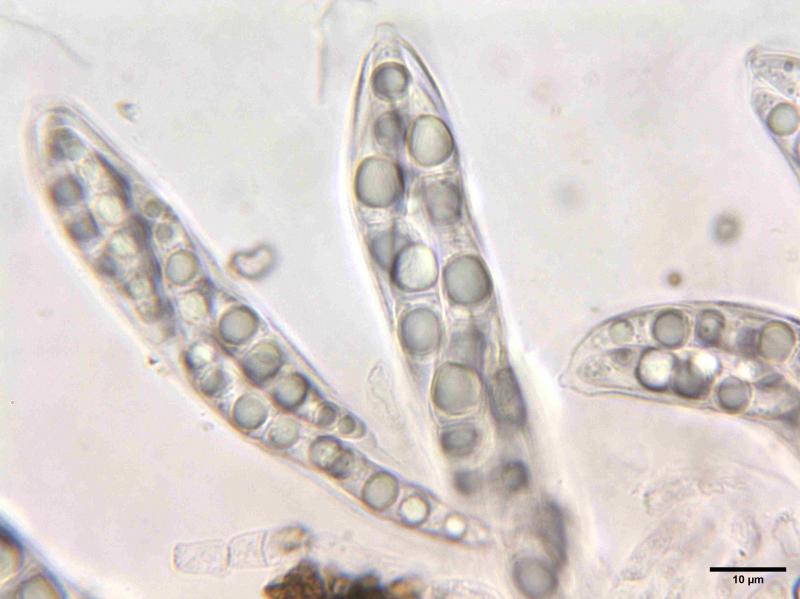
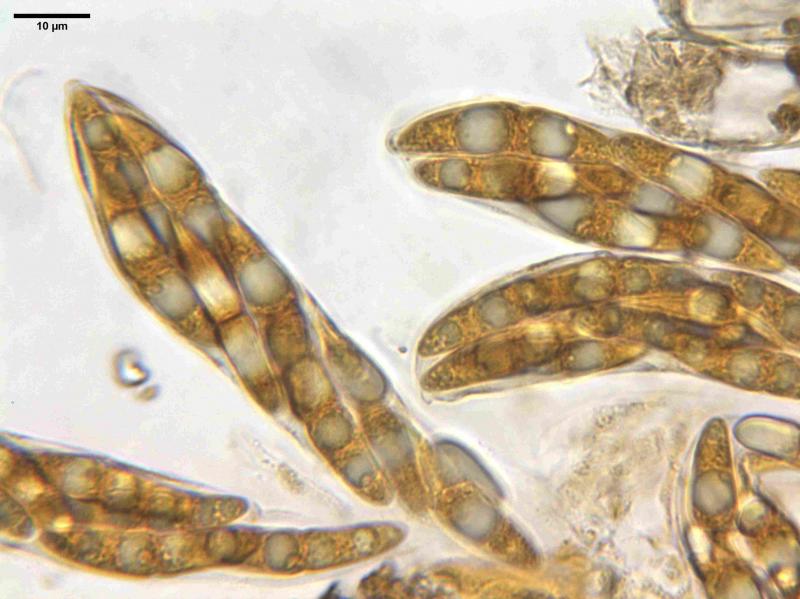
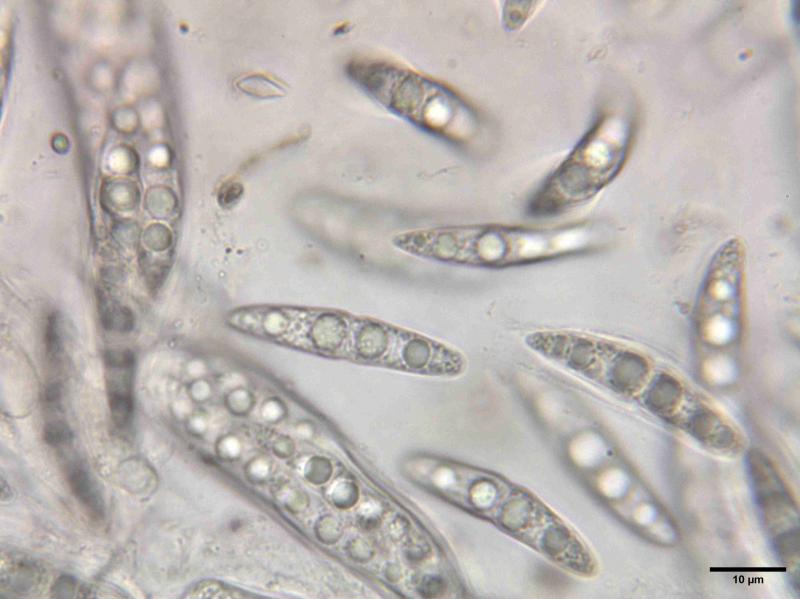
During an excursion organised by Antwerpse Mycologische Kring on 9 May 2026 in the Abtsheide nature reserve in Beerse, Belgium, I found black, round ascocarps beneath the epidermis of Carex leaves. The average diameter is 73 to 140 µm, with a central ostiole smaller than 30 µm and without a papilla.
Exipulum: black with a texture varying from prismatica/angularis to intricata
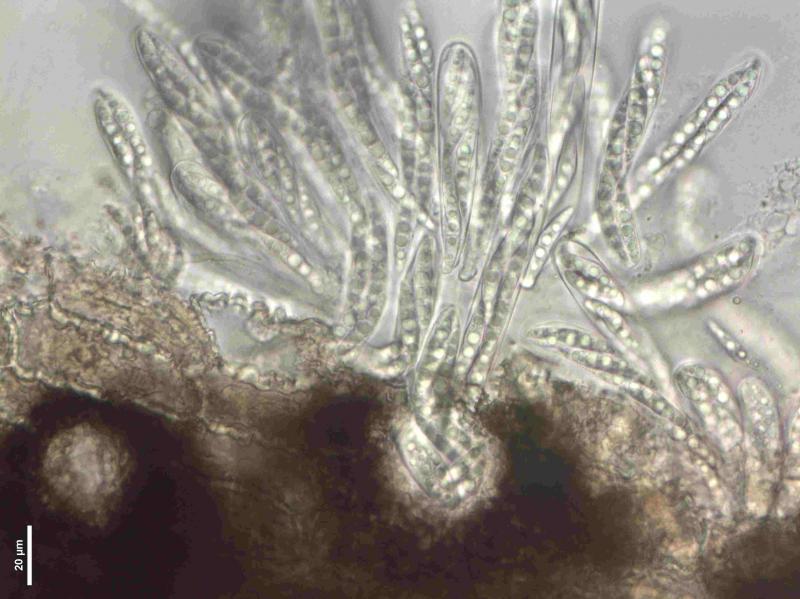
Asci: bitunicate, thick-walled especially at the apex (with a short papilla?); clavate (55–116 × 10–13 µm); containing 8 spores; biseriate to irregular arrangement; reaction to Lugol's solution: dextrinoid;
Spore: subcylindrical to fusiform (sometimes slightly curved), with 1 central septum, slightly constricted at the septum and 2 large and several small droplets in each half; 29–35 × 6–7 µm
Could it be Metasphaeria cumana var. macrospora?
Any help would be most welcome!
Kind regards,
François Bartholomeeusen
Eduard Osieck,
26-05-2026 20:36
Re : Ascomata under epidermis Carex
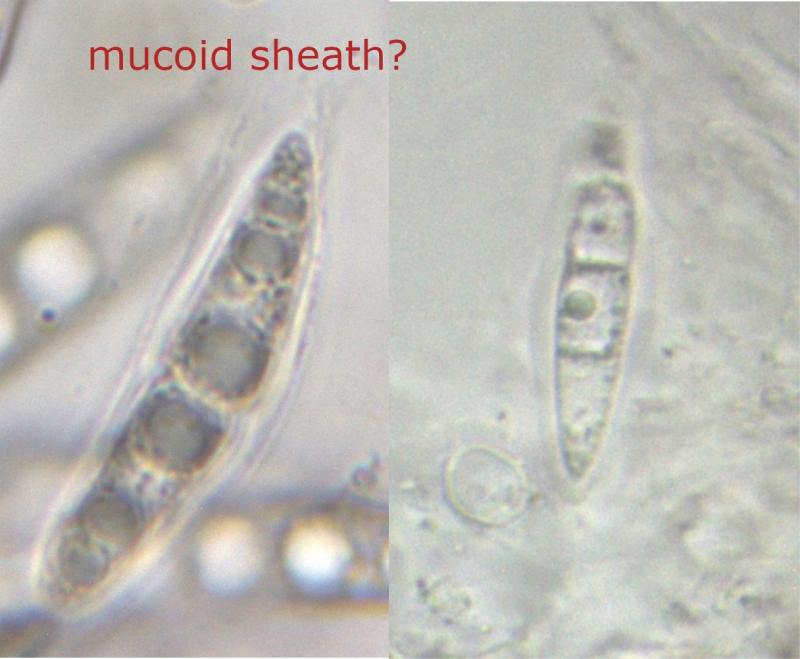
Unfortunately I have never found this species. The spore size is much smaller than given in the protologue: 36-42 x 6-8 um. I am not aware of a modern description. You could compare with other species with this type of spores such as Massarina lacustris (Leuchtmann 1984), Massarina amphibia (Magnes & Hafellner 1991, see also Aptroot 1998), Lentithecium (Massarina) fluviatilis (Aptroot & Van Ryckegem 2001), and Stagonospora perfecta (Quaedvlieg et al. 2013). The latter also from Carex. Did you note a mucoid sheath around the spores (present in M. amphibia at least, best seen in Indian ink). Best regards, Eduard
François Bartholomeeusen,
27-05-2026 17:59
Re : Ascomata under epidermis Carex
Good evening, Eduard,
Thank you very much for your interesting comments!
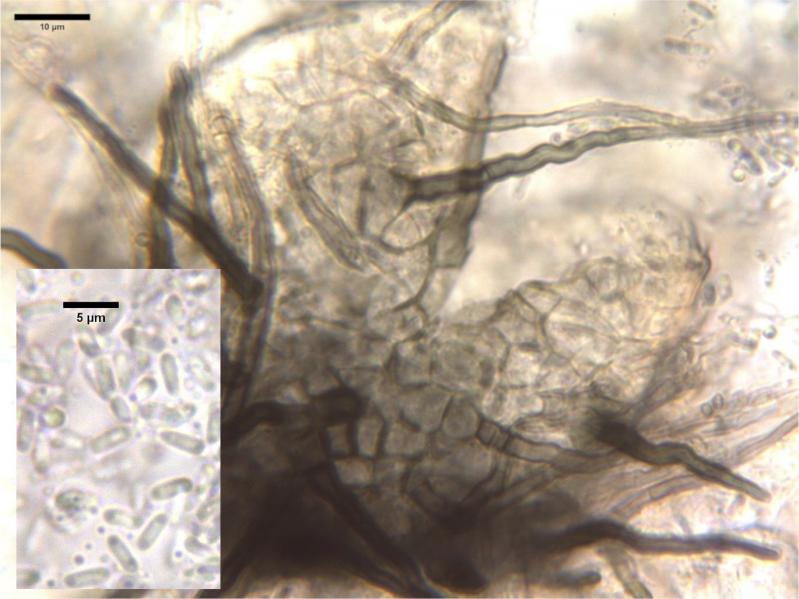
I have reviewed all the photos showing spores and (see first photo) found two spores that appear to have a mucilaginous coating. Today I tried to examine the carex leaf again, but was unsuccessful.
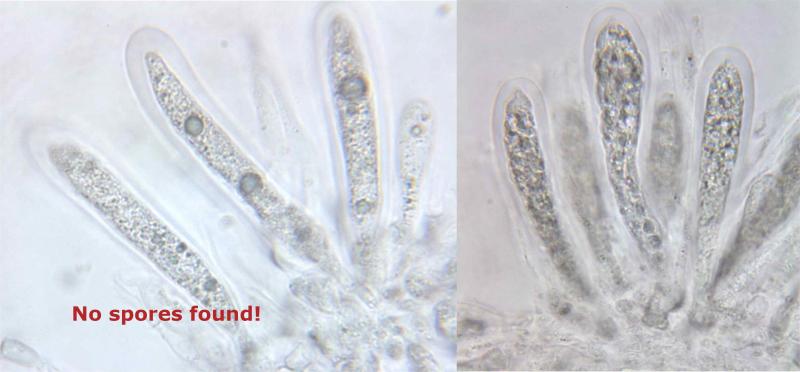
The original examination was already difficult. The first two preparations showed asci but no spores (see second photo, spore disintegrated in asci)
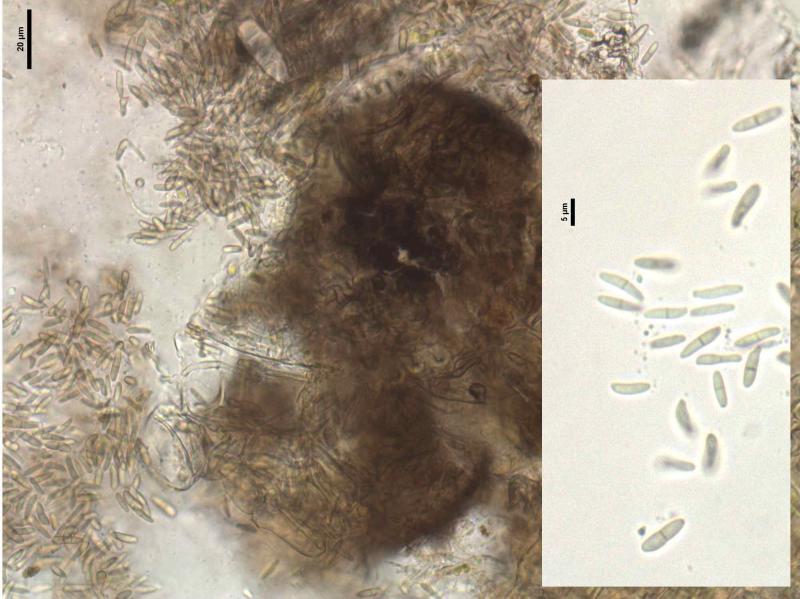
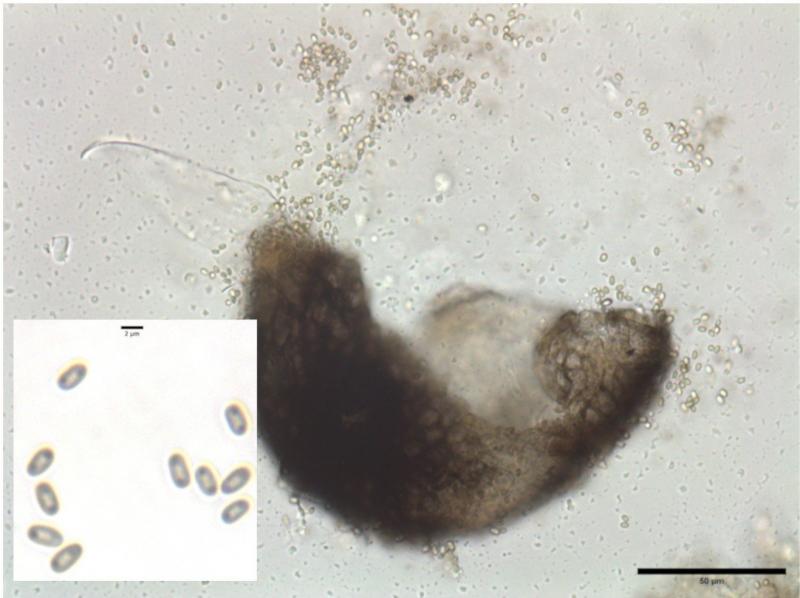
Then four attempts that did yield results, but also several preparations that yielded asexual forms. It's all getting a bit too complex and I'm finding it rather difficult to manipulate those super-tiny ascomata!
Best regards and thanks again,
François
Thank you very much for your interesting comments!
I have reviewed all the photos showing spores and (see first photo) found two spores that appear to have a mucilaginous coating. Today I tried to examine the carex leaf again, but was unsuccessful.
The original examination was already difficult. The first two preparations showed asci but no spores (see second photo, spore disintegrated in asci)
Then four attempts that did yield results, but also several preparations that yielded asexual forms. It's all getting a bit too complex and I'm finding it rather difficult to manipulate those super-tiny ascomata!
Best regards and thanks again,
François