07-06-2026 15:10
 William Slosse
Hello everyone,On 05-06-26, I found following asco
08-06-2026 10:16
 Spooren Marco
I don`t have a clou about this fungus,it is not in
07-06-2026 12:09
 François Freléchoux
Bonjour, Voici une brève description de ce qui m
05-06-2026 11:02
Thomas Læssøehttps://svampe.databasen.org/observations/10596691
07-06-2026 12:43
Steve ClementsBojour. This was a strange find on a stick on my
12-07-2015 00:05
 Nedim Jukic
This one from the same locality as the previous on
06-06-2026 17:44
Steve ClementsBonjour, This disco was on planed wood 3 x 1.5 cm
14-08-2016 23:15
 Alex Akulov
Dear friendsCan you help me to find the descriptio

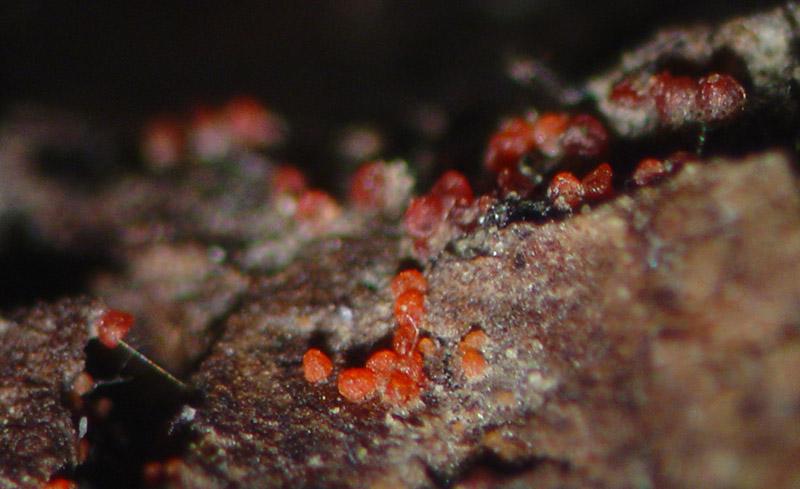
He encontrado estos pequeños peritecios sobre la corteza de una rama de planifolio (Navarra, España).
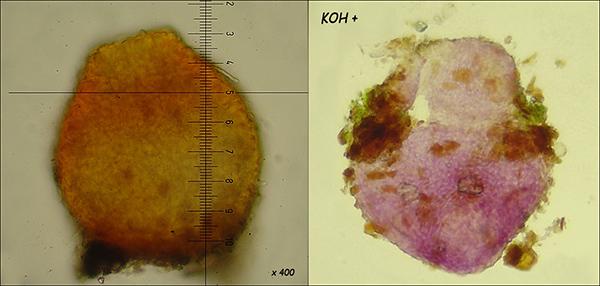
El sustrato está muy deteriorado, y no se decir si crece sobre corteza o sobre algun viejo e irreconocible pyrenomycete.El tamaño de los peritecios es de hasta 300 x 260um.
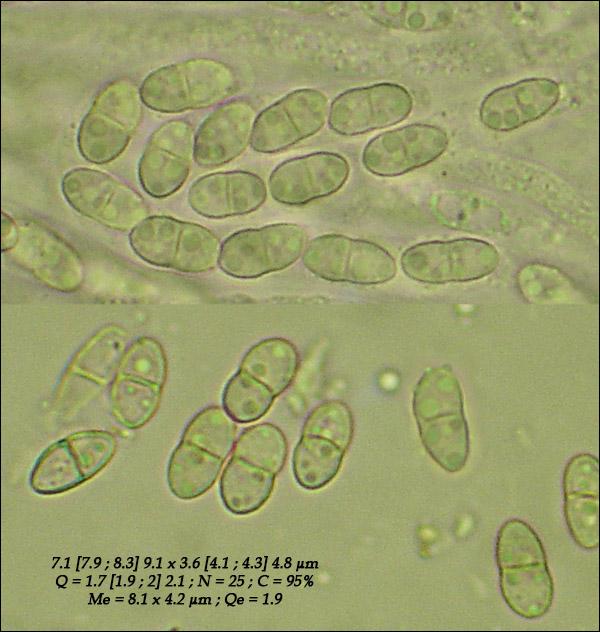
Esporas con 1 septo, verrugosas al madurar.
Podría ser Cosmospora?
Gracias, un saludo
Susana
Hi all:
I found these small perithecia on the bark of a branch of hardwood (Navarra-Spain)
The substrate is very deteriorated, and not say if it grows on bark or on some old and unrecognizable pyrenomycete.
Perithecia size is up to 300 x 260um.
Spores with one septum, warted when mature.
Could be Cosmospora?
Thanks, greetings
Susana
?