
10-06-2026 21:16
 François Freléchoux
Bonsoir,Le dernier du jour, en attendant votre avi
11-06-2026 19:01
 William Slosse
Hello all,In an attempt to make a culture of a sus
11-06-2026 19:03
 Nicolas VAN VOOREN
Chers membres d'Ascofrance,Le site sera placé en

09-06-2026 18:32
Camille MertensSur morceau de roseau immergé 0,5 - 0,7 mm de dia
10-06-2026 12:54
Steve ClementsBonjour encore, Pouvez-vous m'aider, s'il vous pl
10-06-2026 21:07
François Freléchoux
Toutes les tiges de gentianes jaunes de l'an passÃ
10-06-2026 13:41
François Freléchoux
Bonjour à nouveau, Voici une trouvaille d'hier.
10-06-2026 11:53
Steve ClementsBonjour, This disco is abundant on dead stems of
I hope anyone can help me with my "problem"
On the branches of a blackberry bush I found this little black pimples. Under the microscope, I got the next results. Could this be a Didymella applanata? The spores were 12-16x6 uM at large magnification of 1000x
Thanks
Hannie
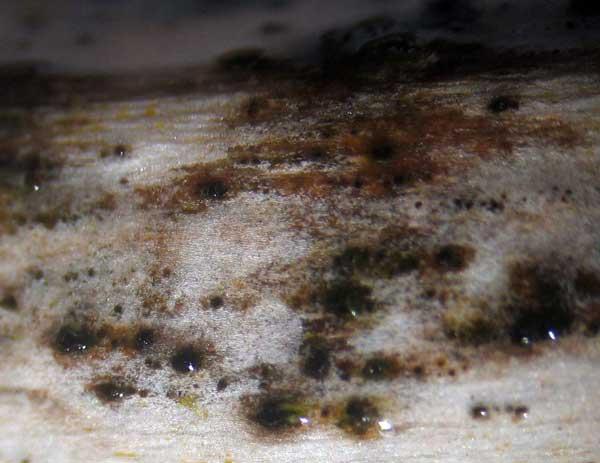
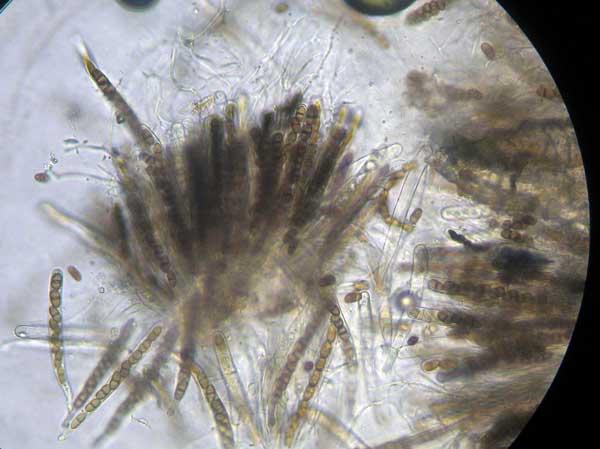
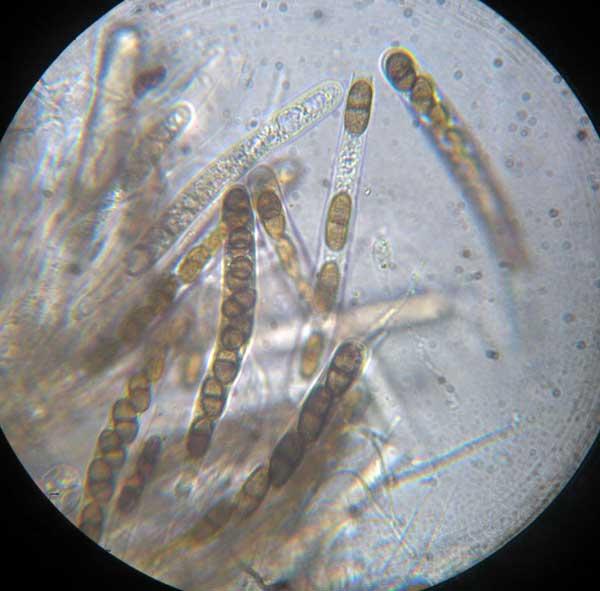
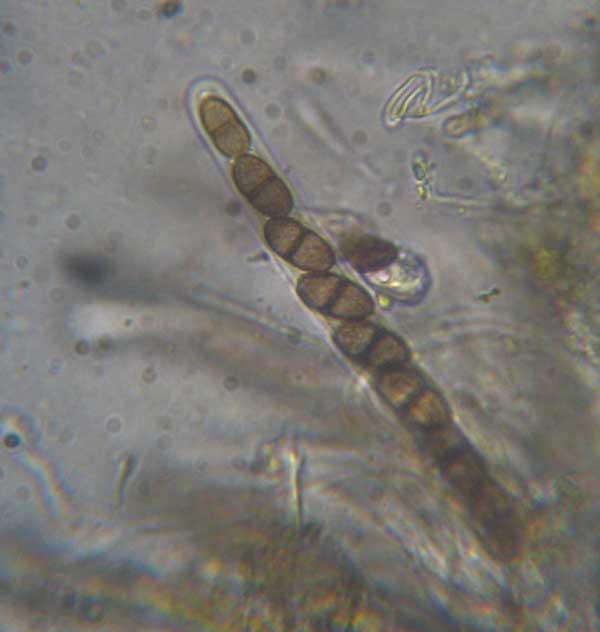
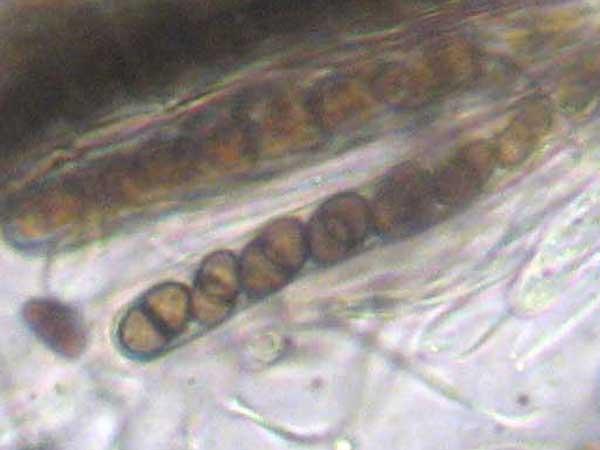

no, this is a member of Amphisphaeria, please check ascus apical structures for reaction with Lugol.
regards,
björn
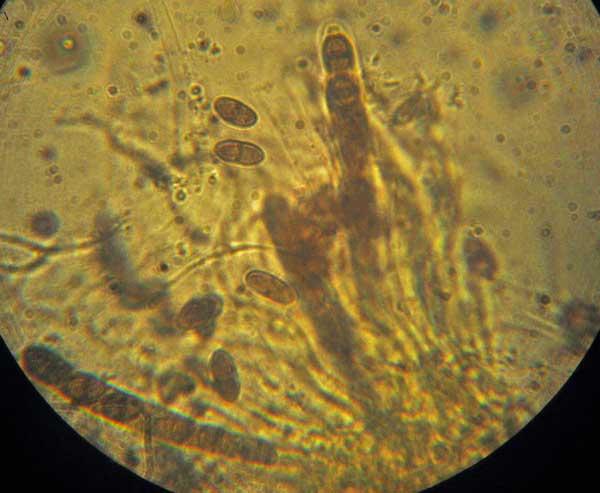
correct, I meant this. But I cannot see wether it is positive or negative. There are several (3-4) species of Amphisphaeria with negative Lugol/Melzer reaction, like Amphisphaeria vibratilis or A. paedida.
Did the spore colour chance from brown to green in melzer?
regards,
björn
Regards, Walter

There is a key in Studies Mycology 37.
We can guess ornementation on the photo of asci. How exactly is it ?
Alain
Good morning,
I downloaded the key of Didymosdphaeria. The spores didn't colour green an as Ik looked again this mornig it's still J- and the spores have a foveate ornamentation.
Looking at the key I suggest that it is D. oblitescens? I think 1b, 2a, 3a =D.oblitescens.
Ascospores less than three times as long as wide.
I hope you correct me if I'm wrong.
I thank all of you for the help, in this way I still learn a lot.
regards
Hannie
The last 2 pics show the real Didymosphaeria oblitescens growing on dead Cornus alba stems, which has been determined by several specialists in this forum.
I feel that there is something wrong...
regards,
björn
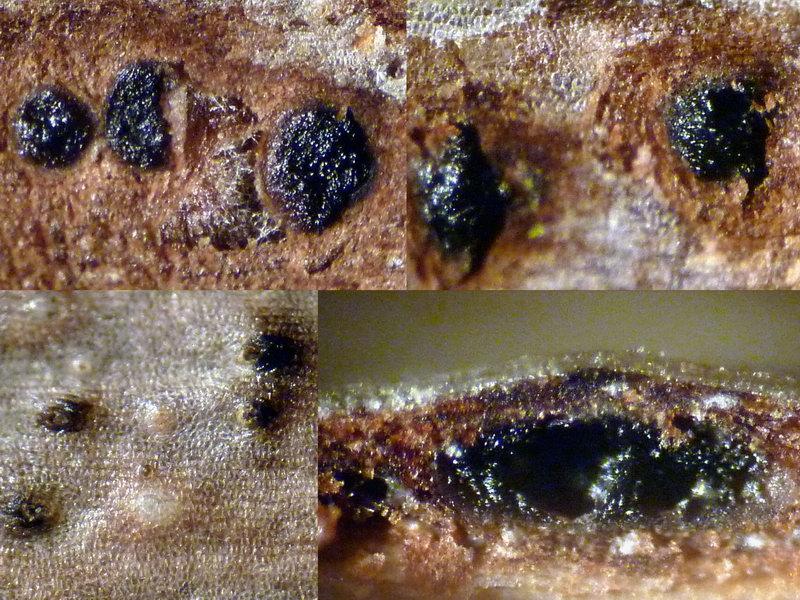
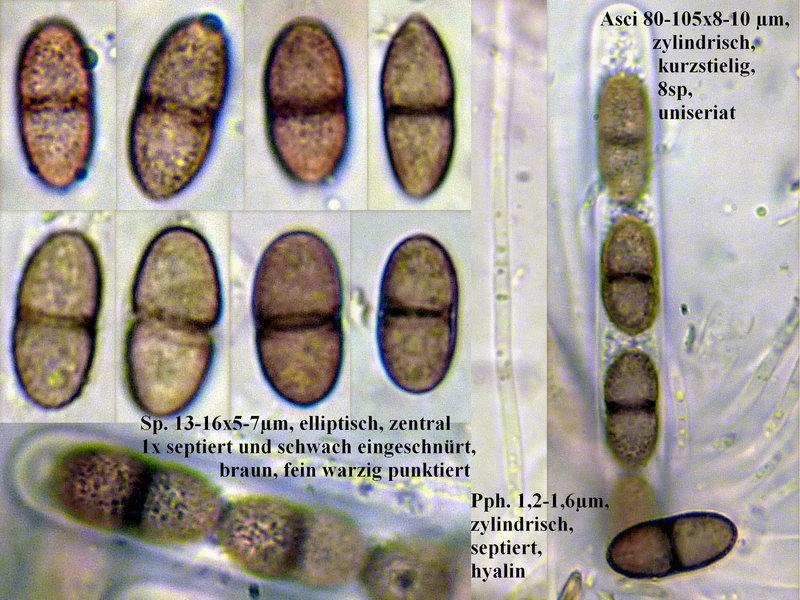
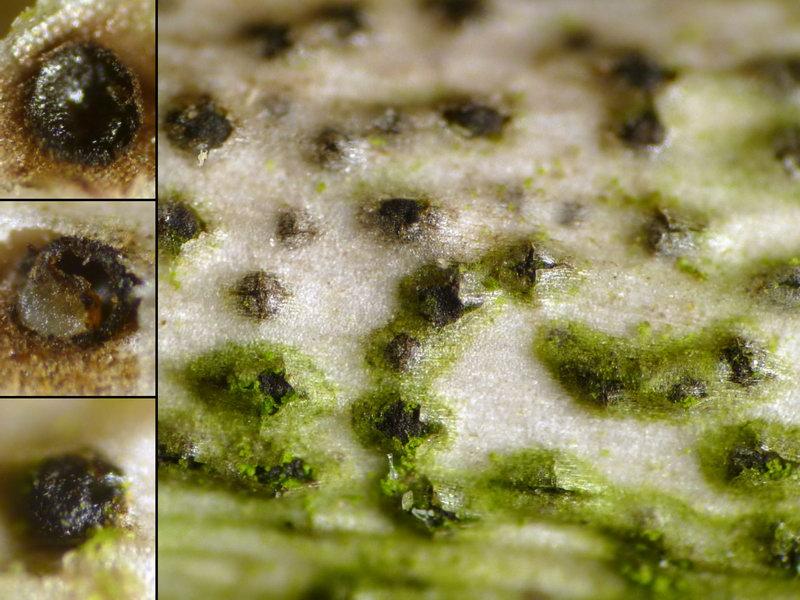
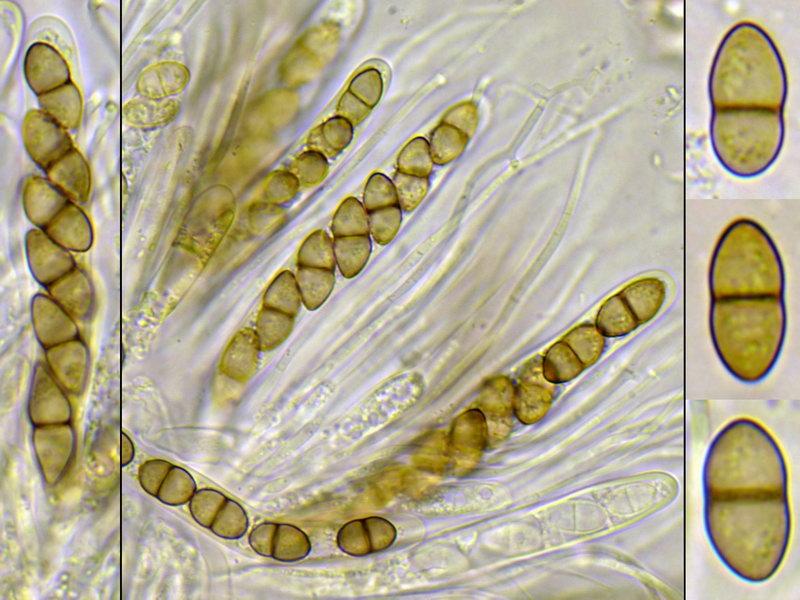
It's ok to me if you think I'm not right, in this way I learn more of it. When I looked at your pictures the first two looks more like my pictures. Maybe I was wrong, the spores didn't have foveate ornamentation but warty spores. I don't have an expensive microscoop.
regards Hannie

Qui peut me traduire le mot "foveate ornamentation?" ?
Merci.
Yannick
Hannie
Les fovéoles sont de petites dépressions (concavités) alors que les verrues sont
des convexités.
Alain
A positive discussion.
Alain
Hannie
I also belive this sp. is belong to Didymosphaeria
Eeventhough this genus is well established the familial placement of the genera is uncertain we need fresh collections to sort out this problem
Could please loan me the material to check if so it would be greatful where i try to do some molecular work on it
Thank you and look forward to hearing from you
HA
If I read it correct you wanted some material send? I found it on Rubus. I still have the twiggs. If you want something of it if to examen I have to take a look if I can find it. But this will be in a few days.
Regards Hannie
Yes please can you send me the material
So i can try work on the molecular on the species
ariyawansa44@gmail.com is my e mail you can contact me via on that
hope we can have intersting finding on this
Thank you
HA