
27-04-2026 18:48
Tony MoverleyCollected 23rd April 2026, Norfolk, EnglandSwarms
27-04-2026 20:52
 Lothar Krieglsteiner
Found on hanging tiwg of Olea europaea in dried-ou
28-04-2026 22:51
 Bernard CLESSE
Bonsoir à toutes et tous,Pourriez-vous m'aider à
29-04-2026 08:01
Lothar Krieglsteiner
... on twig attached to small tree of Citrus auran
29-04-2026 10:44
Lothar Krieglsteiner
growing at moist, drying-out soil at the side of a
28-04-2026 20:33
Vitus SchäfftleinHello, I found Trochila ilicina on Ilex aquifoliu

28-04-2026 21:50
 Pablo Sandoval
Hola a todos,Espero se encuentren bien. Hace mucho
27-04-2026 18:05
Lothar Krieglsteiner
... still attached at standing tree. The green con
28-04-2026 20:07
Lothar Krieglsteiner
... on twig in the air at standing Ceratonia siliq
Lasiosphaeria
Björn Wergen,
24-06-2013 11:21
 Hi there,
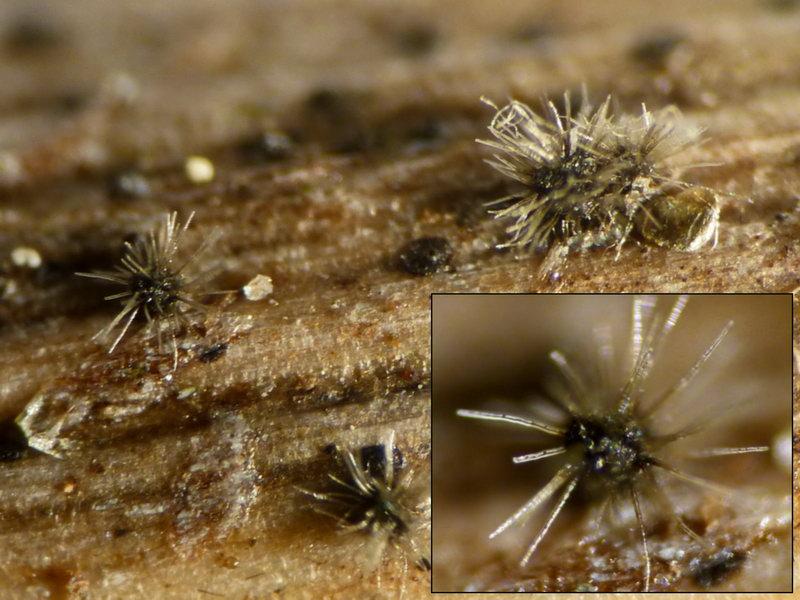
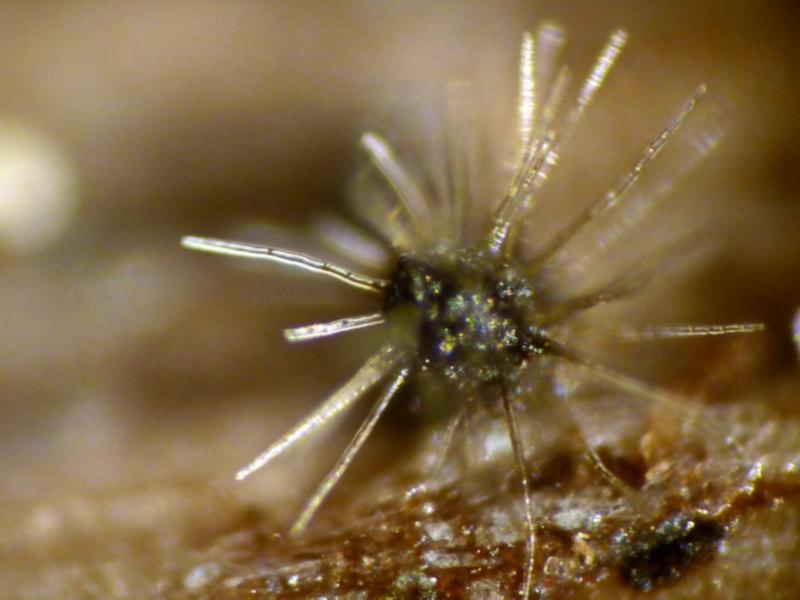
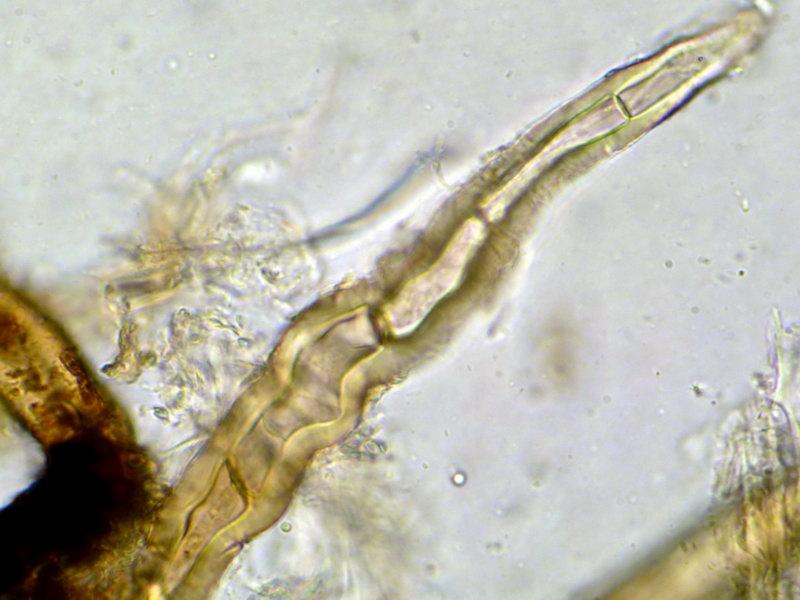
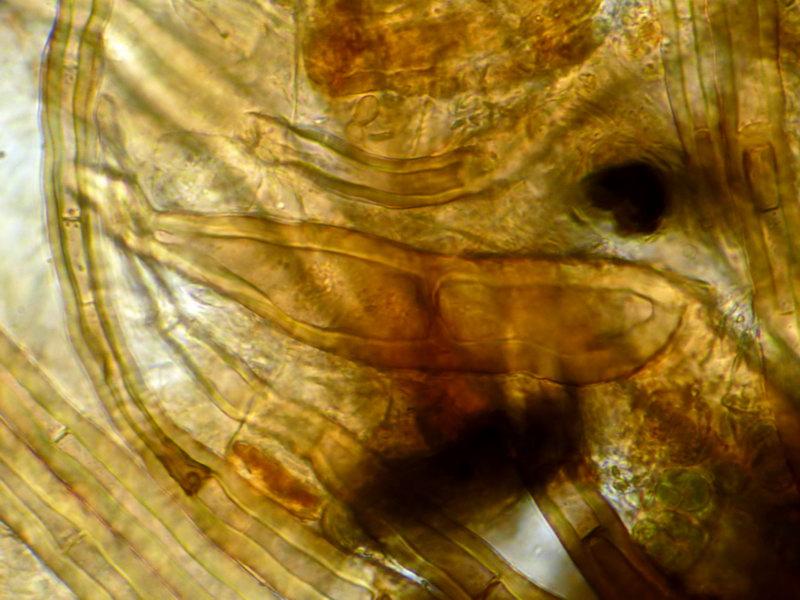
here is another problem, found in Austria on dead dicot stems. I hadn't ever seen any Lasiosphaeria species with so long, straight hairs, which are up to 310µm long.
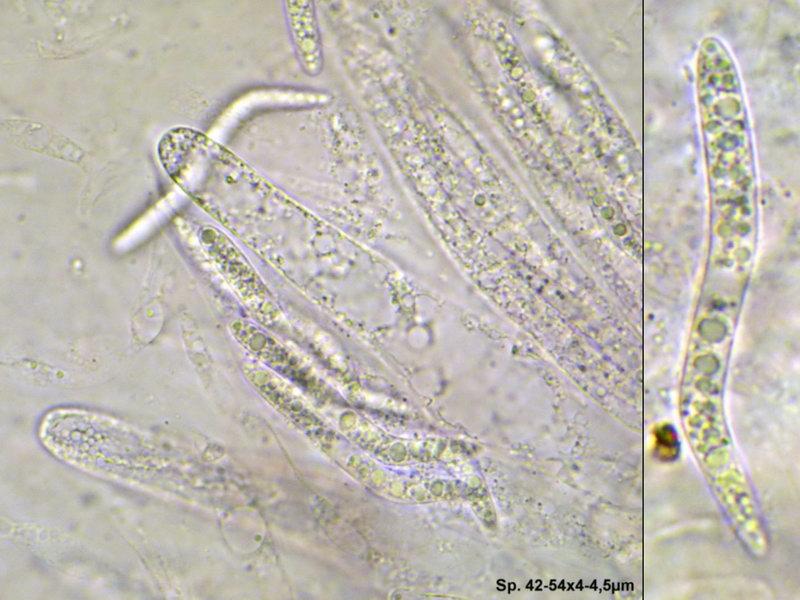
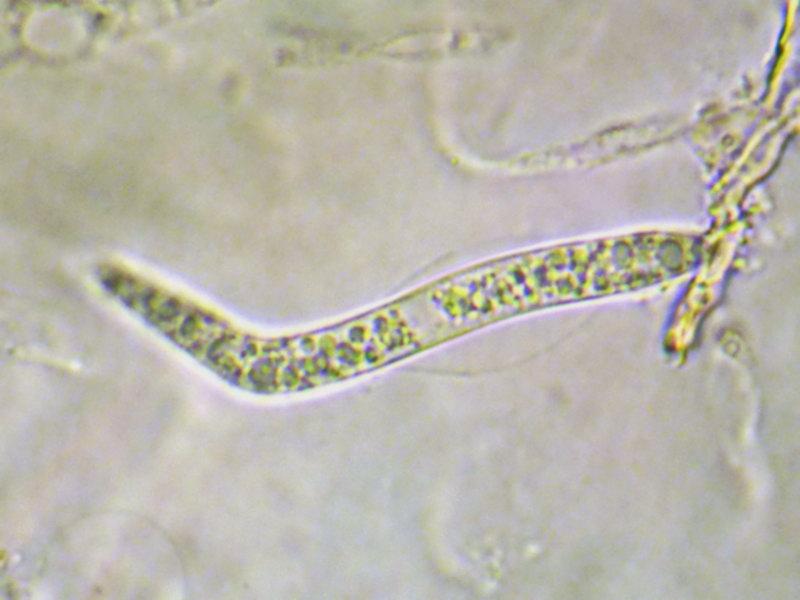
Spores sometimes have 1 (perhaps 2) septation.
With the key available on the page I come to L. rufa (without setae septations) or L. caudata (spores are bigger).
Any idea?
regards,
björn
Andrew N. Miller,
24-06-2013 16:52

Re : Lasiosphaeria
This is Hilberina rufa.
Ascomata gregarious to densely crowded, globose to ovoid, 380-480 µm diam. x 480-550 µm high, setae pale reddish-brown, thick-walled with narrow lumen, blunt to acute ended; ascospores cylindrical, basal end curved in obtuse angle, attenuate and acerose with a slightly swollen enlarged tip, hyaline to yellowish, 3-septate, 48-58 x 3.5-3.8 µm
Andy
Ascomata gregarious to densely crowded, globose to ovoid, 380-480 µm diam. x 480-550 µm high, setae pale reddish-brown, thick-walled with narrow lumen, blunt to acute ended; ascospores cylindrical, basal end curved in obtuse angle, attenuate and acerose with a slightly swollen enlarged tip, hyaline to yellowish, 3-septate, 48-58 x 3.5-3.8 µm
Andy
Björn Wergen,
24-06-2013 18:12
Re : Lasiosphaeria
Hi Andy,
it is really L. rufa? Ok, I thought this species has to have non-septated hairs. Many thanks for your help :)
regards,
björn
it is really L. rufa? Ok, I thought this species has to have non-septated hairs. Many thanks for your help :)
regards,
björn
Andrew N. Miller,
24-06-2013 18:20
Re : Lasiosphaeria
Sorry, I was beta testing a new key I'm trying to make for these things and it still needs some work (obviously). This is probably Hilberina caudata although you said the spores were longer in your collection.
Andy
Andy
Björn Wergen,
24-06-2013 18:39
Re : Lasiosphaeria
Hi,
I think that the spores of H. caudata are longer as in my collection (that was what I meant). For me, Hilberina rufa seems to fit better (compared with H. caudata).
regards,
björn
I think that the spores of H. caudata are longer as in my collection (that was what I meant). For me, Hilberina rufa seems to fit better (compared with H. caudata).
regards,
björn
Andrew N. Miller,
24-06-2013 20:13
Re : Lasiosphaeria
But, your spores look very different from what Candousau et al. illustrated for L. rufa.
Andy
Andy
Björn Wergen,
24-06-2013 20:21
Re : Lasiosphaeria
Hm ok, thanks Andy.
regards,
björn
regards,
björn