

17-05-2026 19:05
Thomas FlammerI have found this tiny 200 ym cup shaped apothecia
17-05-2026 16:41
Margot en Geert VullingsWe found this Lachnum on an old Rubus stem.Fruitbo
05-04-2026 22:46
 Lothar Krieglsteiner
on wood of Ceratonia, Algarve, 3.4.2026.The color
15-05-2026 13:33
Sylvie Le GoffBonjour à tousJe serais très reconnaissante enve
16-03-2011 14:31
roman vargas albertoHi. I would like some opinion about this Peziza
14-05-2026 05:36
Ethan CrensonHi all, I haven't paid much attention to Lachnu
10-05-2026 23:17
 Andreas Gminder
Hello,today we found in a moist steep decidous for
11-05-2026 12:32
 Bernard CLESSE
Pourriez-vous m'aider à identifier cette héloti
13-05-2026 15:26
 François Freléchoux
Bonjour,Voici une récolte faite il y a quelques j
 Hi again,
on that rubus-twig I found a second fungus of the Naevioideae. They are very difficult, I think.
This one opens with a lid like in Trochila, apothecia up to 0,2 mm, spores ellipsoid, hyalin with two large guttules and some smaller ones, (9-10) 9,63x3,94 (3,5-4) µm. Asci cylindric to clavate, 50-69 x 7-8 µm,porus-reaction Ikl positive, dull-violett to blue, biseriat with croziers. Paraphyses with strongly refractive content, cylindrical, 4 µm wide. Marginally hairs? up to 45 x 4 µm, 5 cells, 4 are light brown, the cell at the end is clavate, hyalin.
Thank you for your help.
Regards Maren
?
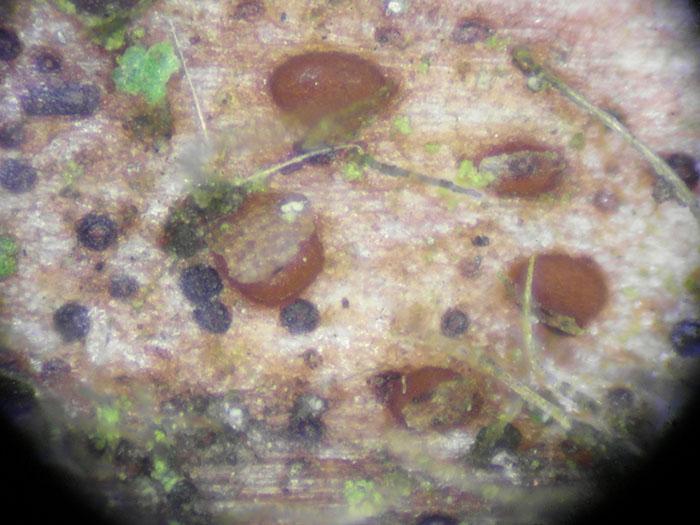
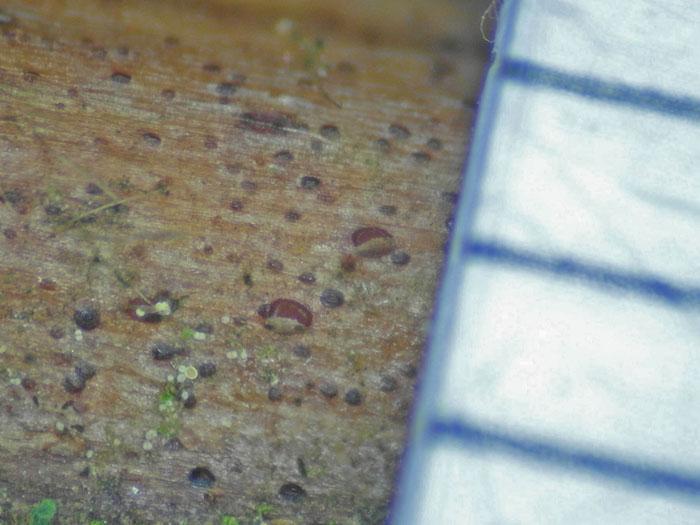
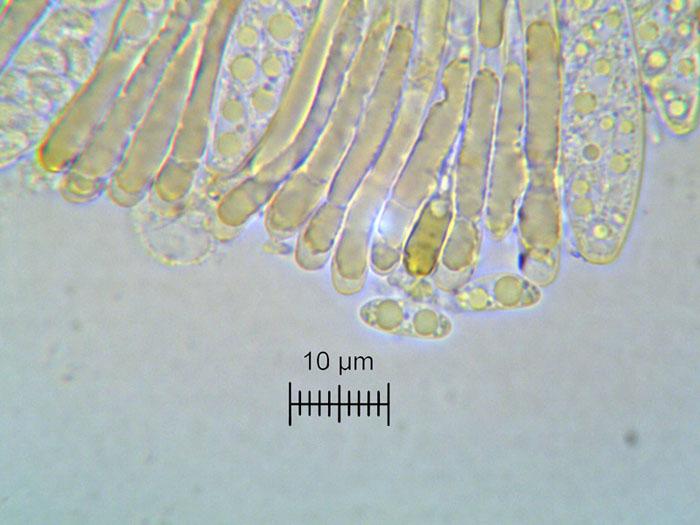
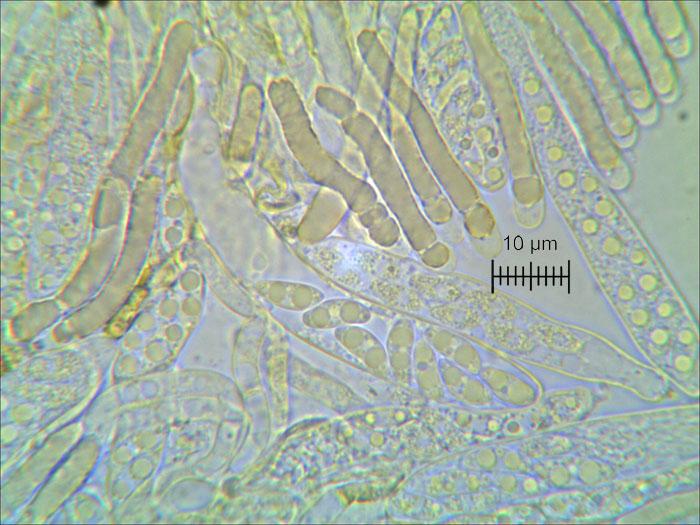
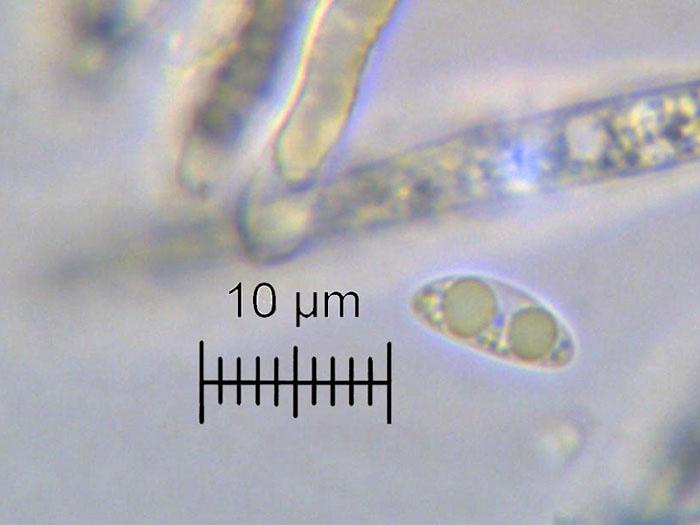
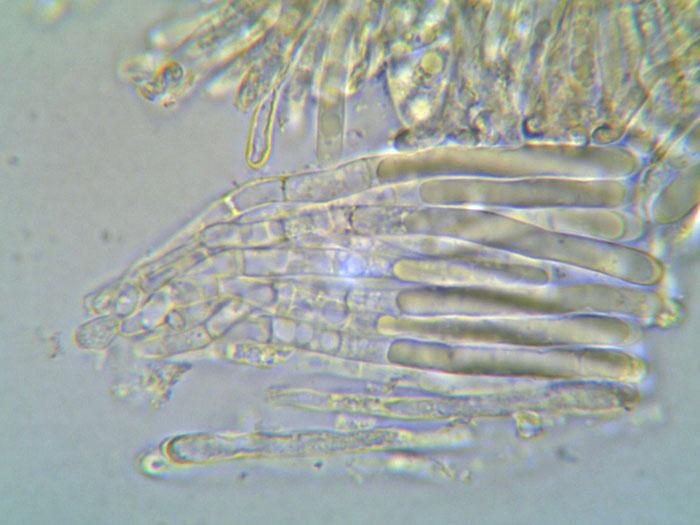
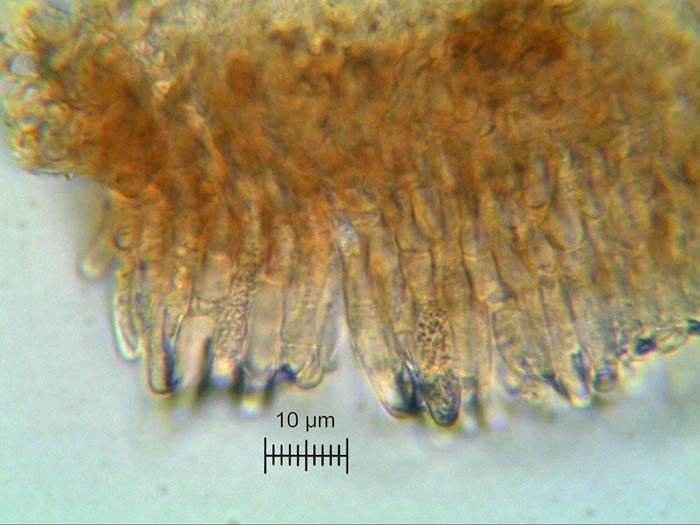
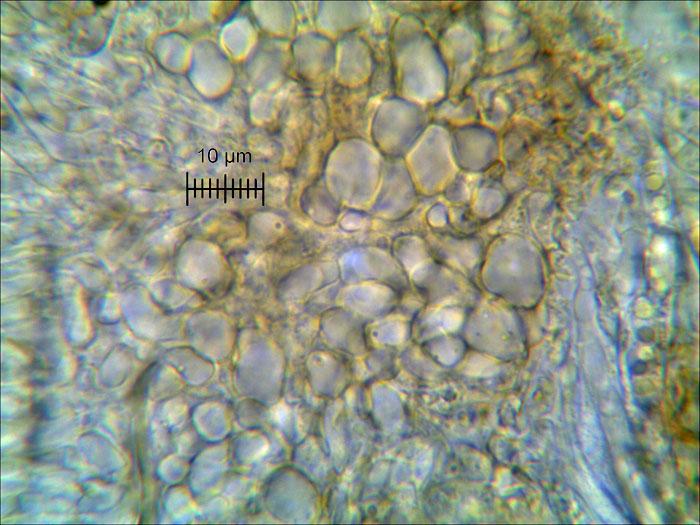
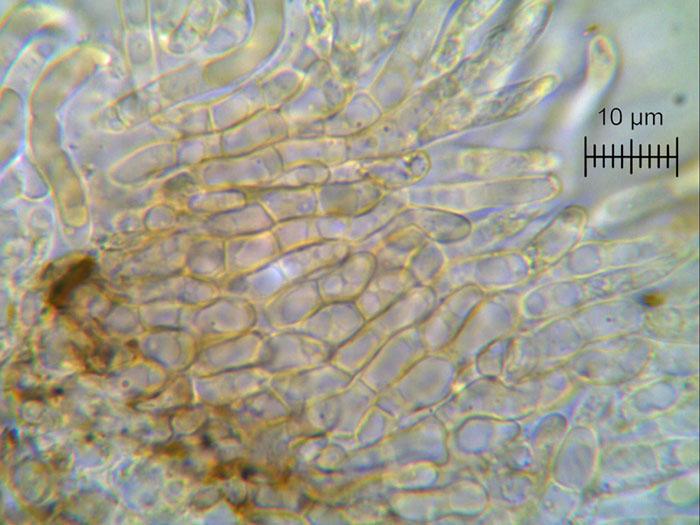
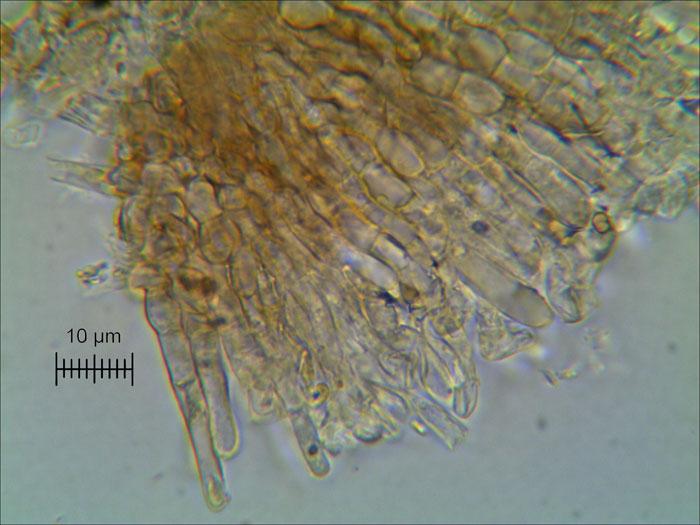
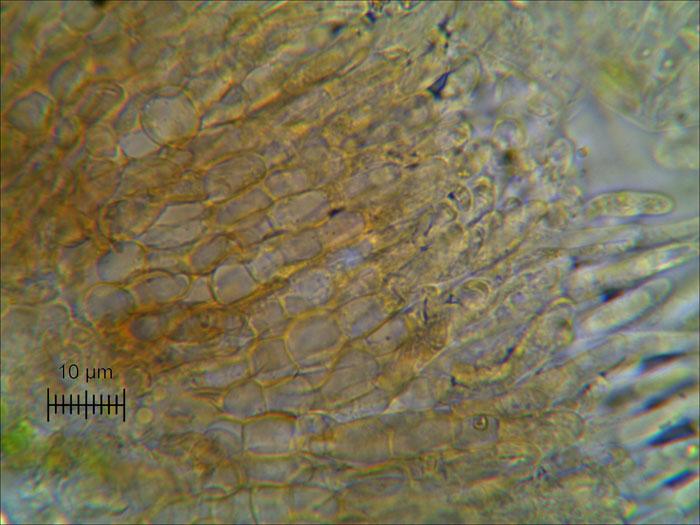
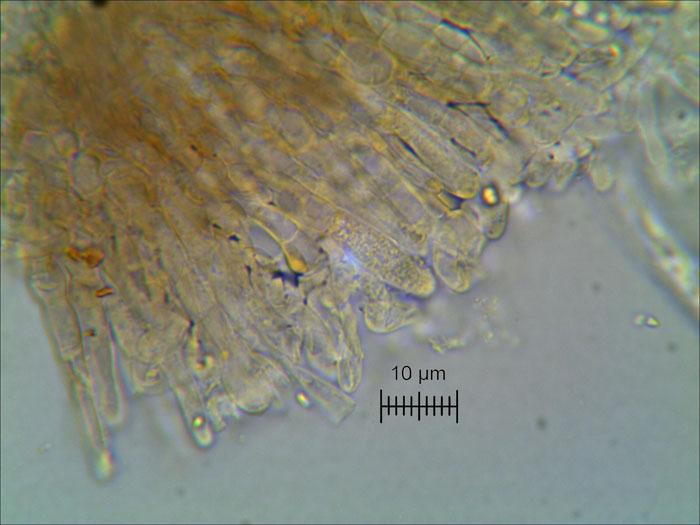
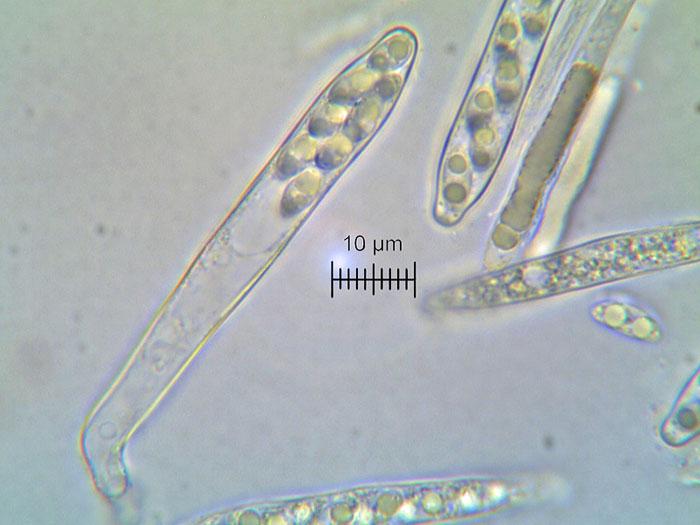
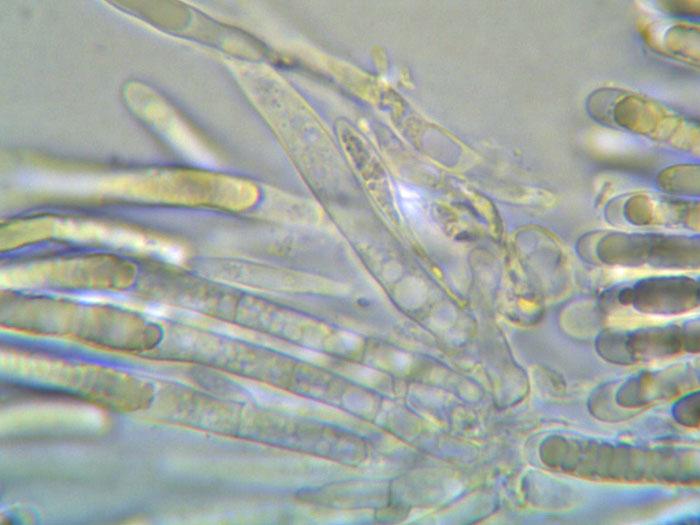
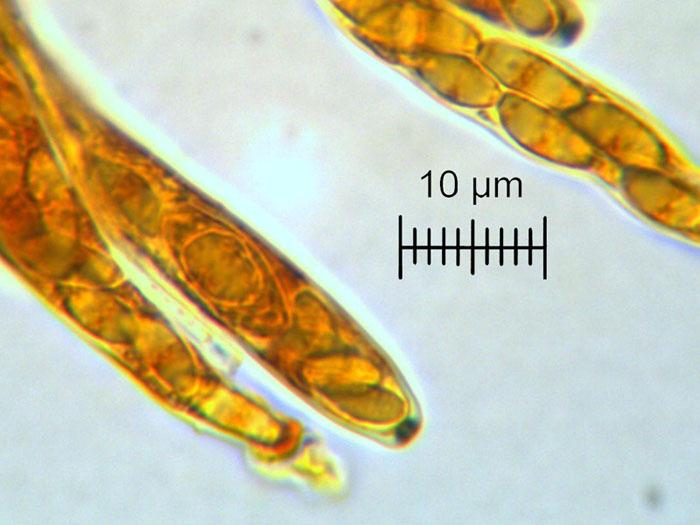
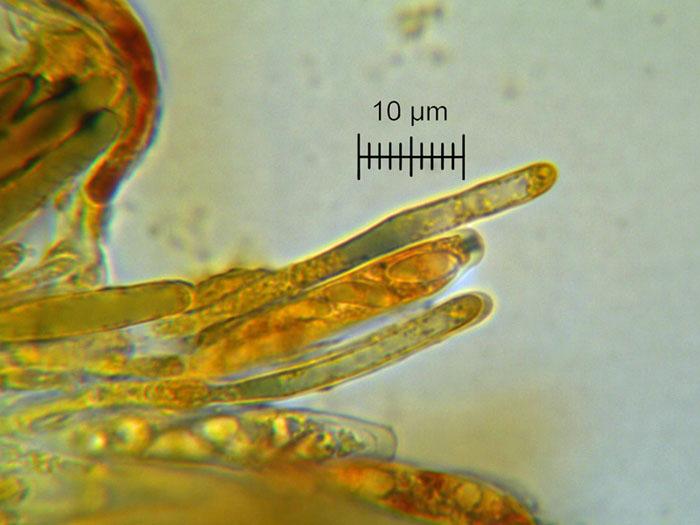

I overlooked this, sorry. It is not Naevioideae but a relative of Trochila as you compared. Hysterostegiella would be an option, but the paraphyses are there always lanceolate. H. dumeti would be on Rubus but has much smaller spores with a low oil content (as also all the other Hysterostegiella species treated by Hein 1983).
I know a similar fungus, in which I never saw a lid like here, though it is erumpent and pushes the epidermis aside, see HB 3802. I used to identify this at first as Duebenia cf. blyttiana, but only until I studied the type of it. Now I have it as "Duebenia-like" in Hysterostegiella, though it could better fit in Trochila. In my HB 5801 the paraphyses are actually slightly lanceolate. Contrary to yours the asci are alway inamyloid there.
The excipulum is covered by crystals. Is this also in yours? I think one of your middle pics show crystals.
Zotto