
10-06-2026 10:45
 François Freléchoux
Bonjour à nouveau, Encore une détermination qui
08-06-2026 10:16
 Spooren Marco
I don`t have a clou about this fungus,it is not in
10-06-2026 09:24
François Freléchoux
Bonjour, J'imagine que cette détermination ne do
09-06-2026 18:32
Camille MertensSur morceau de roseau immergé 0,5 - 0,7 mm de dia
08-06-2026 17:00
François BartholomeeusenGood day everyone, On June 5 2026, I collected de
07-06-2026 15:10
 William Slosse
Hello everyone,On 05-06-26, I found following asco
05-06-2026 11:02
Thomas Læssøehttps://svampe.databasen.org/observations/10596691
07-06-2026 12:09
François Freléchoux
Bonjour, Voici une brève description de ce qui m
07-06-2026 12:43
Steve ClementsBojour. This was a strange find on a stick on my
Using the limited literature I have available, I think it's an Anthostomella species.
The perithecia are ca 0.1-0.2 mm across . Asci are cylindrical, 65-80 x 5-6 µm. Tips stain blue in Melzer's. Spores are uniseriate in the ascus, brown, 8-10 x 3-4 µm. I can't see any sign of an appendage on the spores.
If anyone has any suggestions, I would be very grateful.
Merci
Marcus
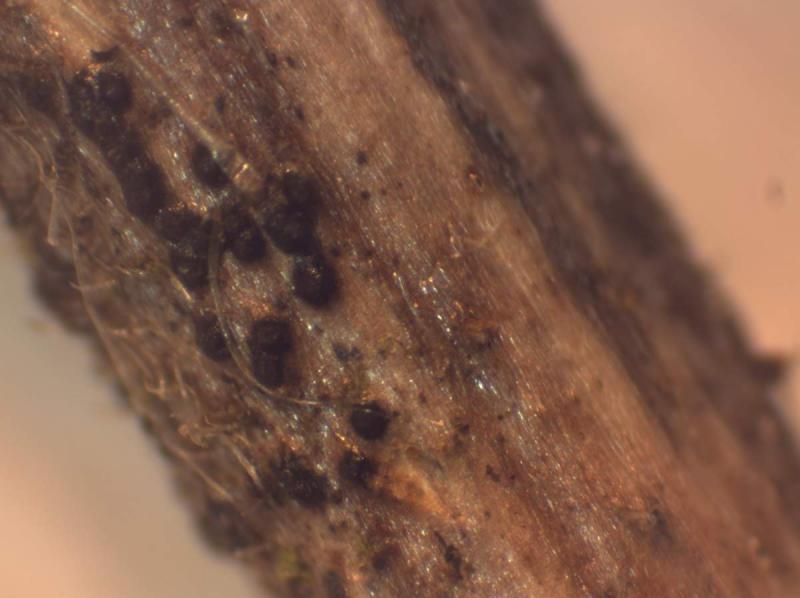
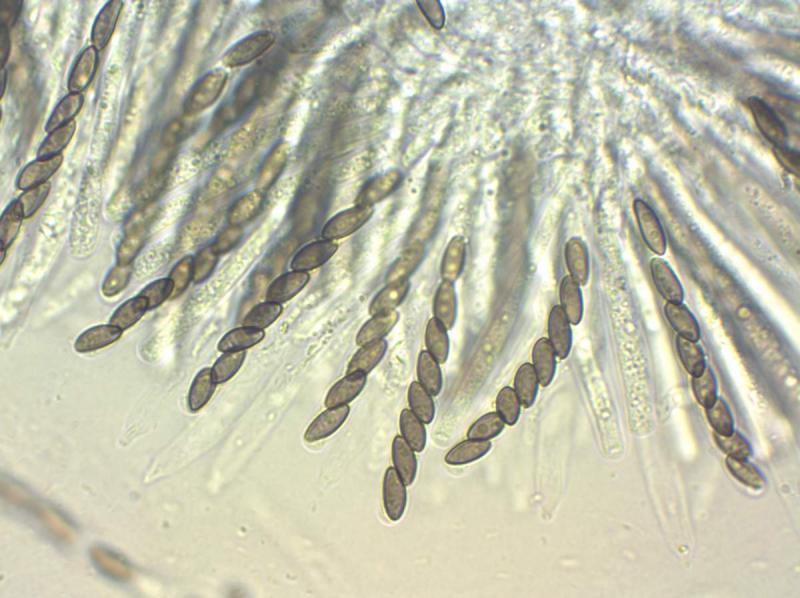
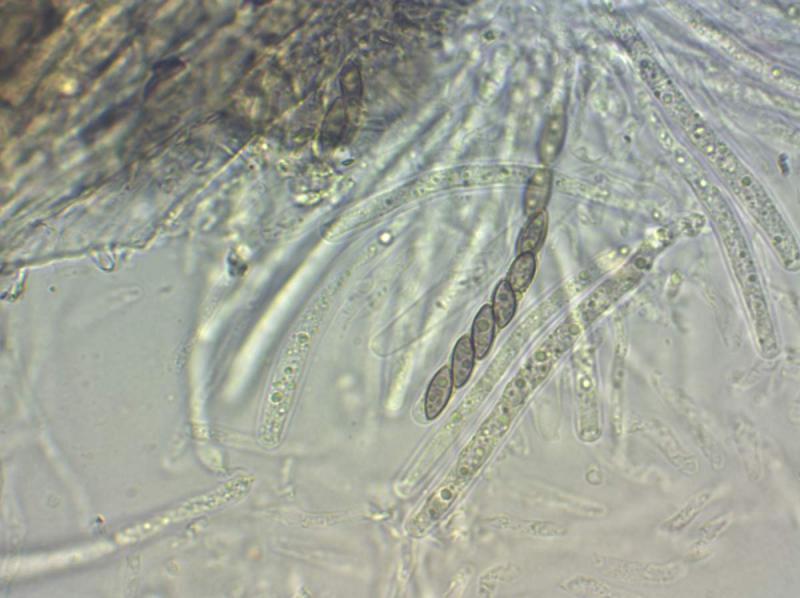
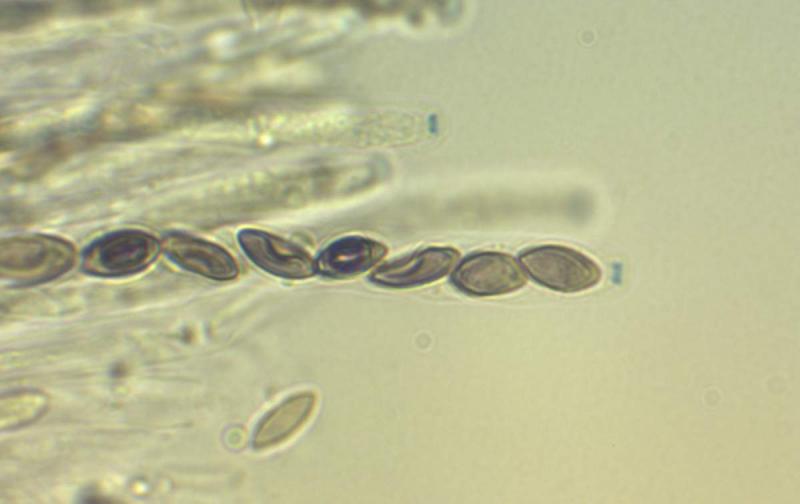
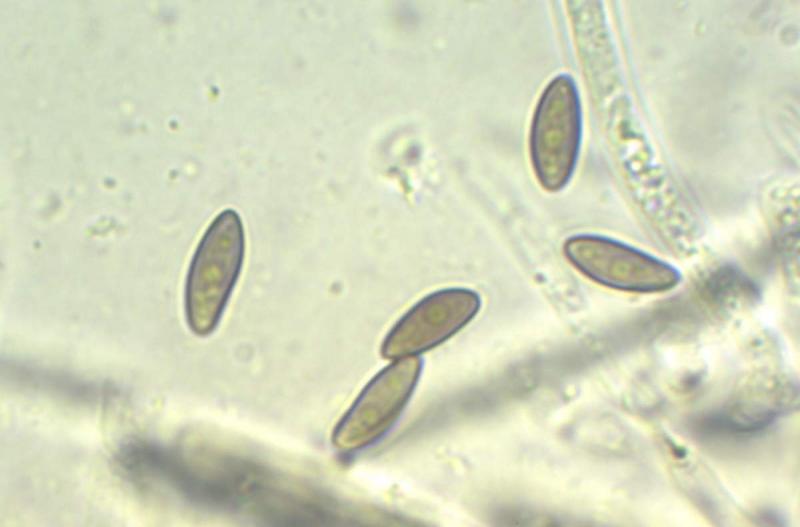

can you see a (possibly faint) germination slit on the spores? Anthostomella has a tendency to appear on monocot's, though not exclusively. A. limitata is plurivorous, and has spores in this size range, but for the time being I am being cautious . . .
I can send you Sheila Francis' Anthostomella monograph (Mycol. Pap. 139 (1975) ) if you are interested . . .
best wishes
Chris

microscopy fits well Anthostomella but in that genus ascomata are typically imersed under a clypeus. It is not clear to me on your photo whether ascomata are superficial or immersed in the substrate. Otherwise I agree with Chris that A. limitata would be a possible candidate. The signature of this species is a spiralling germ slit to the ascospores, often hard to make out, try a very thin slide in 3% KOH, it may help. Also try to make a vertical section across the fungus to see if it is immersed under a clypeus.
Good luck,
Jacques
Hi Chris
It would be great if you could send me the Anthostomella monograph.
I couldn't see a germ slit on the spores but didn't look very closely.
A. limitata does seem to be a possibility. I considered A. tomicoides and A. clypeoides, which have also been recorded on a range of host species, but the spores aren't right.
Marcus
Thanks for your suggestions. I'll have a closer look.
The perithecia are superficial.
Marcus
I'd be very interested in the Anthostomella monograph as well. Thanks in advance!
Best wishes,
Gernot
I'd be also very interested in the Anthostomella monograph as well. Thanks in advance!
Best wishes,
Francis