
11-01-2022 16:36
 Jason Karakehian
Hi does anyone have a digital copy of Raitviir A (
22-05-2026 20:08
Ethan CrensonHello all, Yesterday in NYC I was visiting an e
22-05-2026 18:12
 Lothar Krieglsteiner
... in moist chamber from Portugal.As the fungus s
20-05-2026 17:47
Margot en Geert VullingsWe found this Mollisia on dead Juncus stems mown l
22-05-2026 14:47
Gernot FriebesHi,superficial ascomata collected on bark of a liv
22-05-2026 14:44
Lothar Krieglsteiner
in unripe condition citrine yellow, then soon fadi
22-05-2026 13:29
Gernot FriebesHi,I am curious to hear your opinion on this mater
22-05-2026 10:59
 Nicolas VAN VOOREN
Trouvé sur Phragmites, ce que je pense être un L
20-05-2026 21:49
Margot en Geert VullingsWe found this Lachnum on Juncus stems mown last ye
21-05-2026 17:01
Pierre RepellinBonjour à toutes et à tous,Je recherche l'articl

Hola a todos
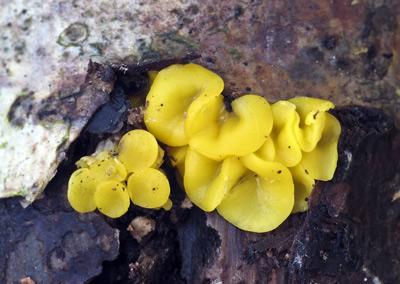
Alguna idea para este ascomiceto amarillo en corylus avellana .
Esporas 9-13 (16) X 4.5-5, elipsoidales con pequeñas gutulas en los extremos, alguna septada.
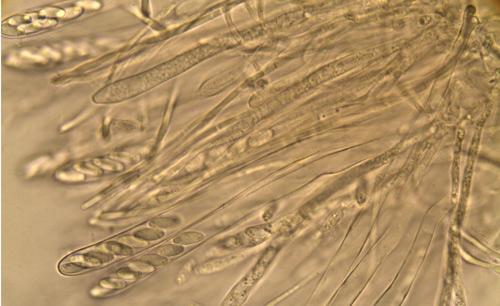
Ascas 145-170 X 8-9,5, IKI+, base bifurcada.
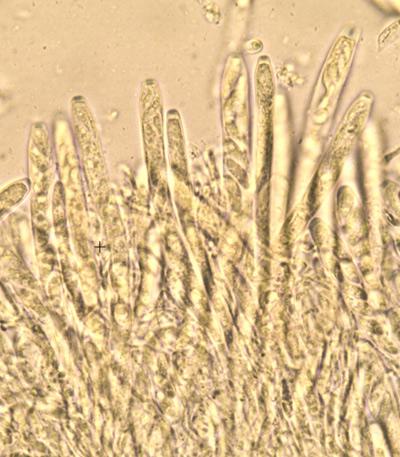
Parafisis cilinfricas, con solo algún septo en la base.
Gracias y saludos
Javier
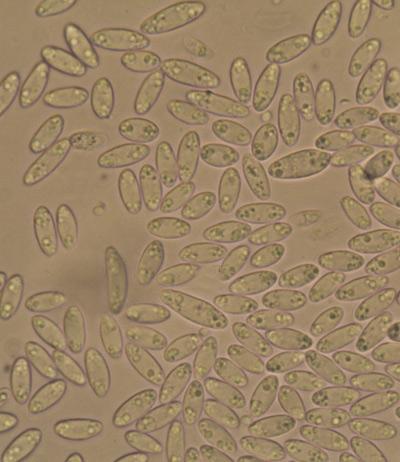
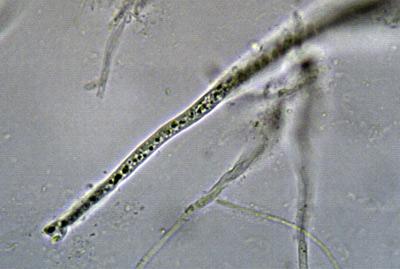

You may in some literature find the spores to be septate but this concerns overmature stages. The mature asci of this species ejects non-septate spores
The spores usually contain a larger LB in each half together with some small ones. To be sure you should look at the excipulum whether it is gelatinized and the hyphae oriented at a high angle to the surface (in section).
I believe that the species belongs in Calycina, as C. citrina, from its microscopy but also from its DNA.
Zotto
Saludos
Javier
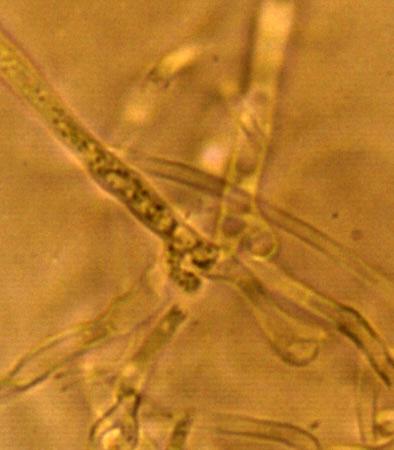
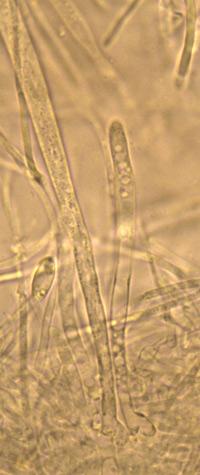
But have a look at the excipulum, please.
Zotto
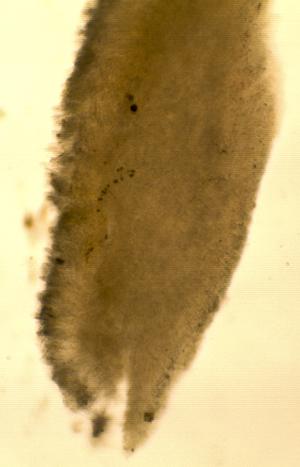
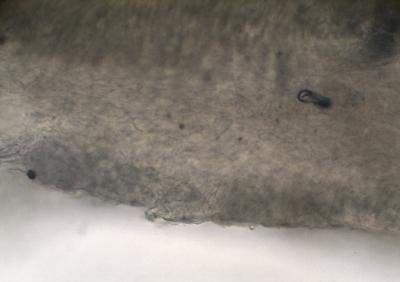
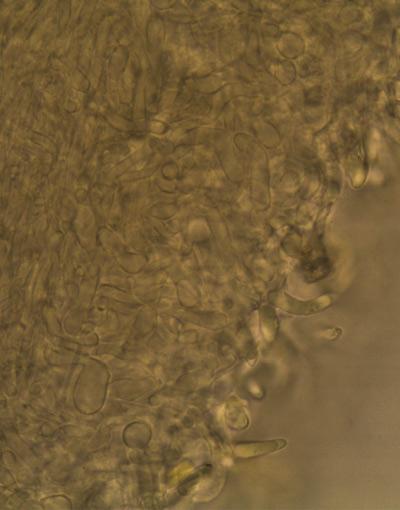
Zotto
Saludos
Javier