
01-05-2026 22:45
 Thierry Blondelle
Bonjour à tous, Une récolte sur bouse séchée d
28-04-2026 20:07
 Lothar Krieglsteiner
... on twig in the air at standing Ceratonia siliq
14-04-2026 05:32
Ethan CrensonHi all, A few weeks back a friend pointed out som
28-04-2026 20:33
Vitus SchäfftleinHello, I found Trochila ilicina on Ilex aquifoliu

30-04-2026 10:28
Rot BojanHello, by appearance I would say that I am dealing
27-04-2026 18:48
Tony MoverleyCollected 23rd April 2026, Norfolk, EnglandSwarms
27-04-2026 20:52
Lothar Krieglsteiner
Found on hanging tiwg of Olea europaea in dried-ou
28-04-2026 22:51
 Bernard CLESSE
Bonsoir à toutes et tous,Pourriez-vous m'aider à
29-04-2026 08:01
Lothar Krieglsteiner
... on twig attached to small tree of Citrus auran
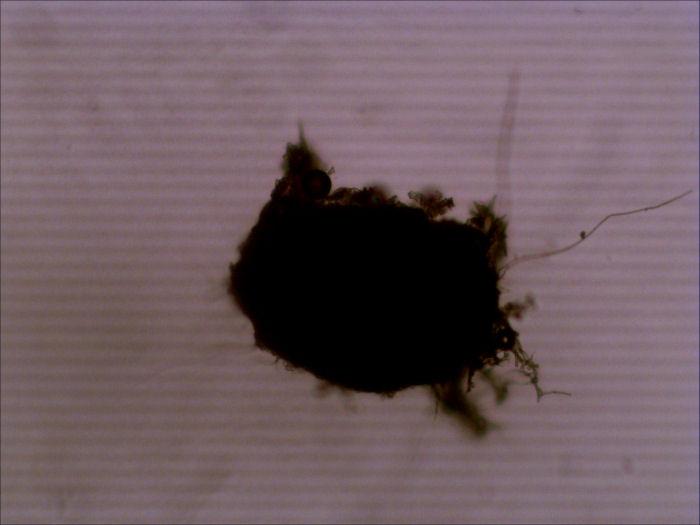
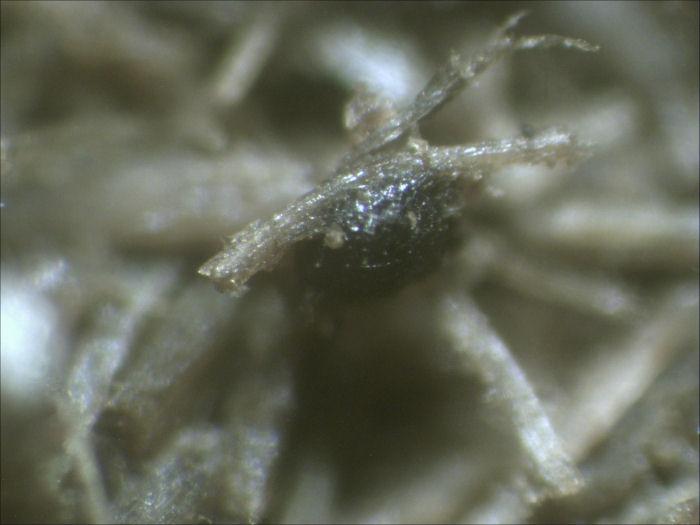
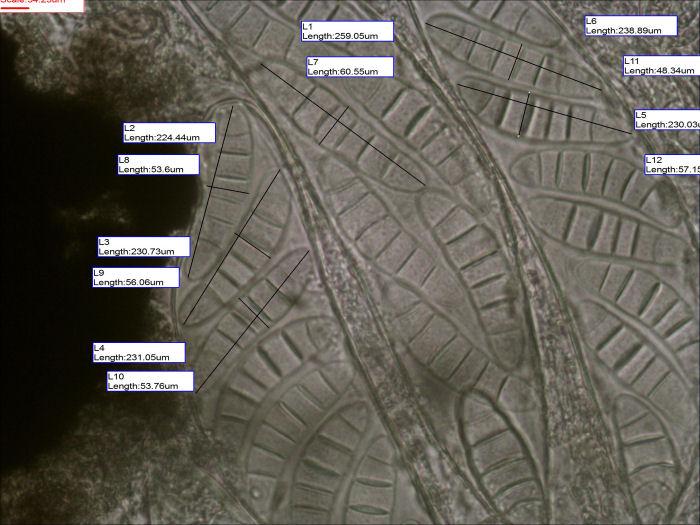
 Found on horse dung.
No mature spores found.
But the thing that is interesting is the extension of the asci and the way they are positioned like the parts of an orange.
It looks that the asci hold spores with 5 cells..
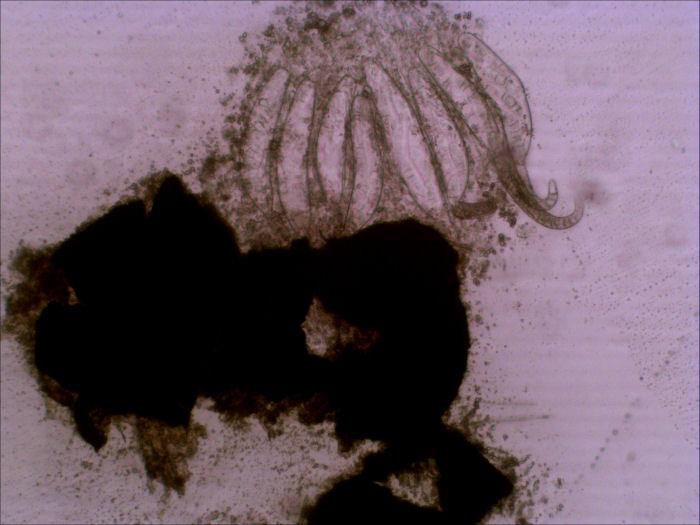
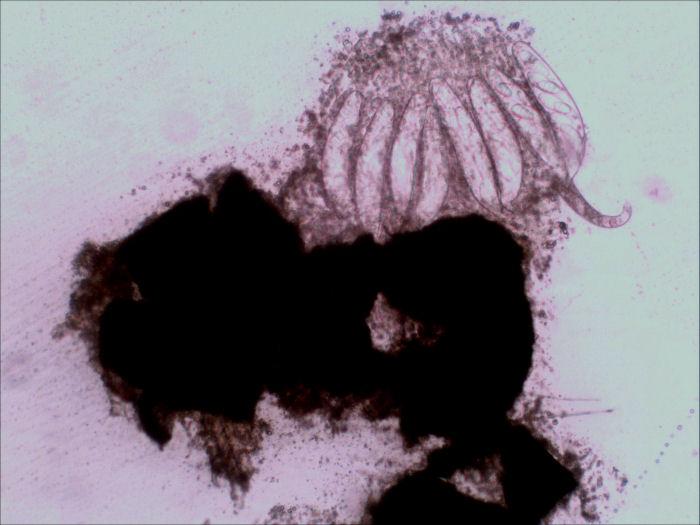
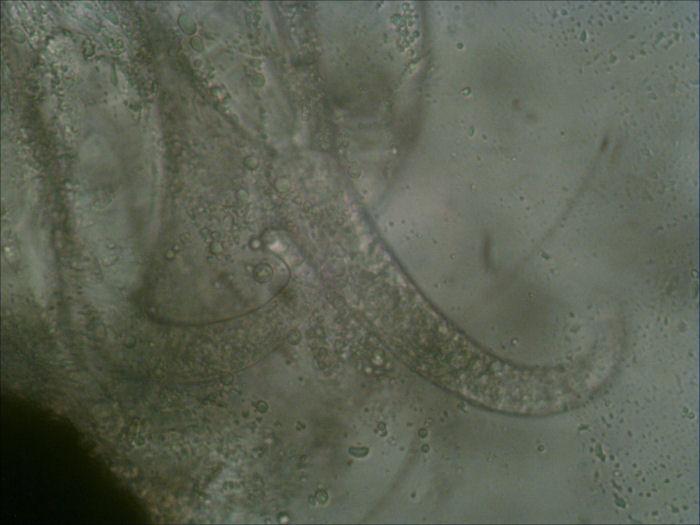
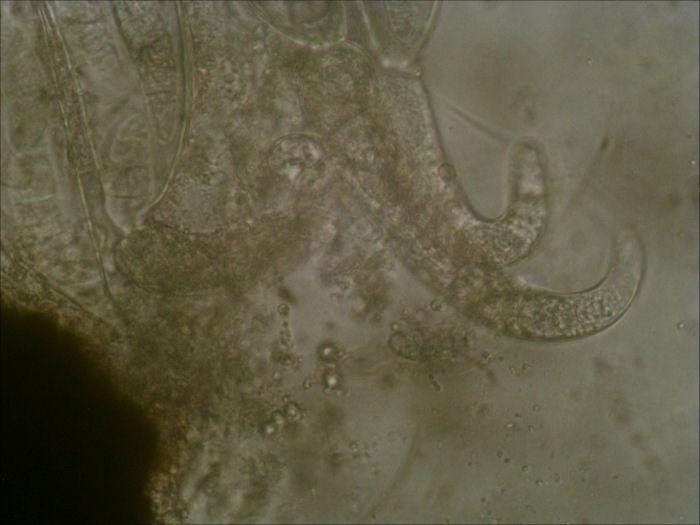
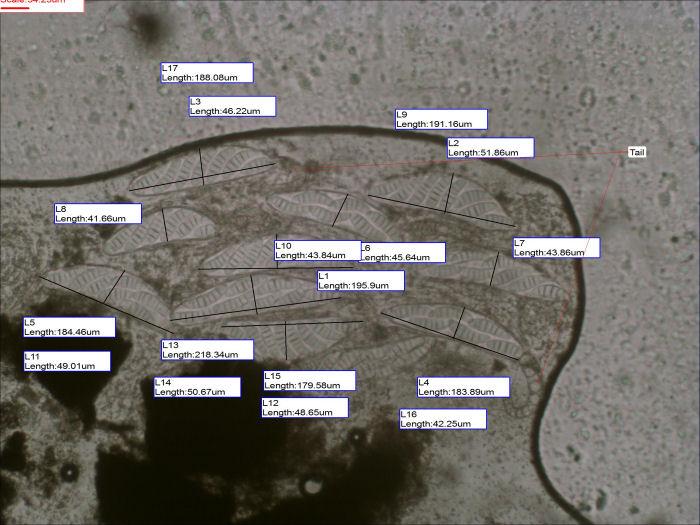
My opinion is that we are talking about the same species as was shown in the first topic because of the extension of the asci. But eventhough the spores are young and still in the ascus they do not match any size of mature 7-celled Sporormiella and with the asci it is the same story.
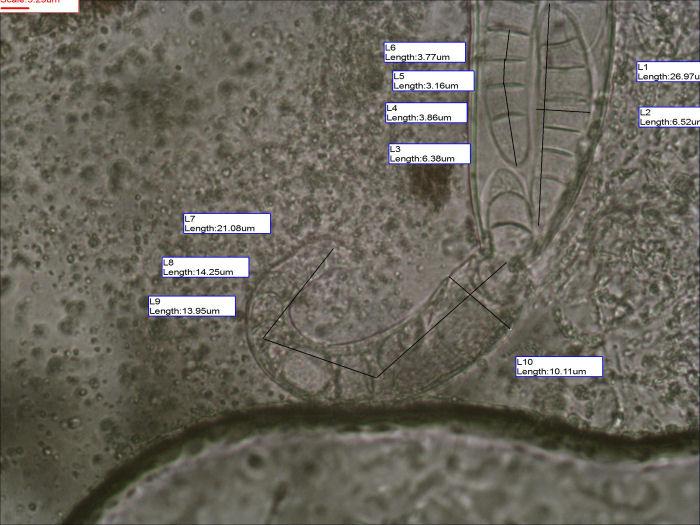
Asci: Flat on one side 179.58-218.34x41.66-51.86 um, extension 49.28x10.11 um (measured at the base).
Spores: Biseriate; 7-celled; spore leaving the ascus 26.97x6.52 um; other young spores 21.53-24.85x4.64-5.387 um.

S. heptamera with very big spores ~ 70µm length. I have seen many immature spores of this species, being different from your ones.
S. vexans has small spores, which I have seen several times in austria. They often have oblique septa, which may be transverse in immature stadium.
S. septenaria with completely transverse septa, but with much bigger spores, which may be too big for your finding (>50µm length).
S. americana and S. trogospora have spores > 10µm broadth, I do not think that this fits your collection.
As a result of this, I think your species comes closest to S. vexans, from which I have meassured 35-42x6,2-7,5µm as mature spore size.
Probably you can find some mature fruitbodies...it will make things easier :P
regards,
björn
Thanks Bjorn, do you have an opinion about the "tail" attatched to the ascus?
Joop