
07-06-2026 15:10
 William Slosse
Hello everyone,On 05-06-26, I found following asco
07-06-2026 12:09
 François Freléchoux
Bonjour, Voici une brève description de ce qui m
05-06-2026 11:02
Thomas Læssøehttps://svampe.databasen.org/observations/10596691
07-06-2026 12:43
Steve ClementsBojour. This was a strange find on a stick on my
12-07-2015 00:05
 Nedim Jukic
This one from the same locality as the previous on
06-06-2026 17:44
Steve ClementsBonjour, This disco was on planed wood 3 x 1.5 cm
14-08-2016 23:15
 Alex Akulov
Dear friendsCan you help me to find the descriptio
04-06-2026 11:36
Gernot FriebesHi,found on Vaccinium myrtillus.Asci: IKI –, 8-s
Hyaloscypha sp.
Maren Kamke,
11-01-2014 19:38
 Hi again,
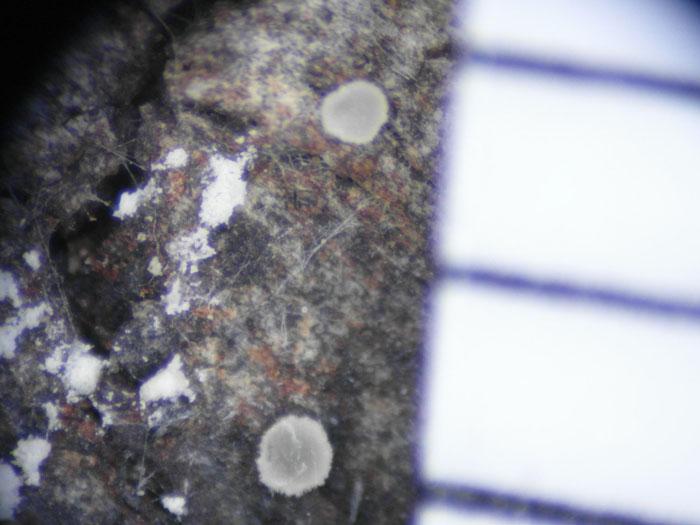
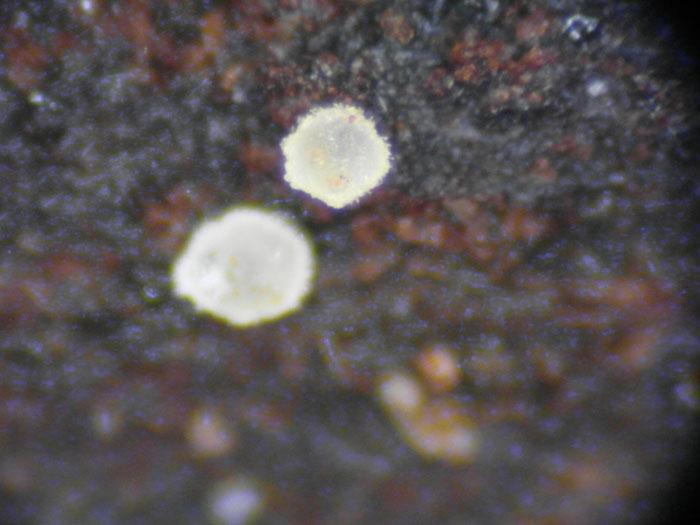
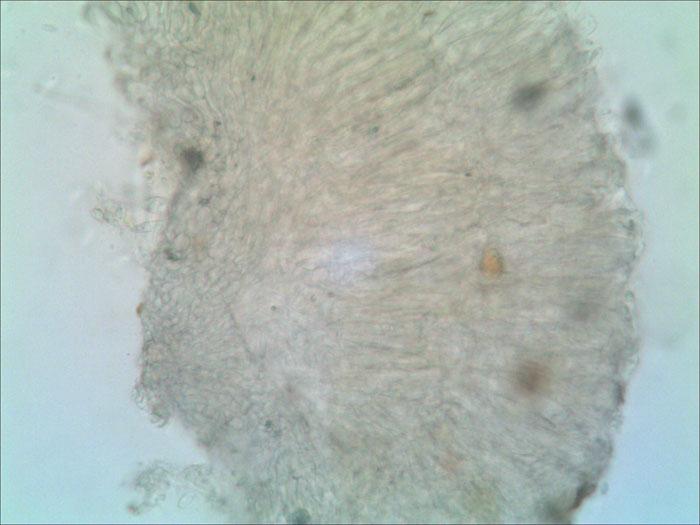
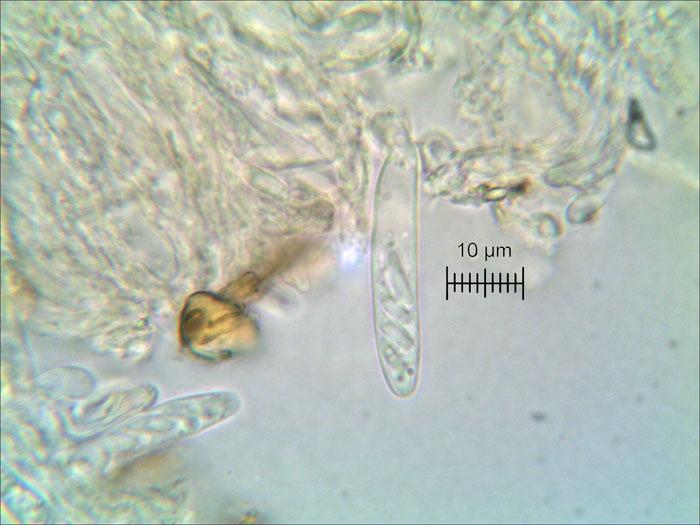
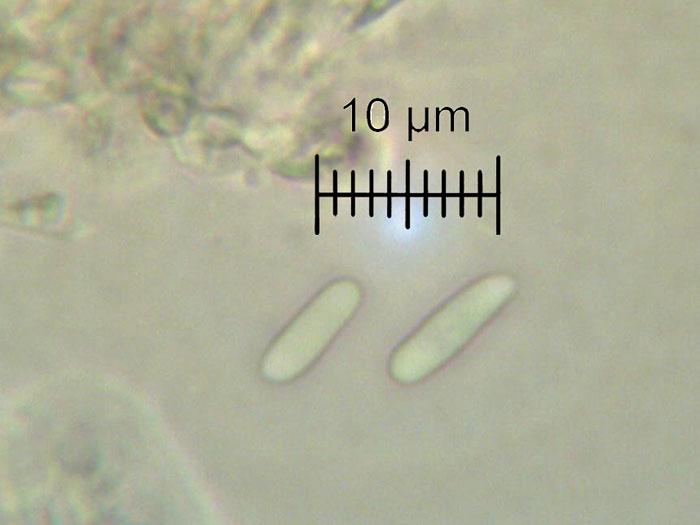
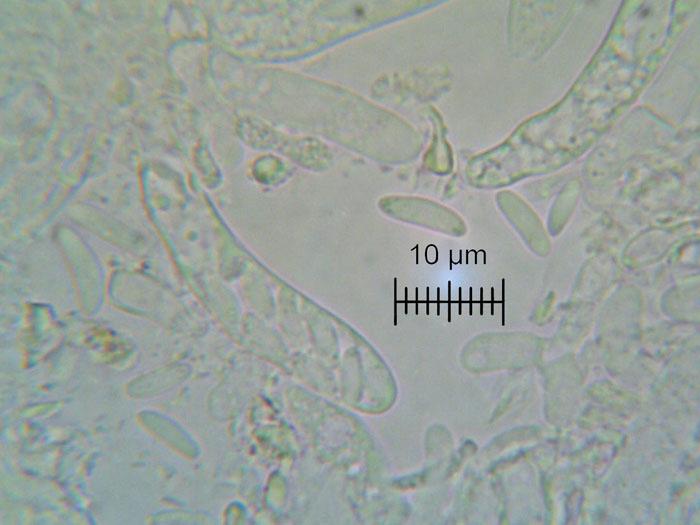
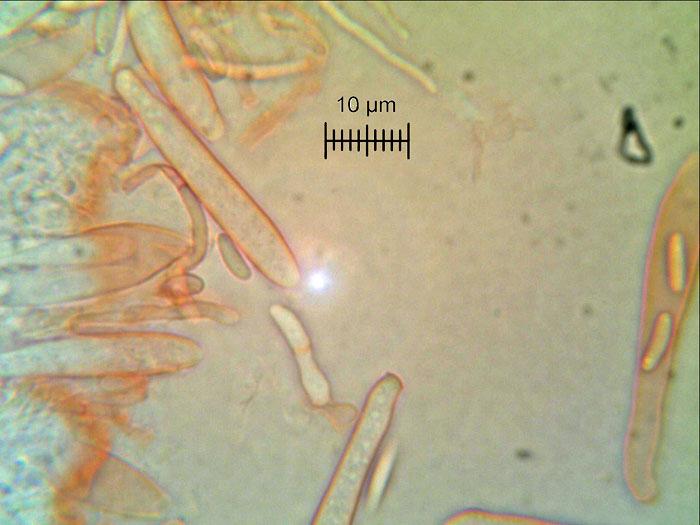
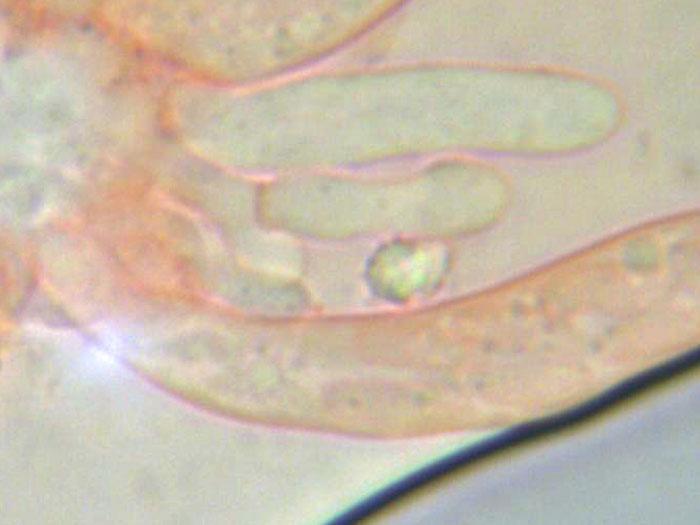
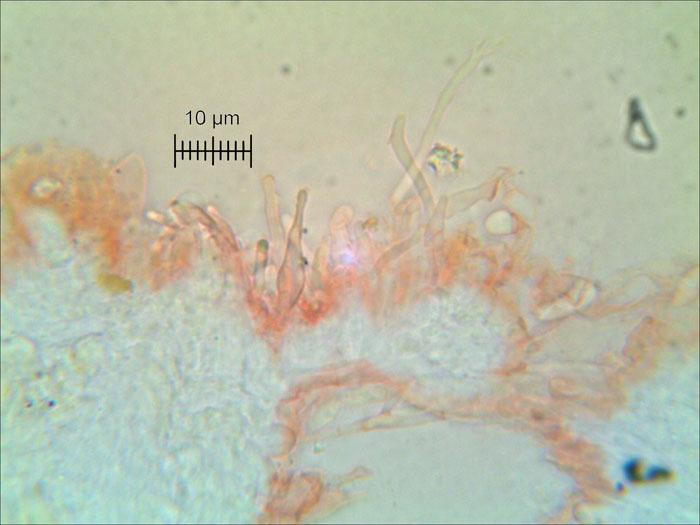
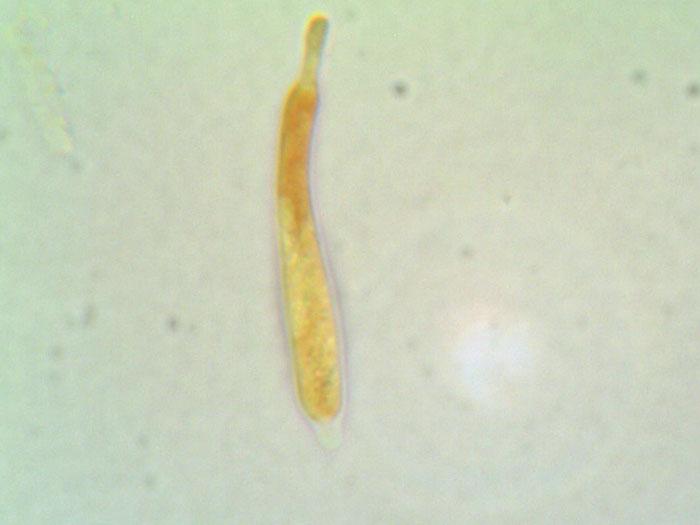
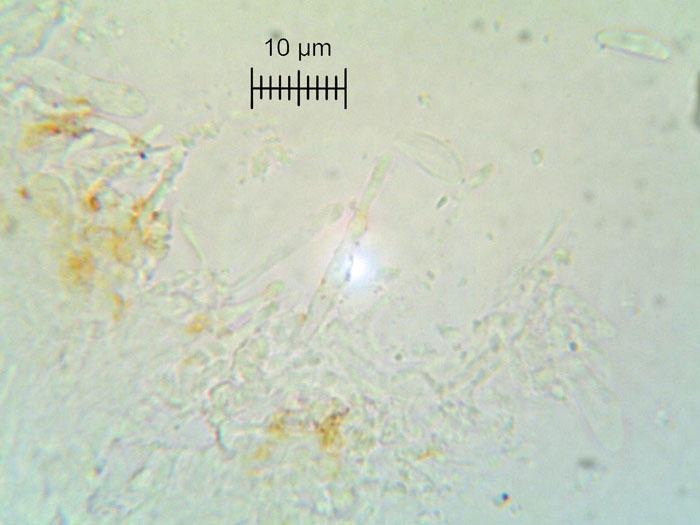
I need your help again. I found this Hyaloscypha on wood, Fagus maybe Quercus. The apothecia are up to 0,4 mm white to pale yellow. Spores (6-9,5) 7,65 x 2,5 (2-3) µm, oil = 0-1, Asci 42 x 5, with croziers, without IKL - reaction even after KOH-treatment with Baralscher Solution and Melzer. paraphyses thin 1 µm, cylindrical. Hairs short 21-25 x 3-3,5 µm, lageniform, apical 1,2 µm, with solitary cristals.
Thanks
Regards Maren
Hans-Otto Baral,
11-01-2014 20:59

Re : Hyaloscypha sp.
Hi Maren
think it is H. quercicola. Did you try the Huhtinen key?
Quercus (ring-pored) and Fagus (scattered minute pores) are easy to distinguish.
Zotto
think it is H. quercicola. Did you try the Huhtinen key?
Quercus (ring-pored) and Fagus (scattered minute pores) are easy to distinguish.
Zotto
Stip Helleman,
12-01-2014 01:15

Re : Hyaloscypha sp.
Hi Maren,
I agree with Zotto, was your collection on wood or (inside) bark or perhaps the cambium layer still attached to the wood. in my experience it is always found on the cambium layer, 1 time of Sorbus aucuparia.
cheers
Stip
I agree with Zotto, was your collection on wood or (inside) bark or perhaps the cambium layer still attached to the wood. in my experience it is always found on the cambium layer, 1 time of Sorbus aucuparia.
cheers
Stip
Maren Kamke,
12-01-2014 19:11
Re : Hyaloscypha sp.
Hi Zotto, hi Stip,
thank you for your help, I think you are right with H. quercicola. I do not have the key of Huhtinen, can someone provide me with it.
I read in Raitviir that the hair walls should be dextrinoid in IKL. This reaction didn't appear so I excluded H. quercicola. Maybe it isn't a constant feature, or difficult to see. Otherwise it matches perfectly. The wood is Quercus and indeed the fruitbodies appear on the cambrium-layer on open areas which no longer have the outer layer.
Regards Maren
thank you for your help, I think you are right with H. quercicola. I do not have the key of Huhtinen, can someone provide me with it.
I read in Raitviir that the hair walls should be dextrinoid in IKL. This reaction didn't appear so I excluded H. quercicola. Maybe it isn't a constant feature, or difficult to see. Otherwise it matches perfectly. The wood is Quercus and indeed the fruitbodies appear on the cambrium-layer on open areas which no longer have the outer layer.
Regards Maren
Hans-Otto Baral,
12-01-2014 20:28
Re : Hyaloscypha sp.
Hi Maren
I am sending you the Huhtinen monograph.
The dextriniod reaction of hairs is only seen in Melzer, not in Lugol, maybe this is the reason for you did not see it. And it is not very striking.
Zotto
I am sending you the Huhtinen monograph.
The dextriniod reaction of hairs is only seen in Melzer, not in Lugol, maybe this is the reason for you did not see it. And it is not very striking.
Zotto