
05-04-2026 22:46
 Lothar Krieglsteiner
on wood of Ceratonia, Algarve, 3.4.2026.The color
15-05-2026 13:33
Sylvie Le GoffBonjour à tousJe serais très reconnaissante enve
16-03-2011 14:31
roman vargas albertoHi. I would like some opinion about this Peziza
14-05-2026 05:36
Ethan CrensonHi all, I haven't paid much attention to Lachnu
10-05-2026 23:17
 Andreas Gminder
Hello,today we found in a moist steep decidous for
11-05-2026 12:32
 Bernard CLESSE
Pourriez-vous m'aider à identifier cette héloti
13-05-2026 15:26
 François Freléchoux
Bonjour,Voici une récolte faite il y a quelques j
12-05-2026 15:41
 Nicolas VAN VOOREN
Dear Ascolovers, especially interested in Pezizale
13-05-2026 12:05
 Thierry Blondelle
Bonjour à tous,J'aimerais avoir confirmation de c
28-04-2026 20:07
Lothar Krieglsteiner
... on twig in the air at standing Ceratonia siliq
It would be great to hear your opinion on this:
Substrate: Decorticated, deciduous wood
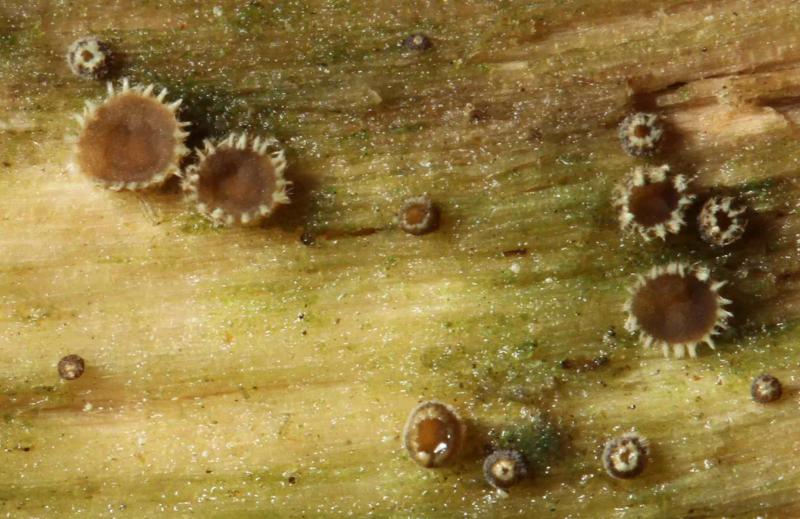
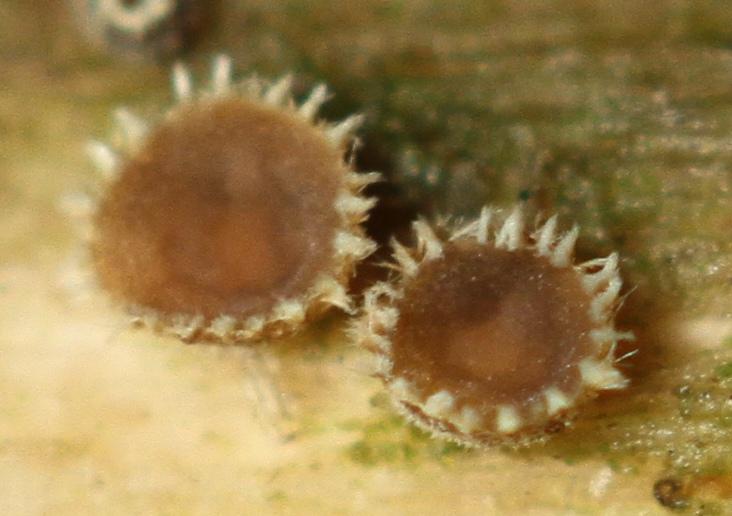
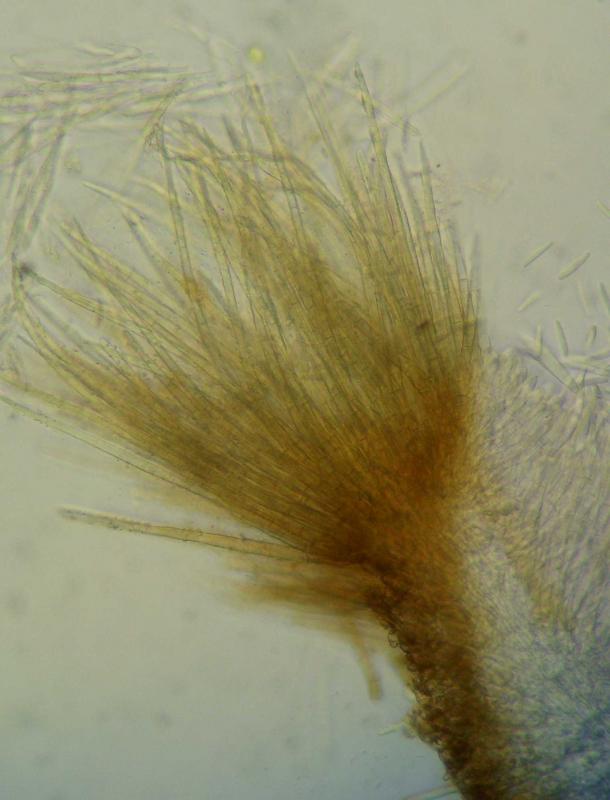
Fruitbodies: Up to 1 mm in diameter. Disc brown to slightly rose in age. Hairs in tufts, whitish (see photos).
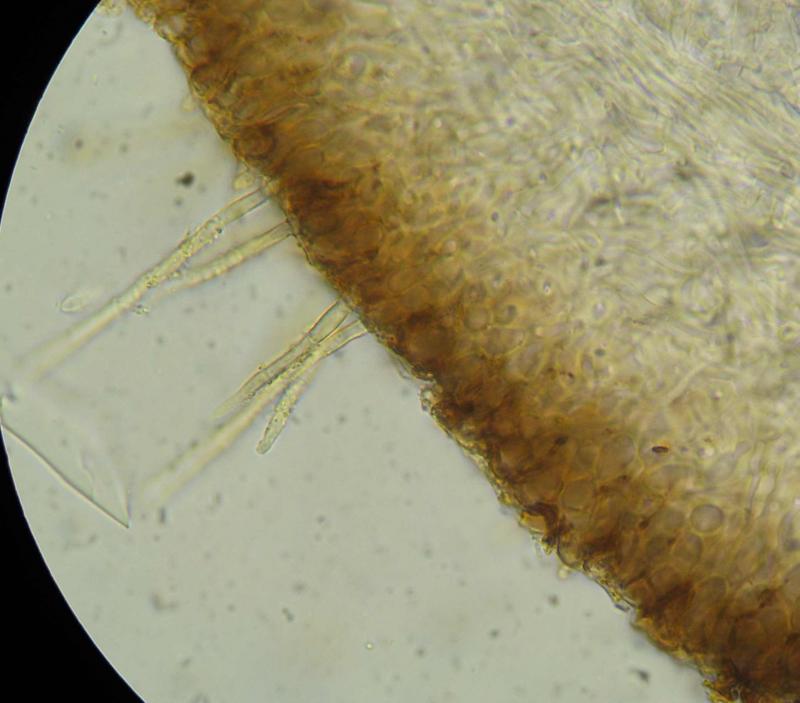
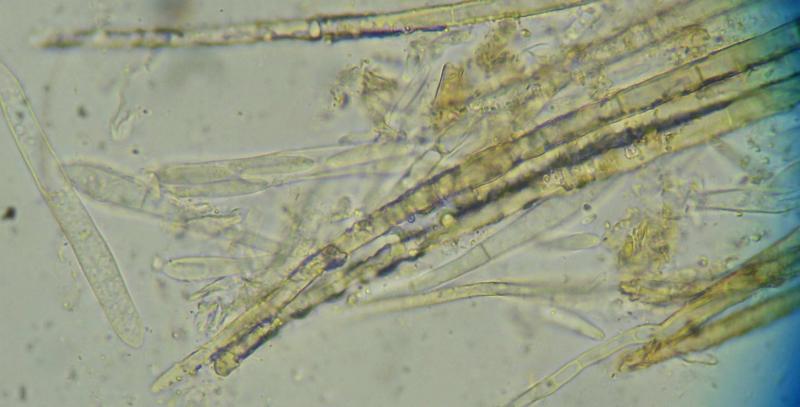
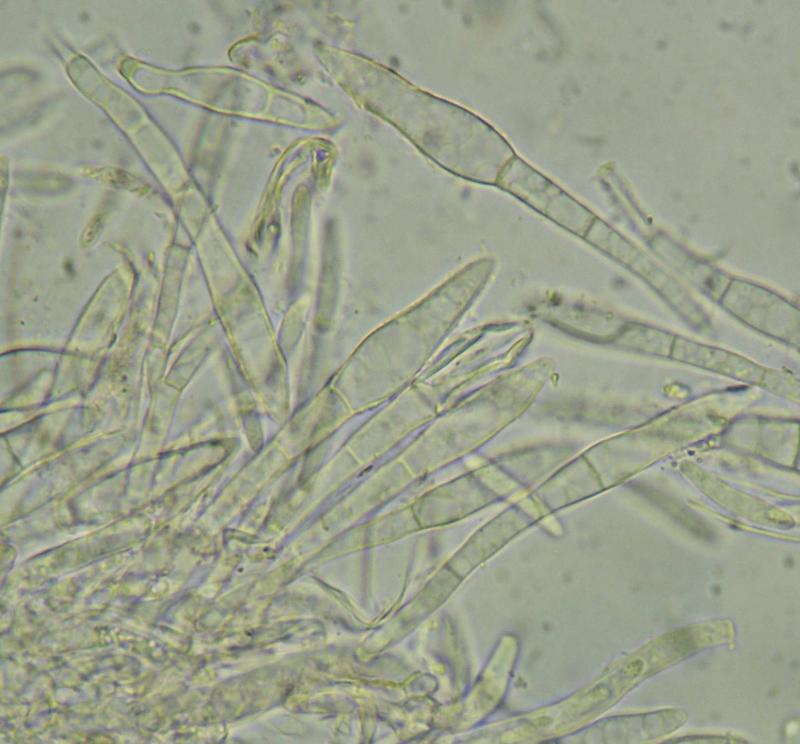
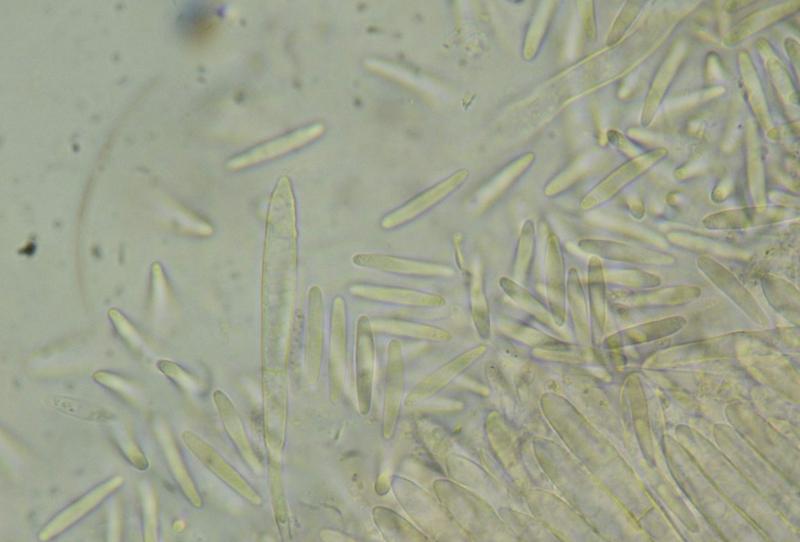
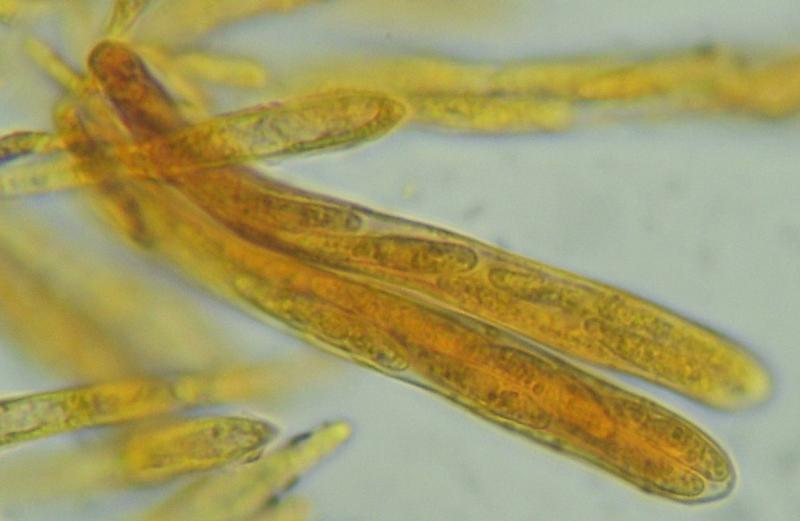
Micro: Asci 60-75 x 7-9 µm, without crosiers, IKI- also after KOH pretreatment. Spores 14-22 x 2.8-3.5 µm, aseptate. Hairs up to 200 x 5 µm, hyaline to yellowish, thick walled, with resinous, brownish excretions. Paraphyses broadly lanceolate, up to 7 µm enlarged, often very fine granules on the apical cell.
Thank you for any help
Stefan

Hi Stefan
It looks like Trichopeziza 'perrotioides' un undescribed species of the genus Trichopeziza
Thanks a lot for your answer. Such a nice species and still undescribed. What a pity...
Best
Stefan

I hesitated here to answer because I struggled with the spores. Those of T. perrotioides are less tapered at the ends and often slightly allantoid, dn they were never such long: *(8-)10-16(-17.5) x 2.7-3.4(-3.7) ?m. I saw a high number of records or images, and the species shows a certain variability, including colour.
Typical besides inamyloid asci without croziers are the warted deposits on the paraphyses. These are visible on your photos, though rather inconspicuous. I am not sure what else could be tested in your fungus. Yes, it is strange that so far no name could be found for it in the literature, though it is full of unclarified names.
I would like to note the collection data of this record, if you don't mind. At present, I would not include it in the species but only mention in my prospected paper.
For the host you have no idea? Possibly the wood anatomy could help?
Zotto
Danke für die Antwort. Die Sporenlänge war im grossen und ganzen bis 18 mü, mit Ausnahmemessungen von 19 und 22 mü. Die Sporen stammten aber auch von einem etwas überreifen FK.
Funddaten: 8.2.2014, Kanton Bern, Trubschachen, 822 m.ü.m., Koordinaten: 630825 / 196515
Substrat: Höchstwahrscheinlich Fraxinus
Liebe Grüsse
Stefan

Danke!
Fraxinus lässt sich zweifelsfrei erkennen an einem Querschnitt oder -bruch: Auffällig ringporig und Spätholzgefäße in kleine Gruppen oder gar einzeln.
Herbarnummer wäre auch noch gut, schlimmstenfalls muss man den Fund irgendwann mal nachmikroskopieren, falls die Zweifel bleiben...
Zotto
Herbarnummer: SB2014010
Gruss
Stefan