05-06-2026 12:10
 François Freléchoux
Capitotricha sp. sur Lonicea caerulea Caractères
05-06-2026 11:02
Thomas Læssøehttps://svampe.databasen.org/observations/10596691

04-06-2026 11:36
Gernot FriebesHi,found on Vaccinium myrtillus.Asci: IKI –, 8-s
19-05-2026 10:27
Patrice TANCHAUDBonjour, récolte récente sur terre retournée i
04-06-2026 18:39
Gernot FriebesHi,I collected this species in two different locat
22-05-2026 13:29
Gernot FriebesHi,I am curious to hear your opinion on this mater
04-06-2026 10:50
François Freléchoux
Bonjour, J'ai trouvé hier un petit asco observé
 Hello all,
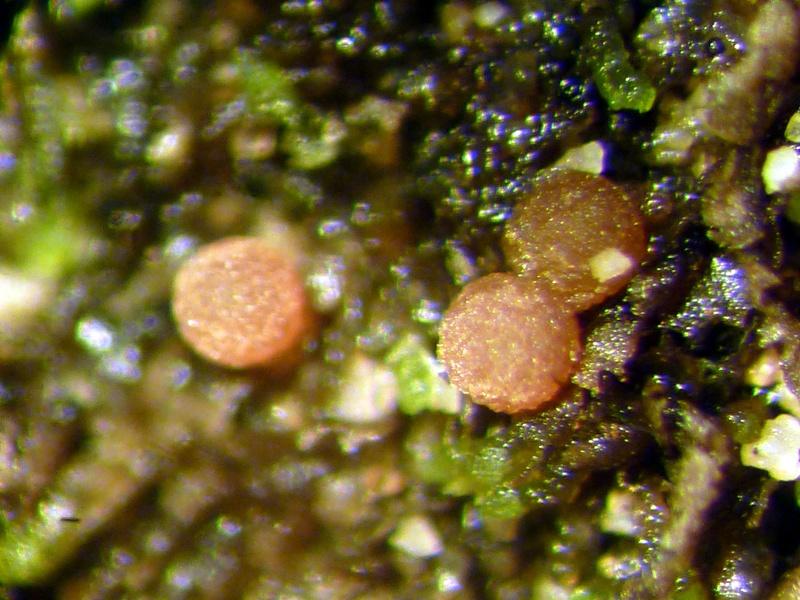
I found this Nectria/Bryonectria ? and i have problems with the specifications. It grows on decaying moss. I'm not sure whether the species is a parasite or saprophyte.
Maybe someone can help.
It will do next year :-)
Very best wishes for an exciting and fungus-filled New Year
Ralf



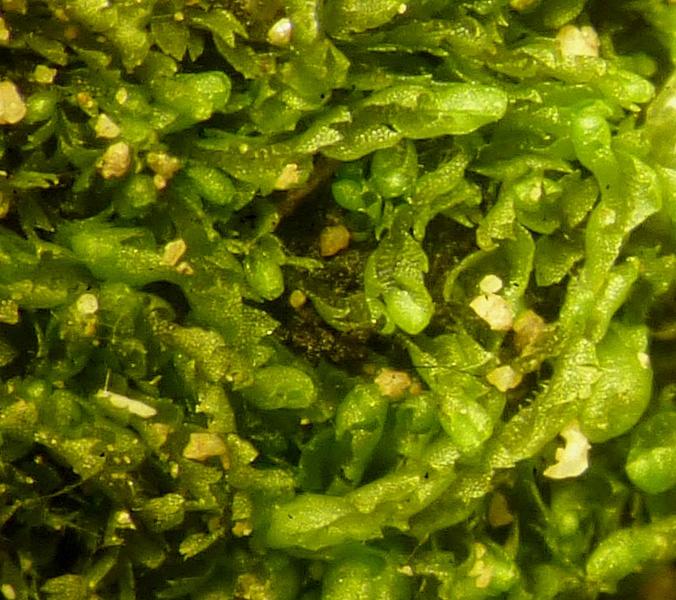
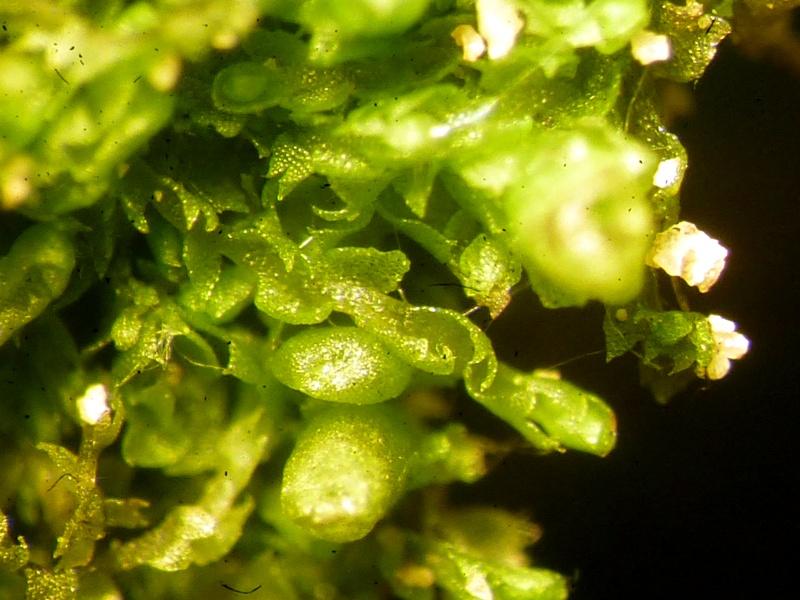
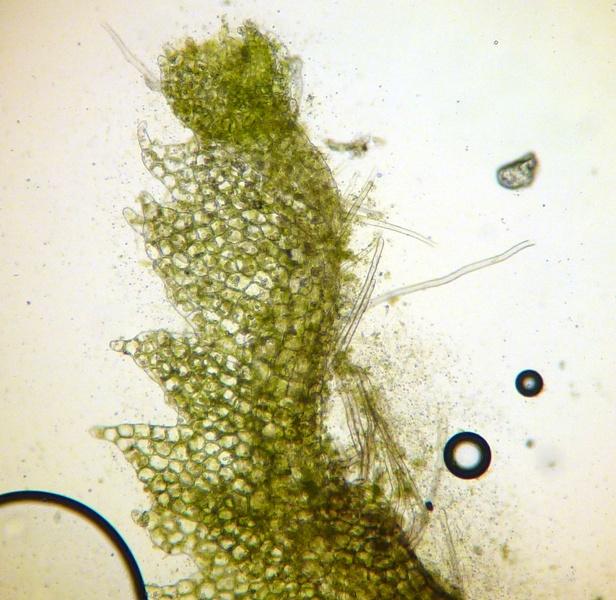


Hi Ralf,
Probably not muscicolous. You should try to get a 5%KOH negative reaction, because it looks like Bionectriaceae like Bionectria or else Hydropisphaera. The moss you show is an hepatic, but perhaps not the host of the Bionectriaceae, the reason why you didn't find it in Döbbeler's papers (I suppose that you have searched in these german works).
Let's wait for Chritian's opinion.
Happy day, happy new year,
Alain
many thanks for your opinion. The discovery site is a pure sandy soil and this kind sits exclusively directly on the illustrated moss. Certainly, it also grows a little Barbula here and there, but I can find out no infections or direct contact. But I find Myzelium or infections in the illustrated moss.
Test KOH is negative.
Happy new Year
Ralf
After more exact consideration rests from nostoc-cultures are found between the moss. Also they are possible as a substrate.

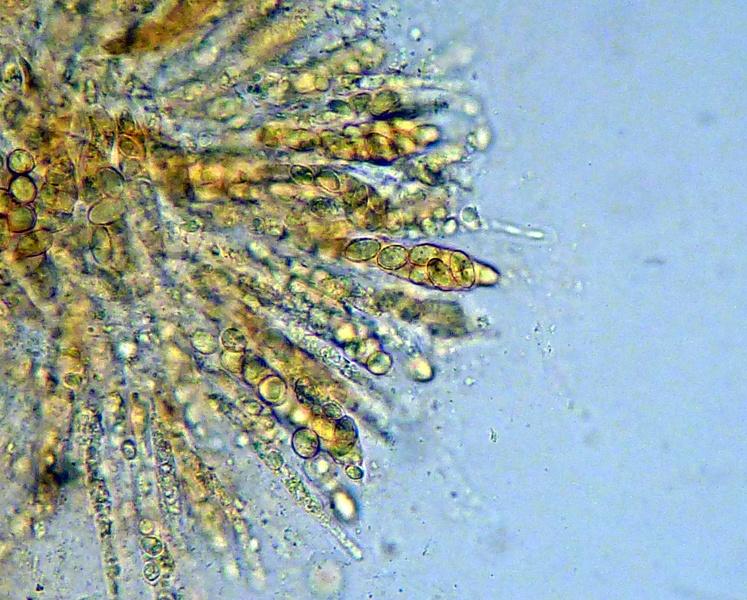
could you make a vertical section through ascomatal wall?
I think Alain is right, it could be the genus Hydropisphaera but without knowing how is made the wall , it is imposssible to say.
Happy new year to all members of the Ascofrance forum.
Christian
I have tried my best one. The kind is very soft and it is difficult to do a neat cut. I hope, You can recognize something on it. To the better contrast I have dyed the test.
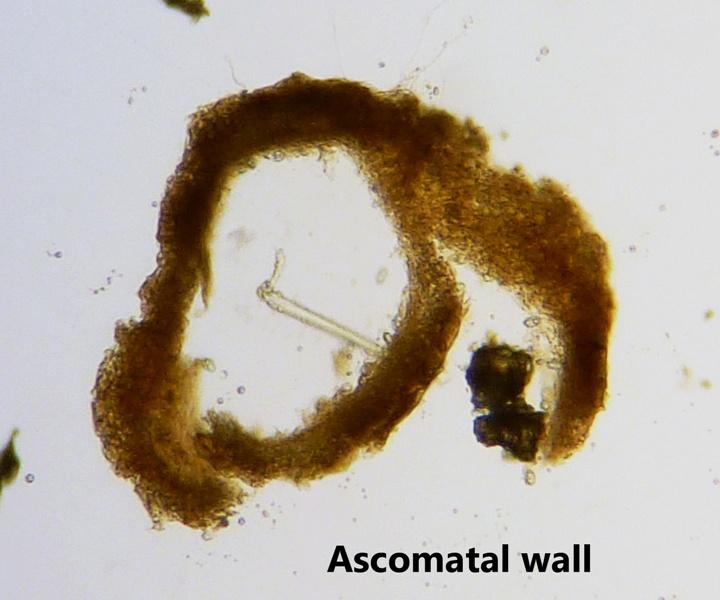


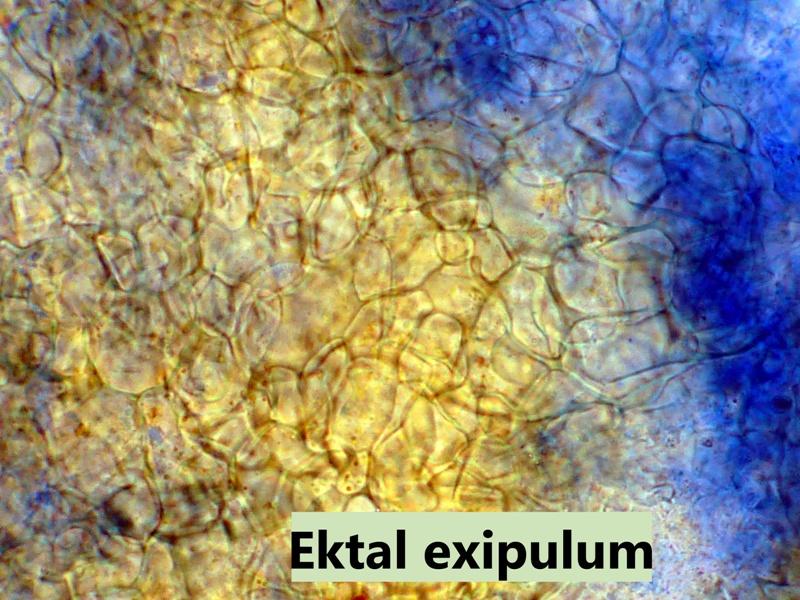
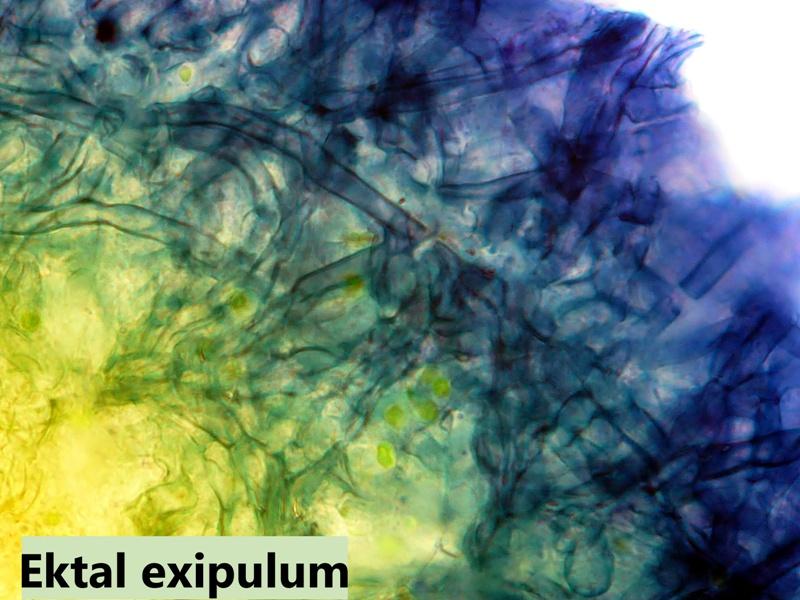
Regards,
Christian
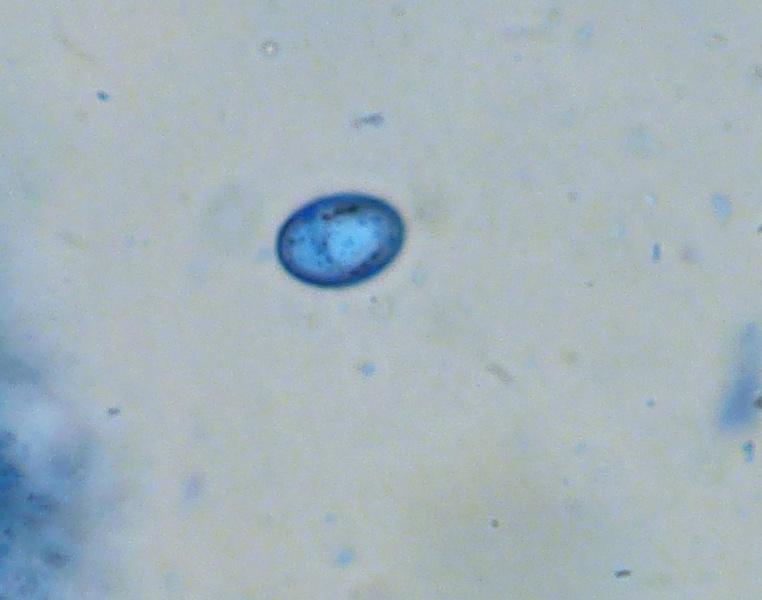
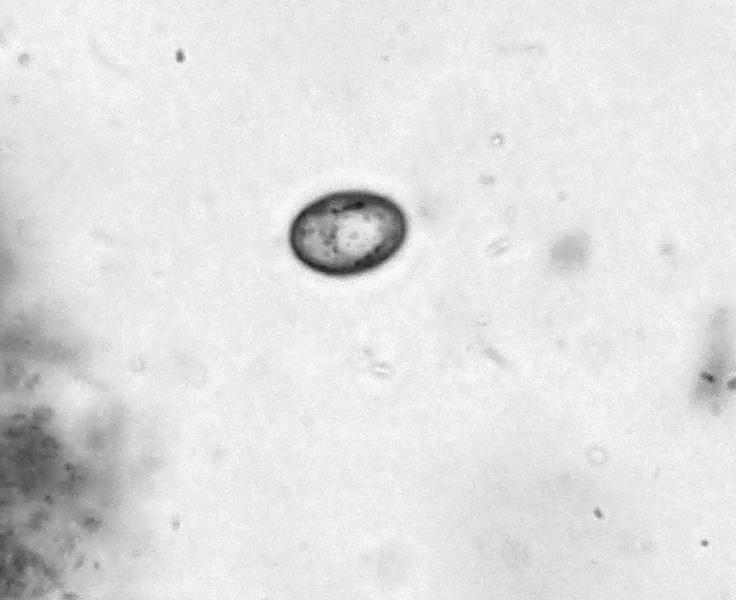
Thank you for your help. The spore dimensions are 13.3-14.9 x 7.4-8.3 microns. A photo of the spores I had inserted above. Unfortunately I missed to color the spores and my stuff is now consumed. So I can not say anything for ornamentation. My mistake.