
11-06-2026 19:01
 William Slosse
Hello all,In an attempt to make a culture of a sus
10-06-2026 21:16
 François Freléchoux
Bonsoir,Le dernier du jour, en attendant votre avi
11-06-2026 19:03
 Nicolas VAN VOOREN
Chers membres d'Ascofrance,Le site sera placé en

09-06-2026 18:32
Camille MertensSur morceau de roseau immergé 0,5 - 0,7 mm de dia
10-06-2026 12:54
Steve ClementsBonjour encore, Pouvez-vous m'aider, s'il vous pl
10-06-2026 21:07
François Freléchoux
Toutes les tiges de gentianes jaunes de l'an passÃ
10-06-2026 13:41
François Freléchoux
Bonjour à nouveau, Voici une trouvaille d'hier.
10-06-2026 11:53
Steve ClementsBonjour, This disco is abundant on dead stems of
Rhodotarzetta's anamorph ?
Nina Filippova,
01-03-2015 13:22
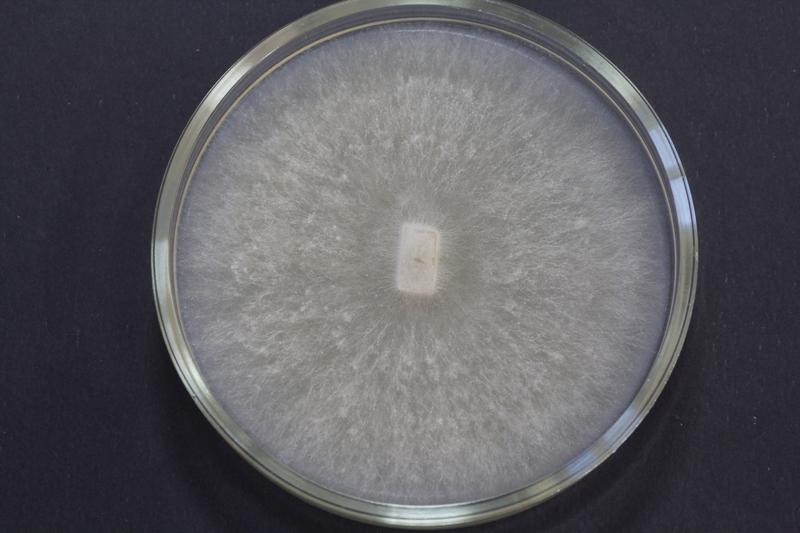
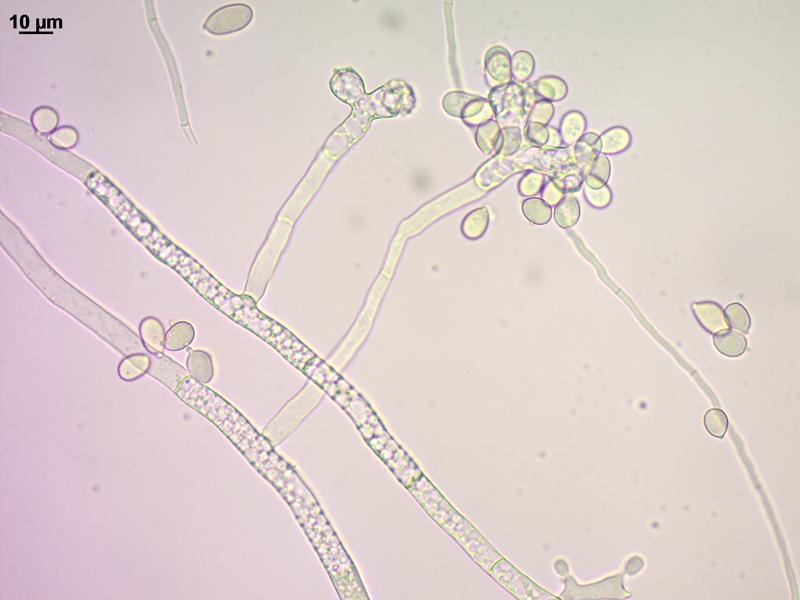
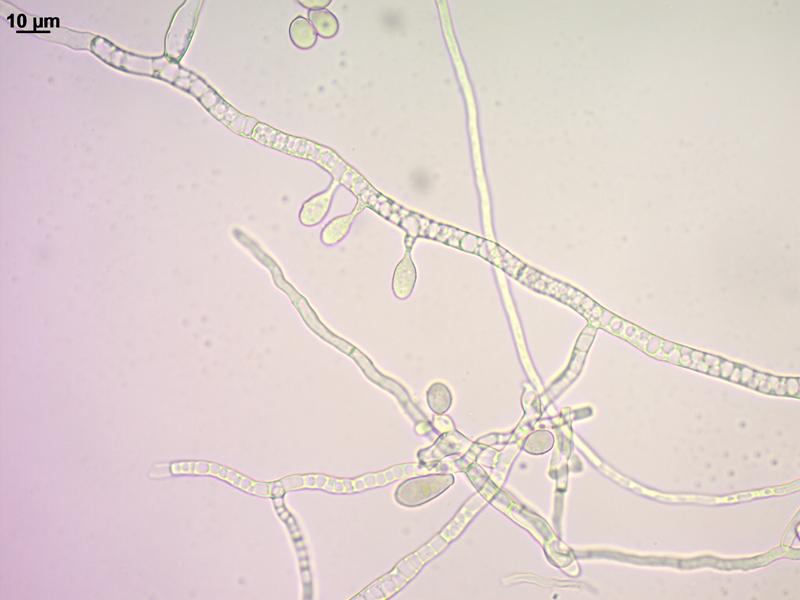
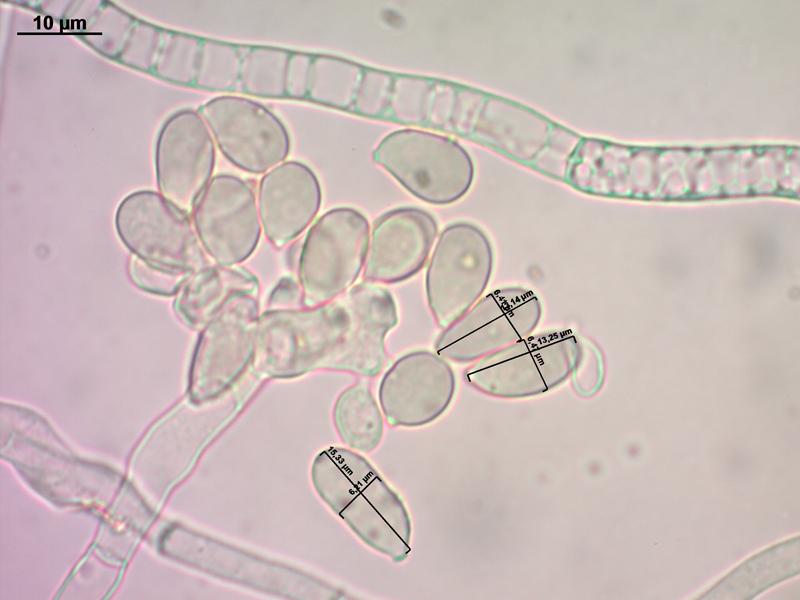
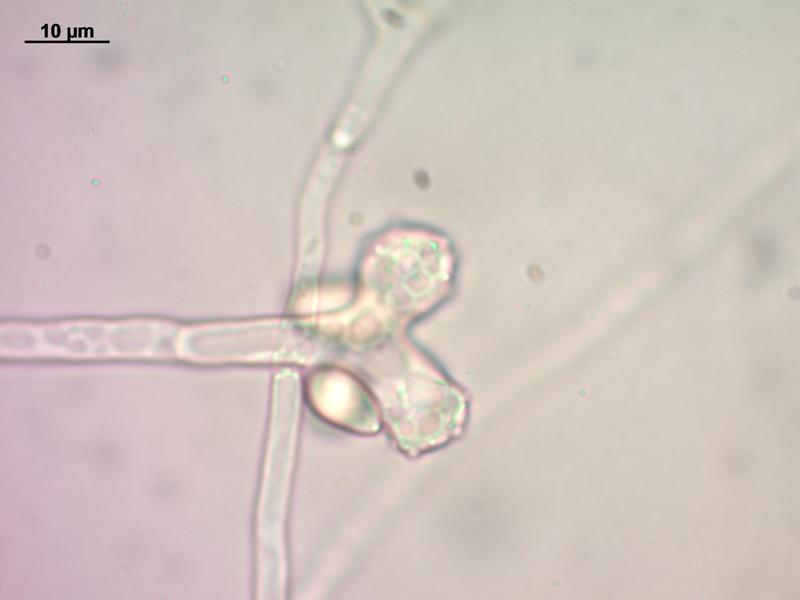
I have something Botrytis- like that may by an anamorph of Rhodotarzetta rosea in culture but i am not sure. I have inoculated dried pieces of apothecia and there were similar looking colonia in all Petri dishes. I am only learning in cultivation technique (it is still winter, therefore i use dried material) and thefore could have mistakes. Please, if you have some suggestion about this anamorphic species, it would be wonderful to know.
Potato-glucose-yeast-agar-charcoal (PH7): Colonia fast growing (9 cm in 3 days), grayish, with brownish conidial mass, pubescent, floccose and forming small sclerotia-like blobs, with not distinct radial zonation.
Yeast-agar-charcoal (PH7): Similar characteristics, but colonia much thinner, slowly growing and conidia barely forming.
Conidiophores about 5 broad, dichotomously branched, terminal fertile cells inflated up to 12 in diameter, producing conidia on short stalks; conidia ellipsoid, with short stalk, pale colored, light brownish in mass by naked eye, *13.7 (9,8-16.2) [17.7] x 6.7 (6-7.7), n=15.
The inoculation of a swan (sand-bran-charcoal) produced extensive growth, all volume was colonized in a week; no apothecia formed so far.
Hans-Otto Baral,
01-03-2015 15:24

Re : Rhodotarzetta's anamorph ?
Did you compare Oedocephalum? I am not familiar here but this would be my first idea.
Zotto
Zotto