
06-05-2026 11:25
 Castillo Joseba
Me mandan el material seco de Galicia (España) re
28-04-2026 20:07
 Lothar Krieglsteiner
... on twig in the air at standing Ceratonia siliq
05-05-2026 22:40
Gernot FriebesHi,I believe this is a Plagiostoma growing on a Sa
04-05-2026 18:13
 Stephen Martin Mifsud
ID request for what seems to be a true aquatic fun
04-05-2026 16:39
Stephen Martin Mifsud
ID request: This specimen was collected in Malta o
28-07-2011 18:31
 Alex Akulov
Dear FriendsToday I made the pdf file of Velenovsk
04-05-2026 09:50
Castillo Joseba
Me mandan el material seco de Galicia,(España) re
02-05-2026 12:42
Alain BRISSARDBonjour à tousJeuidi 30 avril dernier on m'a remi
02-05-2026 13:06
Pauline. PennaBonjour Please can someone help me with this id

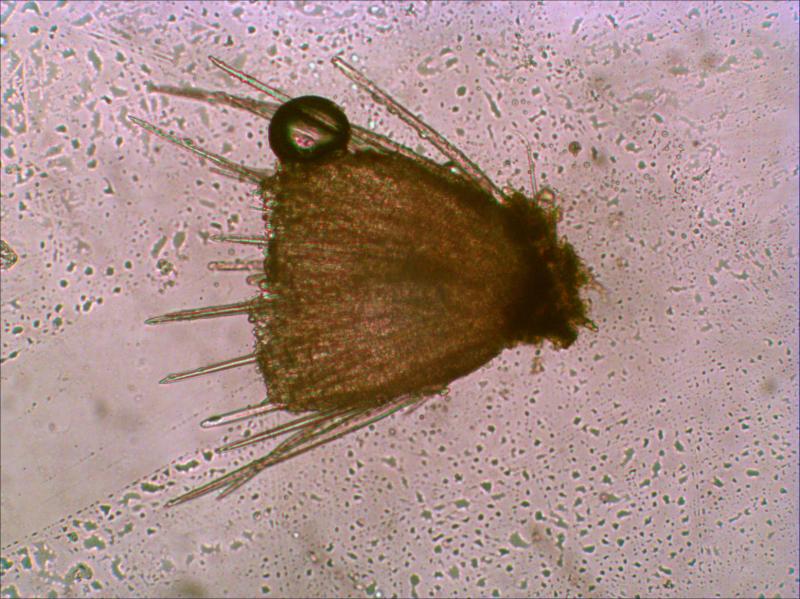
Found on deer dung.
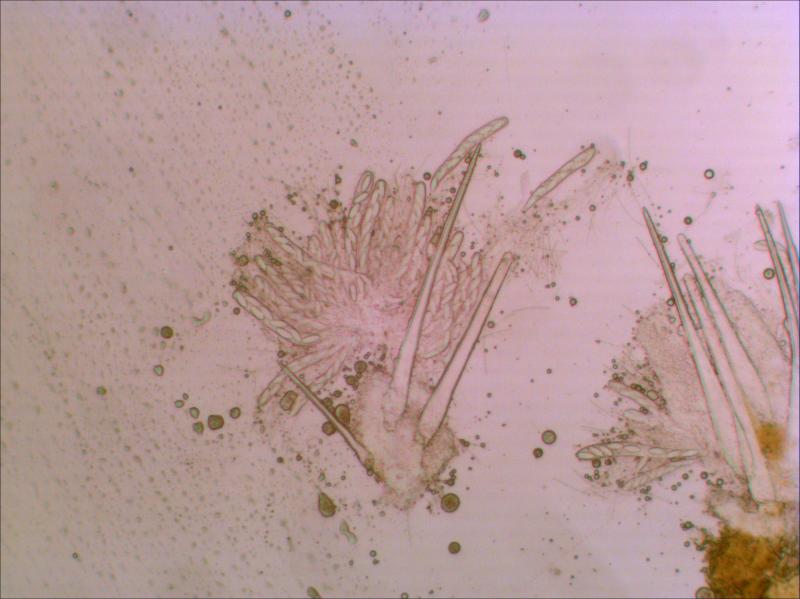
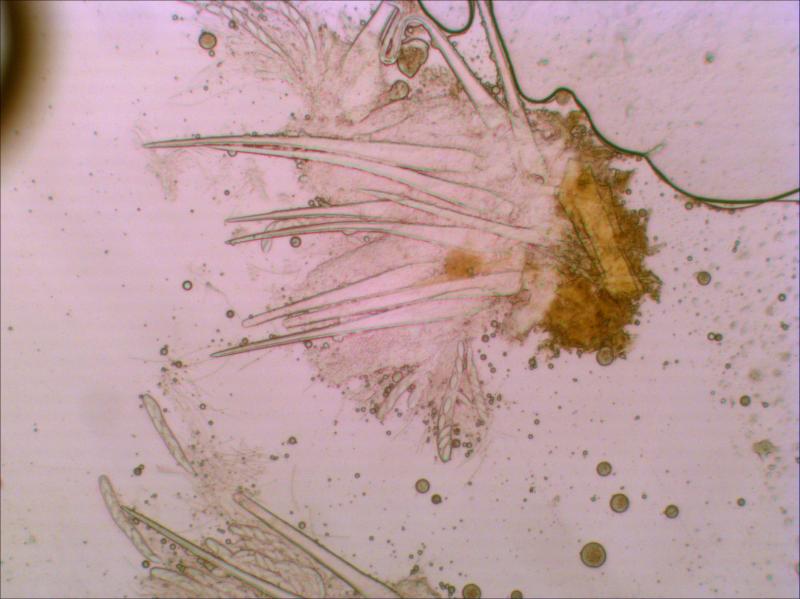
Fruitbody: 297 um wide - 305 um high, covered with straight setea originating from the base.
Setea: Non sepltated with round and pointed tops, thick walled.
Setea with round tops - 234-280x24.5-25 um (width measured at the base), wall 1.5-1.8 um
Setea with pointed top: 334-380x26-27.5 um (width measured at the base), wall 3.0-3.2 um
Pararyses: rounded top, septated, width 2.1-2.4 um
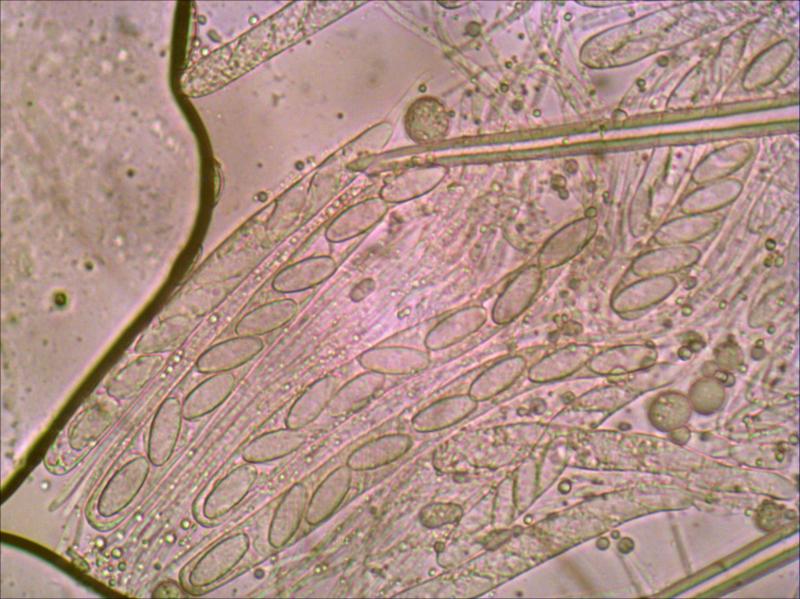
Asci: 8-spored, 149-170x13-14.5.
Spores: ellipsoid, thick walled, 18.5-20x7-7.5 um.
No free spores were found so only spores inside asci were measured but difference in final measurement will not be that much I think.
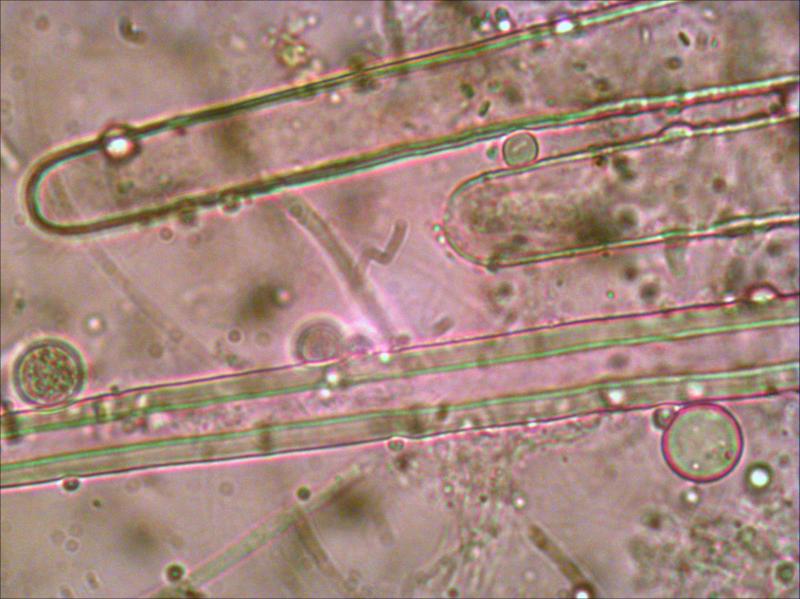
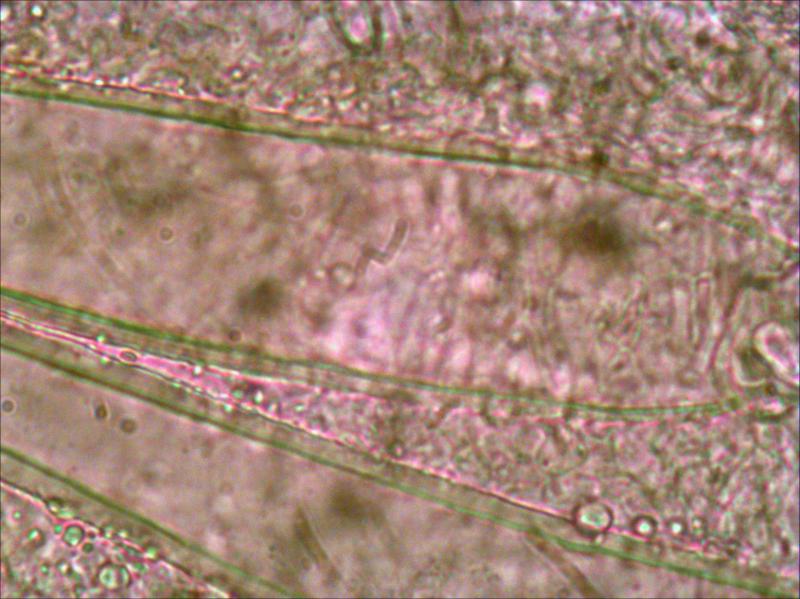
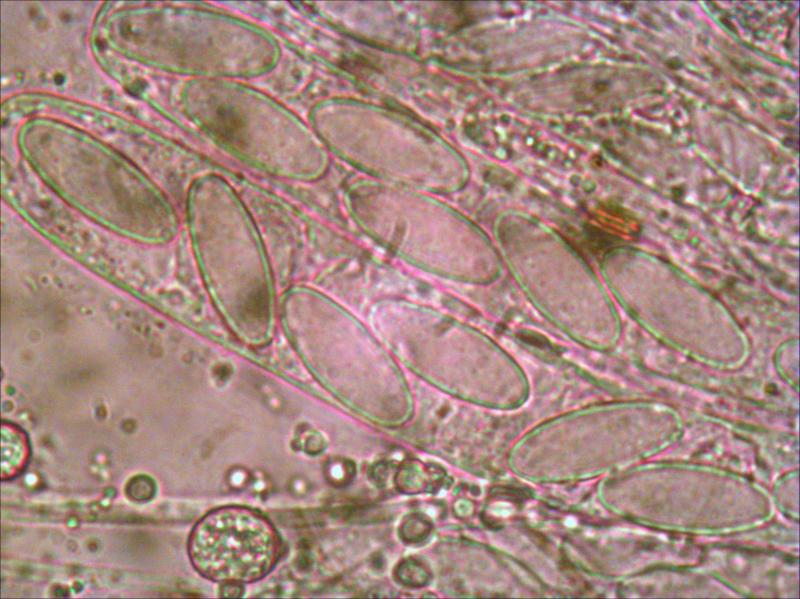
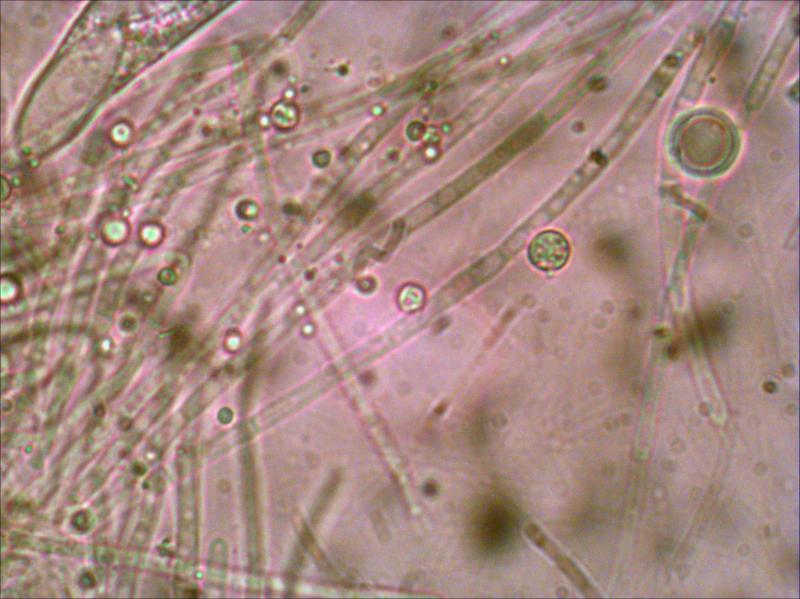

It must have somewhat shorter and broader, more elliptical spores.
Maybe, that the spores in the asci, you show us, are not mature, but however your species should be Lasiobolus macrotrichus.
The narrow, more or less fusiforme spores are typical for this species!
Regards, Norbert