
23-05-2026 18:57
Sylvie Le GoffBonjour à tousRécolté sur une branchette de Sal
22-05-2026 14:44
 Lothar Krieglsteiner
in unripe condition citrine yellow, then soon fadi
23-05-2026 11:44
 Charles Grapinet
Hello, I am having trouble identifying this copro
22-05-2026 21:35
Steve ClementsBonjour, I expected this find on old wood on our
22-05-2026 18:12
Lothar Krieglsteiner
... in moist chamber from Portugal.As the fungus s
22-05-2026 20:08
Ethan CrensonHello all, Yesterday in NYC I was visiting an e
11-01-2022 16:36
 Jason Karakehian
Hi does anyone have a digital copy of Raitviir A (
20-05-2026 17:47
Margot en Geert VullingsWe found this Mollisia on dead Juncus stems mown l
22-05-2026 14:47
Gernot FriebesHi,superficial ascomata collected on bark of a liv
Clypeosphaeria mamillana?
Jenny Seawright,
28-03-2015 00:09
 Hello all,
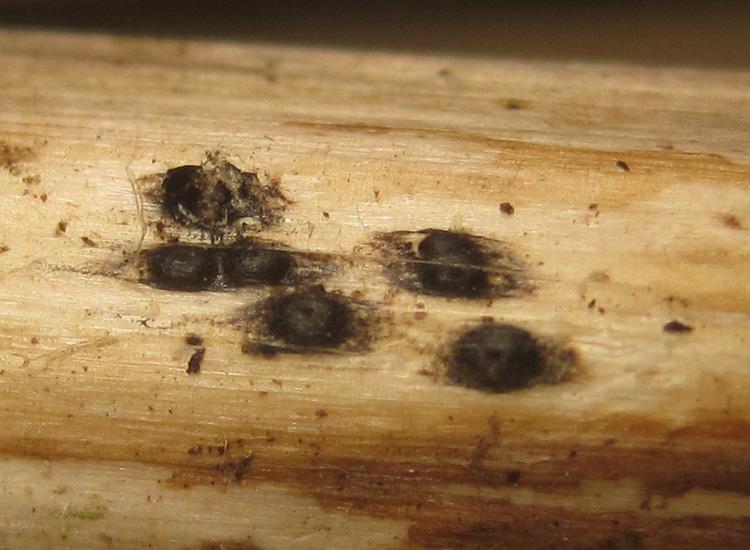
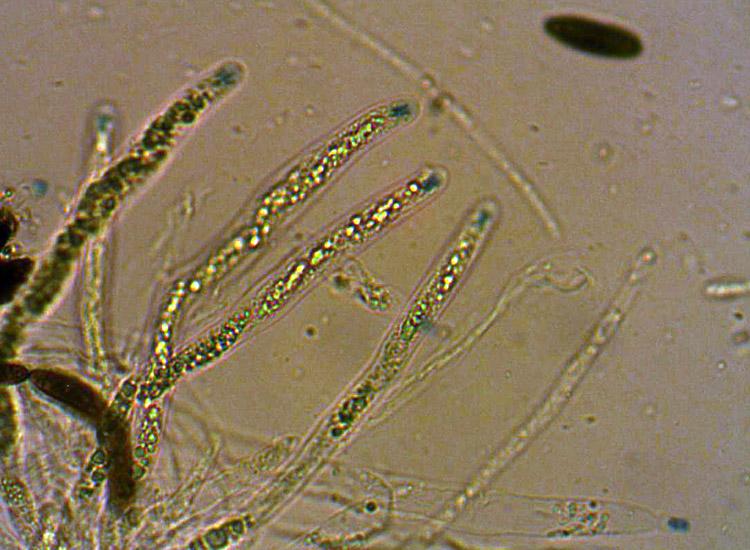
 This was found on a dead Eupatorium stem and the closest I can come is possibly Clypeosphaeria mamillana, though in Ellis that is given for twigs of Acer, Cornus and Quercus. Perithecia initially immersed.
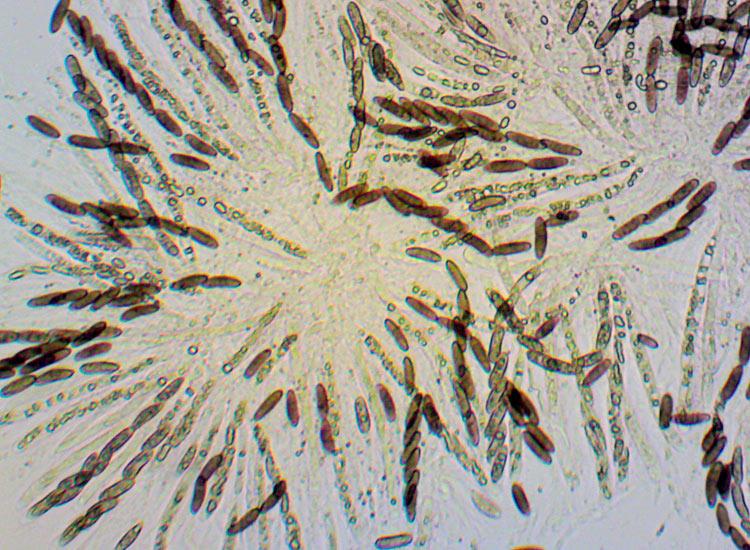
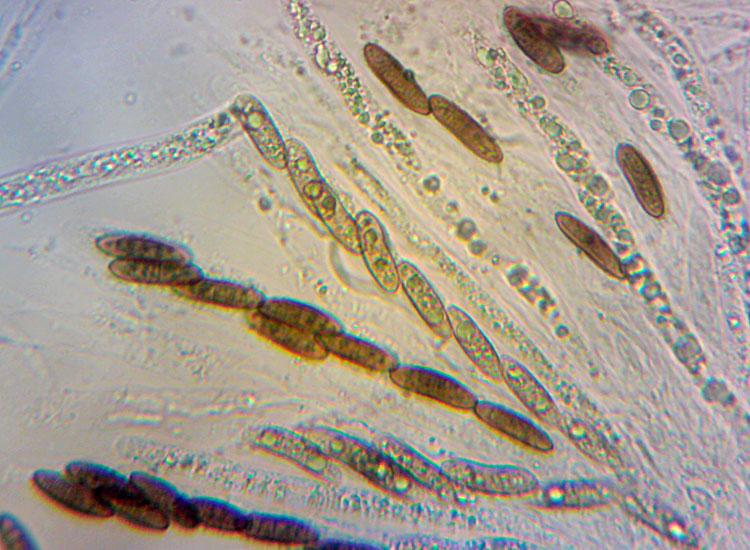
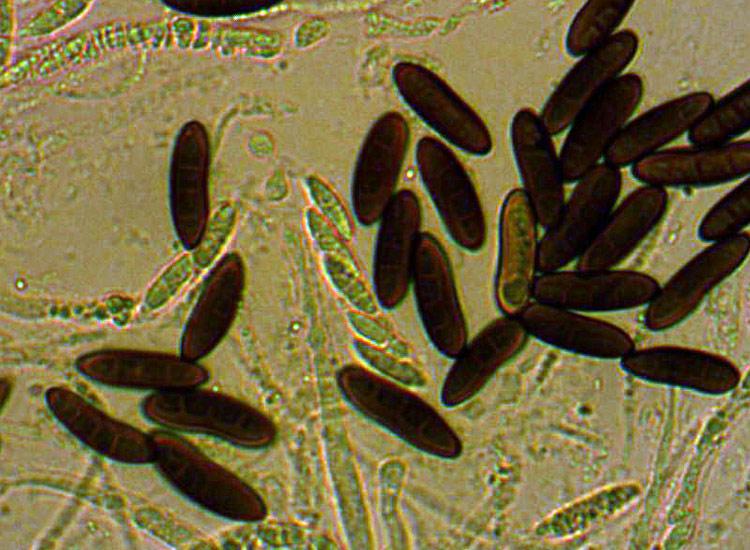
Spores becoming brown and faintly 3-septate, 20-24 x 6(-7) µm.Asci tips immediately blue in Lugols. (Is it correct to describe that as IKI+blue, euamyloid?) I tried adding KOH but wasn;t very successful ....
With regards,
Jenny
Alain GARDIENNET,
28-03-2015 06:27

Re : Clypeosphaeria mamillana?
Hi Jenny,
Yes it is, I think.
It has already been seen on Rubus, Rosa, Lonicera... why not Eupatorium ?
Alain
Jenny Seawright,
28-03-2015 09:40
Re : Clypeosphaeria mamillana?
Thank you Alain
Chris Yeates,
28-03-2015 17:06

Re : Clypeosphaeria mamillana?
Those brown septate / pseudoseptate (?) ascospores certainly look like those of a Clypeosphaeria. The only Clypeosphaeria species for which I have decent descriptions / images are this and C. notarisii. If anyone has access to Barr's paper in Systema Ascomycetum 8 (1989) it would be very useful . . . .
Cordialement
Chris
Cordialement
Chris