

10-06-2026 12:54
Steve ClementsBonjour encore, Pouvez-vous m'aider, s'il vous pl
09-06-2026 18:32
Camille MertensSur morceau de roseau immergé 0,5 - 0,7 mm de dia
10-06-2026 21:16
 François Freléchoux
Bonsoir,Le dernier du jour, en attendant votre avi
10-06-2026 21:07
François Freléchoux
Toutes les tiges de gentianes jaunes de l'an passÃ
10-06-2026 13:41
François Freléchoux
Bonjour à nouveau, Voici une trouvaille d'hier.
10-06-2026 11:53
Steve ClementsBonjour, This disco is abundant on dead stems of
10-06-2026 10:45
François Freléchoux
Bonjour à nouveau, Encore une détermination qui
08-06-2026 10:16
 Spooren Marco
I don`t have a clou about this fungus,it is not in
10-06-2026 09:24
François Freléchoux
Bonjour, J'imagine que cette détermination ne do
Microscopically the spores are globose 11-12µm in diameter (measured in asci as I could not find any free ones), asci are biseptate at base, IKI-ve, 180-210 x 16-20µm, paraphyses were septate, occasionally split at base and slightly inflated at the tips (about 7µm). There appear to be two types of hairs - dark brown, thick walled, septate and acute at the tip 180-330 x 21-27µm (which look like Scutellinia type hairs) and pale thin walled hairs.
I tried keying out these specimens but the only genus I could come close to is Sphaerosporella but they look different from S. brunnea and S. hinnulea and I am suspecting I got the genus wrong.
Any ideas?
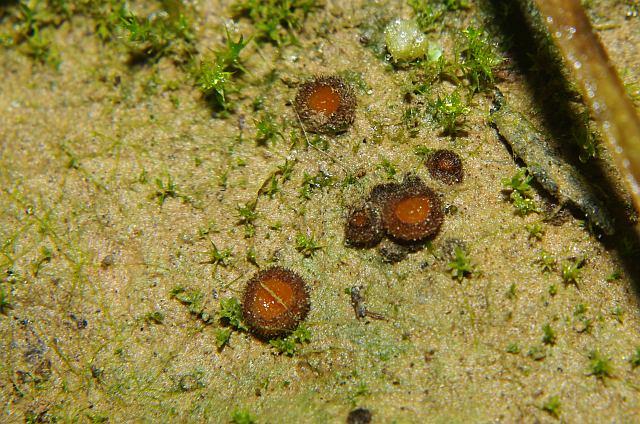
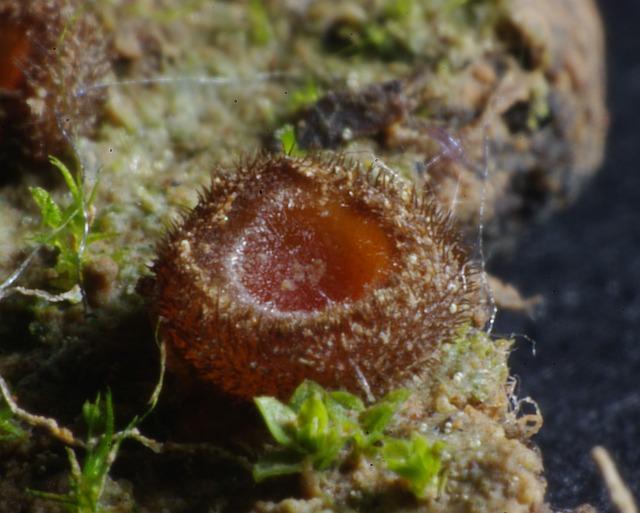
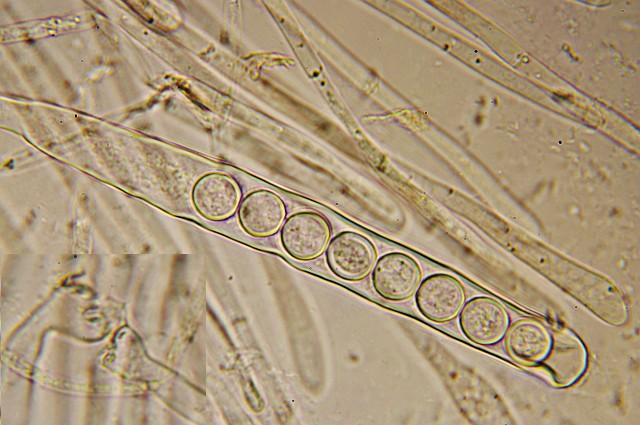
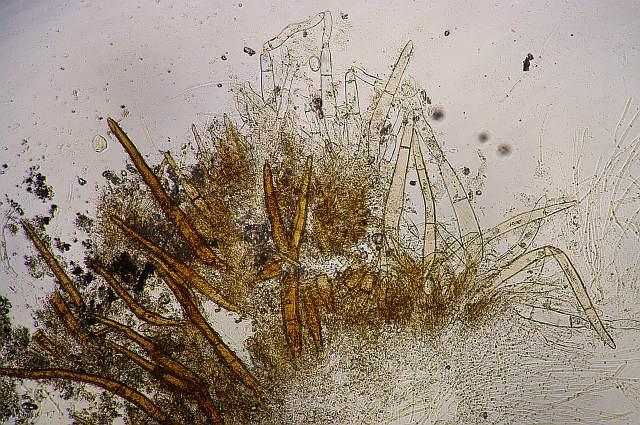
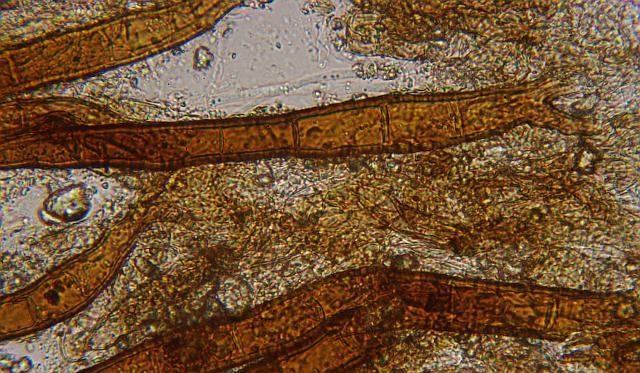
I think that it is a Scutellinia... Why not? The hairs in Scutellinia are longer near the margin but they are present also towards the base. The pigments in the paraphyses are orange-reddish in water?
Mario
Thank you for your reply. There is some colour in the paraphyses but it is located at the middle rather that at the tips.
I will taken another section and stain with cotton blue to check spore ornamentation but the spores appear smooth.
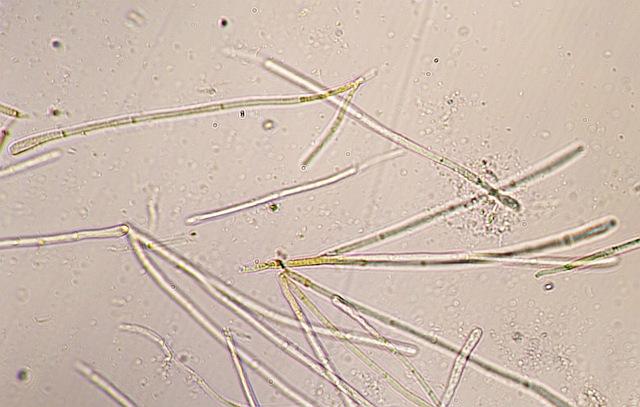

spores appear smooth because they are immature. Take another apothecia to check if there are mature spores, which will surely have a spiky / warty ornamentation (S. heterosphaera, S. legaliae, S. trechispora,...)
regards,
björn