Accès membres

Mot de passe perdu? S'inscrire

27-04-2026 18:48

Tony Moverley

Collected 23rd April 2026, Norfolk, EnglandSwarms

27-04-2026 17:41

Lothar Krieglsteiner Lothar Krieglsteiner

.. Algarve, same leaf than the last post. The con

27-04-2026 18:05

Lothar Krieglsteiner Lothar Krieglsteiner

... still attached at standing tree. The green con

27-04-2026 17:16

Lothar Krieglsteiner Lothar Krieglsteiner

.. Algarve, moist lying.The conidiomata look like

27-04-2026 12:54

Steve Clements

Bonjour. Ce petit champignon blanc résupiné et

27-04-2026 09:59

Pauline. Penna

Bonjour Can anyone advise me on these pycnidia fo

26-04-2026 21:08

William Slosse William Slosse

Several species of Ramularia occur on Rumex that I

22-04-2026 20:54

Enrique Rubio Enrique Rubio

Hi to everybody.This Pyrenopeziza grew in moist le

25-04-2026 11:34

Louis DENY

Bonjour forumdans la clé de Zotto, L. pudicellum

24-04-2026 03:16

David Chapados David Chapados

Found while looking at something else from wood in

« < 1 2 3 4 5 > »
Peziza varia?
Andy Overall, 24-04-2015 13:55
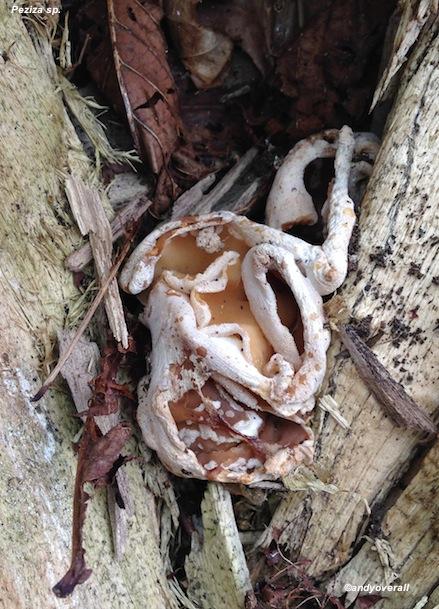
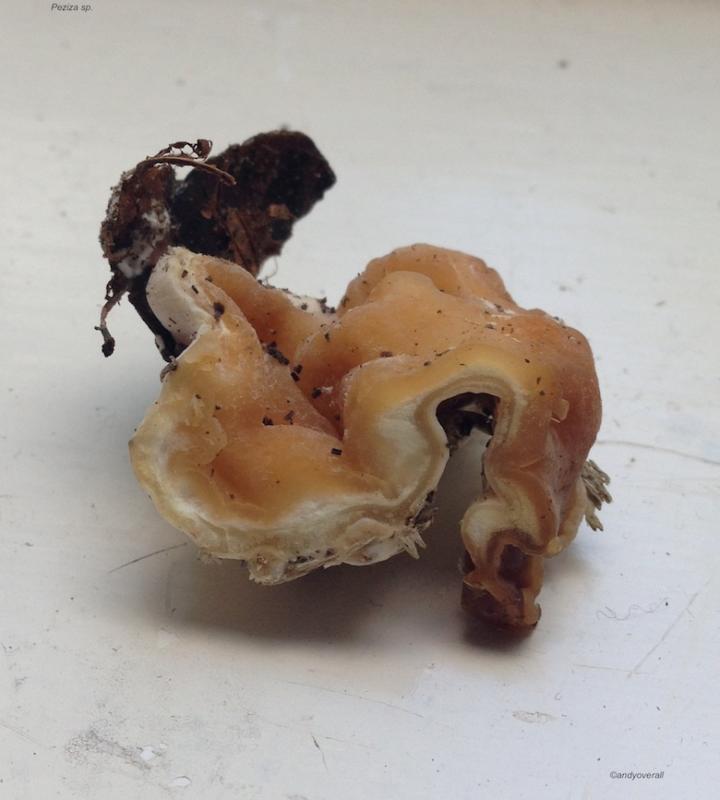
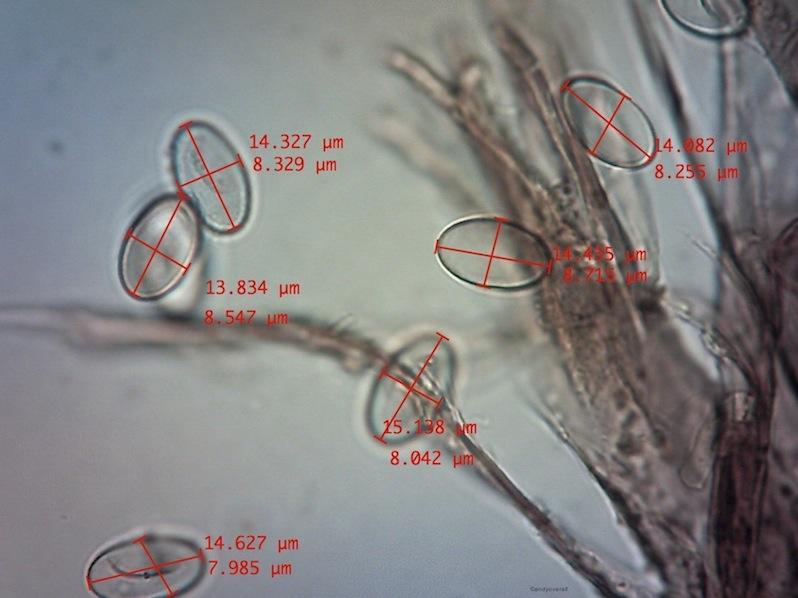
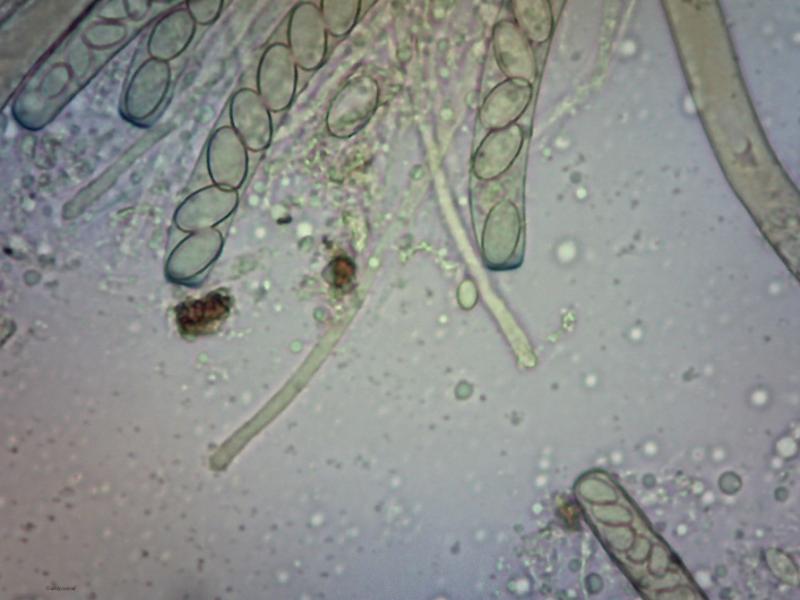
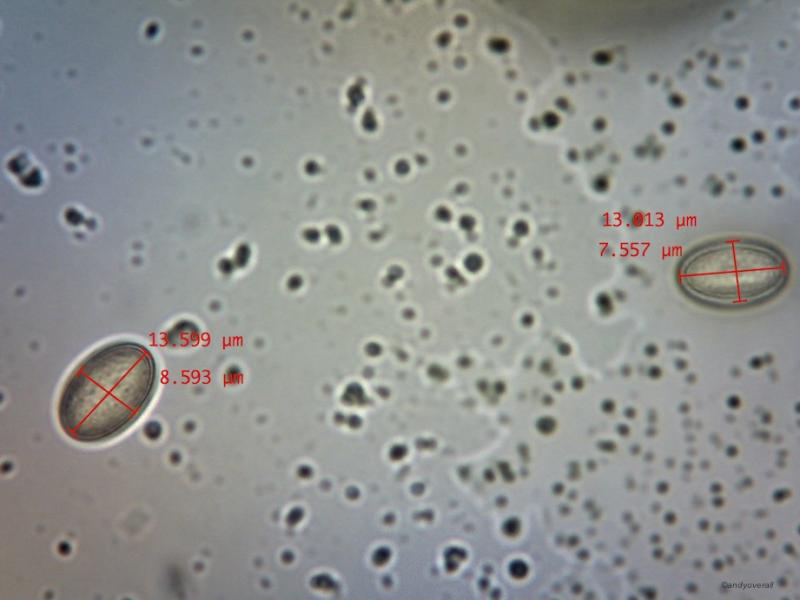
I found this Peziza just inside a fallen, dead, hollowed out Poplar tree.  It was fruiting on the pulped wood inside the hollow. The spores vary in length from 12-15µm (-17µm) x 8 -8.5 (8.7). They are very faintly punctate and aguttulate. My first choice would have been P. micropus due to the simple paraphyses, however, having taken a section of the flesh, not only did I observe layers in the flesh but under the microscope I noticed chain-like cells similar to those associated with P. varia, but the chained cells did not have long, projecting end cells, hence my quandry. Please find a series of pictures, of the ascomata in situ, cut in section and microscopic shots of spores, paraphyses and the chained cells. Any help toward clarification most appreciated.
Thanks in advance Andy
  • message #35399
  • message #35399
  • message #35399
  • message #35399
  • message #35399
  • message #35399
  • message #35399