18-05-2026 12:43
Sylvie Le GoffBonjour à tousPuis je avoir votre aide sur ce que
18-05-2026 10:13
 Lieve Deceuninck
Dear forum members,I identified this as the teleom

17-05-2026 19:05
Thomas FlammerI have found this tiny 200 ym cup shaped apothecia
17-05-2026 16:41
Margot en Geert VullingsWe found this Lachnum on an old Rubus stem.Fruitbo
05-04-2026 22:46
 Lothar Krieglsteiner
on wood of Ceratonia, Algarve, 3.4.2026.The color
15-05-2026 13:33
Sylvie Le GoffBonjour à tousJe serais très reconnaissante enve
16-03-2011 14:31
roman vargas albertoHi. I would like some opinion about this Peziza
14-05-2026 05:36
Ethan CrensonHi all, I haven't paid much attention to Lachnu
10-05-2026 23:17
 Andreas Gminder
Hello,today we found in a moist steep decidous for
Nemania serpens hyphomecyete
Steve Clements,
05-05-2015 15:53
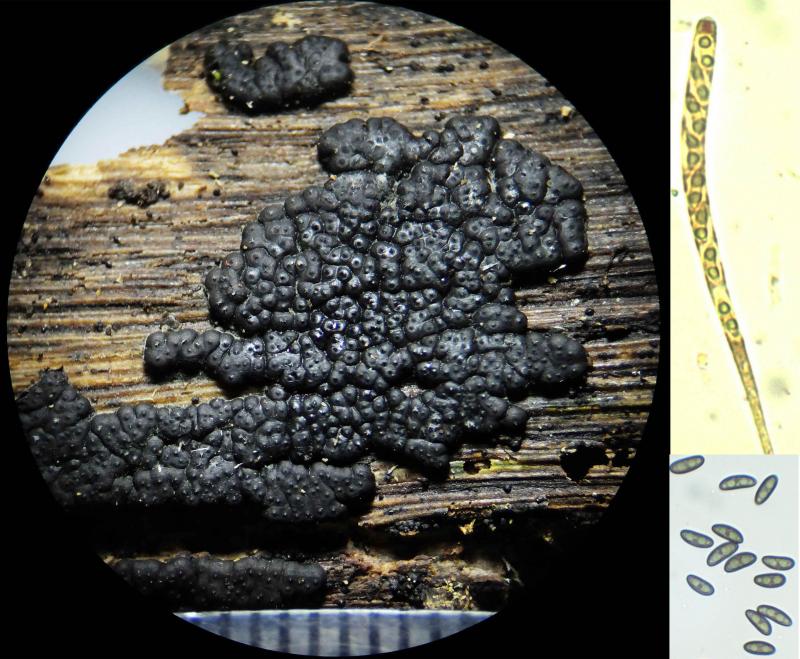
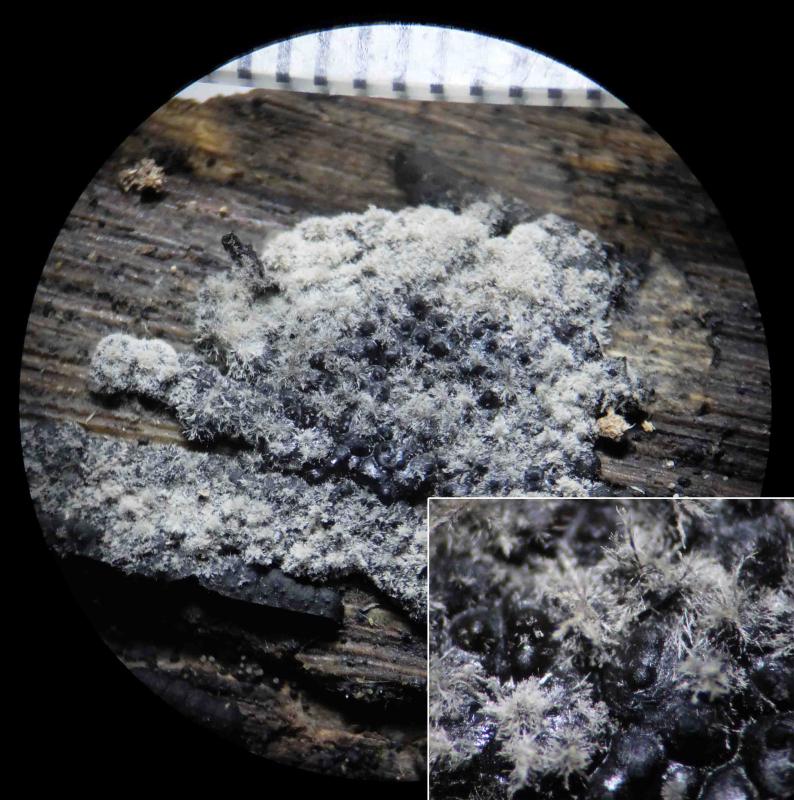
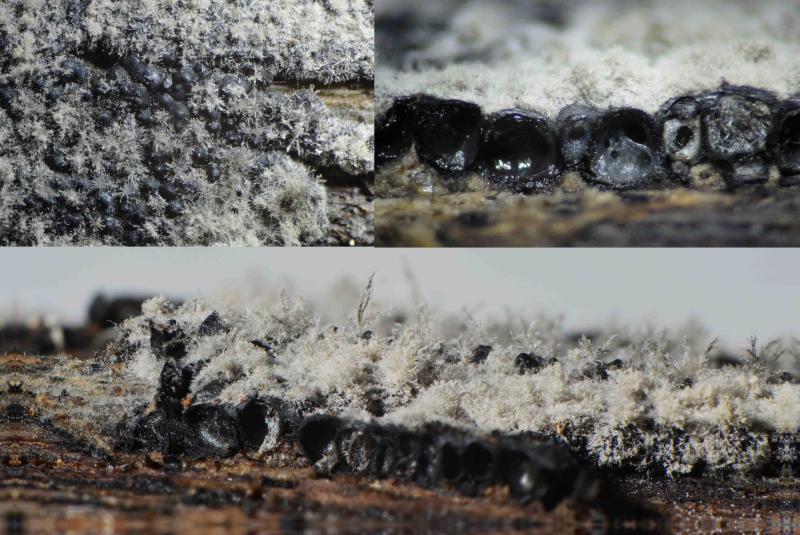
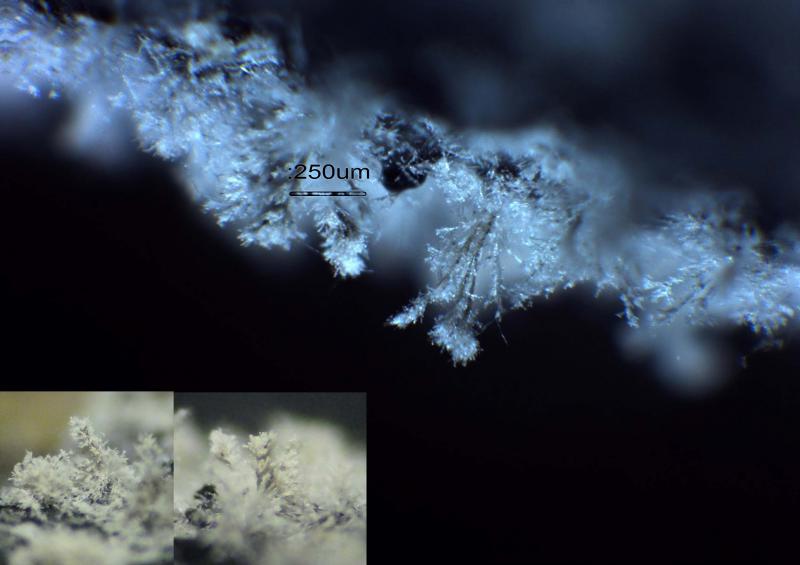
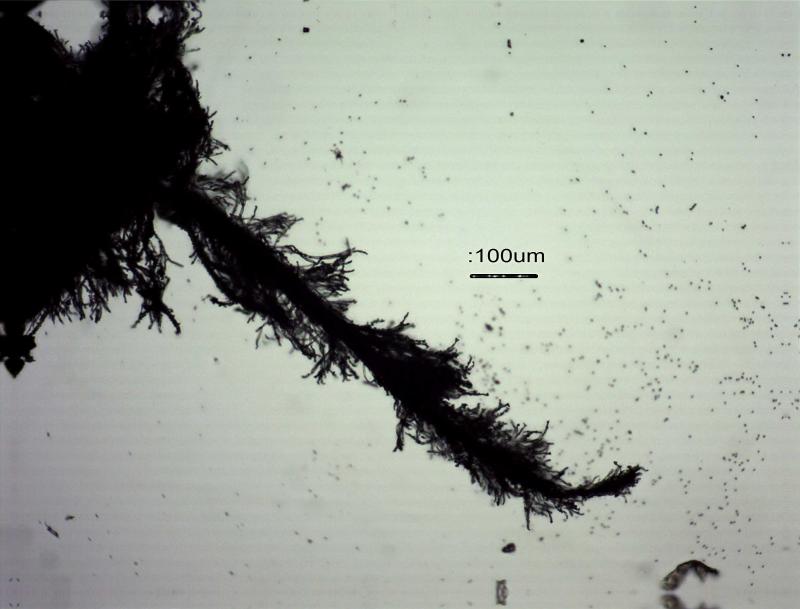
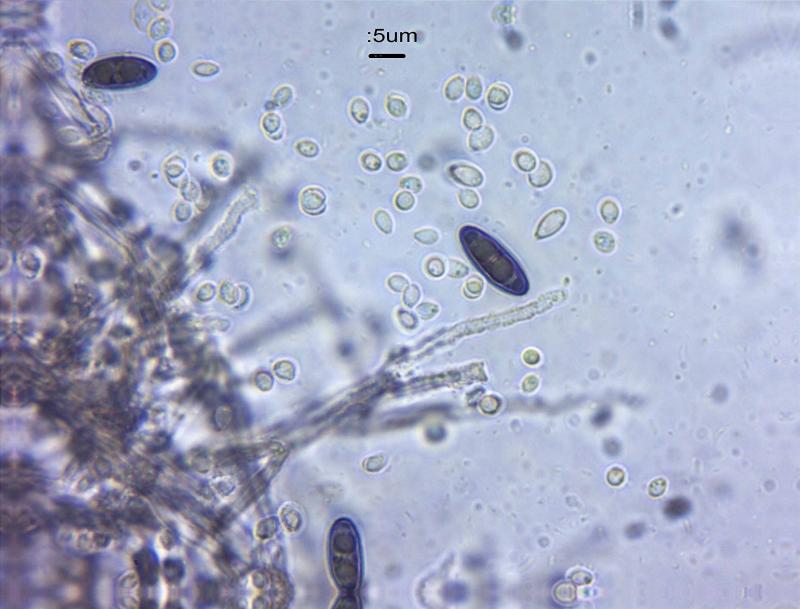
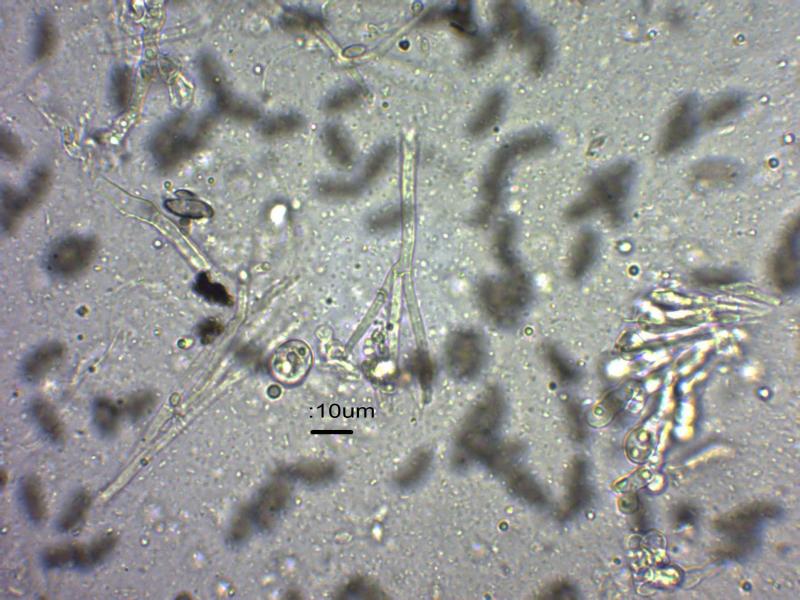
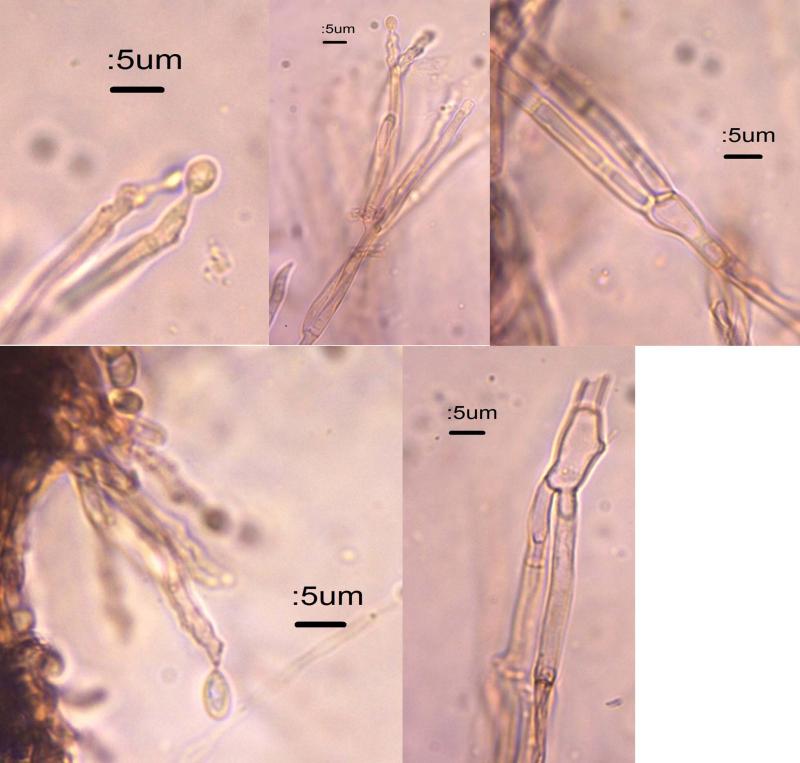
This white hyphomycete quickly appeared within a week on a specimen of Nemania serpens from the Longshaw Estate, which was kept in an icubator. I was interested to know whether this is a parasite or an anamorph of the Nemania, as the pyrenomycete continued to produce ascopspores in profusion for a few weeks, together with the growth of the hyphomycete. However, the hyphomycete appears to be filling the empty chambers of the Nemania so I assume it's a parasite ie another species of fungus.
The conidiophores are white, bushy and about 1mm high. The hyphae septate, 2-3 um wide, with phialide-like mostly dichotomous branching. Conidia are pinched off the tips of the hyphae and are oval, hyaline, 2-4 x 2-3.
This doesn't seem to be listed as a fungus on "Hypoxylon" in Ellis and Ellis.
Kind regards,
Steve
Jacques Fournier,
05-05-2015 18:25

Re : Nemania serpens hyphomecyete
Hi Steve,
at first glance it does not look like the geniculosporium-like anamorph of N. serpens, which is typically greenish grey and not synnematous. However the conidiogenous cells and the conidia might fit. I attach the original description of geniculosporium so that you make your own opinion.
Cheers,
Jacques
at first glance it does not look like the geniculosporium-like anamorph of N. serpens, which is typically greenish grey and not synnematous. However the conidiogenous cells and the conidia might fit. I attach the original description of geniculosporium so that you make your own opinion.
Cheers,
Jacques
 Geniculosporium-serpens-0001.pdf
Chris Yeates,
05-05-2015 19:42

Re : Nemania serpens hyphomecyete
Hi Steve
try Calcarisporium arbuscula, a common parasite of various groups of fungi including many genera of the Xylariales. See Malcolm Storey's series of images at: http://www.discoverlife.org/mp/20q?search=Calcarisporium+arbuscula&mobile=iPhone
best wishes
Chris
try Calcarisporium arbuscula, a common parasite of various groups of fungi including many genera of the Xylariales. See Malcolm Storey's series of images at: http://www.discoverlife.org/mp/20q?search=Calcarisporium+arbuscula&mobile=iPhone
best wishes
Chris
Steve Clements,
06-05-2015 10:34
Re : Nemania serpens hyphomecyete
Many thanks Jacques and Chris,
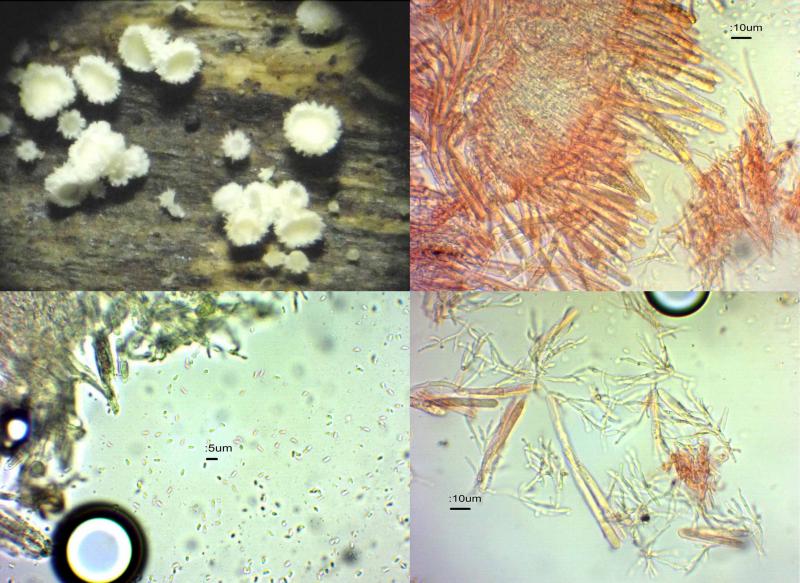
I think this is more likely Calcarisporium arbuscula as you suggest Chris - I was put off by the drawing in Ellis and Ellis as the branching shown is more open. Malcolm Storey's micrograph's are a far better match. I named it with some hesitation on a Lachnum species last year in April (Rough Wood, Longshaw) - my images are getting better with help from FungiJohn and my photographer mate Dave.
Kind regards,
Steve
I think this is more likely Calcarisporium arbuscula as you suggest Chris - I was put off by the drawing in Ellis and Ellis as the branching shown is more open. Malcolm Storey's micrograph's are a far better match. I named it with some hesitation on a Lachnum species last year in April (Rough Wood, Longshaw) - my images are getting better with help from FungiJohn and my photographer mate Dave.
Kind regards,
Steve