12-06-2026 14:50
 François Freléchoux
Bonjour, Voici la brève description d'une Mollis
10-06-2026 21:16
François Freléchoux
Bonsoir,Le dernier du jour, en attendant votre avi
11-06-2026 19:01
 William Slosse
Hello all,In an attempt to make a culture of a sus
11-06-2026 19:03
 Nicolas VAN VOOREN
Chers membres d'Ascofrance,Le site sera placé en

09-06-2026 18:32
Camille MertensSur morceau de roseau immergé 0,5 - 0,7 mm de dia
10-06-2026 12:54
Steve ClementsBonjour encore, Pouvez-vous m'aider, s'il vous pl
10-06-2026 21:07
François Freléchoux
Toutes les tiges de gentianes jaunes de l'an passÃ
10-06-2026 13:41
François Freléchoux
Bonjour à nouveau, Voici une trouvaille d'hier.
Monilia? or Trichoderma? anamorph on Pice abies cone
Steve Clements,
18-05-2015 14:39
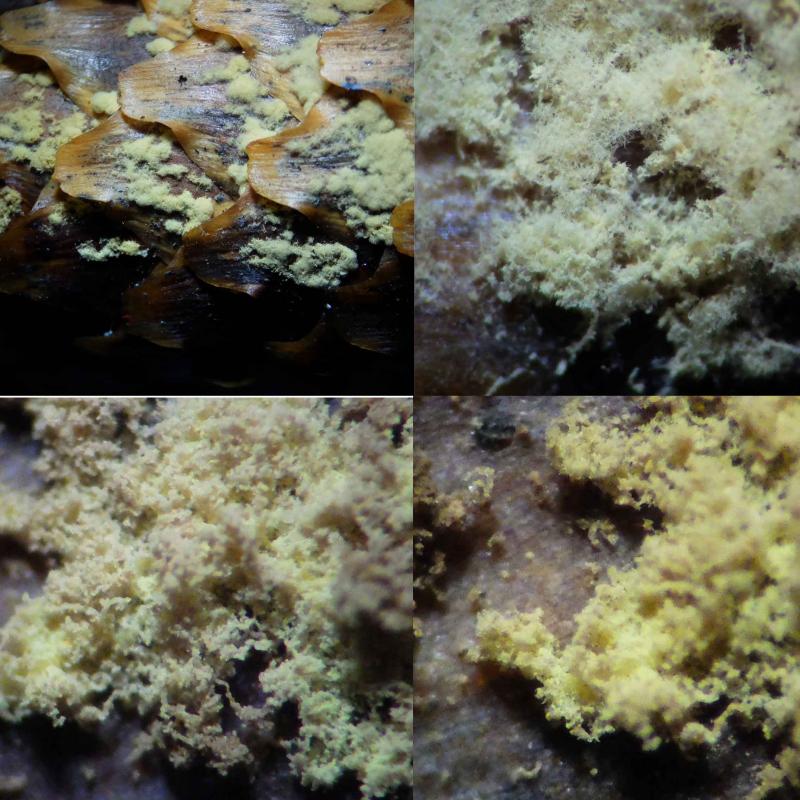
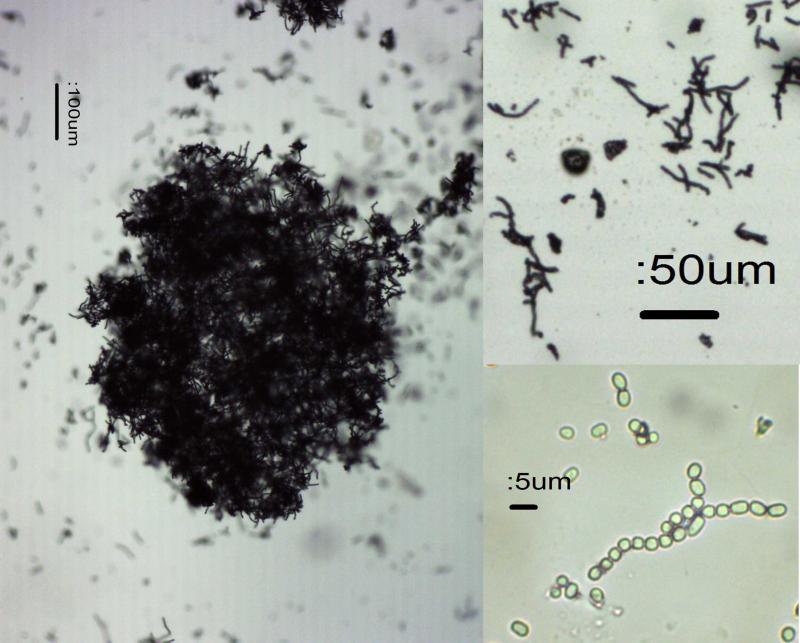
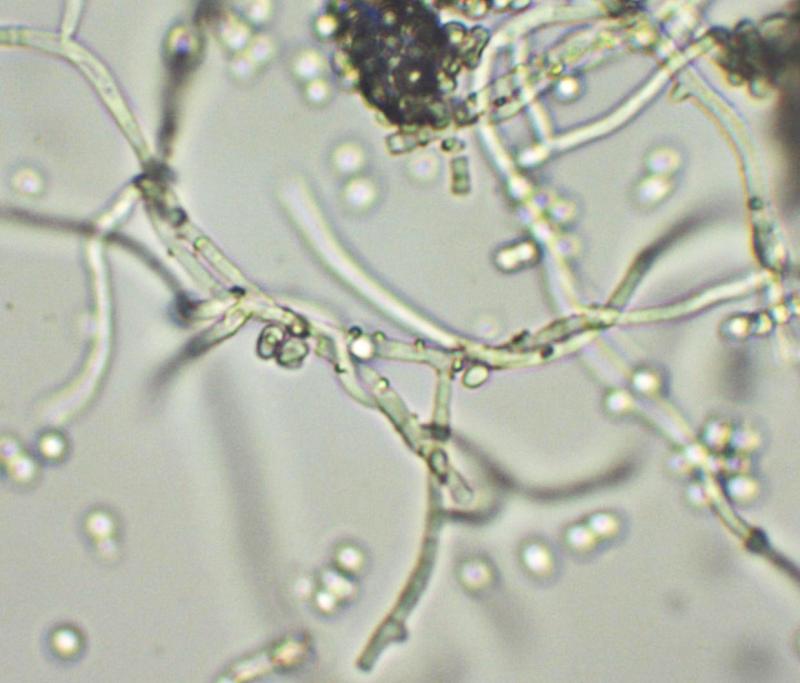
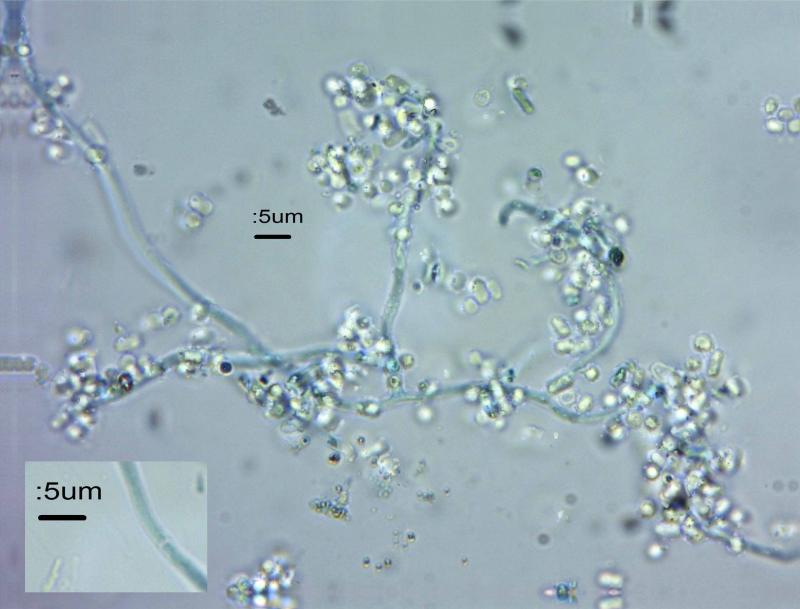
This was found on a buried spruce (Picea abies) cone 22/4/15. It formed a pale yellow amorphous colony, about 0.2-3 mm in thickness, on the scales of the cone. After 3 weeks incubation the colony was turning brownish, and became infested with eelworms. The conidia were spherical to rectangular, hyaline under transmitted light, 2-2.5 x 2-3(5) um. On a dry mount they were in chains up to about 50 um long. In aqueous mounts they formed agglutinated clumps. Hyphae were septate, sparsely branched, 1.5-2 um wide. Pegs were present along the hyphae. It was hard to say whether stalked conidiophores were present – the colony seemed to be quite amorphous. No evidence of phialides seen.
Are these arthrospores or blastospores? Are the conidia budding off the hyphae and then forming chains? The conidia seem to be dry, and so not Trichoderma, but more like Monilia.
We inspected a number of Picea abies cones and found a number of additional fungi: the basidiomycete Strobilurus esculentus, a Mycena sp., a Penicillium, and a gelatinous microfungus . However, very few fungi are listed in Ellis and Ellis on spruce cones.
Sur une épinette enterré (Picea abies) cône 22/4/15. Colonie jaune pâle amorphe, environ 0,2-3 mm d'épaisseur. Les conidies sont sphériques à rectangulaire, hyalines sous lumière transmise, 2-2,5 x 2-3 (5) um. Une fois sec les conidies sont dans les chaînes, lorsqu'il est mouillé, ils agglutinent. Hyphes cloisonnées, peu ramifiée, 1,5-2 um de large. Pegs sont sur les hyphes.
Regards,
Steve