12-06-2026 14:50
 François Freléchoux
Bonjour, Voici la brève description d'une Mollis
10-06-2026 21:16
François Freléchoux
Bonsoir,Le dernier du jour, en attendant votre avi
11-06-2026 19:01
 William Slosse
Hello all,In an attempt to make a culture of a sus
11-06-2026 19:03
 Nicolas VAN VOOREN
Chers membres d'Ascofrance,Le site sera placé en

09-06-2026 18:32
Camille MertensSur morceau de roseau immergé 0,5 - 0,7 mm de dia
10-06-2026 12:54
Steve ClementsBonjour encore, Pouvez-vous m'aider, s'il vous pl
10-06-2026 21:07
François Freléchoux
Toutes les tiges de gentianes jaunes de l'an passÃ
10-06-2026 13:41
François Freléchoux
Bonjour à nouveau, Voici une trouvaille d'hier.
 Hello,
this fungus was found in a tropical lowland dipterocarpous forest of East Kalimantan. It was a single fruitbody partly hiden in the soil, irregularly shaped, beige, hollow, with two holes, measuring 26 mm in the broadest part.
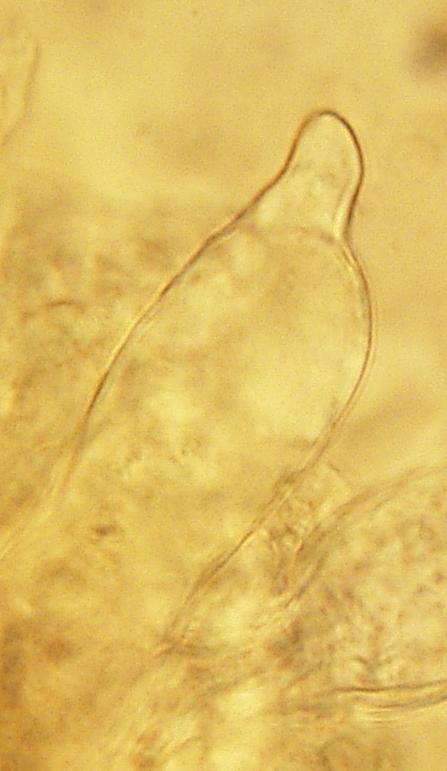
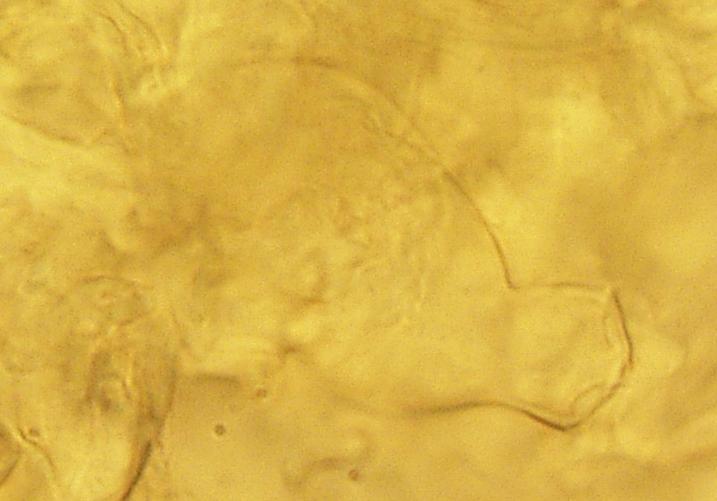
It has a strange structure under microscope, quite difficult to read for me. I can see there a layer of globose-angular, thick-walled cells (20-43 micrometers, the walls up to 2 micrometers) and a layer of thin cylindrical cells running in different ways (3.5-7 micrometers broad).
Spores are yellowish, globose, ornamented with isolated warts, tubercles and high ridges resembling wings (up to 6 micrometers high), measuring 14.5-15.5 micrometers without ornament, 22-25 including ornament.
Asci are non-amyloid, octosporic, uniseriate.
What could it be? It resembles Ruhlandiella with the spores, but the asci are not amyloid and the shape is "wrong". Another idea was Hydnotrya. I really don´t know.
Thanks in advance for any ideas,
Zuzana
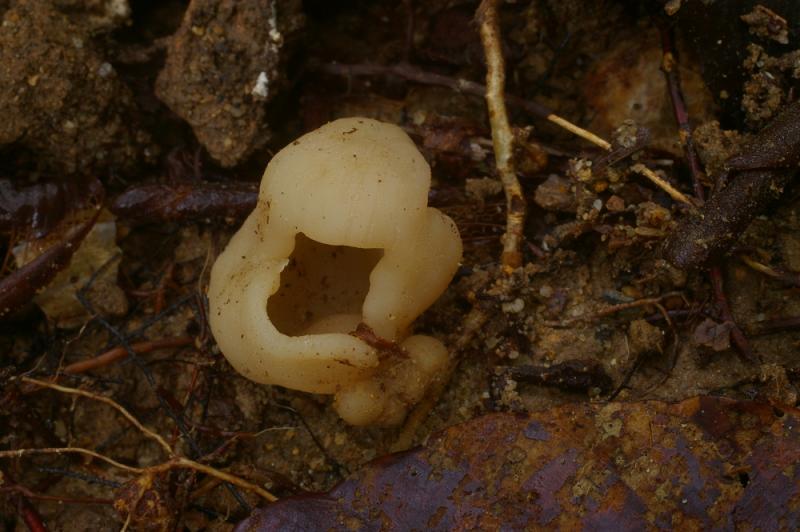
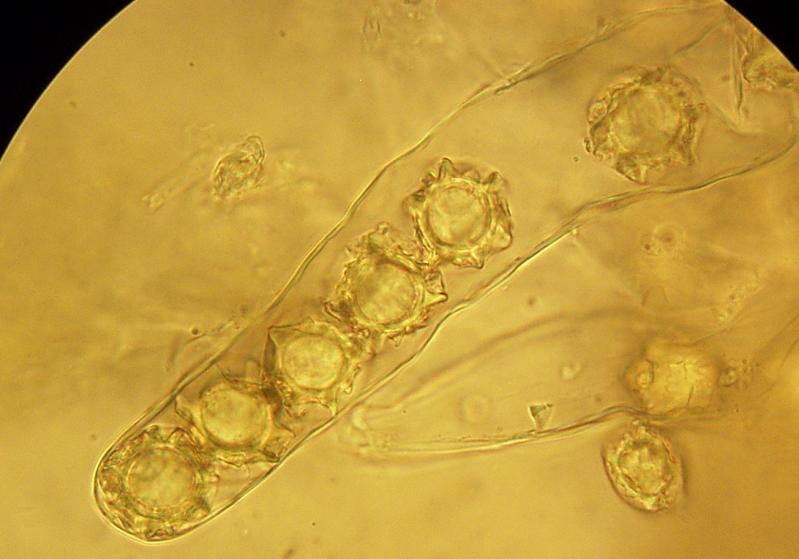
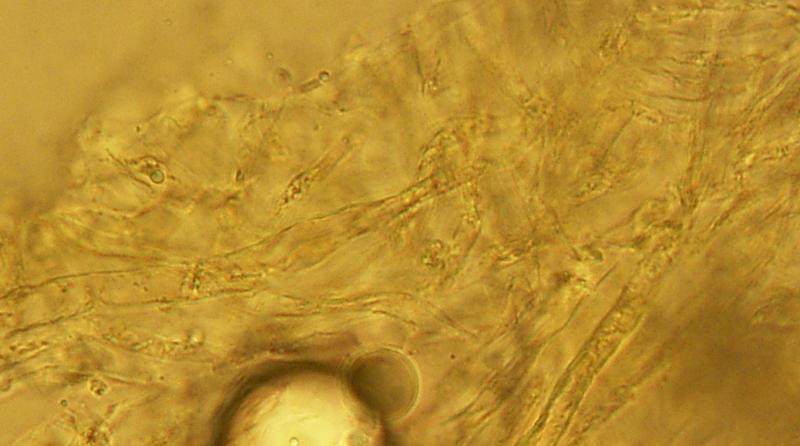
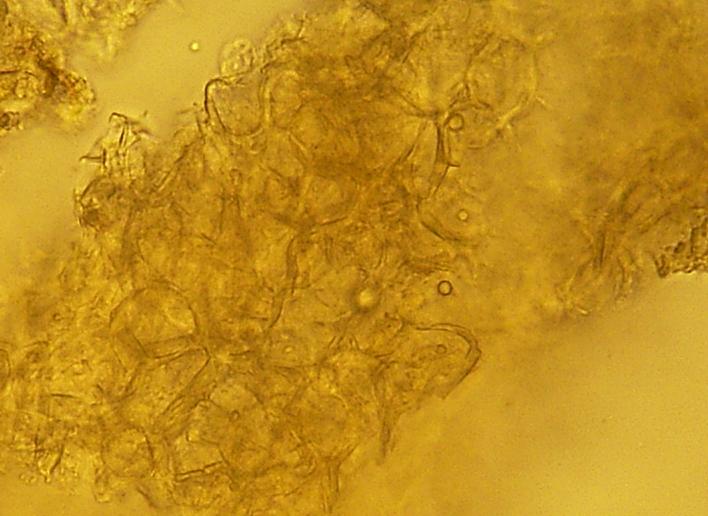
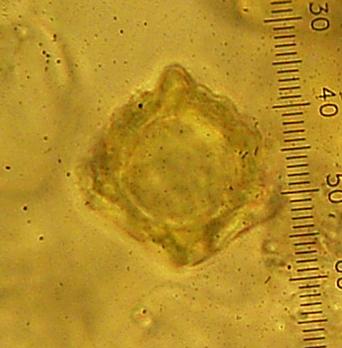
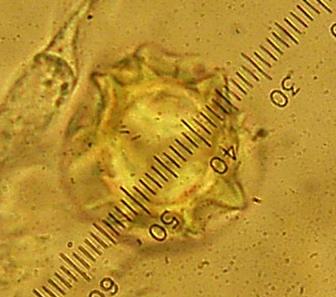
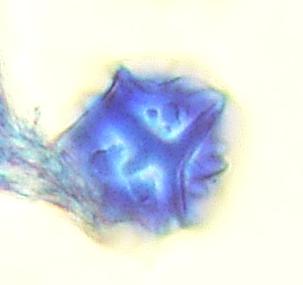
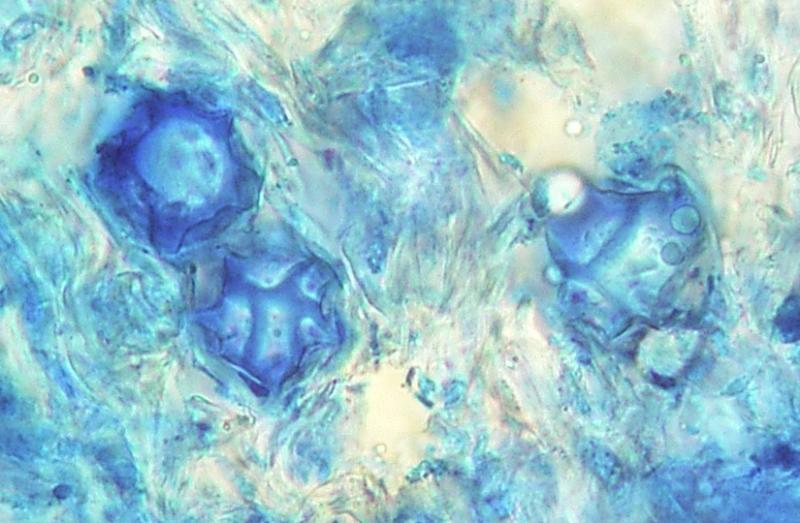
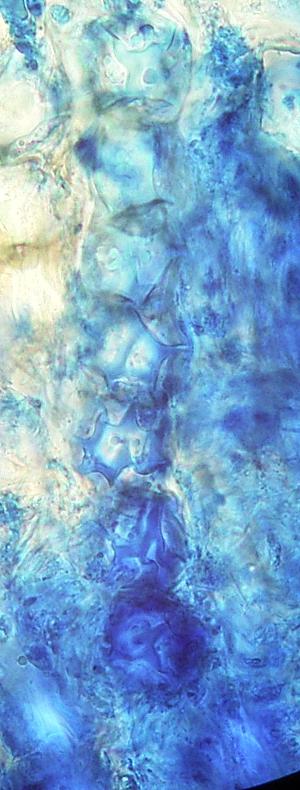
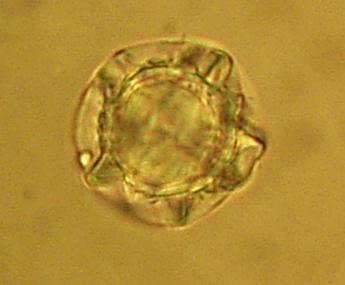
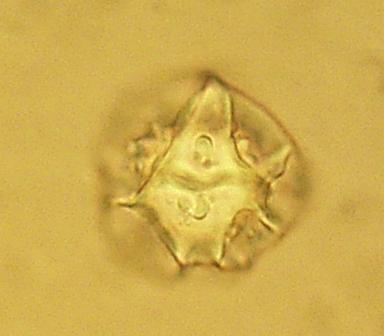
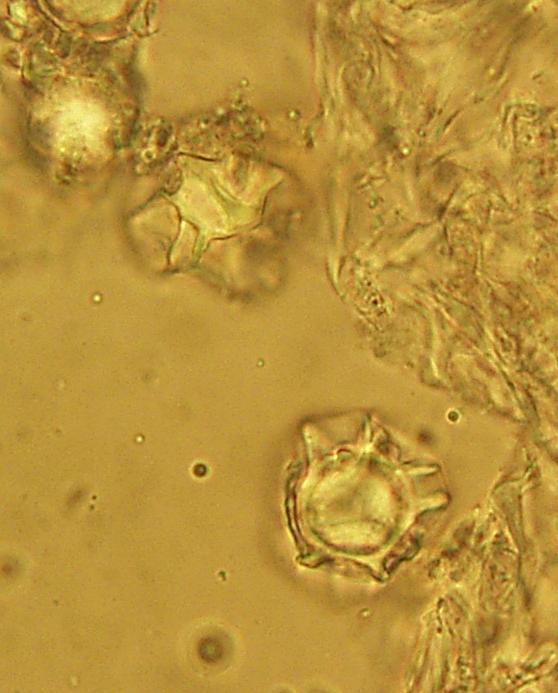
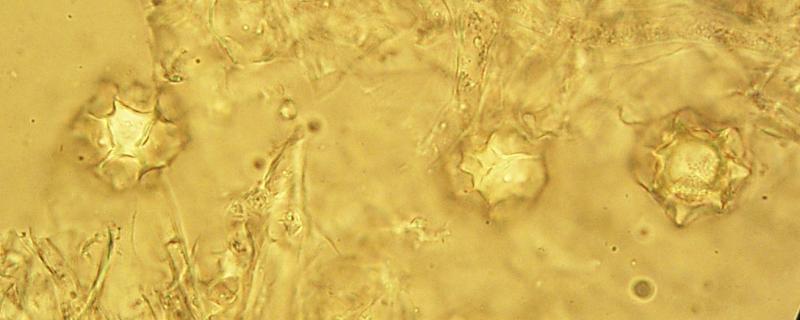
I think this is close to Lazuardia lobata, a tropical cup-fungus. I published a paper on this species in Ascomycete.org journal with M. Pélissier who collected it in Mayotte Island.
The main difference with your collection is the spore size.
Thank you very much for advice! Yes, my spores are larger and have richer ornament. The shape of fruitbody is different too - maybe it´s not visible well in the photo, but the fungus from Borneo had holes, but it was closed (little bit potato-shaped). I also didn´t notice bluish colour in the fruitbody.
Z.