
29-04-2026 10:44
 Lothar Krieglsteiner
growing at moist, drying-out soil at the side of a
28-04-2026 20:07
Lothar Krieglsteiner
... on twig in the air at standing Ceratonia siliq
05-04-2026 22:46
Lothar Krieglsteiner
on wood of Ceratonia, Algarve, 3.4.2026.The color
10-05-2026 16:18
brigitte vignotbonjour trouvée en Ariège sur bois une petite
10-05-2026 23:17
 Andreas Gminder
Hello,today we found in a moist steep decidous for
27-04-2026 17:16
Lothar Krieglsteiner
.. Algarve, moist lying.The conidiomata look like
10-05-2026 09:02
Buckwheat PeteHello everybody, ould this be Lachnum subvirgineu
08-05-2026 11:55
Gernot FriebesHi,found on a decorticated Picea abies branch stil
11-05-2016 20:37
 Zuzana Sochorová (Egertová)
Hi,this very little ascomycete grew on soil in a m
09-05-2026 07:37
Zuzana Sochorová (Egertová)
Hello,please, could anyone share this paper?Ferná
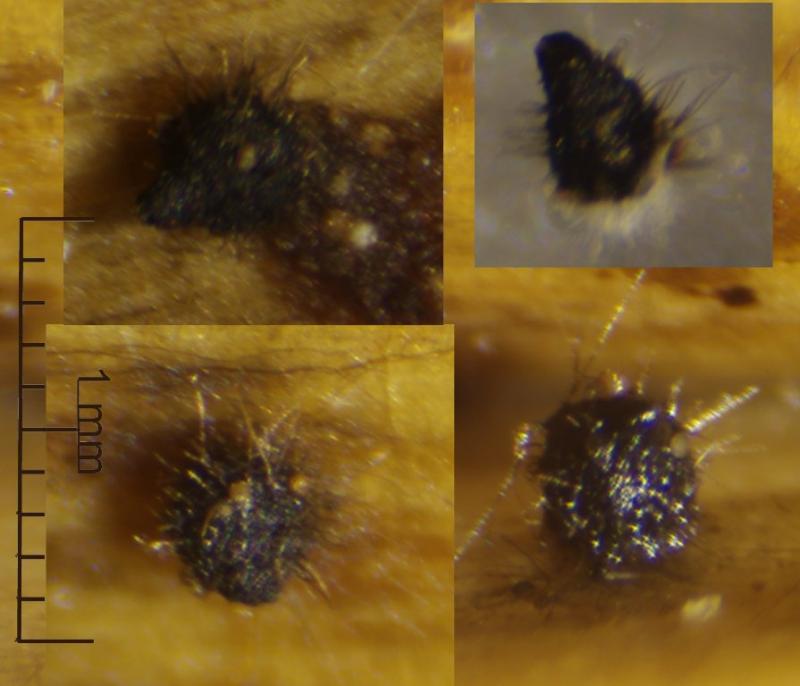
This asco has grown in moist chamber on debris from perennials, collected 29.05.2015 in Stange, Norway.
Perithecia about 420 x 300 µm,
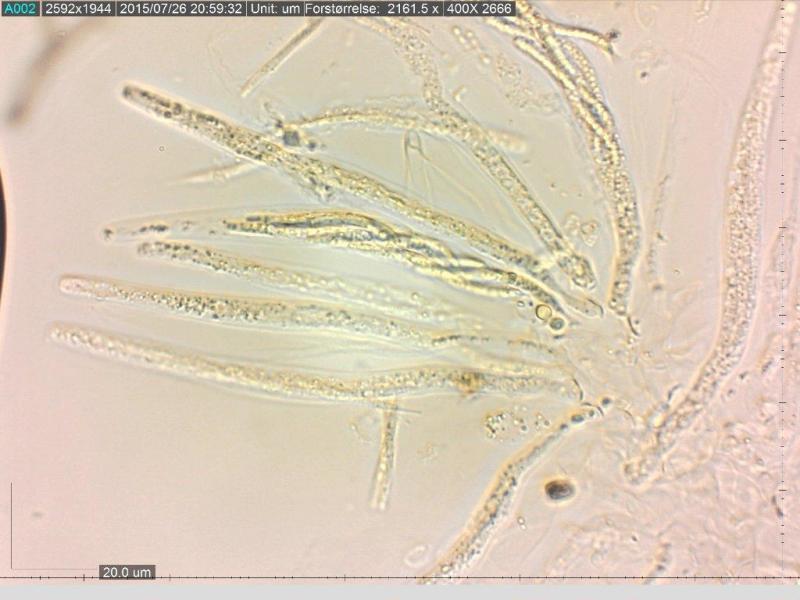
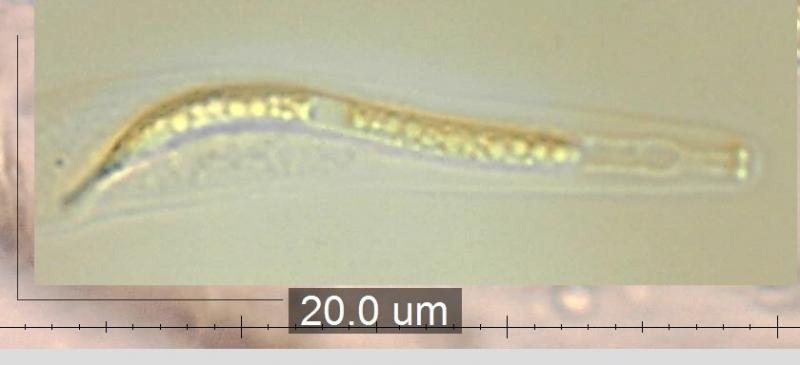
Spores 42 x 3 µm, strait when young. I could not see any septation, but I think they are not fully grown?
Asci 125x 9 µm,
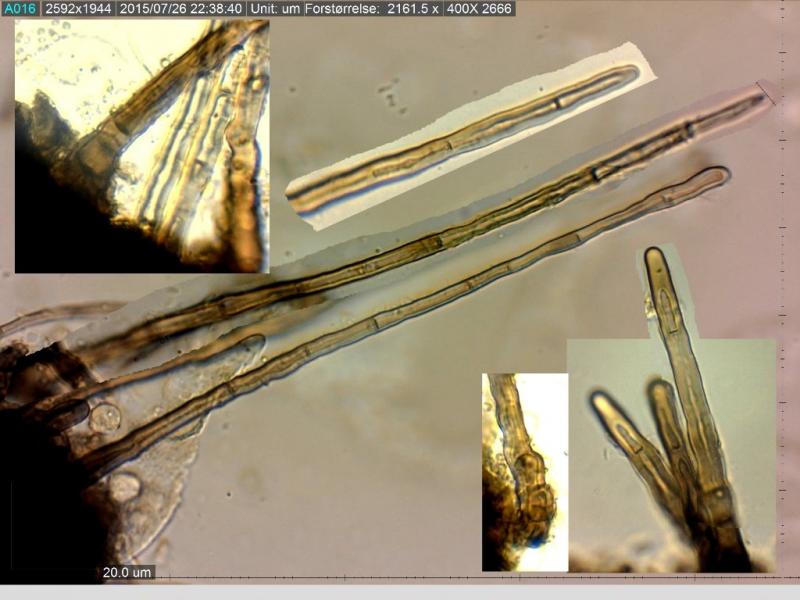
Hairs up to 261 x 7.7 µm, hair wall up to 2.4 µm thick.
I think it is a Lasiosphaeria or Hilberina. After studying the information I found available on the web the closest I can find is L. breviseta, but the substrate does not fit?
Thank you for any help
Regards Per Vetlesen
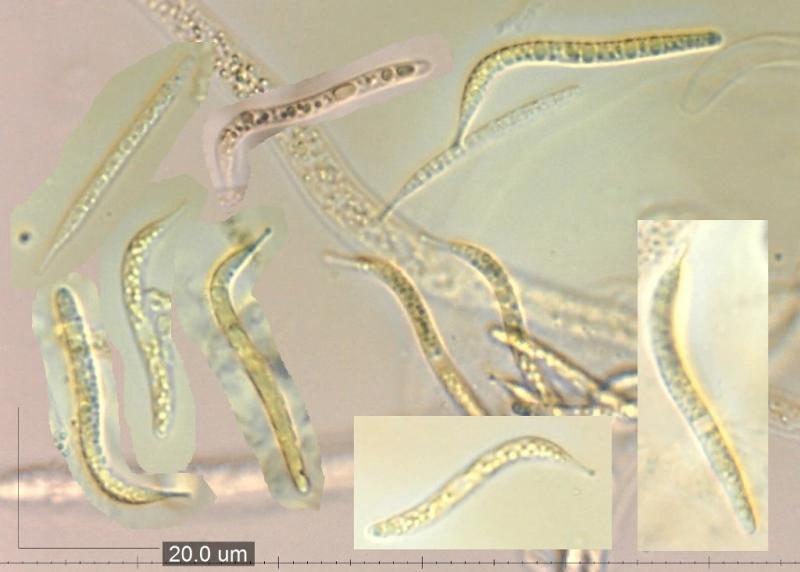

the ascospores are likely those of H. breviseta and as you say, the septation is often delayed. The growth in moist chamber may have affected some other morphological traits like the length of the setae. This is a fairly rare species, at least in my region.
Jacques
Did you note the recent paper by Andrew Miller cs that he has made available on this forum: http://www.ascofrance.fr/search_forum/29631 ? It includes a key to all Lasiosphaeria s.l. and L. breviseta is now included in the (newly created) genus Hilberina. Reference is also made to another species which is similar and may be conspecific: Hilberina rhynchospora.
I have found Hilberina breviseta in the Netherlands too. I will add some more details later because this does seem to be a rare or at least unknown species.
The spore form is quite striking!
Eduard
Thanks for the quick reply:-)
L. breviseta is a rare species and that is why I doubted it could be right.
No, I have not seen the paper by Andrew Miller cs, but after reading it I still think it must be L. breviseta despite it is growing on a different substrate. Andrew Miller did not observe any septation on the spores.
The material consist of just a few fruit bodies, some are still in the moist chamber in hope of mature spores. In about a week I will have a new look at in the moist chamber in hope of mature spores.
Per