
31-03-2026 21:18
 Miguel Ángel Ribes
Good evening. oes anyone have the original descrip
31-03-2026 20:57
Stefan BlaserHello everybody, I hope somebody can help me with
26-03-2026 15:31
 Åke Widgren
Hello,I found this one in October last year, on r
31-03-2026 16:20
 Mlcoch Patrik
Hello, Please about help with determination. On
31-03-2026 08:19
 Bernard CLESSE
Bonjour à toutes et tous,Pourriez-vous m'aider à
30-03-2026 12:03
 William Slosse
Hello all,On 27/03/26, in Kraaiveld in Wingene (Be
25-03-2026 10:35
Hulda Caroline HolteHello,I collected this species growing on a dead b
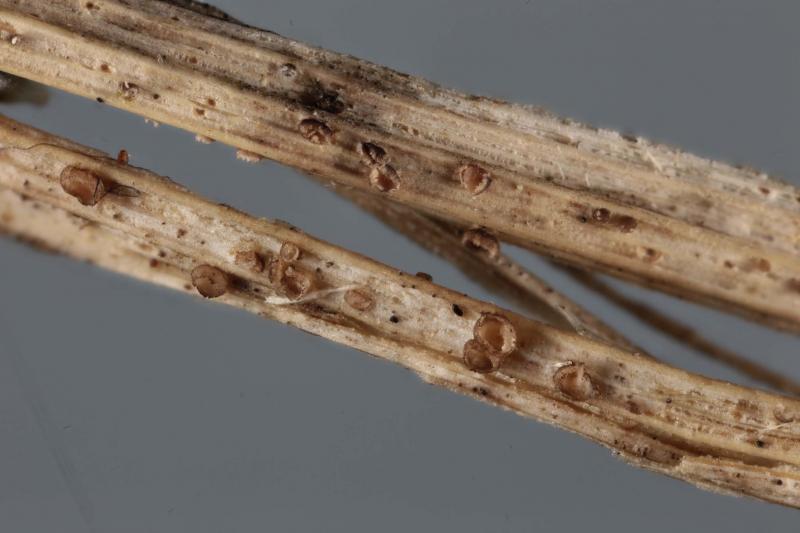
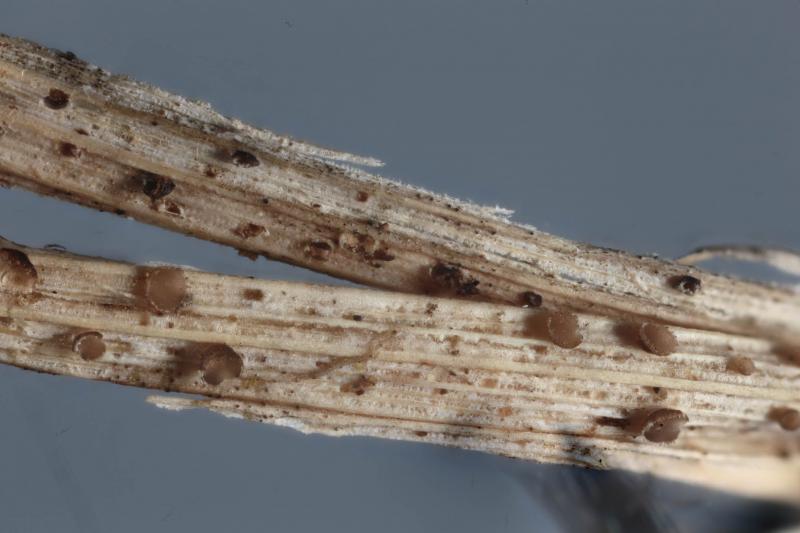
Disco on Carex flacca
Chris Yeates,
28-08-2015 21:22
 Bonsoir tous
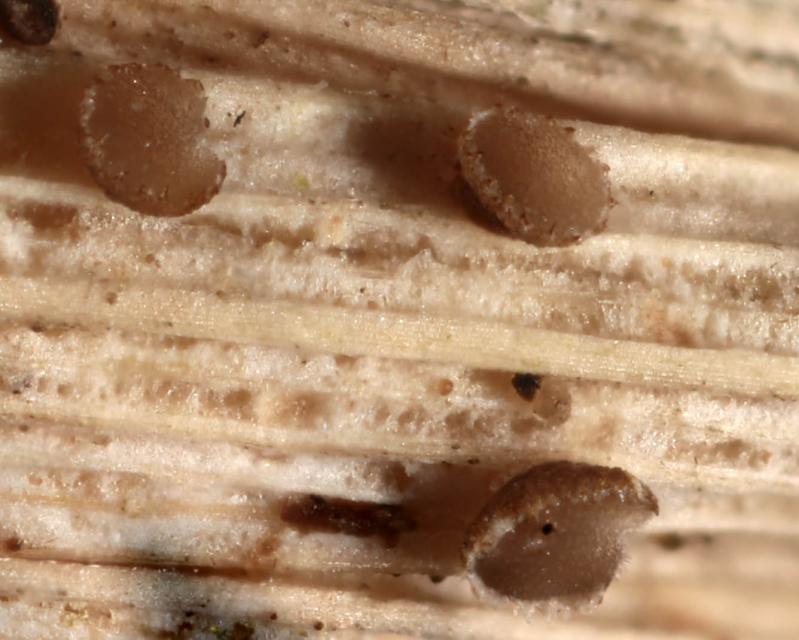
this small discomycete was collected on damp dead leaves of Carex flacca. Although kept damp and fresh, when being prepared for photography the apothecia dried very quickly, drying darker.
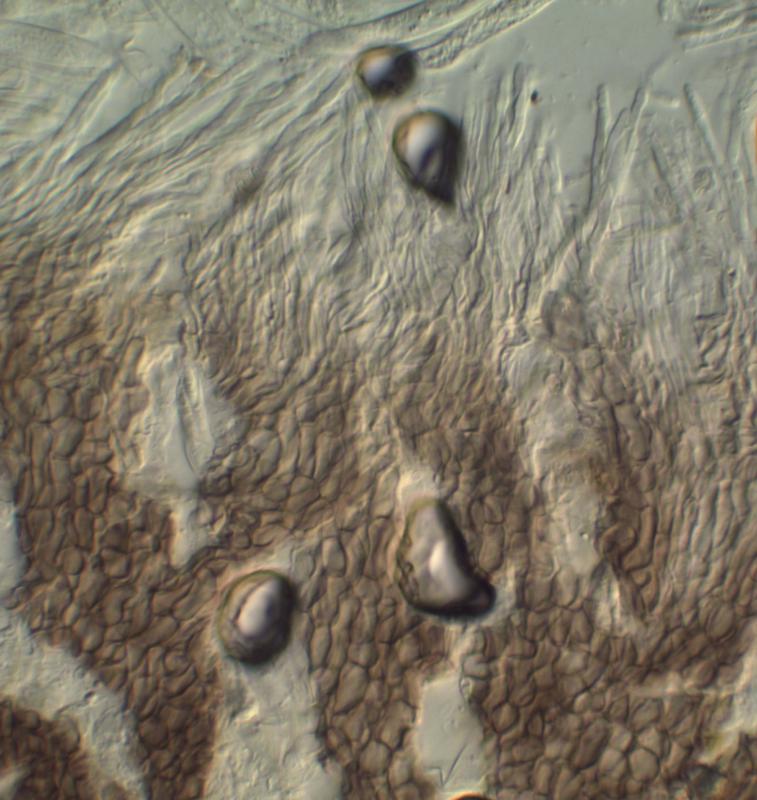
The discs were pale coffee-coloured, with an excipulum which consisted of brown textura globosa at the base, the cells narrowing and ending in a fimbriate hyaline fringe.
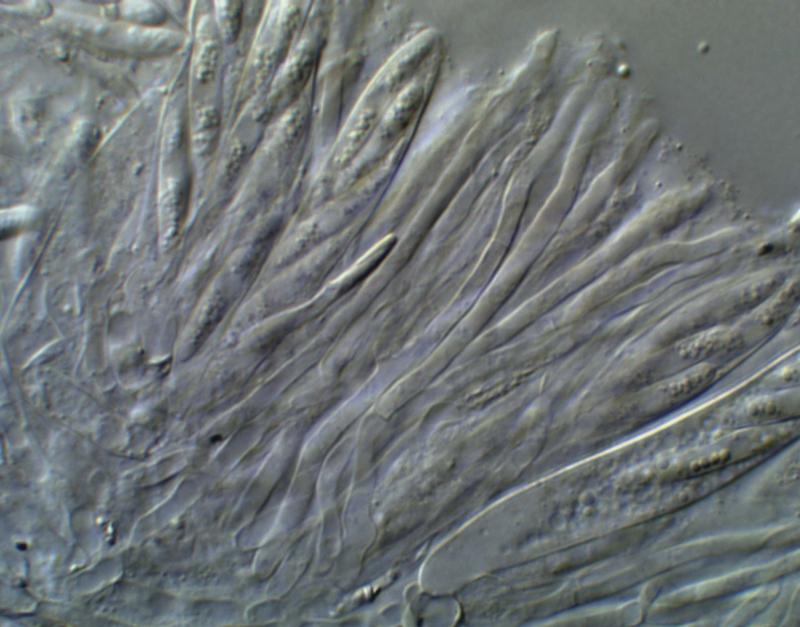
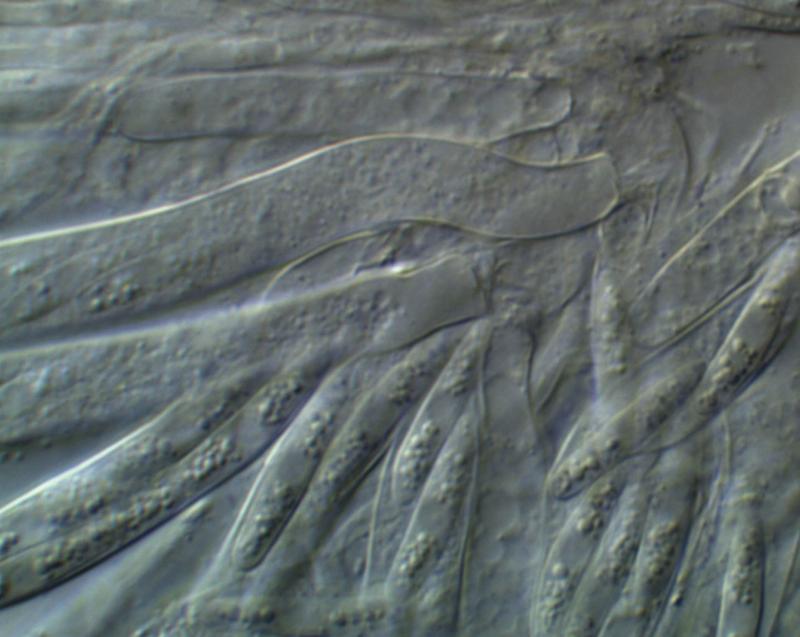
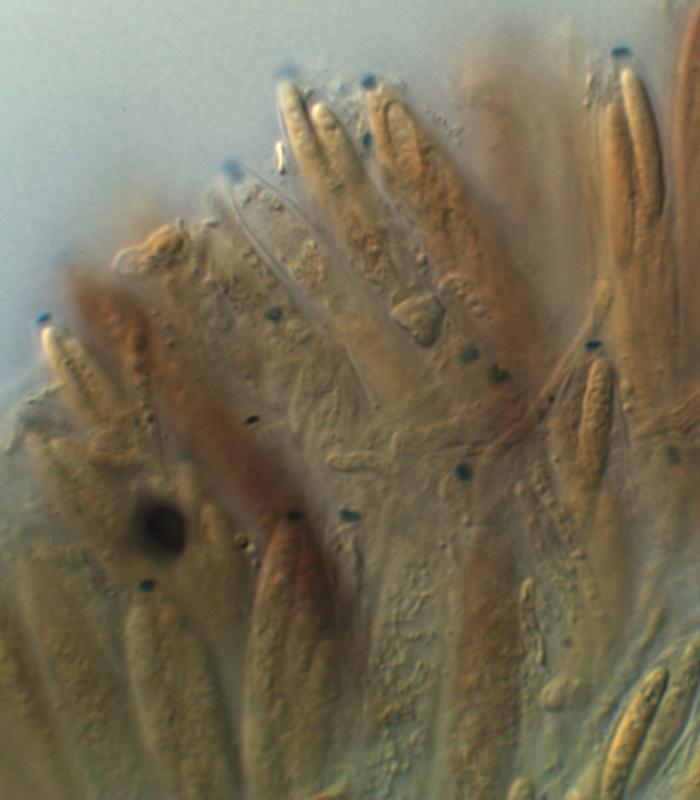
Asci were (I think without croziers); IKI+ bb.
Paraphyses were filiform, not broadening at the apex, and without obvious contents.
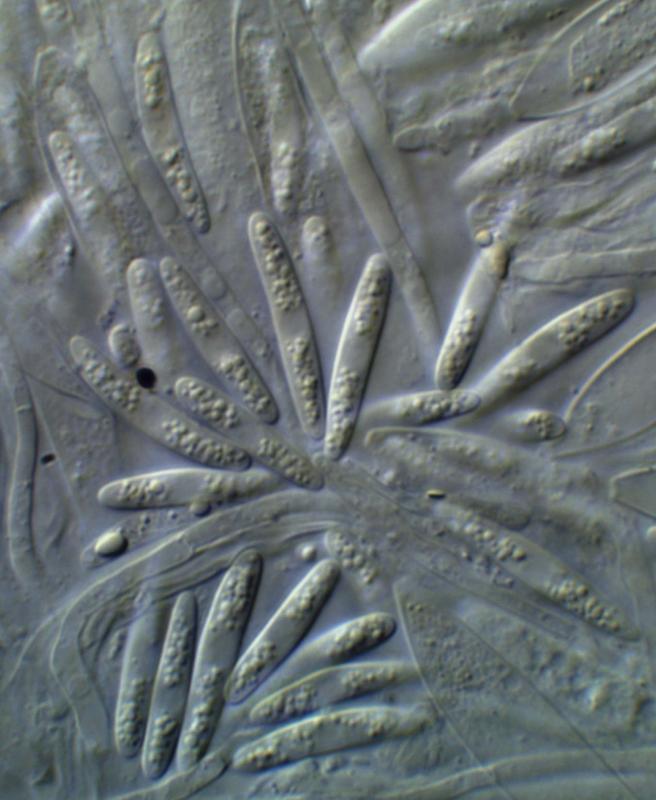
Ascospores were cigar-shaped, some slightly curved and with guttules in each half with a clear central portion; 14.4-18.
I had wondered about Psilachnum asemum, but that has lanceolate paraphyses and IKI- asci . . . .
and suggestions would be welcome
Cordialement
Chris
Hans-Otto Baral,
28-08-2015 21:45

Re : Disco on Carex flacca
Hi Chris
I suppose asci are with croziers. Psilachnum asemum I still think is another name for Cporonellaria caricinella, a species with guttulate warted paraphyses, hemiamyloid apical rings, and broader spores than yours. Did you measure spore width?
I have something similar which I compared with Pseudonaevia (9383, on Carex juncella in Lapland):
https://www.cubbyusercontent.com/pl/CC%2bAscomycota/_1354d48ffaad4b59bd3ffdbb35915d1f#CC%20Ascomycota/7a%20Helotiales/m%20Hysteropezizella-complex/Pseudonaevia
Spores are broader.
Zotto
I suppose asci are with croziers. Psilachnum asemum I still think is another name for Cporonellaria caricinella, a species with guttulate warted paraphyses, hemiamyloid apical rings, and broader spores than yours. Did you measure spore width?
I have something similar which I compared with Pseudonaevia (9383, on Carex juncella in Lapland):
https://www.cubbyusercontent.com/pl/CC%2bAscomycota/_1354d48ffaad4b59bd3ffdbb35915d1f#CC%20Ascomycota/7a%20Helotiales/m%20Hysteropezizella-complex/Pseudonaevia
Spores are broader.
Zotto
Chris Yeates,
28-08-2015 22:21
Re : Disco on Carex flacca
Sorry Zotto spores were 14.4-18 x 2.8-3.1µm . . .
thanks for the quick response
LG
Chris
thanks for the quick response
LG
Chris