

17-05-2026 19:05
Thomas FlammerI have found this tiny 200 ym cup shaped apothecia
17-05-2026 16:41
Margot en Geert VullingsWe found this Lachnum on an old Rubus stem.Fruitbo
05-04-2026 22:46
 Lothar Krieglsteiner
on wood of Ceratonia, Algarve, 3.4.2026.The color
15-05-2026 13:33
Sylvie Le GoffBonjour à tousJe serais très reconnaissante enve
16-03-2011 14:31
roman vargas albertoHi. I would like some opinion about this Peziza
14-05-2026 05:36
Ethan CrensonHi all, I haven't paid much attention to Lachnu
10-05-2026 23:17
 Andreas Gminder
Hello,today we found in a moist steep decidous for
11-05-2026 12:32
 Bernard CLESSE
Pourriez-vous m'aider à identifier cette héloti
13-05-2026 15:26
 François Freléchoux
Bonjour,Voici une récolte faite il y a quelques j
I found this ascomycete growing in sheet of Platanus.
Pseudotecios are inmersed, with a size of 150 um in diameter, and with a small neck about 40um.
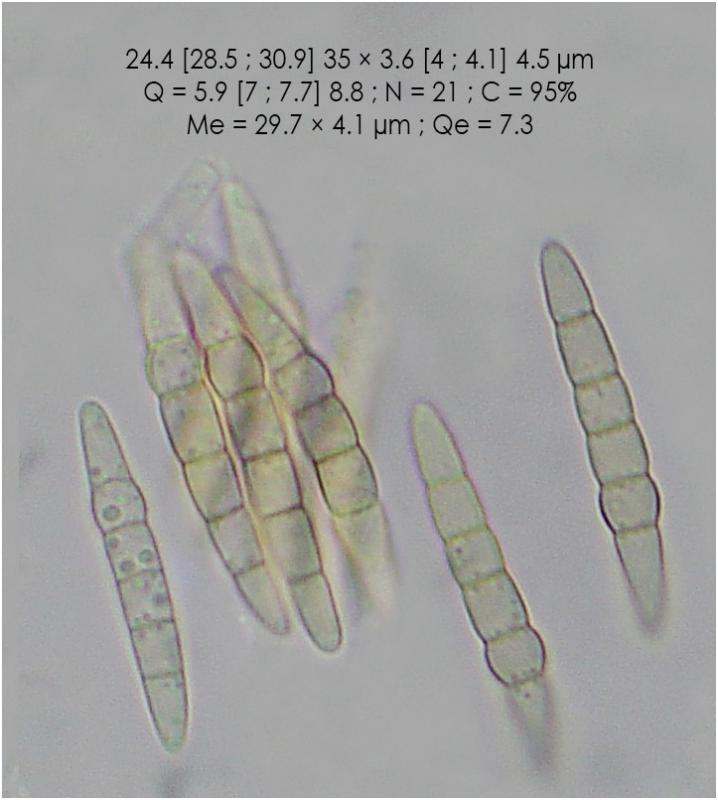
Spores with 5 SEPTA.
I think it is Leptosphaeria, but I could not determine the species.
Any idea?
Thanks, greeting
Susana
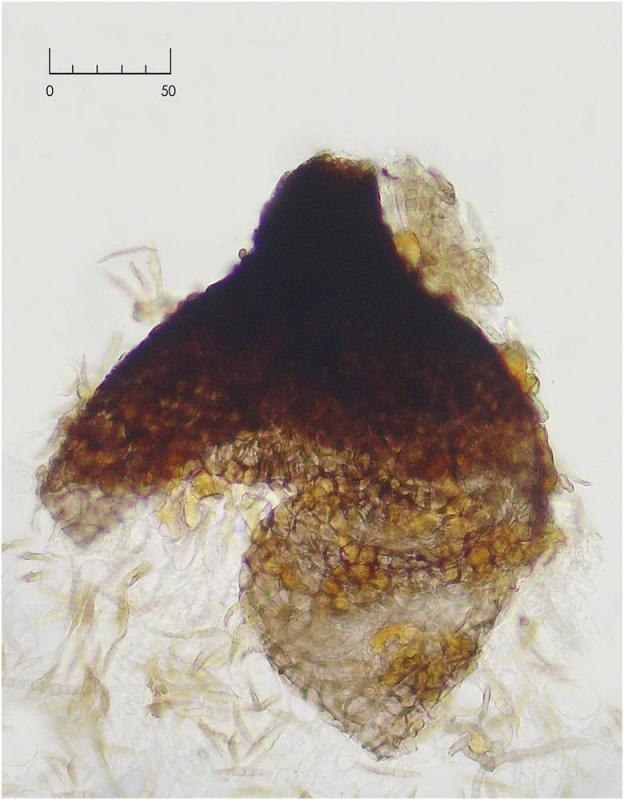
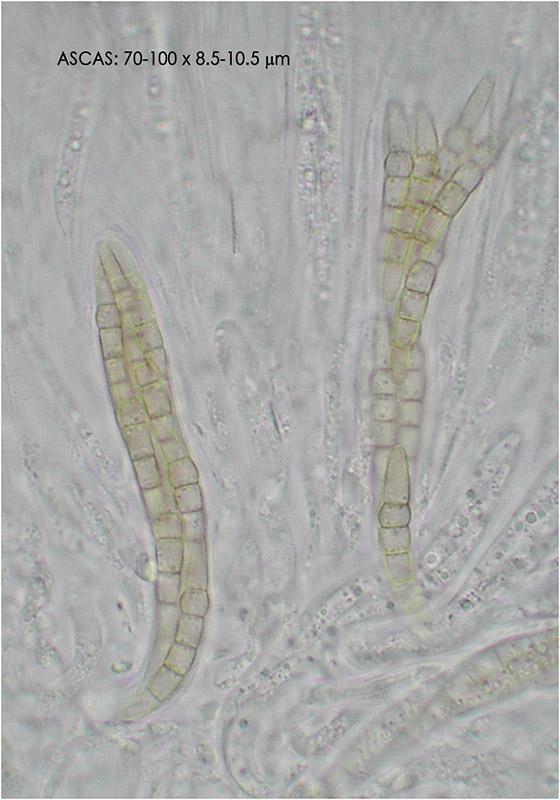

Either there's some weed leaf coming along with the Platanus leaf, and sticked on it, otherwise I have no clue.
Or maybe someone with more knowledge will find the solution...
Cheers - LUC.
No, there was no grass stuck to the sheet. The species was immersed in platanus leaf. The sheet had many "black spots", the majority belonged to Pleospora herbarum. I found 2 perithecia of this type.
To be P. vagans should have spores with some longitudinal septum, and I not saw it. In any case, it would seem more to P. nigrans, but here the spores are greater.
Saludos
Susana