
18-10-2022 00:12
Valencia Lopez Francisco JavierHola amigos/asRecientemente encontré esta colecci
04-06-2026 07:02
 François Freléchoux
Bonjour, Voici la description d'une espèce qui p
03-06-2026 19:45
 Miguel Ángel Ribes
Good afternoonI'm completely baffled by this suppo
03-06-2026 14:39
Thomas FlammerApothecia yellow, glassy-transparent, 80 - 120 ymS

16-03-2014 13:39
 Enrique Rubio
HI to all I'm looking for B. Hein's article on Wi
02-06-2026 14:33
 Nicolas VAN VOOREN
Hello.I'm searching for a PDF copy of the followin
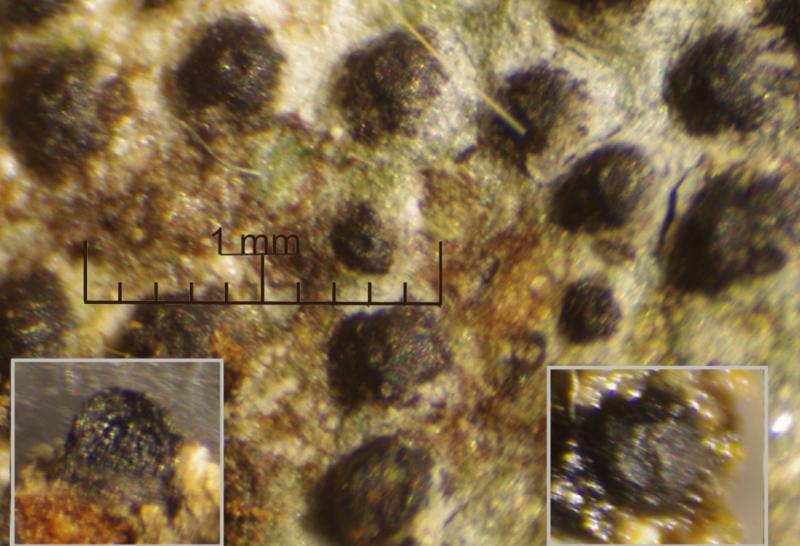
It was found on bark of Tilia cordata in Stange, Norway.
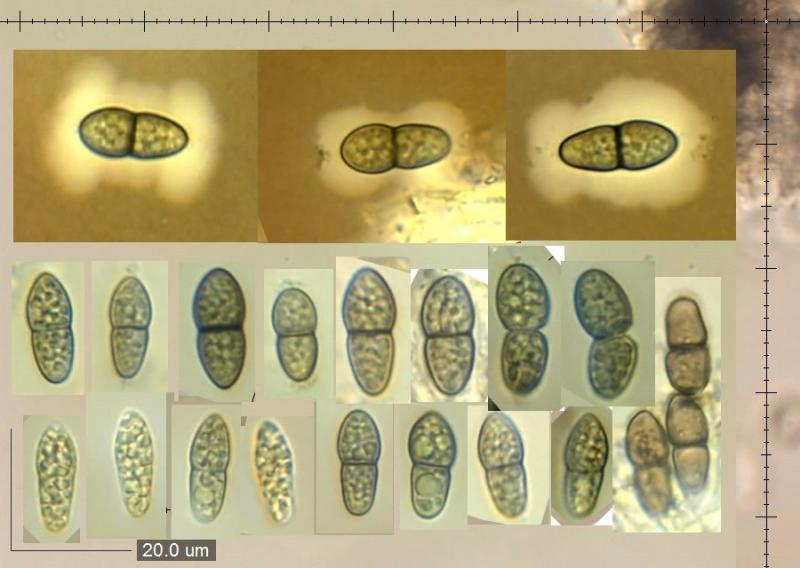
Spores: 17 [18.2 ; 18.8] 20 x 6.8 [7.4 ; 7.8] 8.5 µm, Q = 2.2 [2.4 ; 2.5] 2.7 ; N = 23 ; C = 68%, Me = 18.5 x 7.6 µm ; Qe = 2.4
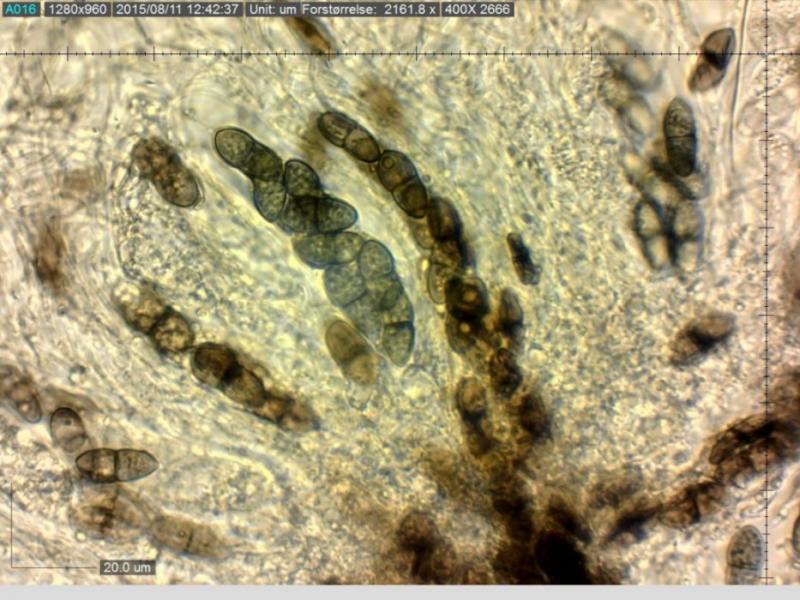
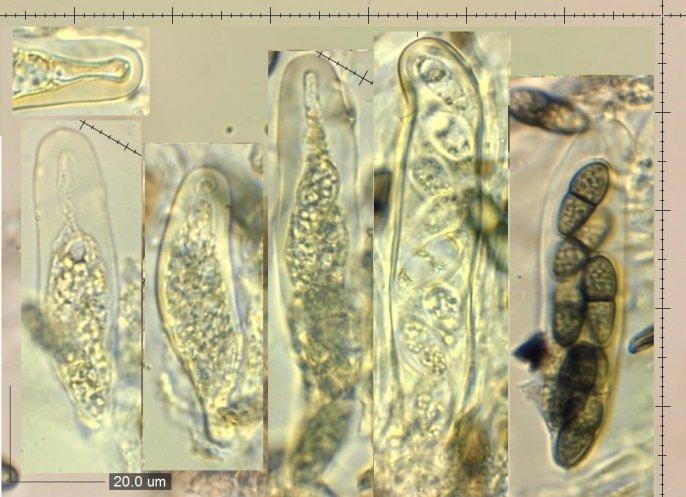
Asci: 77 [80.6 ; 86.4] 90 x 16.4 [17.4 ; 18.8] 19.8 µm, Q = 4.3 [4.5 ; 4.8] 4.9 ; N = 5 ; C = 68%, Me = 83.5 x 18.1 µm ; Qe = 4.6
Thanks in advance for any help.
Hilsen
Per
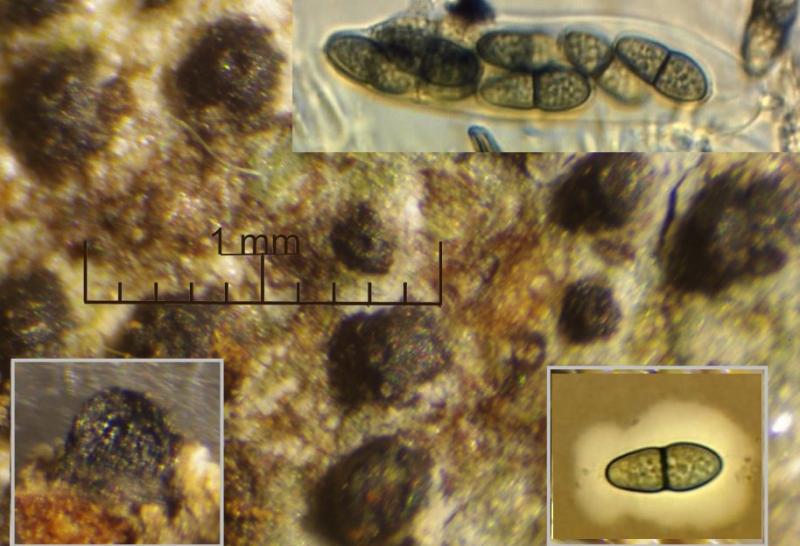
Did you consider Peridiothelia fuliguncta which has similar spores and occurs on Tilia bark? It is described and illustrated by Hawksworth (1985): "A redisposition of the species referred to the ascomycete genus Microthelia" (Bull. Br. Mus. nat. Hist. (Bot.) 14 (2): 43-181). I can mai you a copy of this paper.
Regards Eduard

Hi,
Good guess from Eduard, I agree.
I posted photos in Ascofrance database.
Alain
PS : it's a fungus that is not exclusively lichenicolous.
I did not consider Peridiothelia fuliguncta, in fact I had no idea of what it was. There is a key and description of it in "Bulletin of the British Museum" 1985 by DAVID L. HAWKSWORTH, it fits very vel.
Still it would be great if you, Eduard, could email the paper you mentioned.
HAWKSWORTH writes: "Probably never lichenized".
Thank you very much for help.
Regards
Per
Paper just sent.
Eduard
Per