
17-04-2026 19:16
 Enrique Rubio
Hi to everybodyI would appreciate any assistance r
14-04-2026 05:32
Ethan CrensonHi all, A few weeks back a friend pointed out som
17-04-2026 15:14
 Bruno Coué
Bonjour.Récoltes du 16/04/2026, sur feuilles mort
12-04-2026 15:52
Gernot FriebesHi,I'm looking for help with this anamorph collect
14-04-2026 21:52
Gernot FriebesHi,found on dead leaves of Carex elata. Conidia: 4
16-04-2026 22:09
Buckwheat PeteHello, I'd like to ask about this older specimen:
15-04-2026 19:33
Fátima Durán ManzanequeHi!! I need help, I found this Ascomycete but I d
14-04-2026 20:31
Gernot FriebesHi,can this be Psilachnum lateritioalbum on Phragm
12-04-2026 17:56
 Hardware Tony
Found on dead stems in February earlier this year
12-04-2026 12:22
 William Slosse
In a dune grassland in Oostduinkerke (Belgium), on
Durandiella calluna
Elisabeth Stöckli,
17-07-2016 10:37
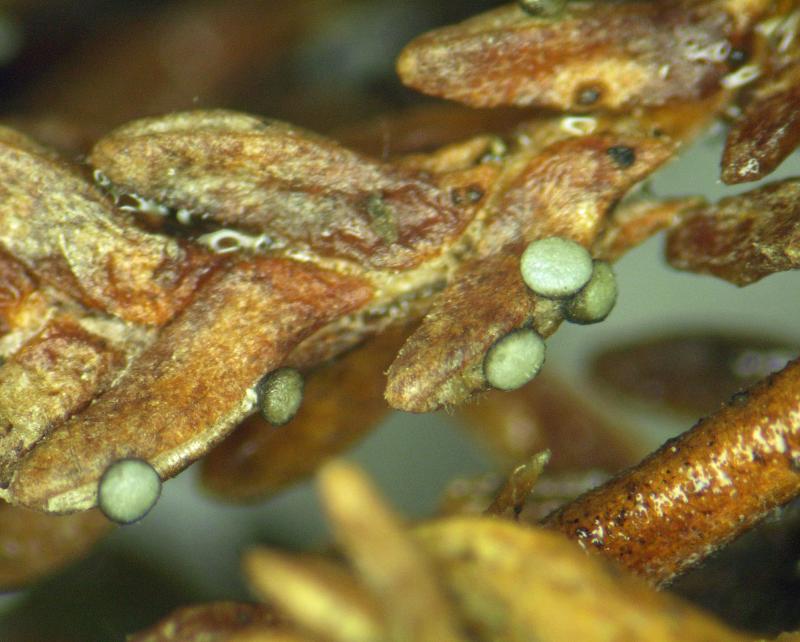
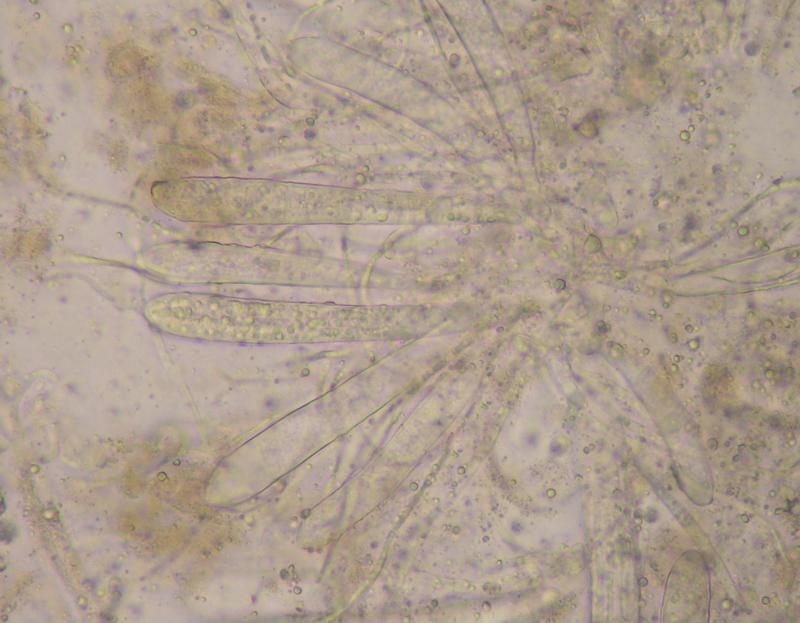
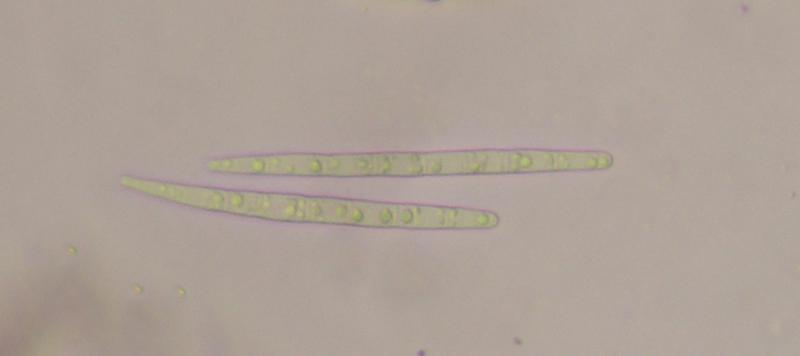
Trouvé sur feuilles mortes de Calluna vulgaris (Lande subalpine xérophile à 1'950m), apothécies 03.-0.5mm de diamètre, surface externe couverte de poils bruns, Hyménium gris, asques 80-115x11.5-12.5µm, octosporés, IKI-, spores fusiformes 45-50x2.2-3µm, lisses, hyalines, 7x septées, paraphyses filiformes.
Qu'en pensez-vous ? Merci d'avance.
Elisabeth

Hans-Otto Baral,
17-07-2016 12:26

Re : Durandiella calluna
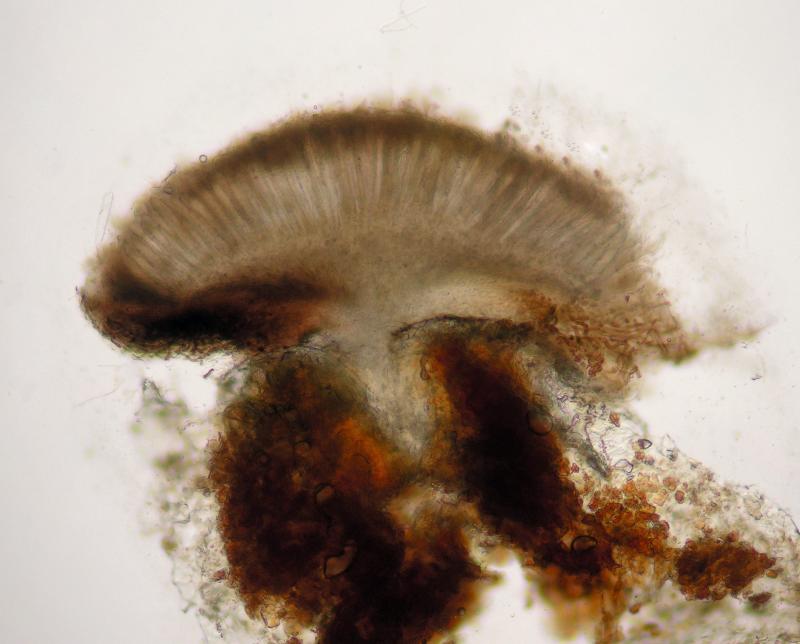
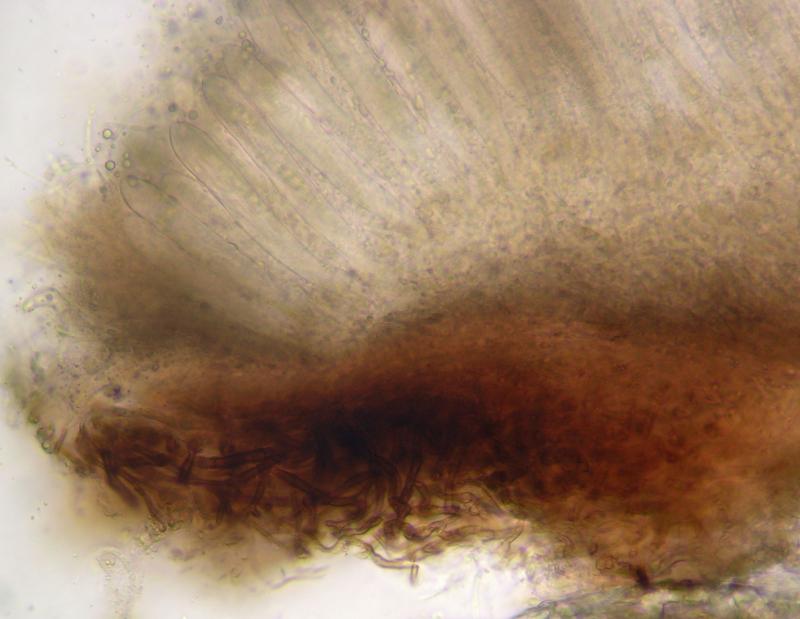
The excipular structure with covering intricate brown hyphae looks exceptional. You don't have a closeup of this?
D. callunae is described with 38-52 x 3-4 µm spores and longer asci. No intricate hyphae on the excipulum and that of margin strongly protruding.
I am not sure about this, but also Godronia seems to be excluded.
D. callunae is described with 38-52 x 3-4 µm spores and longer asci. No intricate hyphae on the excipulum and that of margin strongly protruding.
I am not sure about this, but also Godronia seems to be excluded.
Elisabeth Stöckli,
17-07-2016 15:32
Re : Durandiella callunae
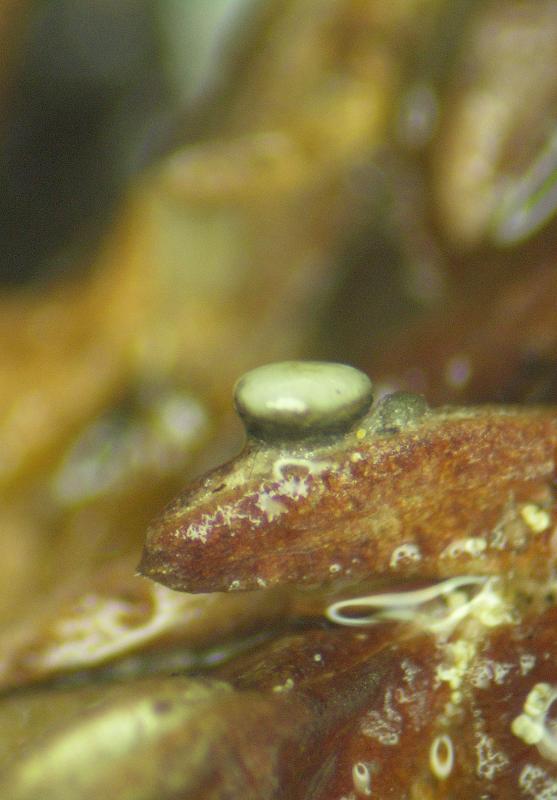
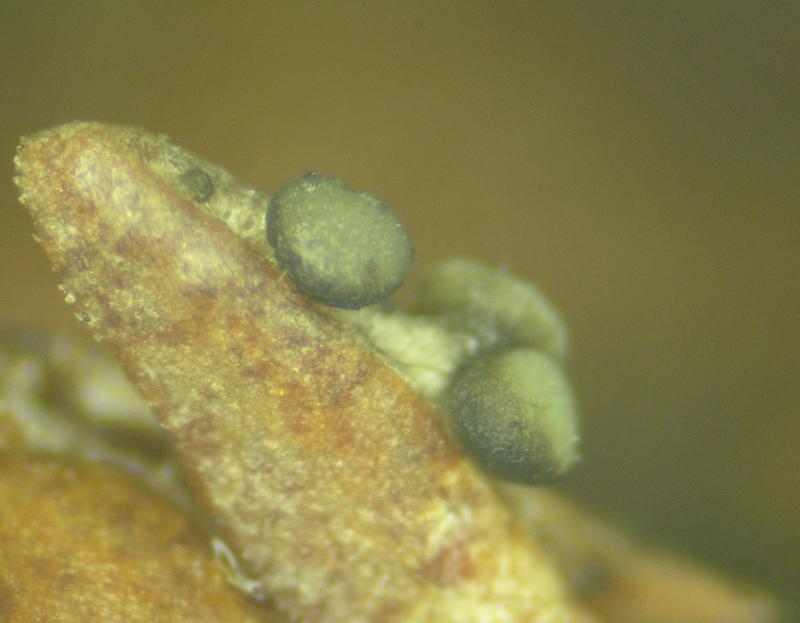
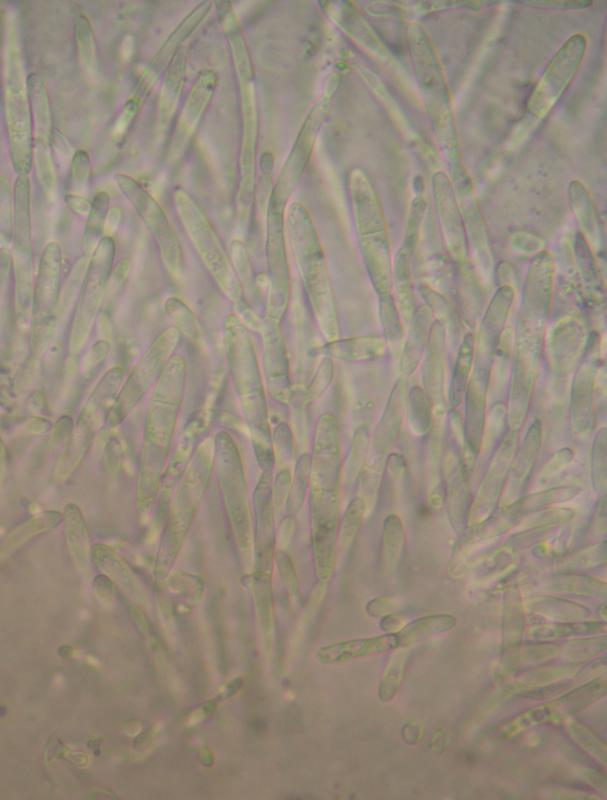
N° 1: apothécies, N° 2 jeune stade
presque pas de spores en dehors des asques, sont 3µm
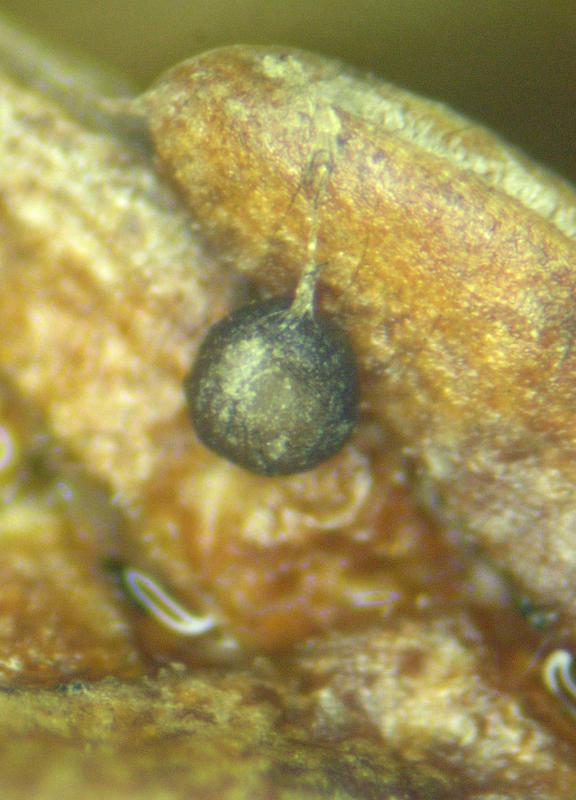
N° 3: conidie 0.4mm (sur la même branche)
N° 4: conidies spores 15-20x3-4µm, 3x septées (mûres)
Elisabeth
presque pas de spores en dehors des asques, sont 3µm
N° 3: conidie 0.4mm (sur la même branche)
N° 4: conidies spores 15-20x3-4µm, 3x septées (mûres)
Elisabeth

Hans-Otto Baral,
17-07-2016 16:20
Re : Durandiella calluna
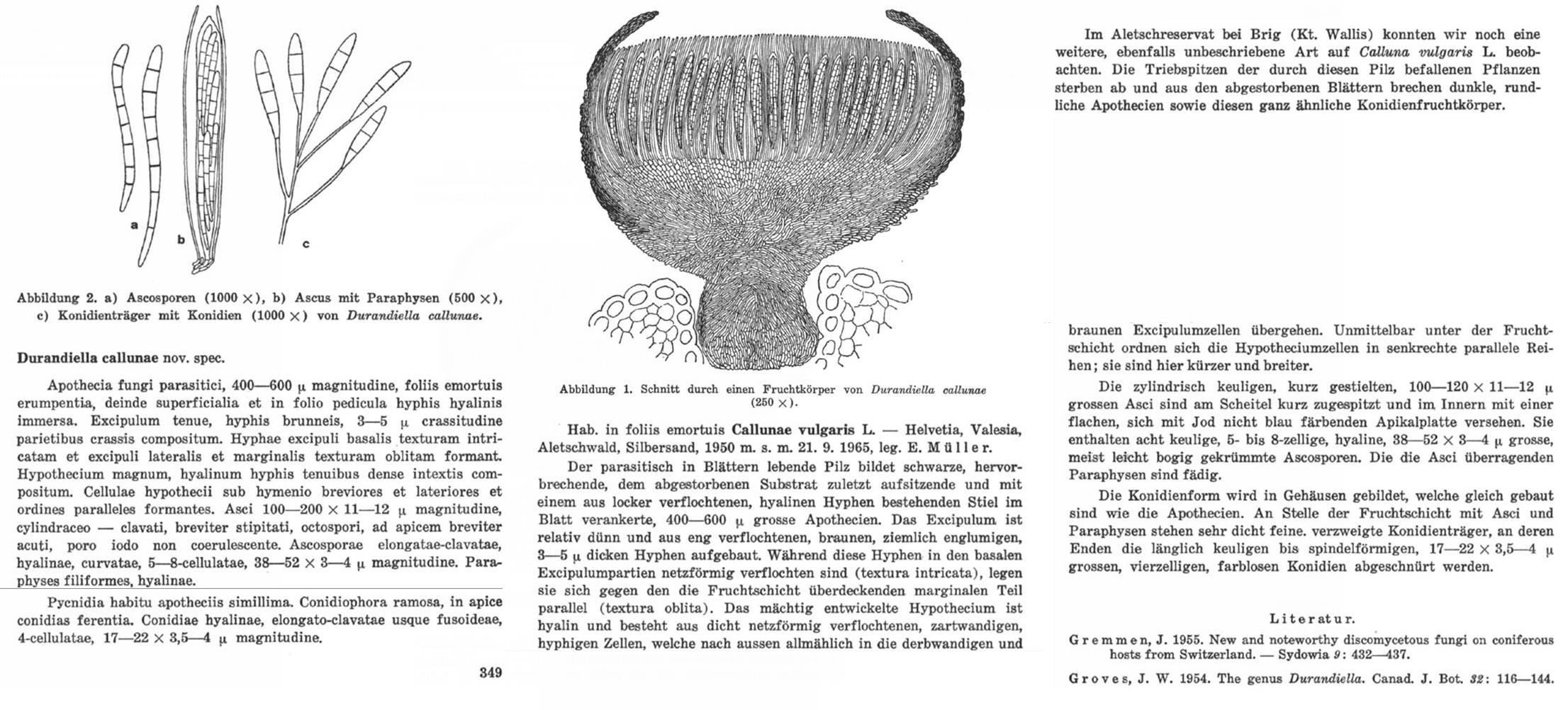
Jawohl! Now I am convinced it is G. callunae.
The drawing by Müller & Schläpfer-B. is quite schematic, but conidial size and septa fit perfectly (17-22 x 3.5-4).
Du hast kein Foto reifer Konidien?
protologue below.
The drawing by Müller & Schläpfer-B. is quite schematic, but conidial size and septa fit perfectly (17-22 x 3.5-4).
Du hast kein Foto reifer Konidien?
protologue below.
 Godronia-callunae-Muller-amp-Schl.-B.-1966-0001.jpg
Elisabeth Stöckli,
17-07-2016 17:14
Re : Durandiella callunae
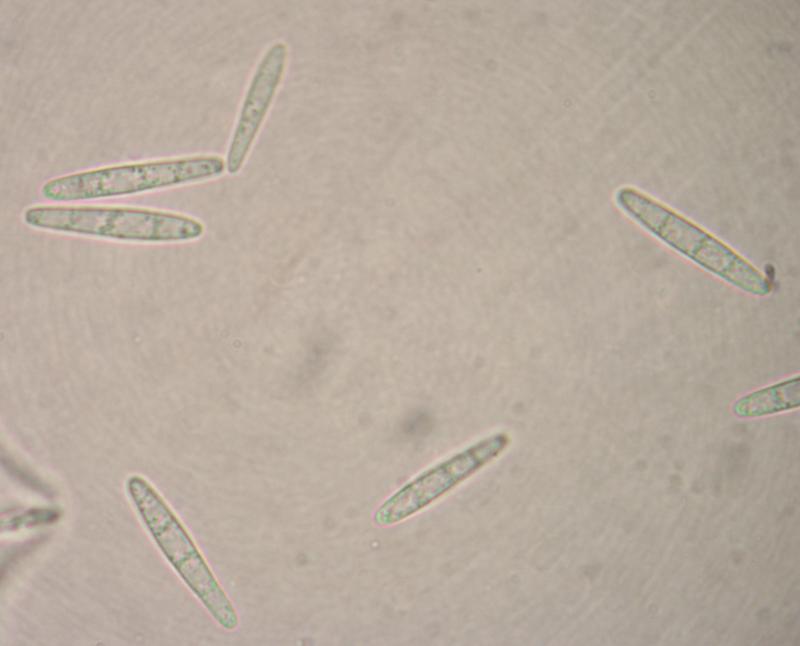
Hier sind einige reife Konidien!
Vielen Dank Zotto.
Elisabeth
Vielen Dank Zotto.
Elisabeth
Hans-Otto Baral,
17-07-2016 18:23
Re : Durandiella calluna
Prima!