
22-05-2026 18:12
 Lothar Krieglsteiner
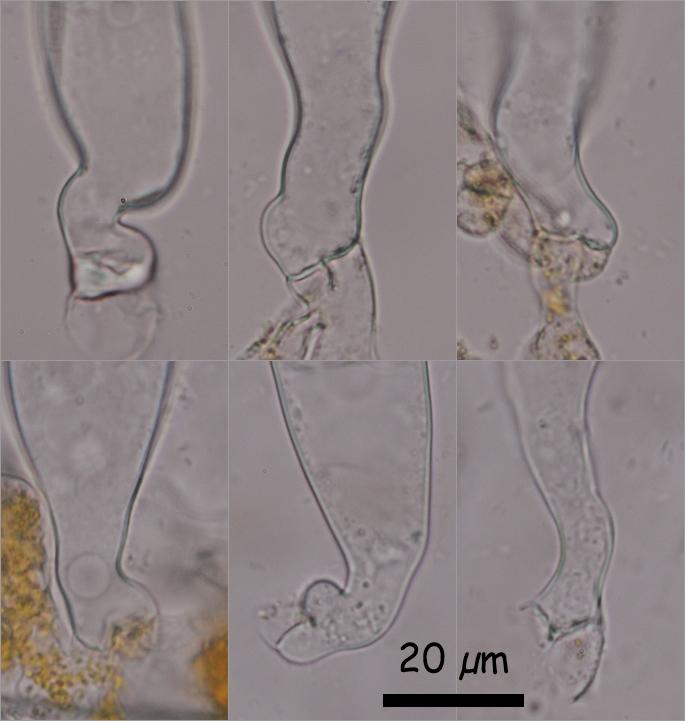
... in moist chamber from Portugal.As the fungus s
11-01-2022 16:36
 Jason Karakehian
Hi does anyone have a digital copy of Raitviir A (
20-05-2026 17:47
Margot en Geert VullingsWe found this Mollisia on dead Juncus stems mown l
22-05-2026 14:47
Gernot FriebesHi,superficial ascomata collected on bark of a liv
22-05-2026 14:44
Lothar Krieglsteiner
in unripe condition citrine yellow, then soon fadi
22-05-2026 13:29
Gernot FriebesHi,I am curious to hear your opinion on this mater
22-05-2026 10:59
 Nicolas VAN VOOREN
Trouvé sur Phragmites, ce que je pense être un L
20-05-2026 21:49
Margot en Geert VullingsWe found this Lachnum on Juncus stems mown last ye
21-05-2026 17:01
Pierre RepellinBonjour à toutes et à tous,Je recherche l'articl
20-05-2026 20:08
 Andreas Millinger
Good evening,another quite distinctive find from M
Ramsbottomia crec'hqueraultii 280815 287
Miguel Ángel Ribes,
06-08-2016 20:49
 Hi friends
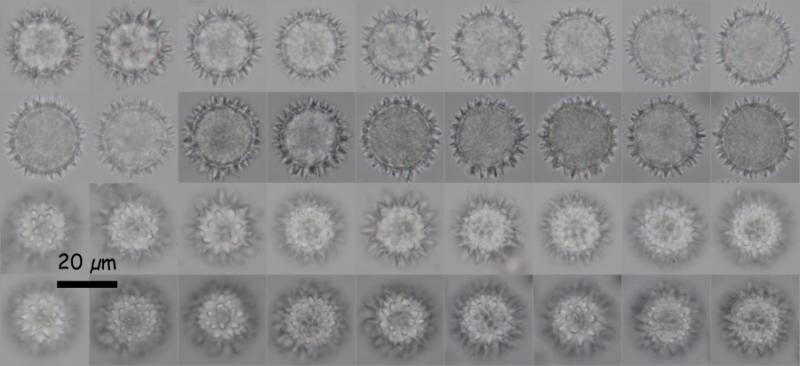
I have this Ramsbottomia with rounded spores and mixed characters between R. crec'hqueraultii and R. macracantha.
Spores (1000x, H2O, live, without ornamentation): (19,2) 20,3 - 23,4 (23,6) × (19) 20,2 - 22,7 (22,9) µm; Q = 1 ; N = 37; Me = 21,8 × 21,4 µm; Qe = 1.
Ornamentation length: (2,2) 2,6 - 3,9 (4,2) µm; N = 45; Me = 3,3 µm.
I think it is nearest R. crec'hqueraultii than macracantha because Me spores are 21,8 x 21,4 (only a little bigger than 20 µm) and ornamentation is Me = 3,3 µm, but all papers I have read have spore measures for crec'hqueraltii < 20 µm and spiner never > 3,5 µm. And in this collection some spines have a very broad base.
Perhaps my collection is a "joung" R. macracantha?
Thank you in advance.
Nicolas VAN VOOREN,
07-08-2016 09:53
Re : Ramsbottomia crec'hqueraultii 280815 287
Hi Miguel.
You lost your Cotton Blue ;-)
It would be interesting to know more about the other characters, especially the "hairs", and the habitat.
You lost your Cotton Blue ;-)
It would be interesting to know more about the other characters, especially the "hairs", and the habitat.
Miguel Ángel Ribes,
07-08-2016 17:50
Re : Ramsbottomia crec'hqueraultii 280815 287
Jejeje, don't worry Nico, next time, despite this impressive ornamentation, I will use CB, CRB or another blue.
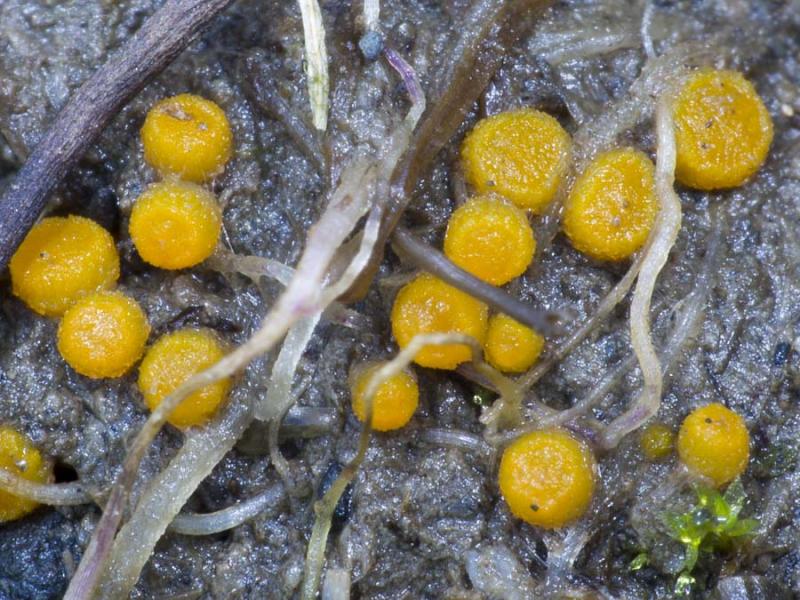
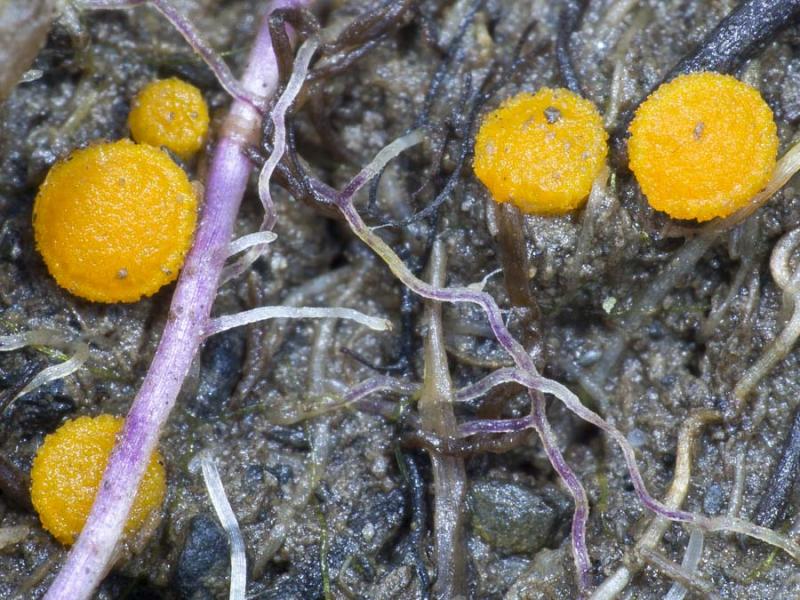
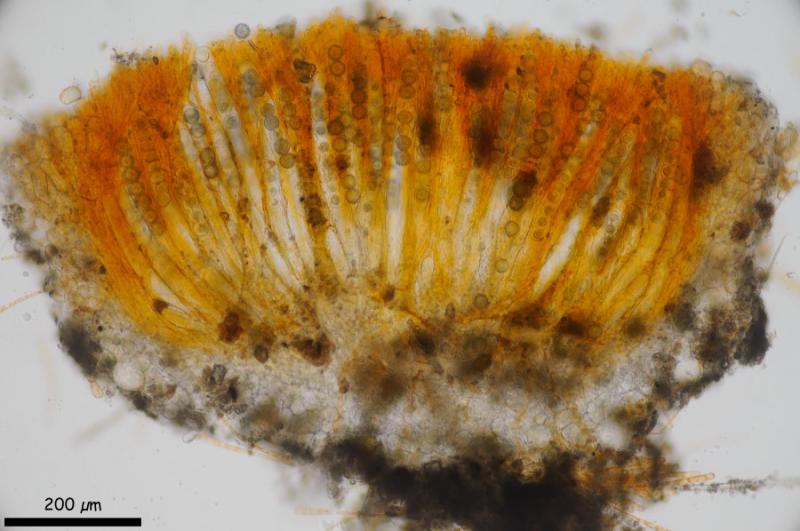
This Ramsbottomia was neighbor of Boudiera tracheia, at alpine place, in a very, very humid slope of a small stream, between mosses, with Juncus, Aconitum and another small herbs.
An this are the pictures.
This Ramsbottomia was neighbor of Boudiera tracheia, at alpine place, in a very, very humid slope of a small stream, between mosses, with Juncus, Aconitum and another small herbs.
An this are the pictures.
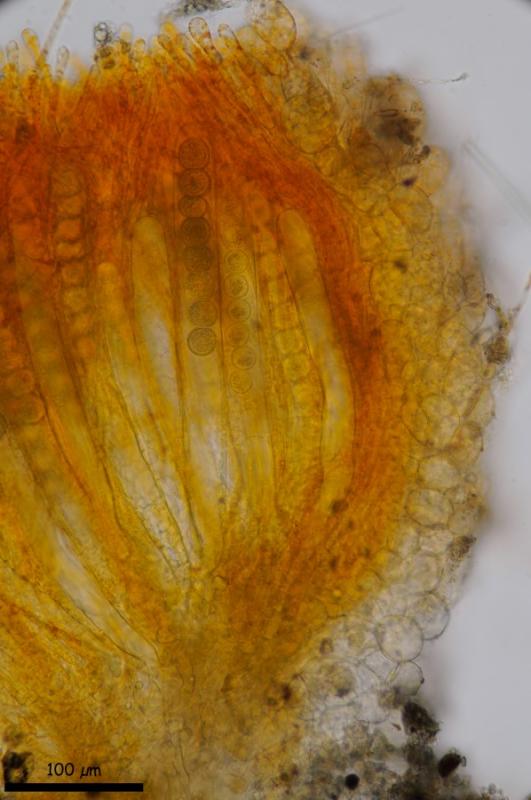
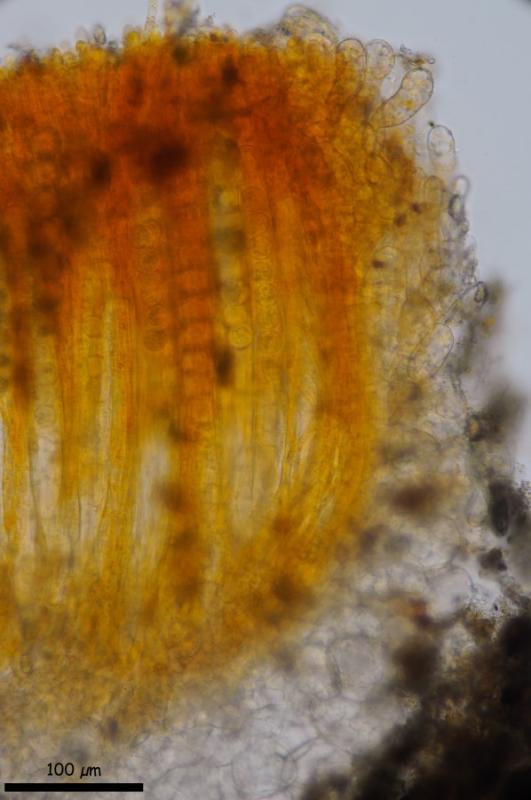
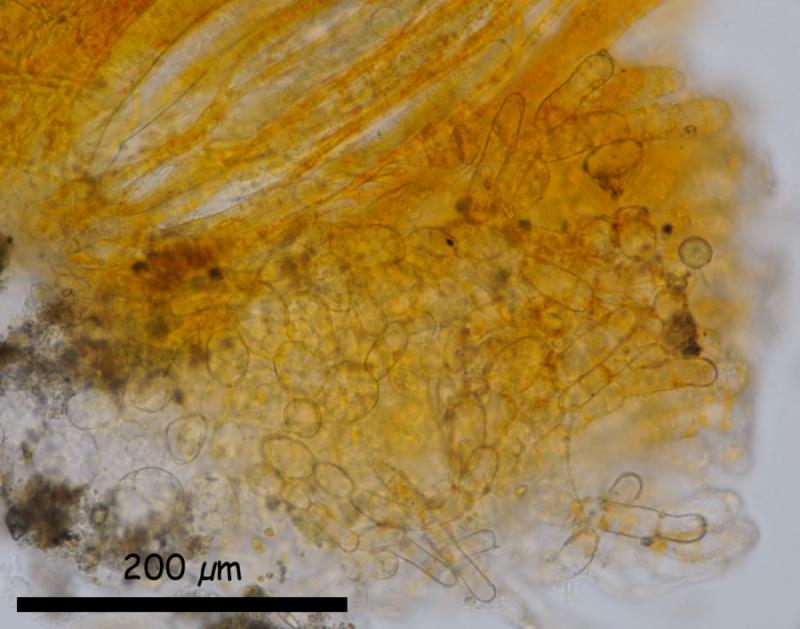
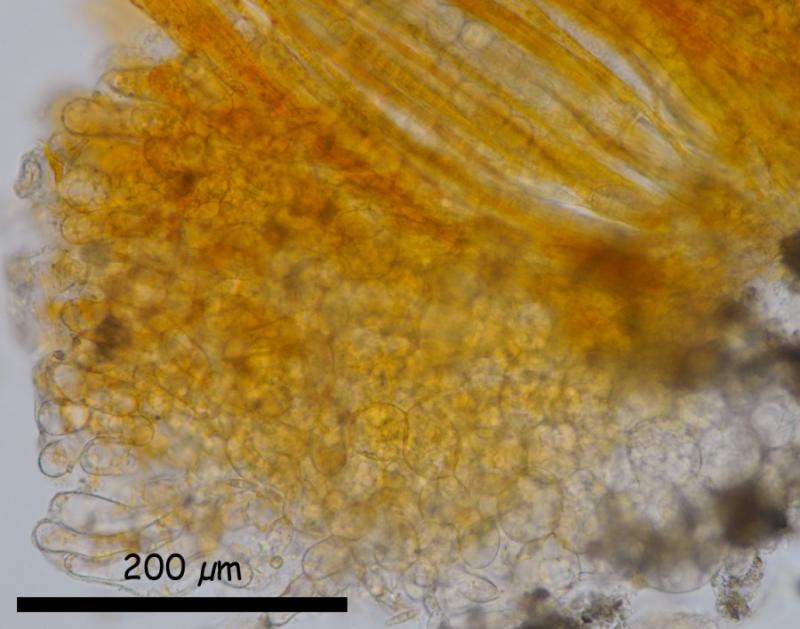
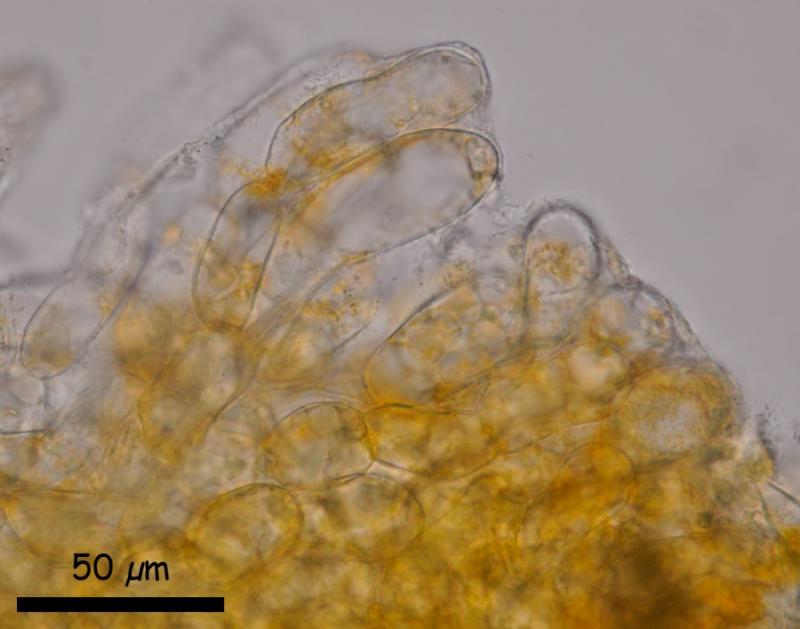
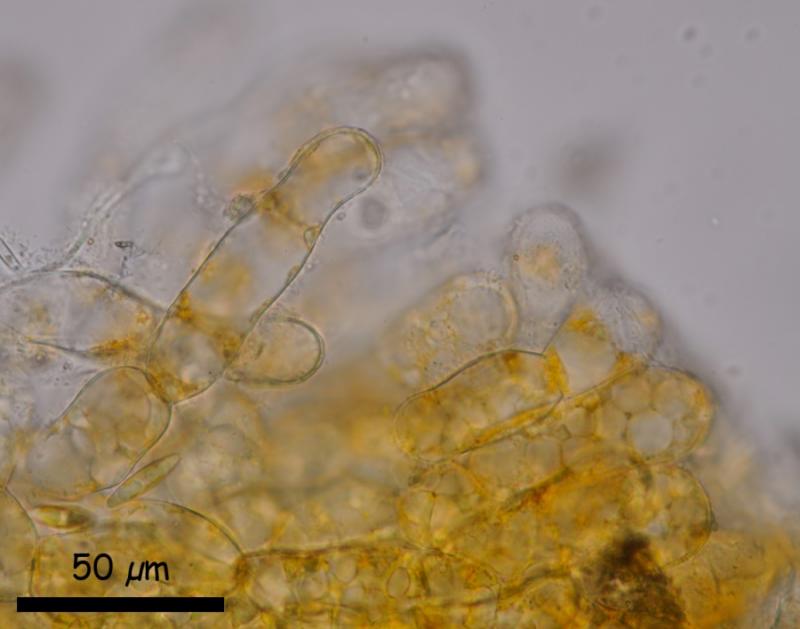
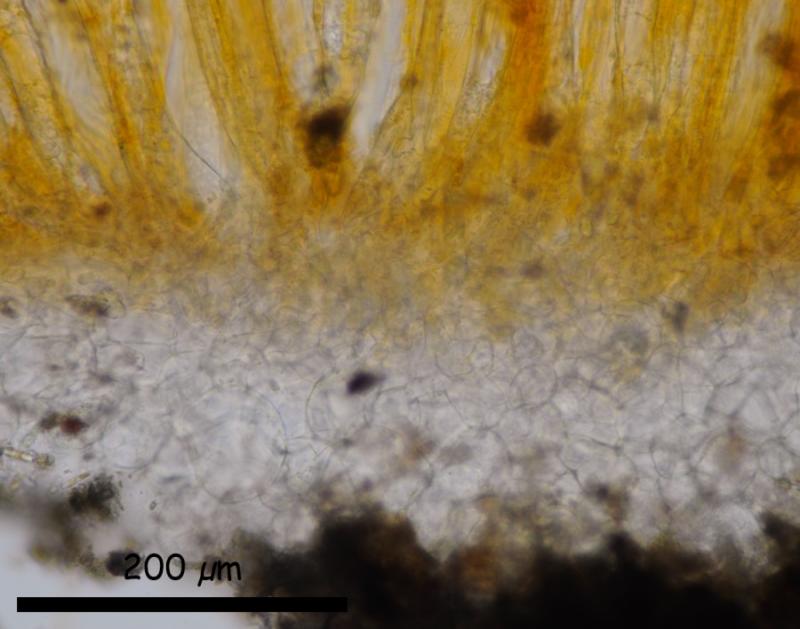
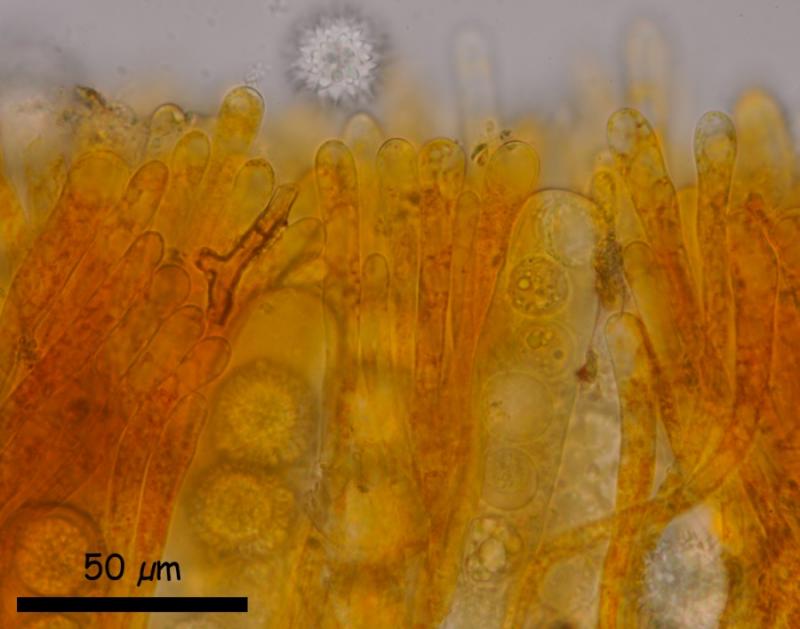
Nicolas VAN VOOREN,
09-08-2016 19:07
Re : Ramsbottomia crec'hqueraultii 280815 287
Hi.
In alpine zone, the most common species is R. asperior, but the spores of this collection seem to be too large (and not enough subglobose) to fit the latter.
R. lamprosporoidea is another hypothesis, but the "hairs" should be more coloured and longer (I think you remember our discussion about this taxon and some Pyrenean collections).
In all cases keep this collection, a DNA sequence could be useful to clarify the taxonomy of each taxon...
In alpine zone, the most common species is R. asperior, but the spores of this collection seem to be too large (and not enough subglobose) to fit the latter.
R. lamprosporoidea is another hypothesis, but the "hairs" should be more coloured and longer (I think you remember our discussion about this taxon and some Pyrenean collections).
In all cases keep this collection, a DNA sequence could be useful to clarify the taxonomy of each taxon...
Miguel Ángel Ribes,
09-08-2016 19:40
Re : Ramsbottomia crec'hqueraultii 280815 287
Hi Nico
We have a collection of R. lamprosporoidea published in "Contribución al conocimiento de la micobiotal de Parque Natual de la Sierra Norte de Guadalajara. Catálogo y especies más interesantes I. Bol. Soc. Micol. Madrid 38: 163-181. 2014" (link here: https://www.dropbox.com/s/kilf85z3nt3683z/Contribucion%20conocimiento%20micobiota%20del%20PN%20Sierra%20Norte%20de%20Guadalajara%20-%20Campos%202014.pdf?dl=0):
* with subglobose spores, not rounded, (16,1-)16,9-18,9(-19,3) x (13,8-)14,8-17(-17,4) mµ Q = (1-)1,05-1,18(-1,2); N = 41; Me = 17,9 x 16 µm ; Qe = 1,1.
* with darker hairs of (72,3-)103,5-134,9(-162,3) x (11,7-)13,3-22(-24,3) µm; N = 34; Me = 118 x 17,5 µm
The length hairs is similar in both collection, but not the spore shape.
We could try to sequenced it.
Thank you.
We have a collection of R. lamprosporoidea published in "Contribución al conocimiento de la micobiotal de Parque Natual de la Sierra Norte de Guadalajara. Catálogo y especies más interesantes I. Bol. Soc. Micol. Madrid 38: 163-181. 2014" (link here: https://www.dropbox.com/s/kilf85z3nt3683z/Contribucion%20conocimiento%20micobiota%20del%20PN%20Sierra%20Norte%20de%20Guadalajara%20-%20Campos%202014.pdf?dl=0):
* with subglobose spores, not rounded, (16,1-)16,9-18,9(-19,3) x (13,8-)14,8-17(-17,4) mµ Q = (1-)1,05-1,18(-1,2); N = 41; Me = 17,9 x 16 µm ; Qe = 1,1.
* with darker hairs of (72,3-)103,5-134,9(-162,3) x (11,7-)13,3-22(-24,3) µm; N = 34; Me = 118 x 17,5 µm
The length hairs is similar in both collection, but not the spore shape.
We could try to sequenced it.
Thank you.