
29-05-2026 15:35
daniel FERREBonjour à tous,Je voudrais votre aide pour cette
28-05-2026 16:15
James MitchellHello,Does anyone have the original publication of
28-05-2026 11:06
Thomas Læssøehttps://svampe.databasen.org/observations/10596750
23-05-2026 11:44
 Charles Grapinet
Hello, I am having trouble identifying this copro
25-05-2026 16:44
François BartholomeeusenHi forum members,During an excursion organised by
26-05-2026 21:25
Dirk GerstnerHello everyone, I'm completely stumped by this li
26-05-2026 22:44
Ethan CrensonHi all, I think I have Incrucipulum capitatum her
22-05-2026 14:44
 Lothar Krieglsteiner
in unripe condition citrine yellow, then soon fadi
25-05-2026 16:35
 Bernard CLESSE
Bonjour à toutes et tous,J'ai trouvé récemment,
22-05-2026 13:29
Gernot FriebesHi,I am curious to hear your opinion on this mater
 Hi to everybody
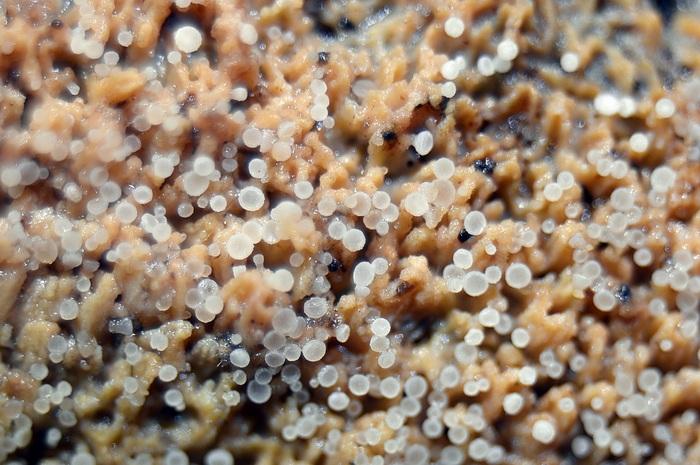
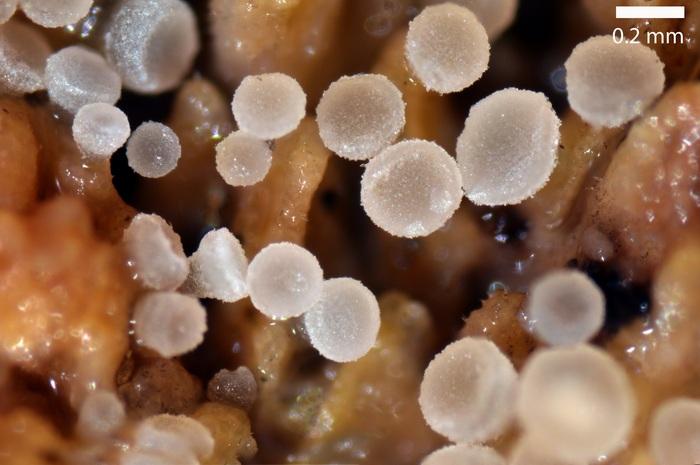
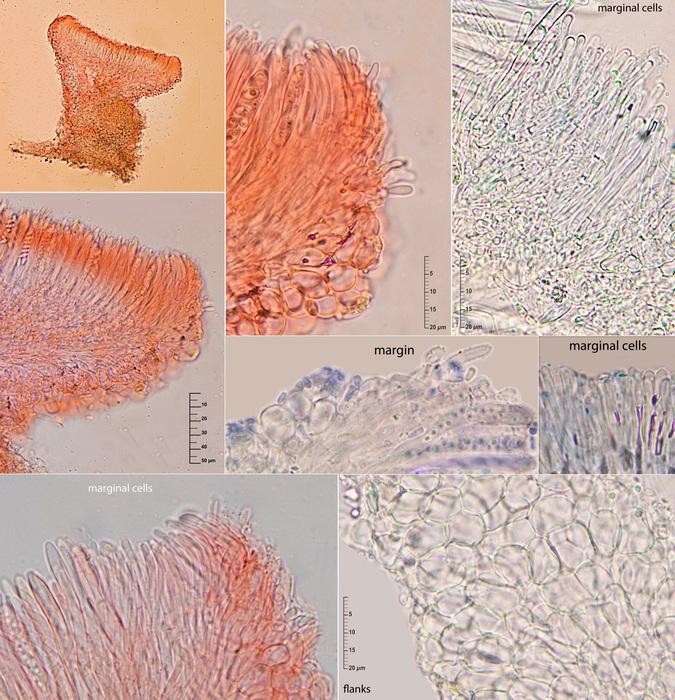
These very densely, gregarious apothecia were growing on the hymenium of a very decayed resupinate, poroid fungus on wood of Fagus sylvatica at 1000 m of altitude. The apothecia are white, shortly stipitate by a stout, broad, cylindrical pseudostipe. The white hymenium is briefly cupulate, later aplanate or only slightly convex, 200-500 microns in diameter. Excipulum downy, as the margin.
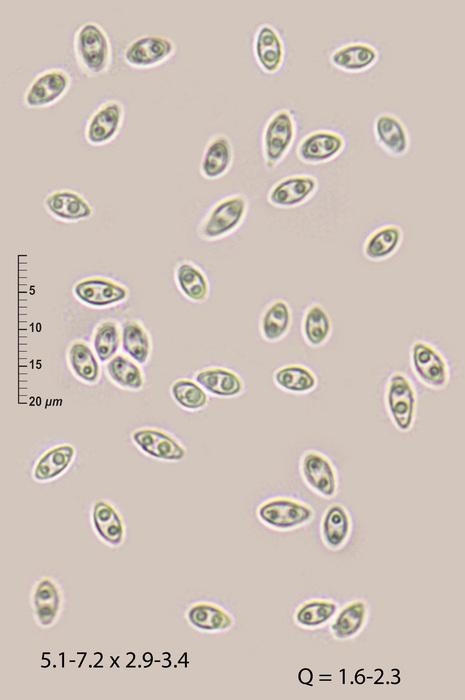
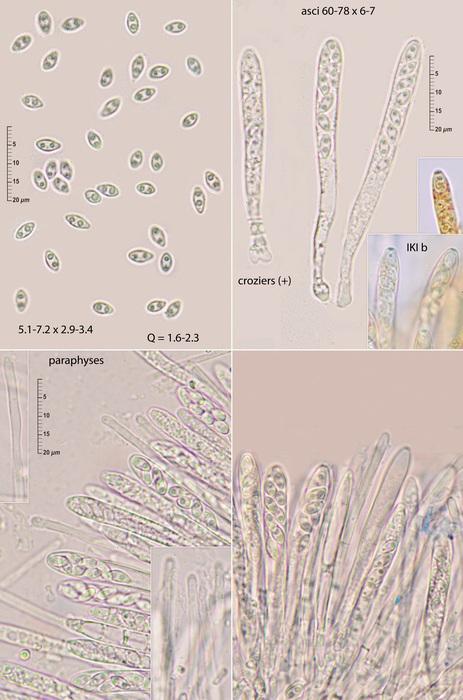
The inconspicuous marginal cells are cylindrical or slightly clavate, smooth or finelly incrustate, but not verrucose as in Cistella species. Ectal excipulum of hyaline, roundish, angular to prismatical cells with no inclusions or VBs. Paraphyses optically empty, with no VBs.
Asci 8-spored, IKI b or rb, with croziers.
I think it could be near to Calycina guttulifera from Zotto's folder.
What do you think?
Thanks again

Maybe yours fits best the find by Patrice Tanchaud from 10.IX.2015 in lacking VBs and a blue apical ring. my 6787 was IKI purely red.
From 6787 we have a sequence (ITS and LSU). It clusters in Leptodontidium near L. trabinellum, but these fungi have VBs.
Zotto
yes, near this find : http://www.mycocharentes.fr/pdf1/413%201948%202%20.pdf
Patrice
Bonsoir Patrice
Oui. Je pense que ton champi est le même, qui as les cellules marginales avec un petit épaississement apicale.