

19-05-2026 10:27
Patrice TANCHAUDBonjour, récolte récente sur terre retournée i
04-06-2026 18:39
Gernot FriebesHi,I collected this species in two different locat
22-05-2026 13:29
Gernot FriebesHi,I am curious to hear your opinion on this mater
04-06-2026 10:50
 François Freléchoux
Bonjour, J'ai trouvé hier un petit asco observé
04-06-2026 07:02
François Freléchoux
Bonjour, Voici la description d'une espèce qui p
04-06-2026 13:34
Gernot FriebesHi,I am interested to hear your opinion on this Le
04-06-2026 11:36
Gernot FriebesHi,found on Vaccinium myrtillus.Asci: IKI –, 8-s
 Hi,
Hi,I wil copy/paste some data from other topic, sorry once more for the incovenience.
Found one discoid apothecia (0,4 cm diam.) on wet and sprinkled riverbank, covered in moss in Medittereneaen part of Bosnia and Herzegovina (28.08.2016., just above 110 m)
Ascospores brownish: 17.5 - 19.7 x 9.2 - 10.7 µm
Paraphyses up to 10 µm in the apex, on average 6-9 µm wide, usually emerged in brown pigment.
I`m not sure whether or not this could fit P.limnaea. Distincly brown spores, and highly pigmented paraphyses and area around are some of the uncertainties. On the other hand ecology/elevation of P. alaskana is much more different (not inculding record from Israel).
What do you think? Appreciate any comments.
Regards,
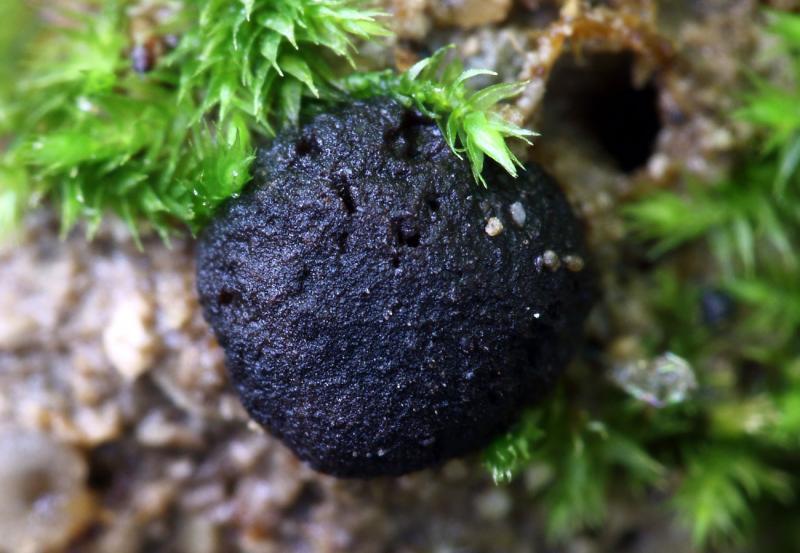
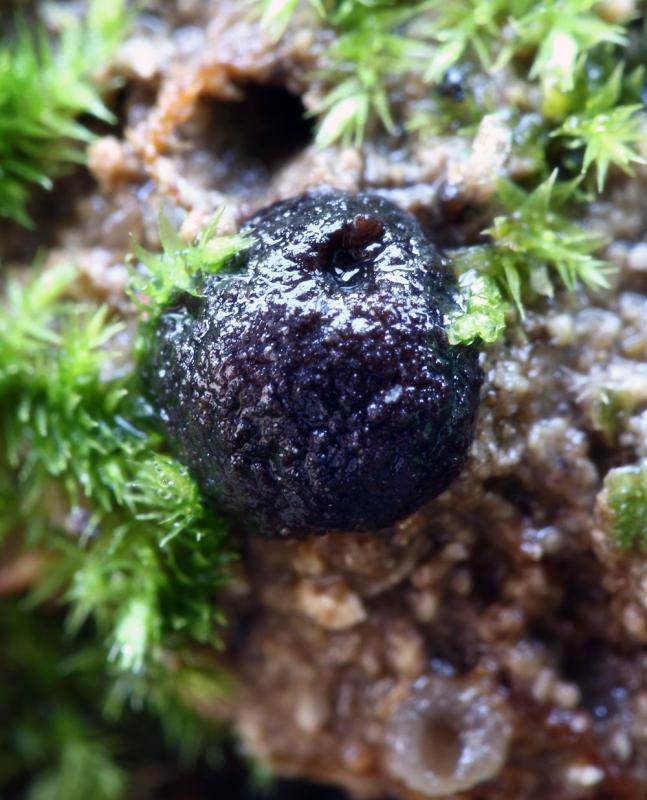
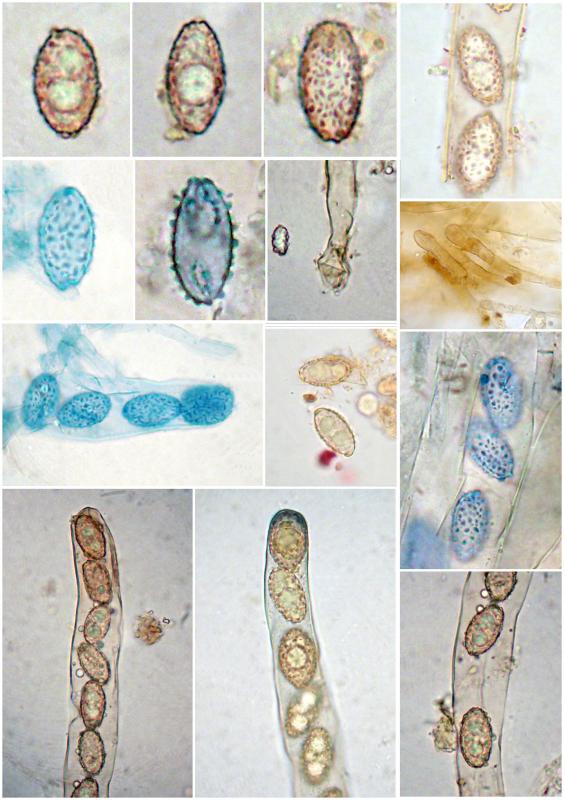

So it's hard to give a correct determination based on one old specimen.
Maybe the same fungus, but I have no name. The close species seems to be P. badiofusca.
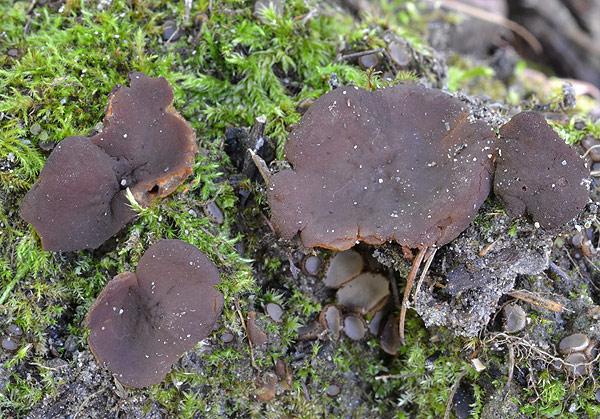
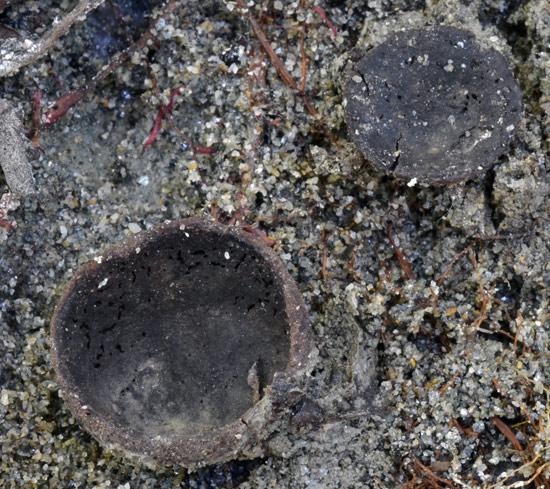
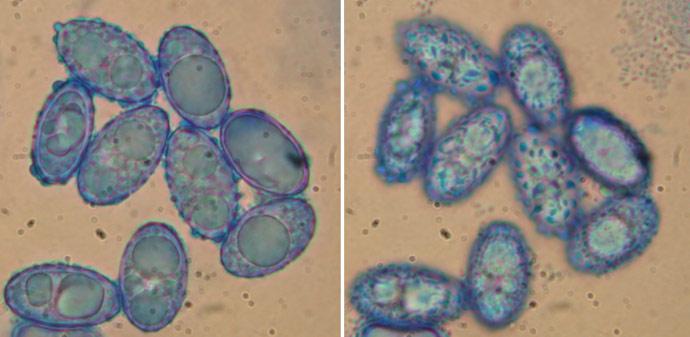
That could be the same one.
It is same "mossy" riverbank habitat, but significatly different elevation.
I`ve also noted a presence of small pseudohairs at the margin, up to 75 µm in lenght, and 9 µm wide, elongated from ectal excipulum cells.
Nedim