
29-05-2026 15:35
daniel FERREBonjour à tous,Je voudrais votre aide pour cette
28-05-2026 16:15
James MitchellHello,Does anyone have the original publication of
28-05-2026 11:06
Thomas Læssøehttps://svampe.databasen.org/observations/10596750
23-05-2026 11:44
 Charles Grapinet
Hello, I am having trouble identifying this copro
25-05-2026 16:44
François BartholomeeusenHi forum members,During an excursion organised by
26-05-2026 21:25
Dirk GerstnerHello everyone, I'm completely stumped by this li
26-05-2026 22:44
Ethan CrensonHi all, I think I have Incrucipulum capitatum her
22-05-2026 14:44
 Lothar Krieglsteiner
in unripe condition citrine yellow, then soon fadi
25-05-2026 16:35
 Bernard CLESSE
Bonjour à toutes et tous,J'ai trouvé récemment,
22-05-2026 13:29
Gernot FriebesHi,I am curious to hear your opinion on this mater
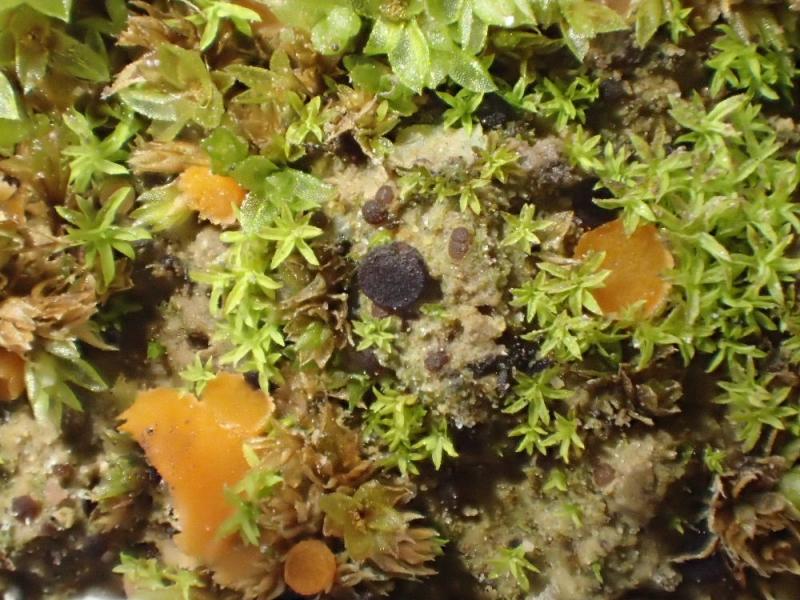
Vendredi, un ami m'a apporté un petit morceau de terre moussue découpé sur une place à feu. Outre l'Octospora excipulata (= roxheimii) facilement identifiable, j'ai trouvé aussi quelques Ascobolus pusillus (au centre de la photo, en violet). En cherchant à la loupe binoculaire, j'ai aperçu d'autres minuscules apothécies (en brun pâle autour de l'Ascobolus).
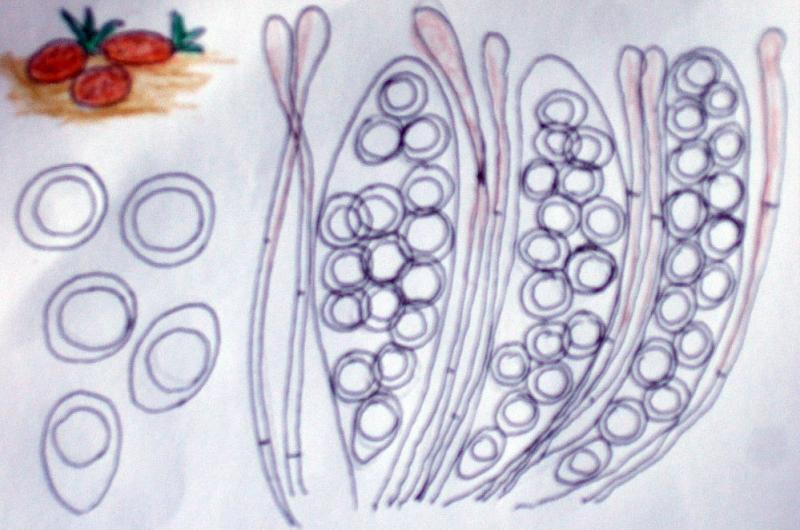
Rien d'exceptionnel me direz-vous mais, quand on examine une apothécie au micro, surprise : des asques contenant 16 spores rondes, lisses avec une grosse goutte au centre. La spore en bas de l'asque est elliptique ou en forme d’œuf. Taille des spores : 7-8 µm de diamètre.
La réaction au Melzer n'est pas évidente, je ne suis pas parvenu à examiner la base des asques (trop de cendre dans la préparation car l'apothécie semble bien adhérer au sol.
Pas d'idée et je ne sais où chercher. Je joins un mauvais dessin qui vous donnera peut-être une idée.
merci de votre aide
gilbert
cheers

Gilbert, perhaps you can find an emptied ascus, does it have an operculum?
Je viens de refaire une préparation sans trop de cendre. j'ai utilisé IKI et tous les sommets des asques sont bleus. pas vu d'opercule mais large fente ou largement déchiré pour ceux qui ont libéré leurs spores.
Je vous avoue que je n'avais jamais entendu parler de ce genre Steinia...
Omù pourrais-je trouver de la documentation ?
merci encore
Gilbert
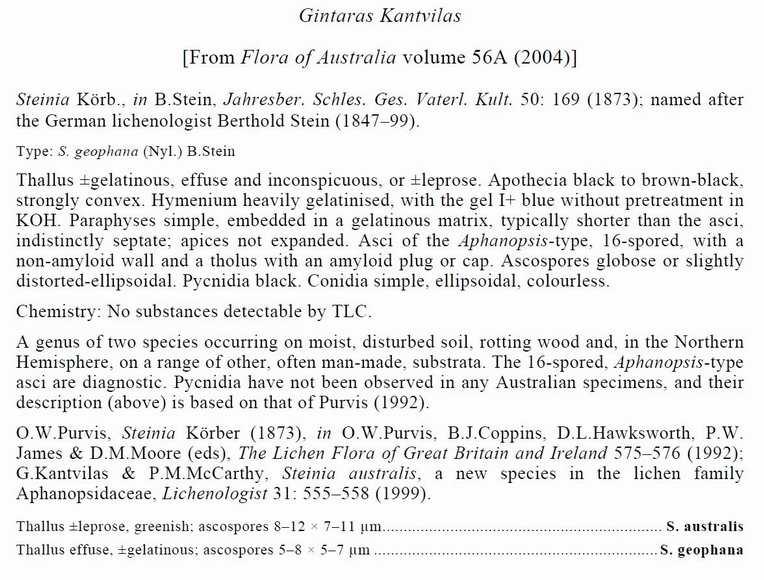
The key you have here.
Hello together,
very interesting fungus indeed - I never heard of it also.
If the apothecia dry out they surely become blackish, so I would not worry too much about the colour.
Thank you, Zotto, for the file also!
Best regards from Lothar
I must admit I looked only now more closely to the macrophoto. It shows in the centre a dark apothecium that might indeed belong to Steinia, while the surrounding orange apothecia could be an Octospora. But on Gilberts drawing I see only orange apos.
Zotto
Merci à tous.
Gilbert
Yes - Gilbert already wrote that the orange aapothecia are Octospora excivulata and the larger violaceous one Ascobolus pusillus. But there are further, very minute pothecia - they should be the Steinia.
Best regards, Lothar
I did not read enough Gilbert's text :-(
Sur la photo, l'espèce centrale bien foncée, violet noir est Ascobolus pumilus, les orange sont Octospora excipulata. Les Steinia sont autour de l'Ascobolus, un peu brun olivacé.
G
Merci beaucoup
Gilbert