
31-03-2026 21:18
 Miguel Ángel Ribes
Good evening. oes anyone have the original descrip
31-03-2026 20:57
Stefan BlaserHello everybody, I hope somebody can help me with
26-03-2026 15:31
 Åke Widgren
Hello,I found this one in October last year, on r
31-03-2026 16:20
 Mlcoch Patrik
Hello, Please about help with determination. On
31-03-2026 08:19
 Bernard CLESSE
Bonjour à toutes et tous,Pourriez-vous m'aider à
30-03-2026 12:03
 William Slosse
Hello all,On 27/03/26, in Kraaiveld in Wingene (Be
25-03-2026 10:35
Hulda Caroline HolteHello,I collected this species growing on a dead b
30-03-2026 09:53
Yanick BOULANGERBonjourVoici des petites fructifications poilues s
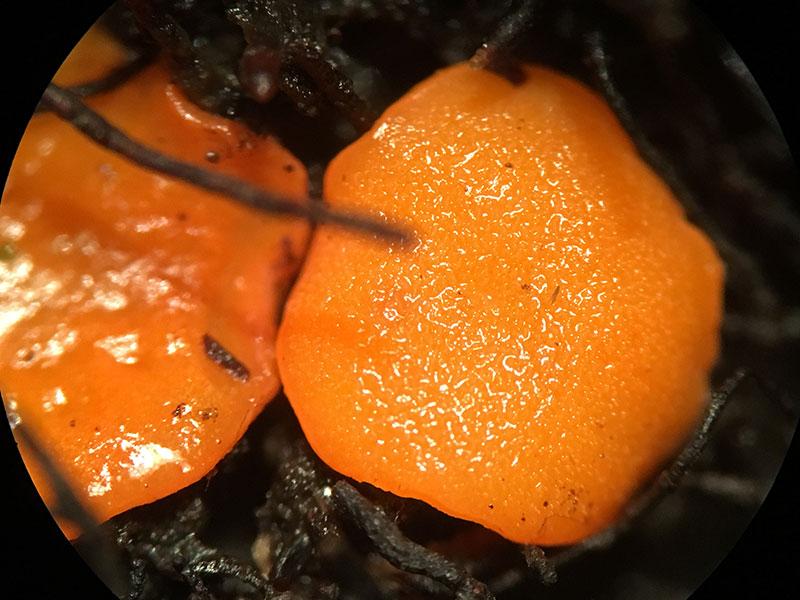
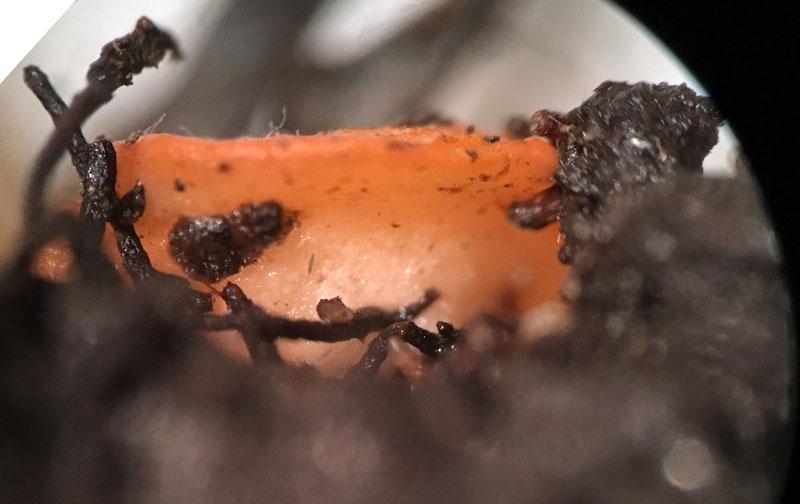
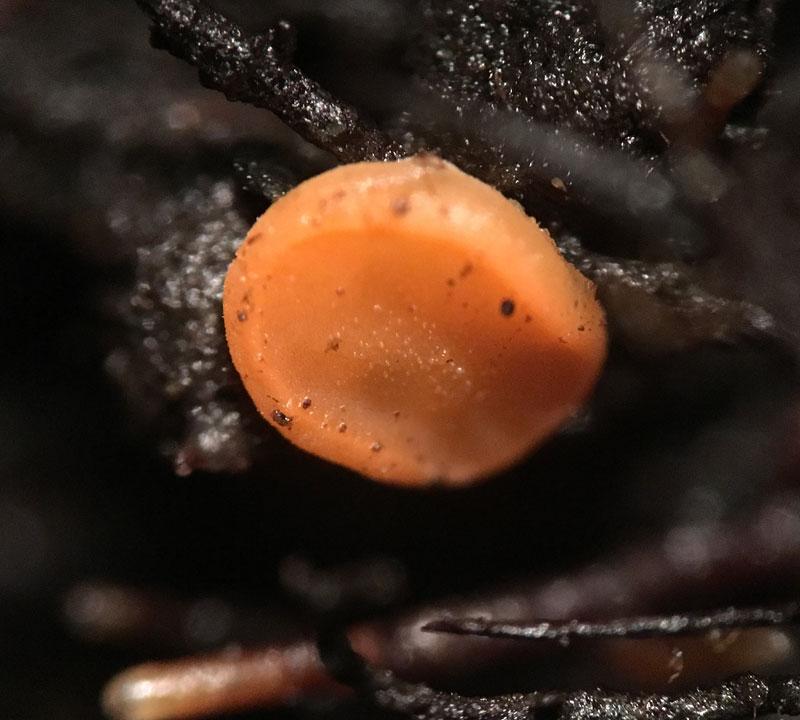
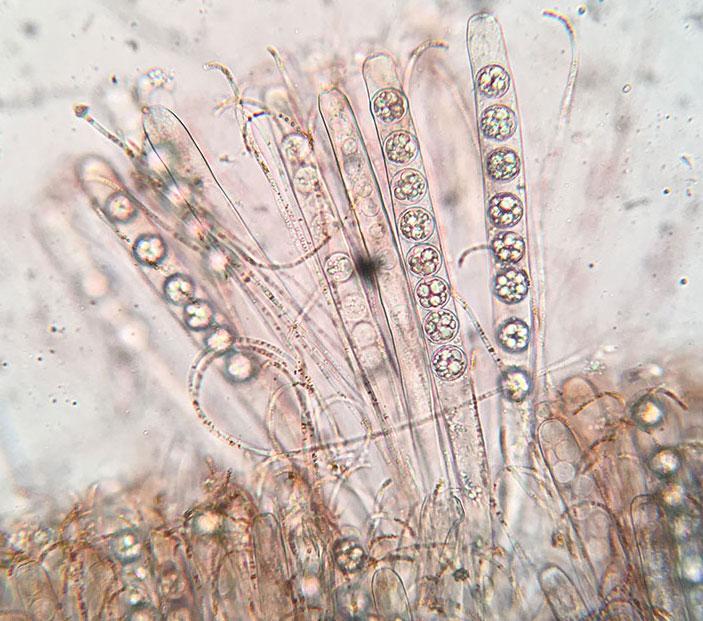
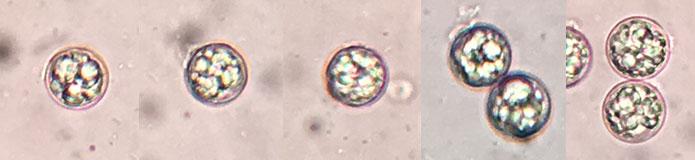
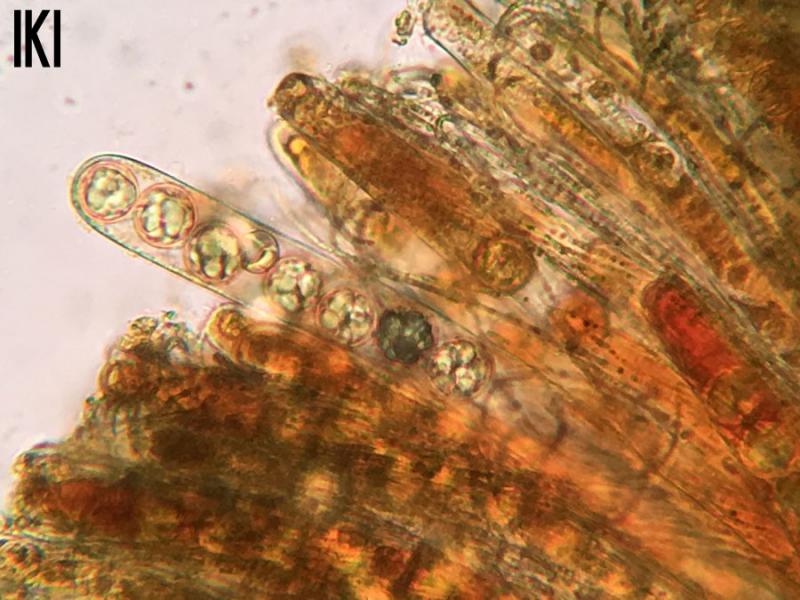
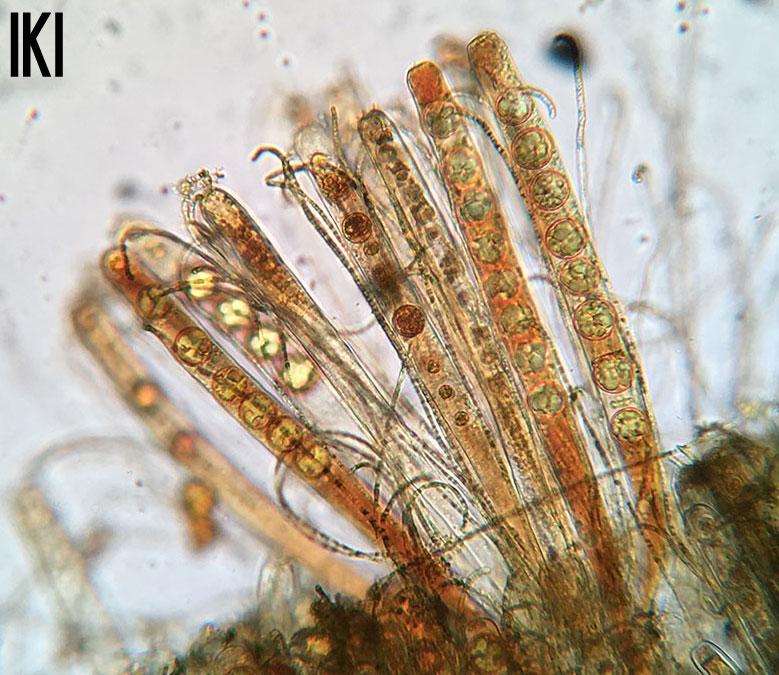
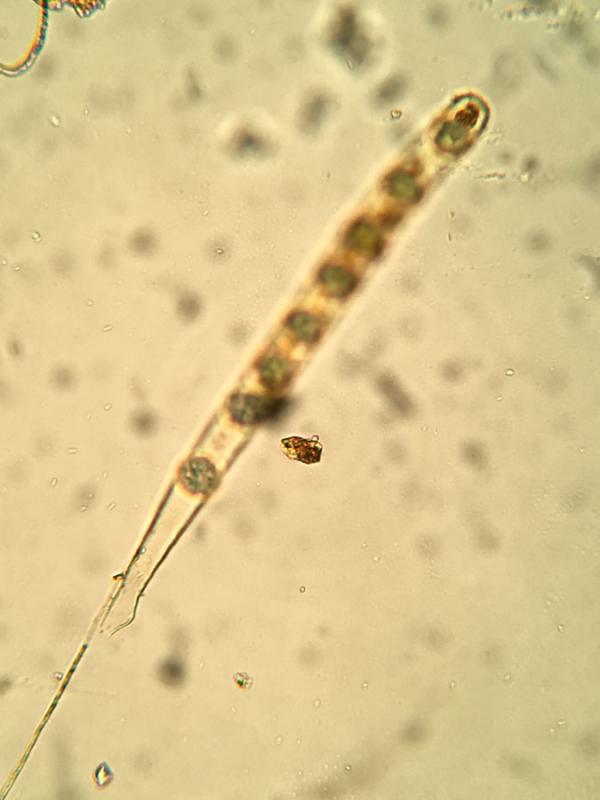
possibly Pulvinula constellatio ? on moss debris
Ethan Crenson,
21-08-2017 01:44
Nicolas VAN VOOREN,
22-08-2017 07:53

Re : possibly Pulvinula constellatio ? on moss debris
The ascospores of P. convexella (= P. constellatio) are usually larger, i.e. 16–19 µm diam.
So probably another species.
So probably another species.
Ethan Crenson,
24-08-2017 06:39
Re : possibly Pulvinula constellatio ? on moss debris
Nicolas, thank you for your comments. There seems to be some uncertainty about the spore size for P. convexella/P. constellatio:
Pfister (Synopsis of the Genus): 18-20 (as P. convexella)
FoS: 13-17 (as P. constellatio)
Dennis: 13-15 (as P. constellatio)
Beug: 13-18 (as P. convexella)
Seaver: 15-20 (as Lamprospora constellatio)
In Pfister's Synopsis, P. convexella and P. cinabarrina match in apothecia color, spore features (other than size) etc. P. miltina is not described in full, referring to Rifai (1968) (which I do not have). But I have seen reference to P. miltina elsewhere (Bioimages UK) which seem to align with my collection well:
Apothecia: 3-7mm diam.
Ascospores: spherical, hyaline, smooth,14-16µm diam., with central mass of small oil drops.
Asci: 8-spored, apex not blued in Melzer's Iodine, upto 250µm long, but mostly smaller.
Paraphyses: 2µm diam, slightly wider at the tips, curved at the tips, mostly unbranched, with granular orange contents which turn green in Melzer's Iodine"
Would you say Pulvinula miltina in my case?
Pfister (Synopsis of the Genus): 18-20 (as P. convexella)
FoS: 13-17 (as P. constellatio)
Dennis: 13-15 (as P. constellatio)
Beug: 13-18 (as P. convexella)
Seaver: 15-20 (as Lamprospora constellatio)
In Pfister's Synopsis, P. convexella and P. cinabarrina match in apothecia color, spore features (other than size) etc. P. miltina is not described in full, referring to Rifai (1968) (which I do not have). But I have seen reference to P. miltina elsewhere (Bioimages UK) which seem to align with my collection well:
Apothecia: 3-7mm diam.
Ascospores: spherical, hyaline, smooth,14-16µm diam., with central mass of small oil drops.
Asci: 8-spored, apex not blued in Melzer's Iodine, upto 250µm long, but mostly smaller.
Paraphyses: 2µm diam, slightly wider at the tips, curved at the tips, mostly unbranched, with granular orange contents which turn green in Melzer's Iodine"
Would you say Pulvinula miltina in my case?
Thank you again,
Ethan
Nicolas VAN VOOREN,
26-08-2017 16:09
Re : possibly Pulvinula constellatio ? on moss debris
I don't think so. P. miltina is an Australian species and maybe an endemic species.
Lothar Krieglsteiner,
26-08-2017 18:24

Re : possibly Pulvinula constellatio ? on moss debris
Is there any modern key on Pulvinula, at least for Europe?
Best regards from Lothar
Elsa Sousa,
18-09-2017 01:13
Re : possibly Pulvinula constellatio ? on moss debris
Hi Ethan,
I found yesterday what I believe to be the same fungus, here in Portugal. I found it on a stream margin over soil attached to debris and the mesurements are exactly like yours!
I found this document, and I think this could be P. miltina too. Since it has been found on different places over the world, it is possible that it is just rarely collected.
The document - http://www.ascofrance.com/uploads/forum_file/Pulvinula-johannis-Sydowia-60-0247-0252-0001.pdf
Regards,
Elsa
I found yesterday what I believe to be the same fungus, here in Portugal. I found it on a stream margin over soil attached to debris and the mesurements are exactly like yours!
I found this document, and I think this could be P. miltina too. Since it has been found on different places over the world, it is possible that it is just rarely collected.
The document - http://www.ascofrance.com/uploads/forum_file/Pulvinula-johannis-Sydowia-60-0247-0252-0001.pdf
Regards,
Elsa
Nicolas VAN VOOREN,
18-09-2017 18:30
Re : possibly Pulvinula constellatio ? on moss debris
All these collections (of P. miltina) were reported before the use of molecular analyses, so I'm quiet sure that a modern review should provide another diagnostic.
Last weeks, I studied five different collections of Pulvinula (in fresh state) and I was unenable to provide a correct name, based on the known data on this genus :-(
Best.
Nicolas
Last weeks, I studied five different collections of Pulvinula (in fresh state) and I was unenable to provide a correct name, based on the known data on this genus :-(
Best.
Nicolas