31-03-2026 21:18
 Miguel Ángel Ribes
Good evening. oes anyone have the original descrip
31-03-2026 20:57
Stefan BlaserHello everybody, I hope somebody can help me with
26-03-2026 15:31
 Åke Widgren
Hello,I found this one in October last year, on r
31-03-2026 16:20
 Mlcoch Patrik
Hello, Please about help with determination. On
31-03-2026 08:19
 Bernard CLESSE
Bonjour à toutes et tous,Pourriez-vous m'aider à
30-03-2026 12:03
 William Slosse
Hello all,On 27/03/26, in Kraaiveld in Wingene (Be
25-03-2026 10:35
Hulda Caroline HolteHello,I collected this species growing on a dead b
30-03-2026 09:53
Yanick BOULANGERBonjourVoici des petites fructifications poilues s
Hymenoscyphus sachalinensis in southern Germany
Hans-Otto Baral,
21-08-2017 21:19
 Hi all
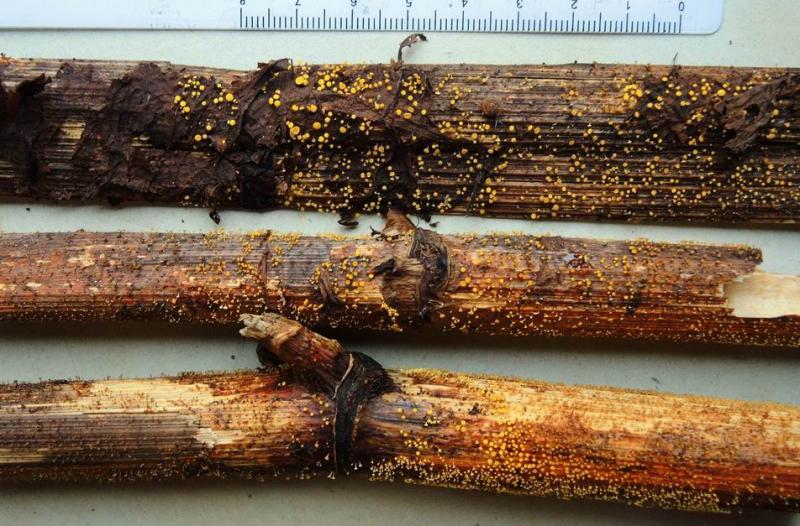
yesterday I finally found in my home village in Tübingen Hymenoscyphus sachalinensis alias H. aff. dearnessii in masses, it is my first personal collection. I did not expect that because over all the years I never saw it, although looking now and then on its substrate, dead stems of Reynoutria sachalinensis (or R. x bohemica, rarely R. japonica).
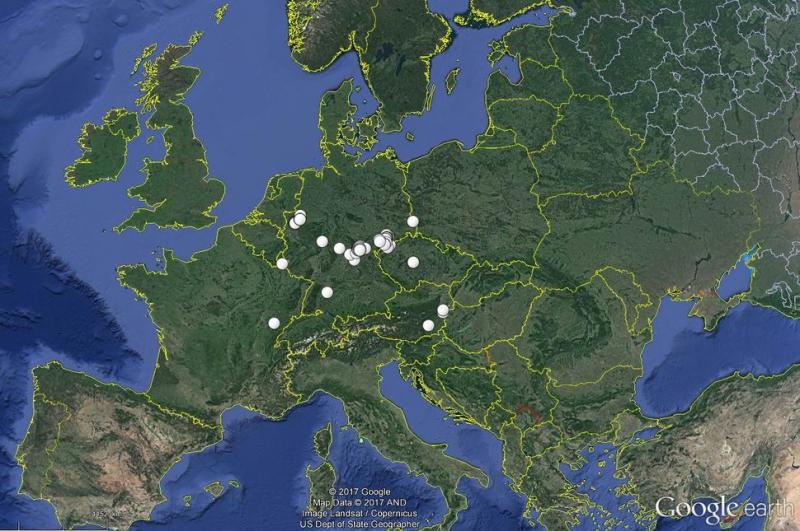
Here I add the most actual map of the (still not validly described) species, where you can see that large areas are without a record, to my knowledge. In case you have collected it in such an "empty" area, please do not hesitate and contact me.
The species is very frequent in the middle of Germany, and now I assume that it can perhaps be found all over central Europe. Certainly it is invasive, the question is only at what time it arrived at which place. The first known collections were made as late as 2001.
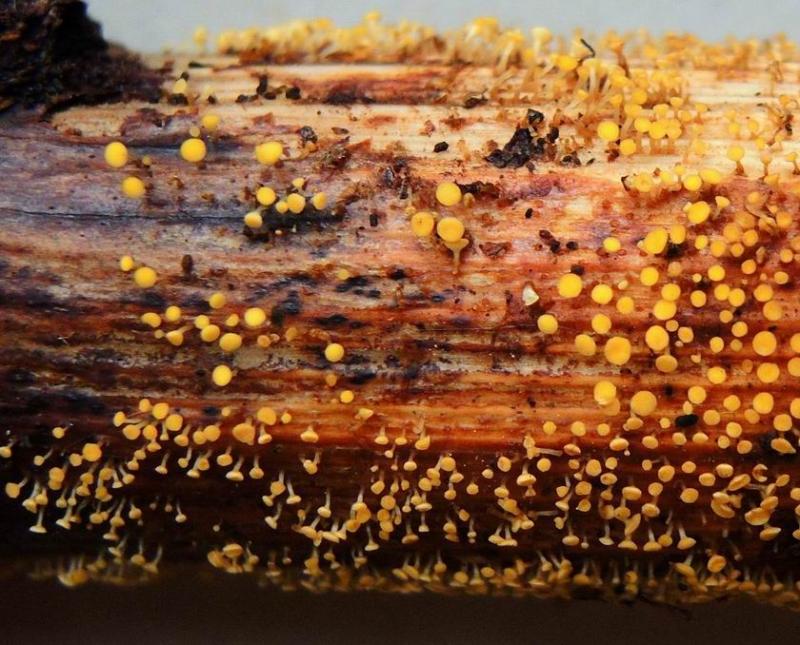
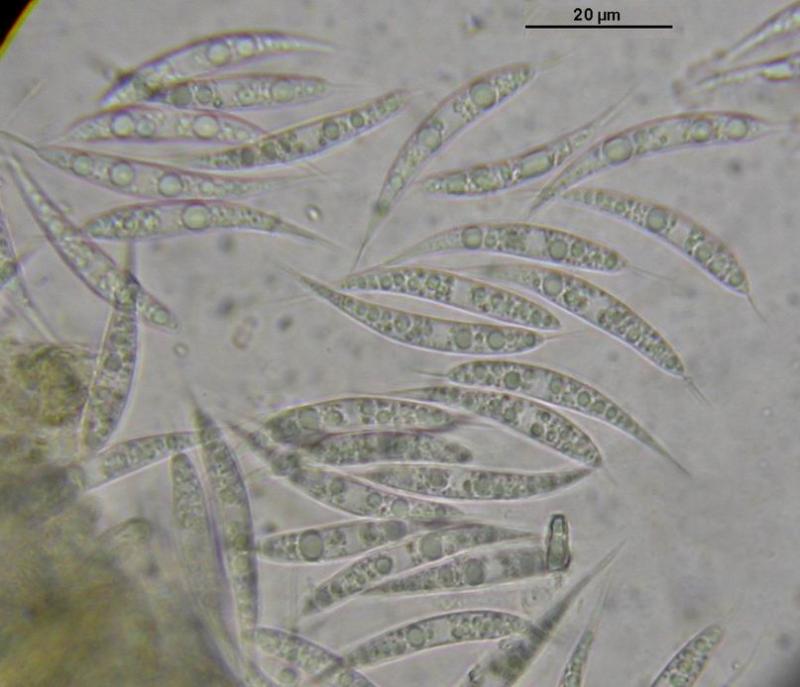
I also add some images of my collection. The species differs from H. scutula in the abundant growth of the bright yellow apothecia, distinctly longer spores (30-36) which are not really scutuloid because the asymmetry at the spore apex is lacking and therefore the upper setula inserted apically.
Zotto