
31-03-2026 21:18
 Miguel Ángel Ribes
Good evening. oes anyone have the original descrip
31-03-2026 20:57
Stefan BlaserHello everybody, I hope somebody can help me with
26-03-2026 15:31
 Åke Widgren
Hello,I found this one in October last year, on r
31-03-2026 16:20
 Mlcoch Patrik
Hello, Please about help with determination. On
31-03-2026 08:19
 Bernard CLESSE
Bonjour à toutes et tous,Pourriez-vous m'aider à
30-03-2026 12:03
 William Slosse
Hello all,On 27/03/26, in Kraaiveld in Wingene (Be
25-03-2026 10:35
Hulda Caroline HolteHello,I collected this species growing on a dead b
30-03-2026 09:53
Yanick BOULANGERBonjourVoici des petites fructifications poilues s

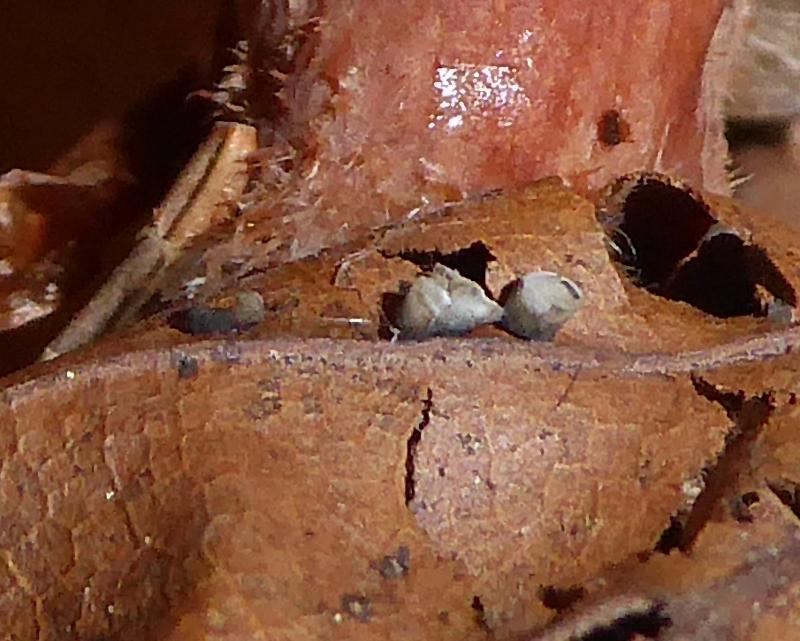
.. found on August, 15th, in the Bavarian Forest, on leaves of Fagus silvatica at the base of a collected Lactarius subdulcis. My first thought was Pycnopeziza pachyderma, but this does not fit.
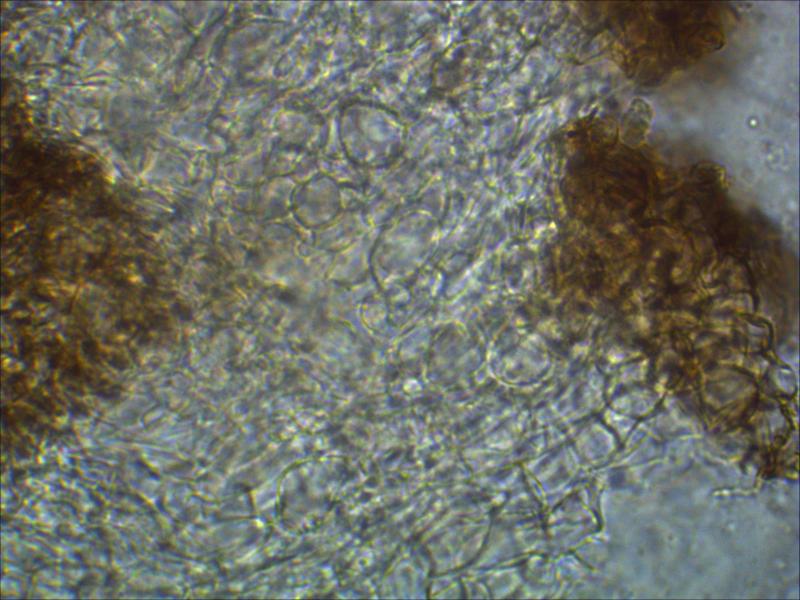
The excipulum is of dark globulosa, and there is no vacuolar body but more guttulate contents.
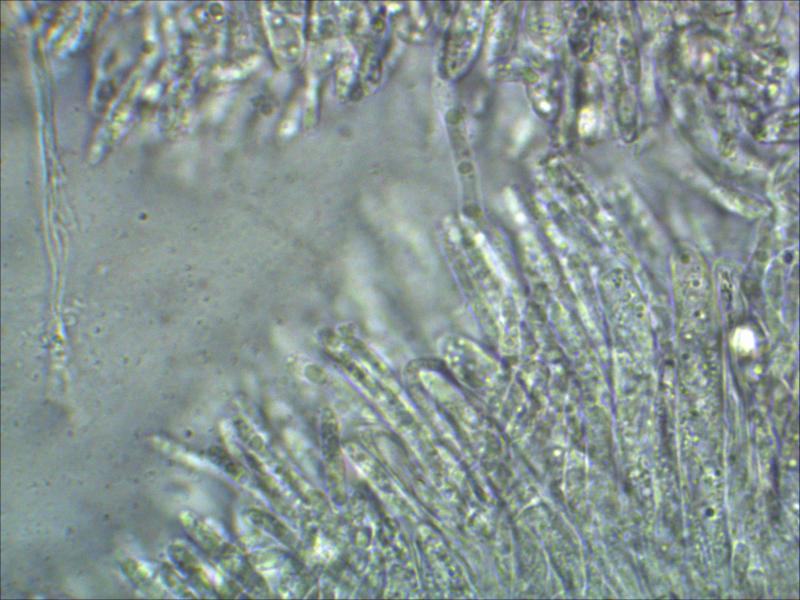
Unfortunately, the macrofoto is very poor, and the docu of the micros is not very appropriate, too.
Can somebody help anyway?
The asci are with croziers, and the IKI-reaction is blue, but not very strong.
Best regards from Lothar
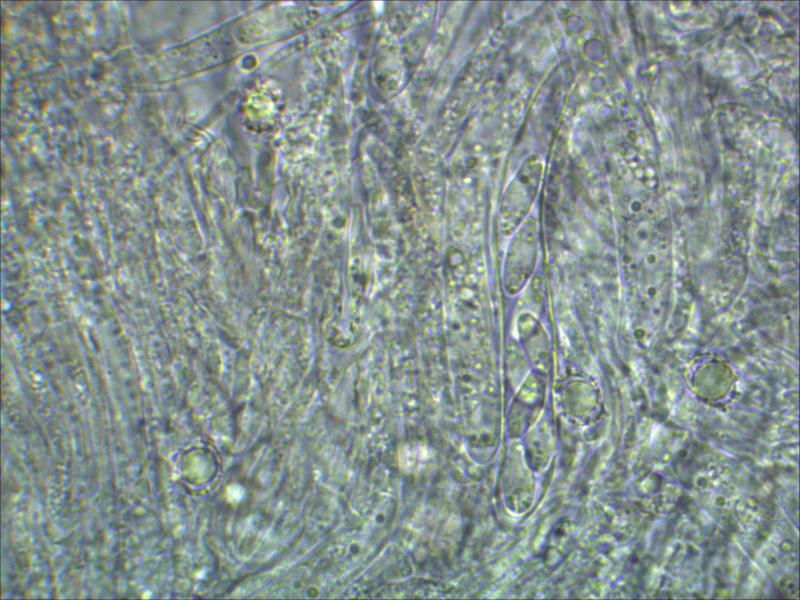
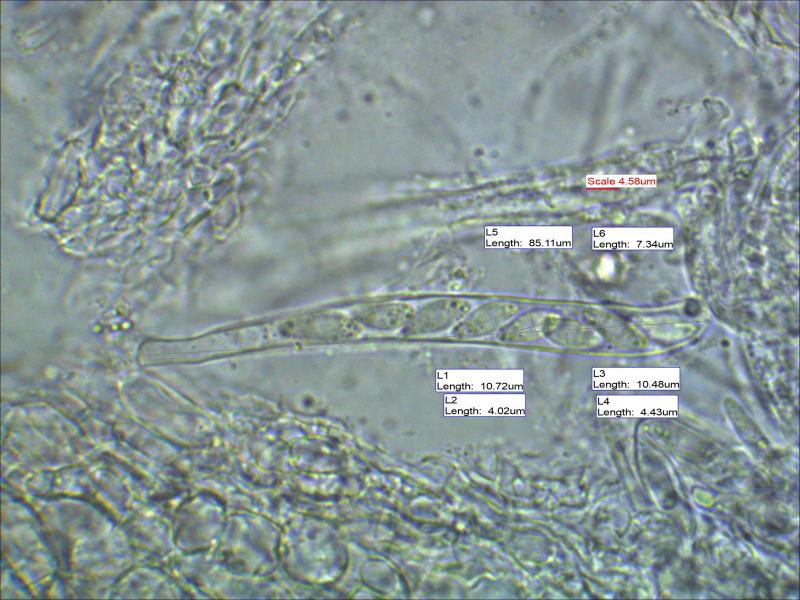
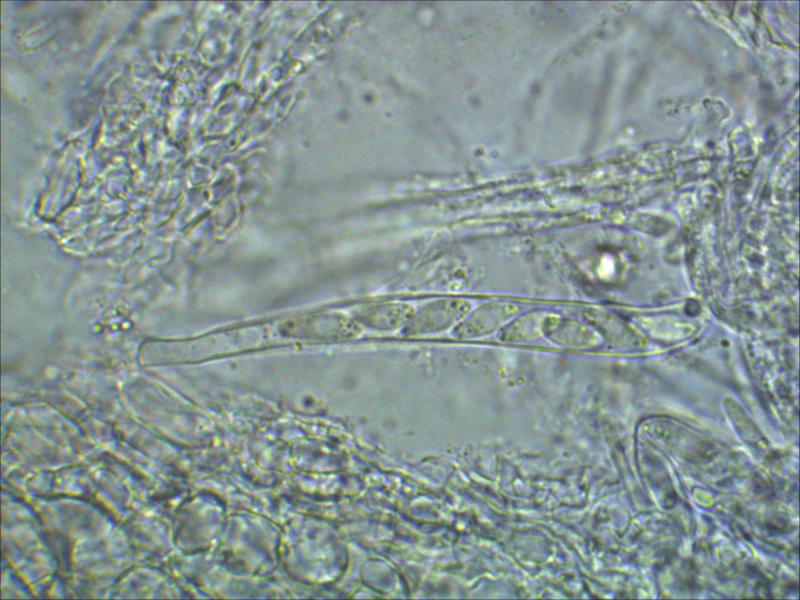

also anhand deiner Skalenangaben komme ich auf Sporen von 9.5-12.5 x 3.7-4.3 µm.
Das muss die Mollisia spectabilis sein, wobei das natürlich keine Mollisia ist. Der Apikalring sollte vom Hymenoscyphus-Typ sein.
Ich hab den im Cudoniella-Ordner.
Gruß
Zotto
Hallo Zotto,
vielen Dank für Deinen Art-Tipp. Ja, es ist auf alle Fälle keine Mollisia, sie hat keinen Vakuolenkörper. Die von Dir ermittelten Sporen liegen ja in etwa bei dem, was ich auch gemessen habe (auf einem Foto sind ja 2 Sporen gemessen).
Herzliche Grüße von Lothar
Das ist was Seltenes und ist leider noch nie sequenziert worden, soweit ich weiß.
Hallo Zotto,
ein kleiner Beleg wurde angefertigt - viel Material war es ja nicht. Eine Sequenzierung kann und wird vielleicht auch im Rahmen des Projektes statt finden.
Der Becherling war noch ziemlich unreif, und die einzigen Sporen, die ich fand, waren ja noch im Schlauch. Insofern wundern mich die etwas kleinen Sporenmaße nicht so.
LG von Lothar