31-03-2026 21:18
 Miguel Ángel Ribes
Good evening. oes anyone have the original descrip
31-03-2026 20:57
Stefan BlaserHello everybody, I hope somebody can help me with
26-03-2026 15:31
 Åke Widgren
Hello,I found this one in October last year, on r
31-03-2026 16:20
 Mlcoch Patrik
Hello, Please about help with determination. On
31-03-2026 08:19
 Bernard CLESSE
Bonjour à toutes et tous,Pourriez-vous m'aider à
30-03-2026 12:03
 William Slosse
Hello all,On 27/03/26, in Kraaiveld in Wingene (Be
25-03-2026 10:35
Hulda Caroline HolteHello,I collected this species growing on a dead b
30-03-2026 09:53
Yanick BOULANGERBonjourVoici des petites fructifications poilues s
Asco rouge sur sol sableux
Bernard CLESSE,
26-08-2017 17:36
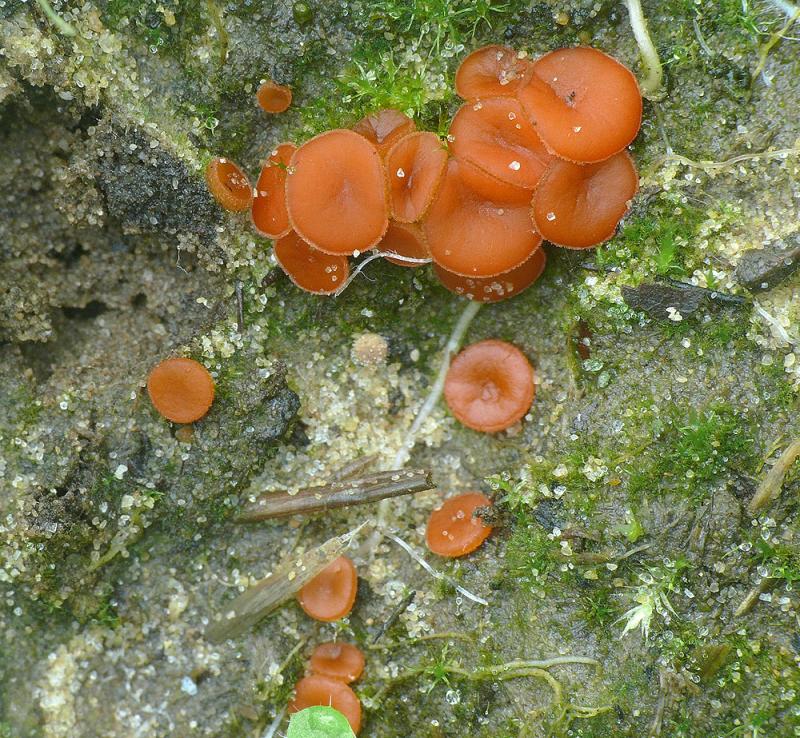
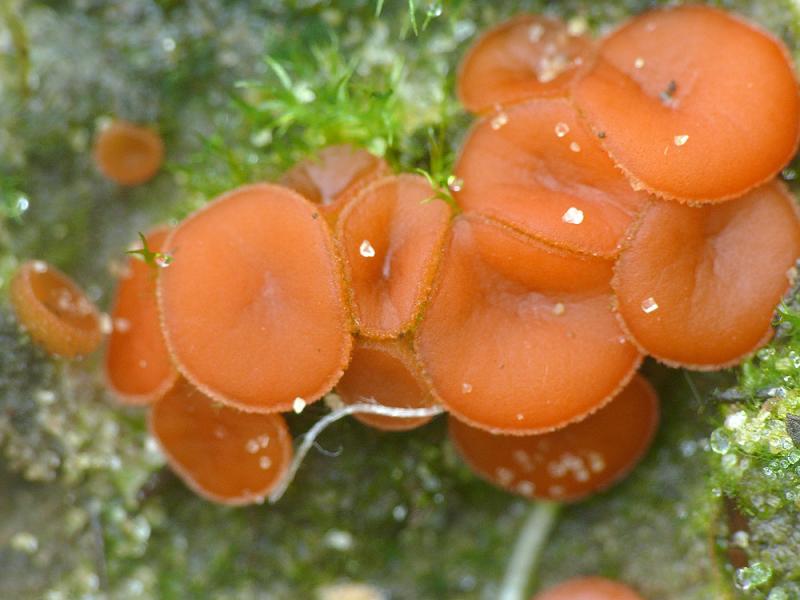
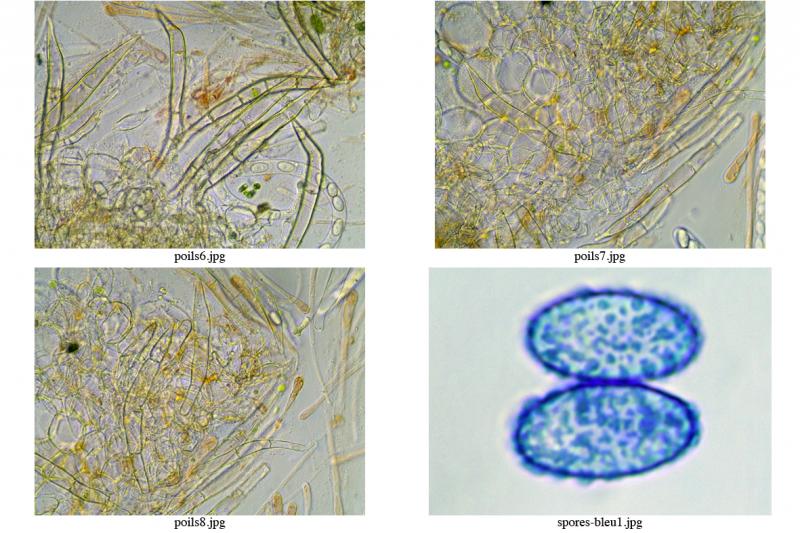
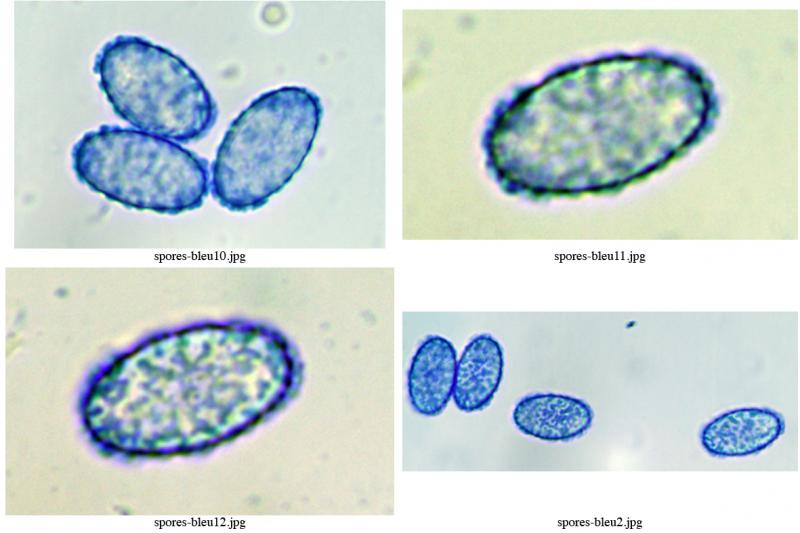
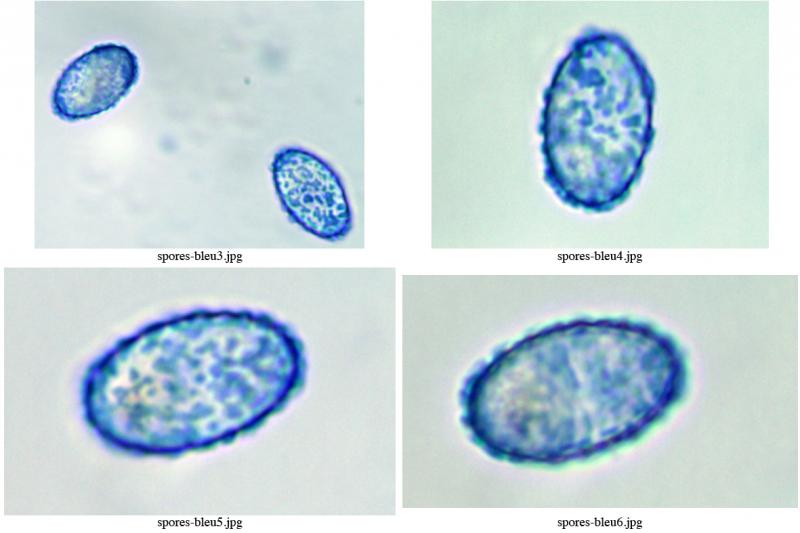
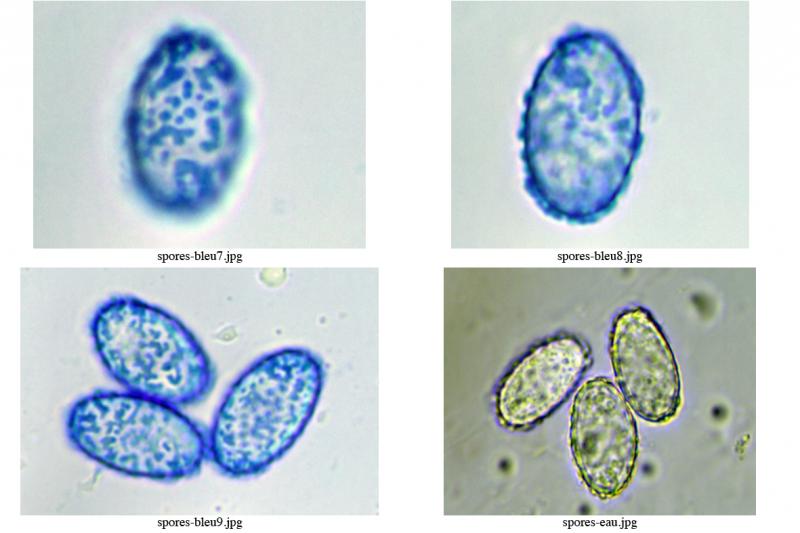
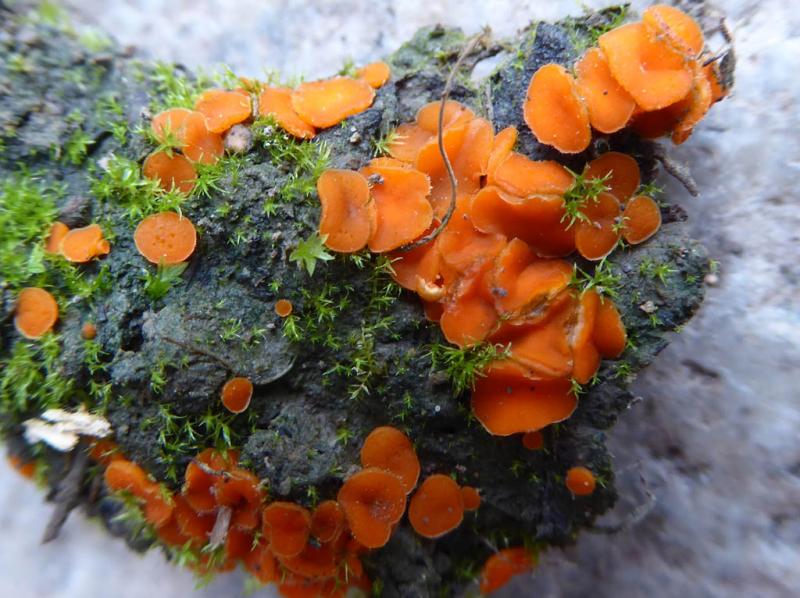
Bonjour à tous,Voici un asco rouge trouvé sur ornière de chemin foretsier, sur sol sableux acide.
a) diamètre apothécies : max. 4 mm
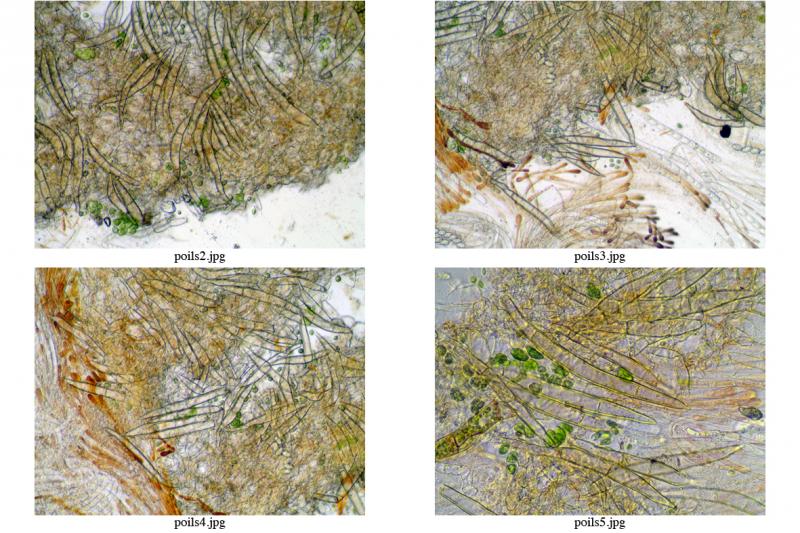
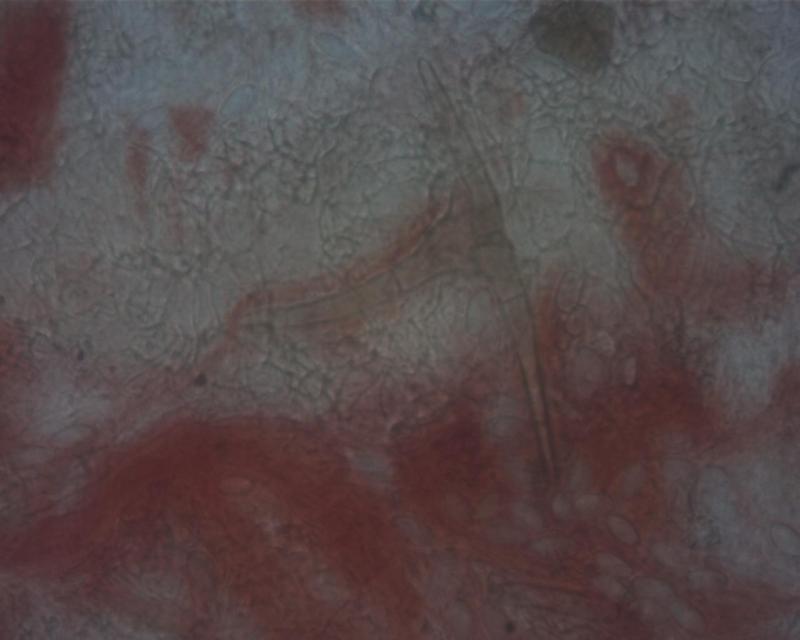
b) poils hylains à jaunâtres, septés, acuminés, à parois épaisses : longueur max. 200 µ
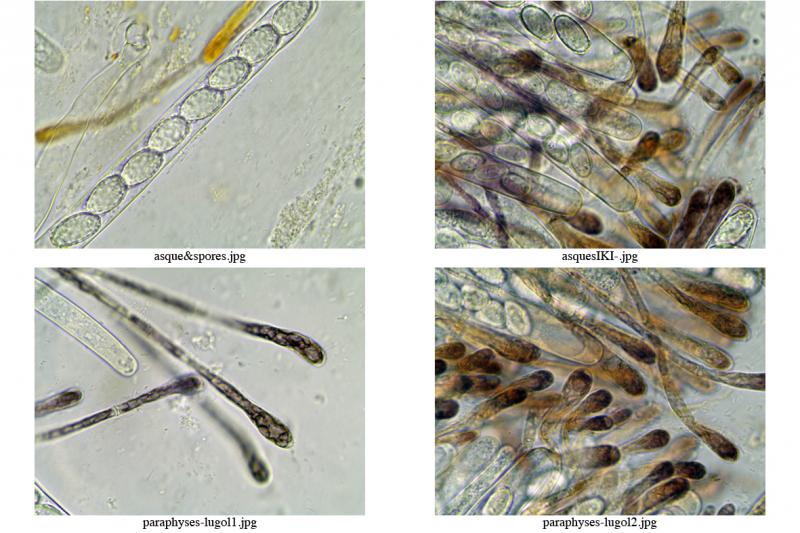
c) spores elliptiques à verrues hautes jusque 1 µ : 16-17x9-10
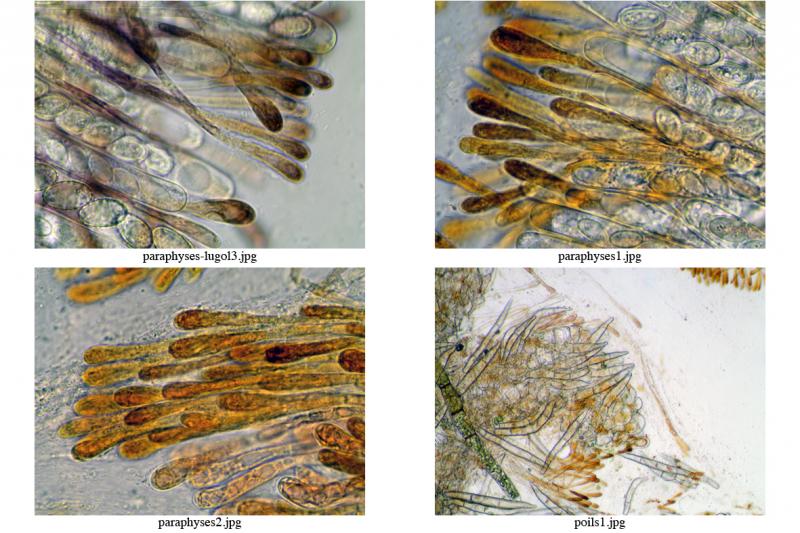
d) paraphyses à pigment jaune orange (devenant pourpre noirâtre dans le lugol), enflées au sommet
e) asques IKI-
Bernard
Guy Lambert,
26-08-2017 19:28
Re : Asco rouge sur sol sableux
Bonjour Bernard
Je pense a Cheilymenia
Voir Cheilymenia crucipila
Voir s'il y a des poils cruciformes
J'ai trouvé cette espèce denièrement avec des poils cruciformes après plusieurs micros.
Je ne suis pas un expert en asco
Voir d'autres avis
Guy
Bernard CLESSE,
27-08-2017 22:09
Re : Asco rouge sur sol sableux
Bonsoir Guy,
Merci pour ton avis !
C'est à cette espèce que je suis finalement resté, faute de mieux… Je n'ai pas trouvé de poils cruciformes et c'est ça qui m'étonnait. Mais je ne sais pas s'il existe un "sosie" sans ce type de poils…
Bernard
Merci pour ton avis !
C'est à cette espèce que je suis finalement resté, faute de mieux… Je n'ai pas trouvé de poils cruciformes et c'est ça qui m'étonnait. Mais je ne sais pas s'il existe un "sosie" sans ce type de poils…
Bernard
Viktorie Halasu,
28-08-2017 17:09

Re : Asco rouge sur sol sableux
Hello Bernard,
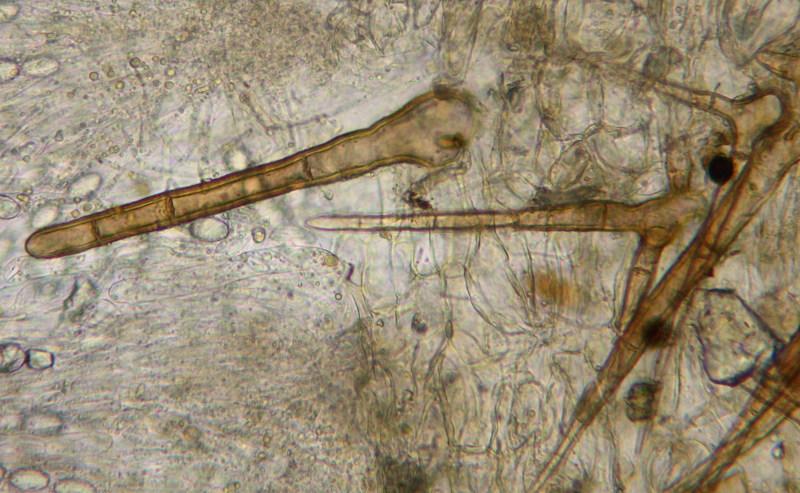
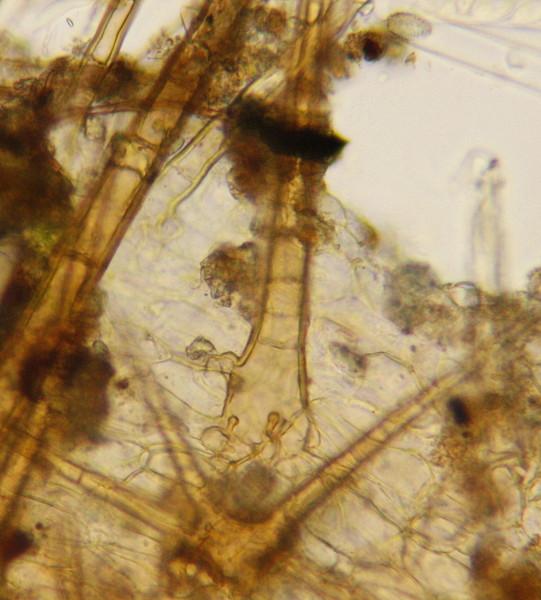
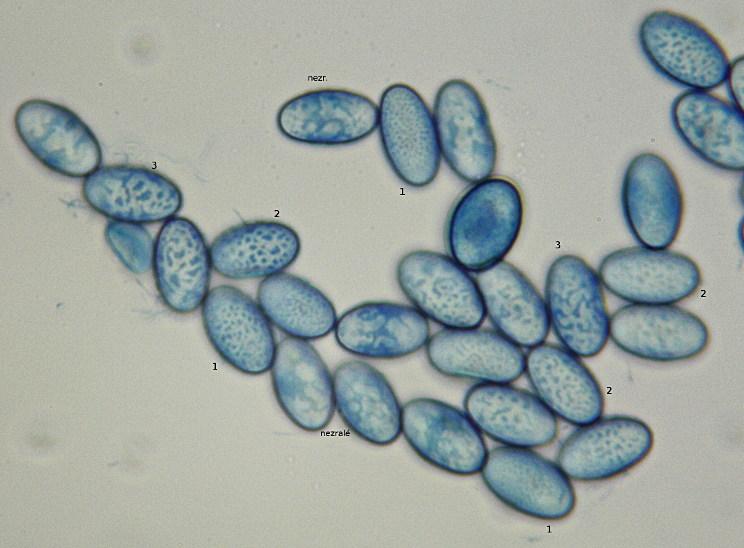
I saw C. crucipila only about 15 times but so far I've never seen it with flexuous fusiform hairs like this. The number of stellate hairs varies a lot between collections, but marginal hairs were always stiff, straight, rather thick (in relation to length) and with a wide non-rooting base (photo attached). Hairs lower on the receptacle were thinner, stiff, usually lighter colored and with less bulbous base. Usually I see somewhat more narrow spores with perispore loosening (in LACB) as pointed apiculi on poles, but the size can still be within variability of C. crucipila, except for the hairs. I don't have Moravec's monograph here, but perhaps not ideally mature C. rubra (one of its varieties)? On the last photo is sporeprint from a collection identified (a bit hesitantly due to my limited experience) as C. rubra var rubra - only spores of type "1" look like they "should" according to the monograph. I don't know if the variation / immaturity level is often higher in Cheilymenia than in a Scutellinia sporeprint, or if it was just strange collection.
Viktorie
edit: The collection to which belongs the sporeprint on 3rd photo, was redetermined as Scutellinia torrentis.
I saw C. crucipila only about 15 times but so far I've never seen it with flexuous fusiform hairs like this. The number of stellate hairs varies a lot between collections, but marginal hairs were always stiff, straight, rather thick (in relation to length) and with a wide non-rooting base (photo attached). Hairs lower on the receptacle were thinner, stiff, usually lighter colored and with less bulbous base. Usually I see somewhat more narrow spores with perispore loosening (in LACB) as pointed apiculi on poles, but the size can still be within variability of C. crucipila, except for the hairs. I don't have Moravec's monograph here, but perhaps not ideally mature C. rubra (one of its varieties)? On the last photo is sporeprint from a collection identified (a bit hesitantly due to my limited experience) as C. rubra var rubra - only spores of type "1" look like they "should" according to the monograph. I don't know if the variation / immaturity level is often higher in Cheilymenia than in a Scutellinia sporeprint, or if it was just strange collection.
Viktorie
edit: The collection to which belongs the sporeprint on 3rd photo, was redetermined as Scutellinia torrentis.