
31-03-2026 21:18
 Miguel Ángel Ribes
Good evening. oes anyone have the original descrip
31-03-2026 20:57
Stefan BlaserHello everybody, I hope somebody can help me with
26-03-2026 15:31
 Åke Widgren
Hello,I found this one in October last year, on r
31-03-2026 16:20
 Mlcoch Patrik
Hello, Please about help with determination. On
31-03-2026 08:19
 Bernard CLESSE
Bonjour à toutes et tous,Pourriez-vous m'aider à
30-03-2026 12:03
 William Slosse
Hello all,On 27/03/26, in Kraaiveld in Wingene (Be
25-03-2026 10:35
Hulda Caroline HolteHello,I collected this species growing on a dead b
In the middle of an alder swamp forest, in Belgium, is a dike that the last six months has been inundated by the high water level.
Ascomata was found in November, at the base of a mossy, dead poplar (populus) seemingly growing on the bark.
Apothecium: 14 x 15 mm, saddle-shaped, selliform, grey-green, the brim is not attached to the stipe except one attachment of 0.5 mm wide;
Stalk: dirty yellow, 27 mm long, at the top 6 mm and 4 mm wide at the base, the whole length ribbed, the ribs run 2 mm further on the apothecium;
Spores: elliptical, 15,23-19,43 x 10,36-12,97 µm, Q = 1.53, 1 large drop and several small ones,
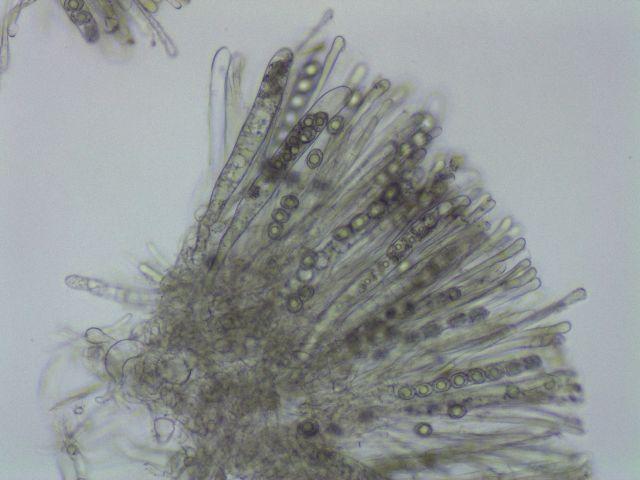
Asci: 194,53-261,53 x 16.77-22,17 µm; cylindrical, IKI-;
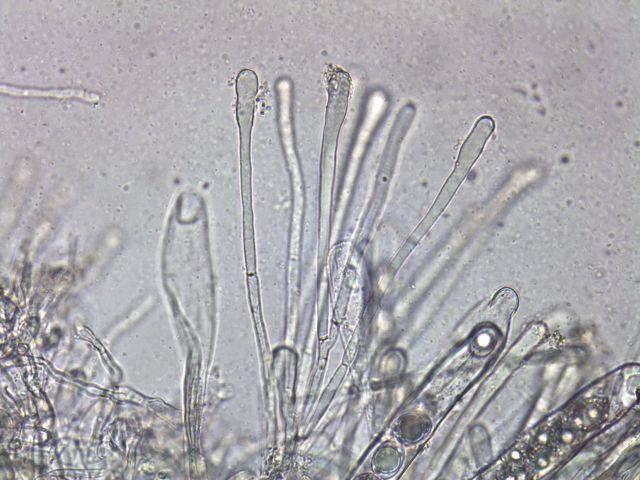
Paraphyse: septated, filiform, branched and 5 µm wide with up to 8 µm swollen top
Ectal exipulum: textura globulosa-subglobulosa length > 50 µm
Medular exipulum: textura intricate
Could this be Hevella lacunose var. sulcata or is it a H. lacunose that suffered from the wet weather and environmental conditions? Thanks for your help!
Greetings,
François Bartholomeeusen
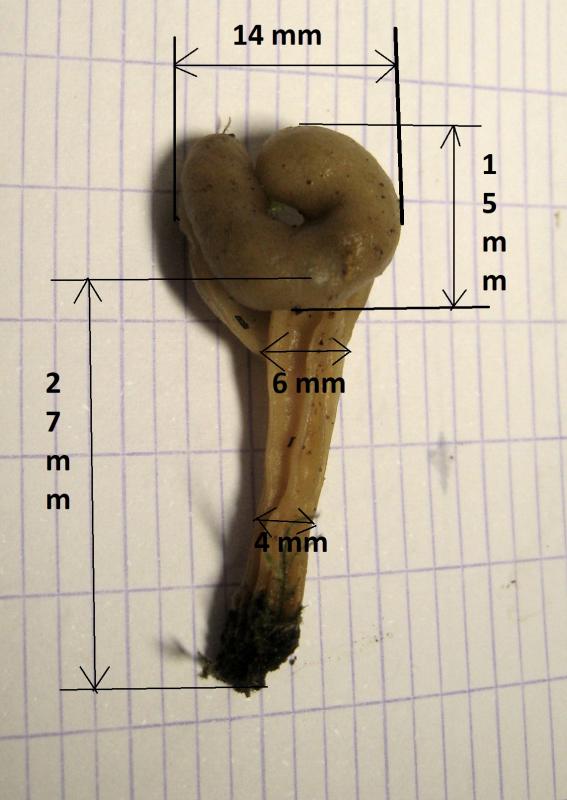
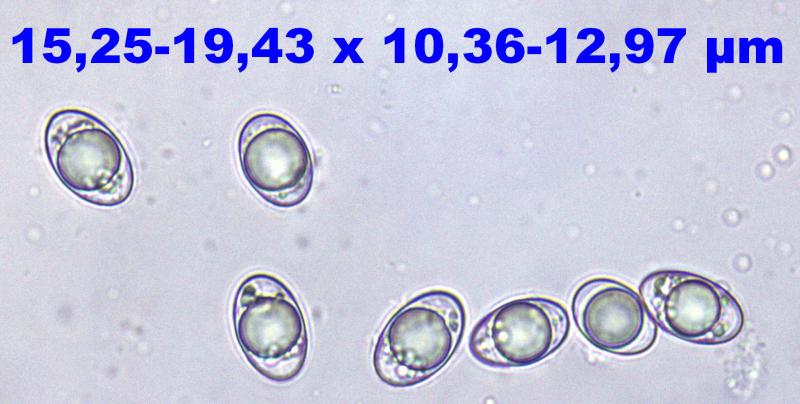
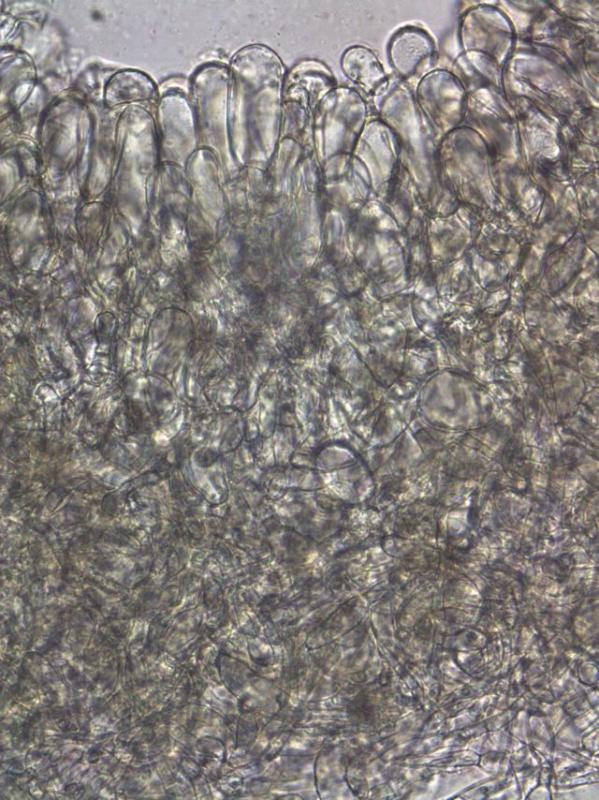
Thanks for your good suggestion. I have read the description of H. phlebophora in Ascomycete.org and in Coolia 27 (1) but I still have my doubts. The ribs of the stalk continue on the bottom of the cap but they become very soon furrowed. My spore sizes are also slightly larger.
Greetings,
François