
10-06-2026 21:16
 François Freléchoux
Bonsoir,Le dernier du jour, en attendant votre avi
11-06-2026 19:01
 William Slosse
Hello all,In an attempt to make a culture of a sus
11-06-2026 19:03
 Nicolas VAN VOOREN
Chers membres d'Ascofrance,Le site sera placé en

09-06-2026 18:32
Camille MertensSur morceau de roseau immergé 0,5 - 0,7 mm de dia
10-06-2026 12:54
Steve ClementsBonjour encore, Pouvez-vous m'aider, s'il vous pl
10-06-2026 21:07
François Freléchoux
Toutes les tiges de gentianes jaunes de l'an passÃ
10-06-2026 13:41
François Freléchoux
Bonjour à nouveau, Voici une trouvaille d'hier.
10-06-2026 11:53
Steve ClementsBonjour, This disco is abundant on dead stems of
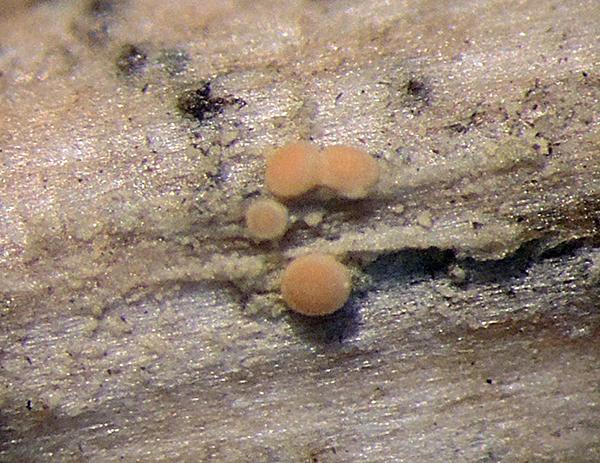
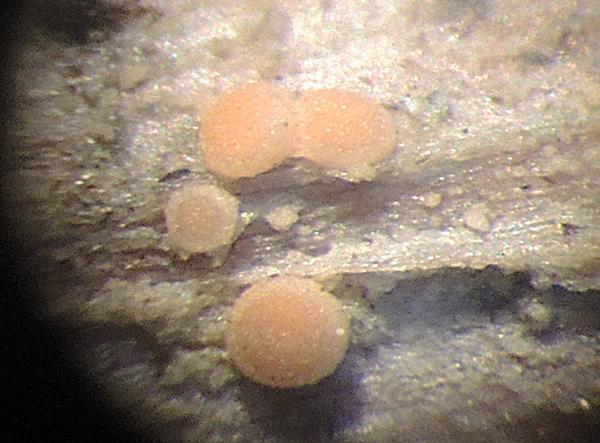
pale disc on Urtica stems - S Sweden - with spiralling spores
Thomas Læssøe,
19-03-2018 17:34
Apothecia to 0.2 mm, discoid with distinct smooth margin, at first whitish-greyish drying to apricot on hymenium with paler outside.
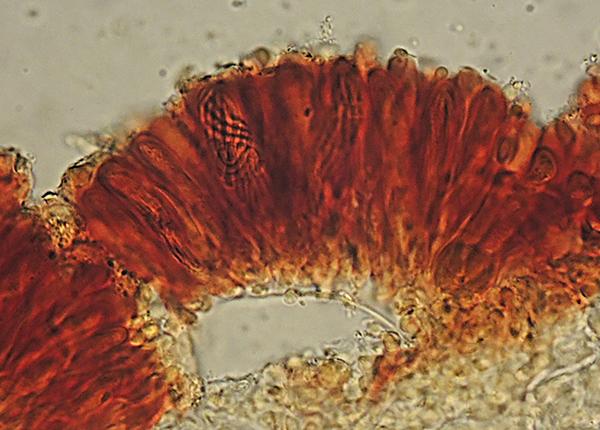
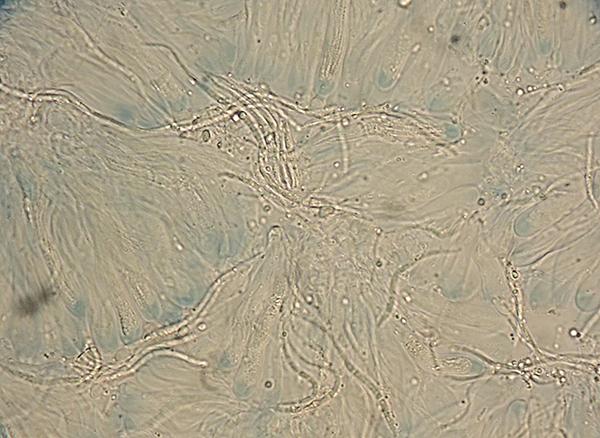
Hymenium deep orange red in IKI in weak ammonia then slowly blue at the apex and less so further down the asci.
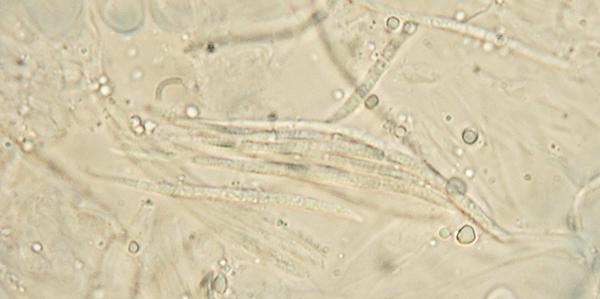
Asci with outer dextrinoid coating, 8-spored, clavate, ca. 50 x 8-9 µm.
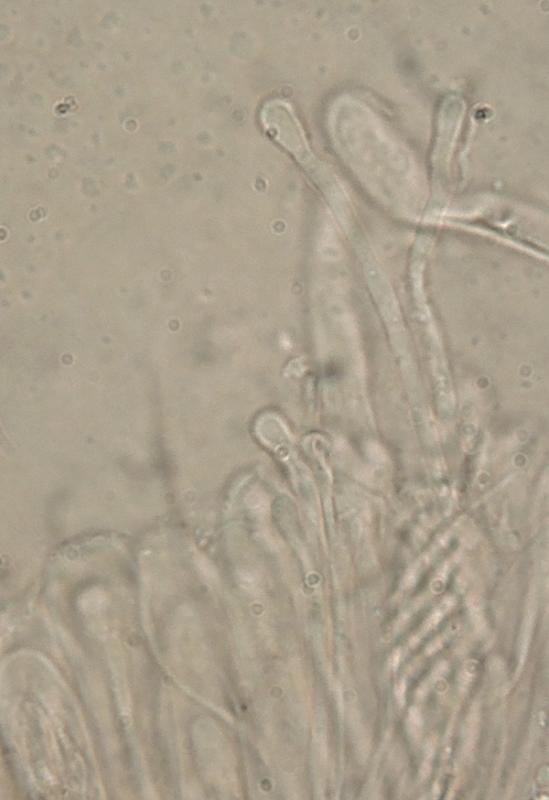
Spores strongly spiralling within ascus in one bundle, 3-5- septate, tapering to lower end and rounded at distal end, 35-45 x 1.5 µm. Paraphyses clavate above. Not exc. asci.


Alain BRISSARD,
19-03-2018 17:55
Re : pale disc on Urtica stems - S Sweden - with spiralling spores
Perhaps Erinella discolor = Trichopeziza discolor = Lachnum discolor ??
Thomas Læssøe,
19-03-2018 21:37
Re : pale disc on Urtica stems - S Sweden - with spiralling spores
interesting suggestion but this material is without hairs, with paraphyses that are enlarged (pearshaped) at the apices, spores with fewer septa etc.
Stip Helleman,
21-03-2018 00:02

Re : pale disc on Urtica stems - S Sweden - with spiralling spores
Hi Thomas,
indeed this option seems to be quite unusual without hairs, in my opinion it has a twist of a Lichenicolous species with this apical dome and the asci strongly reacting in IKI, they mostly react blue in this case only a little blue left after a while probably because of the Ammonia mount.
No idea about the genus.
good luck,
Stip
indeed this option seems to be quite unusual without hairs, in my opinion it has a twist of a Lichenicolous species with this apical dome and the asci strongly reacting in IKI, they mostly react blue in this case only a little blue left after a while probably because of the Ammonia mount.
No idea about the genus.
good luck,
Stip