05-04-2026 20:40
 Robin Isaksson
Hi!Found i Japan on bark of Abies sp. Spores 35-4
31-03-2026 21:18
 Miguel Ángel Ribes
Good evening. oes anyone have the original descrip
31-03-2026 20:57
Stefan BlaserHello everybody, I hope somebody can help me with
26-03-2026 15:31
 Åke Widgren
Hello,I found this one in October last year, on r
31-03-2026 16:20
 Mlcoch Patrik
Hello, Please about help with determination. On
31-03-2026 08:19
 Bernard CLESSE
Bonjour à toutes et tous,Pourriez-vous m'aider à
30-03-2026 12:03
 William Slosse
Hello all,On 27/03/26, in Kraaiveld in Wingene (Be
Hysterium pulicare (?)
Ethan Crenson,
04-04-2018 16:05
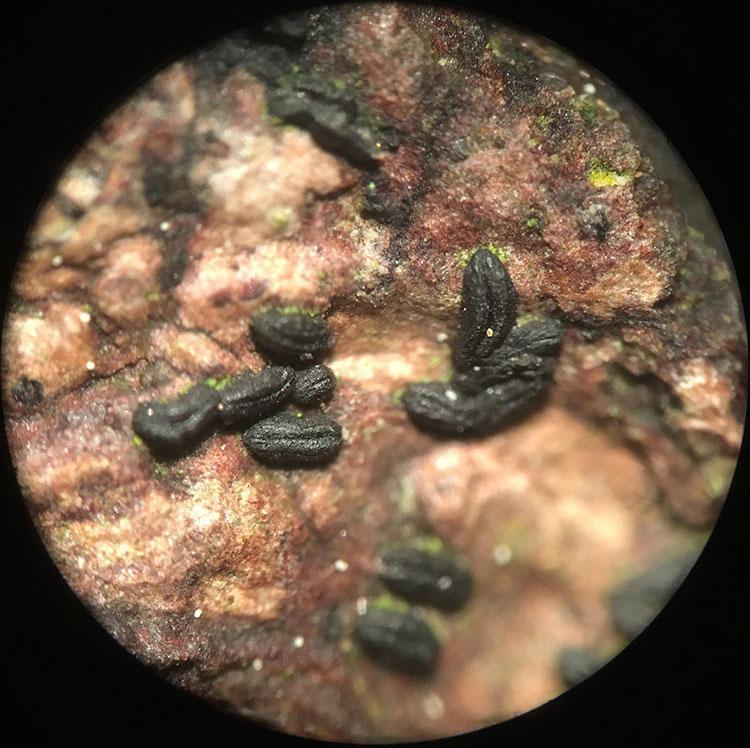
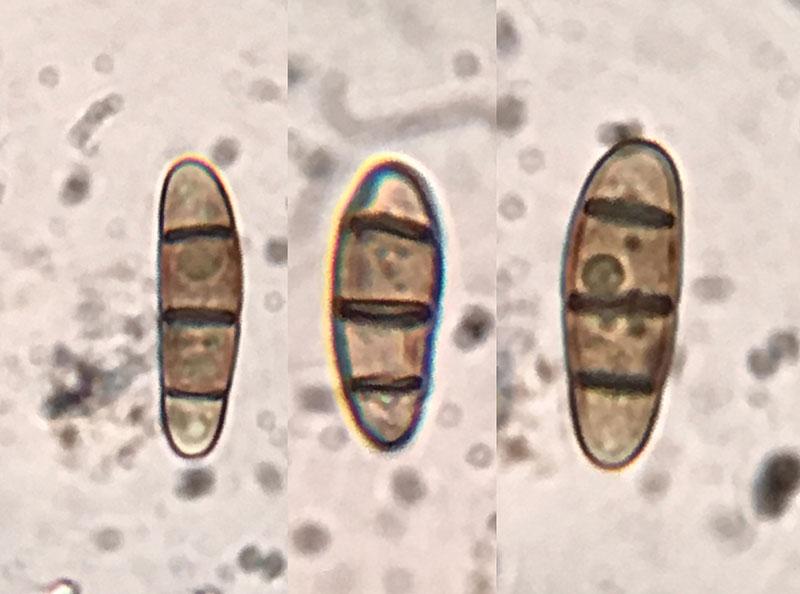
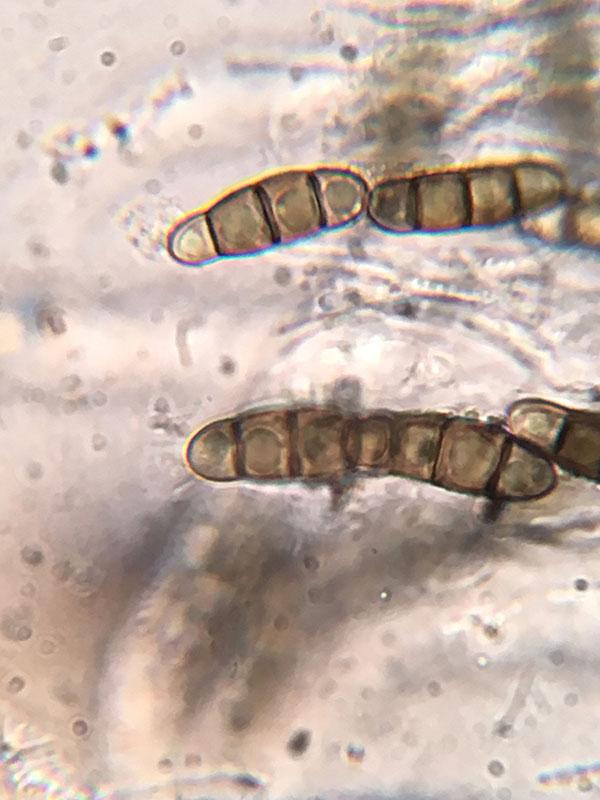
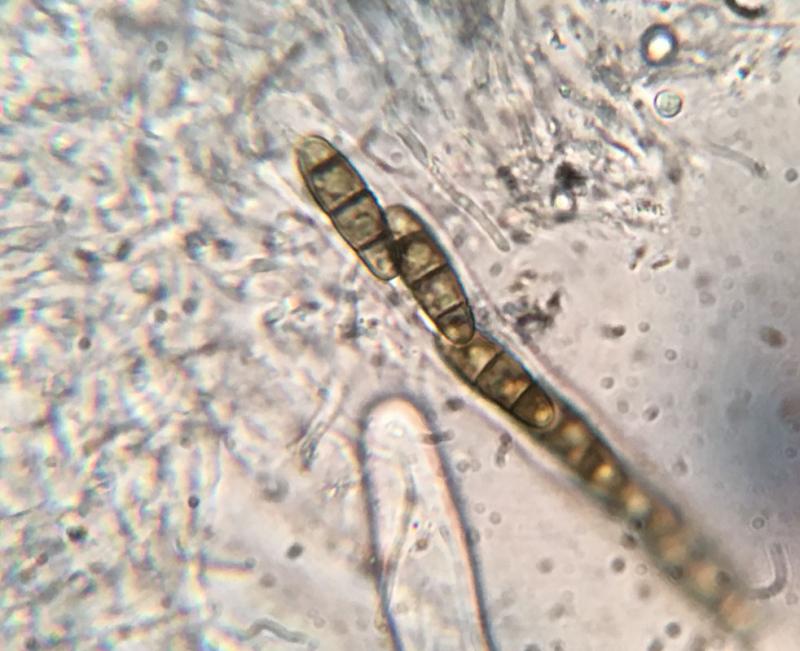
From Bronx NYC, Pelham Bay Park on Picea. Am I correct that this is Hysterium pulicare? Ascospores are brown, 3-septate, (18) 21-24 by 6-8µm. The end cells of most spores are lighter brown (a few almost hyaline) than the median cells.
The difference between H. angustatum and H. pulicare in Boehm's key depends on this feature: "terminal cell mainly remaining hyaline". He also writes that ~10% of ascospores of H. pulicare are typically found to be concolorous; and ~5% of ascospores of H. angustatum are found to be versicolorous.
Ascospore size for H. pulicare is worth mentioning as well. H. pulicare ascospores can reach up to 40µm in length according to Boehm and Zogg. I did not observe anything approaching 40µm.
So my questions regarding my collections boil down to: Are the end cells light enough to place it in H. pulicare? Does the absence of ascospores in the larger range (near 40µm) eliminate H. pulicare as a possibility?
Thanks in advance!