

06-04-2026 21:36
 Viktorie Halasu
Hello, could anyone please send me the article wi
06-04-2026 19:40
 David Gibbs
Help with this one much appreciated, on rotting Fa
06-04-2026 11:07
Louis DENYBonjour forum, Trouvé sur bois de feuillu très d
06-04-2026 16:24
Juuso ÄikäsLast Tuesday I found some tiny white Helotiales gr
05-04-2026 20:40
 Robin Isaksson
Hi!Found i Japan on bark of Abies sp. Spores 35-4
06-04-2026 08:15
 Lothar Krieglsteiner
some days ago, on the lower surface of leaf of Que
05-04-2026 22:46
Lothar Krieglsteiner
on wood of Ceratonia, Algarve, 3.4.2026.The color
Ombrophila sp
Salvador Tello,
23-02-2019 23:17
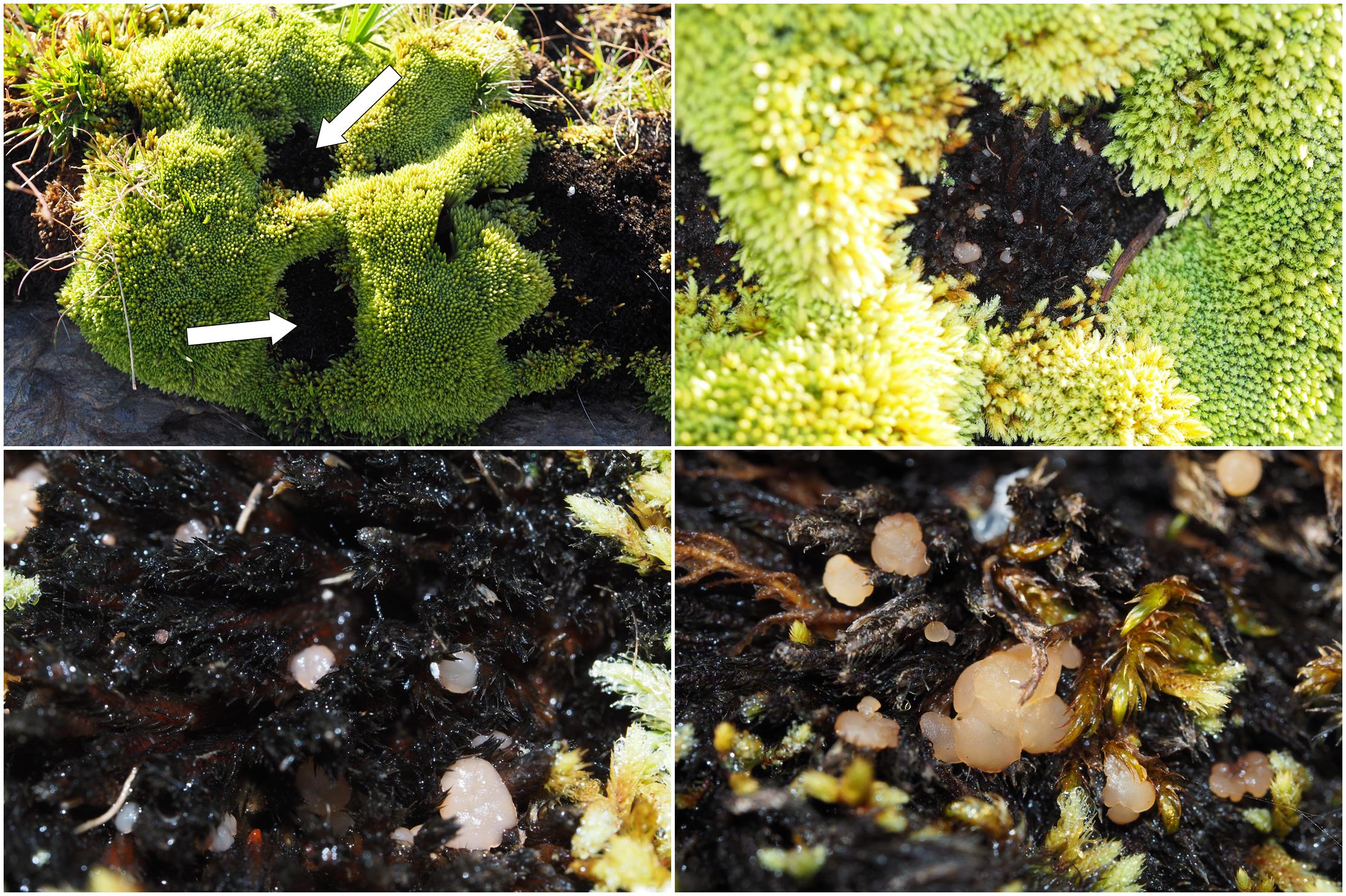
Recogí estos hongos en agosto del año pasado creciendo en una zona turberas muy encharcada, sobre zonas muertas del musgo Philonotis seriata, a 2800 m de altitud.
Apotecios blancos o ligeramente anaranjados, estipitados, algo convexos, de hasta 3 mm de diámetro.
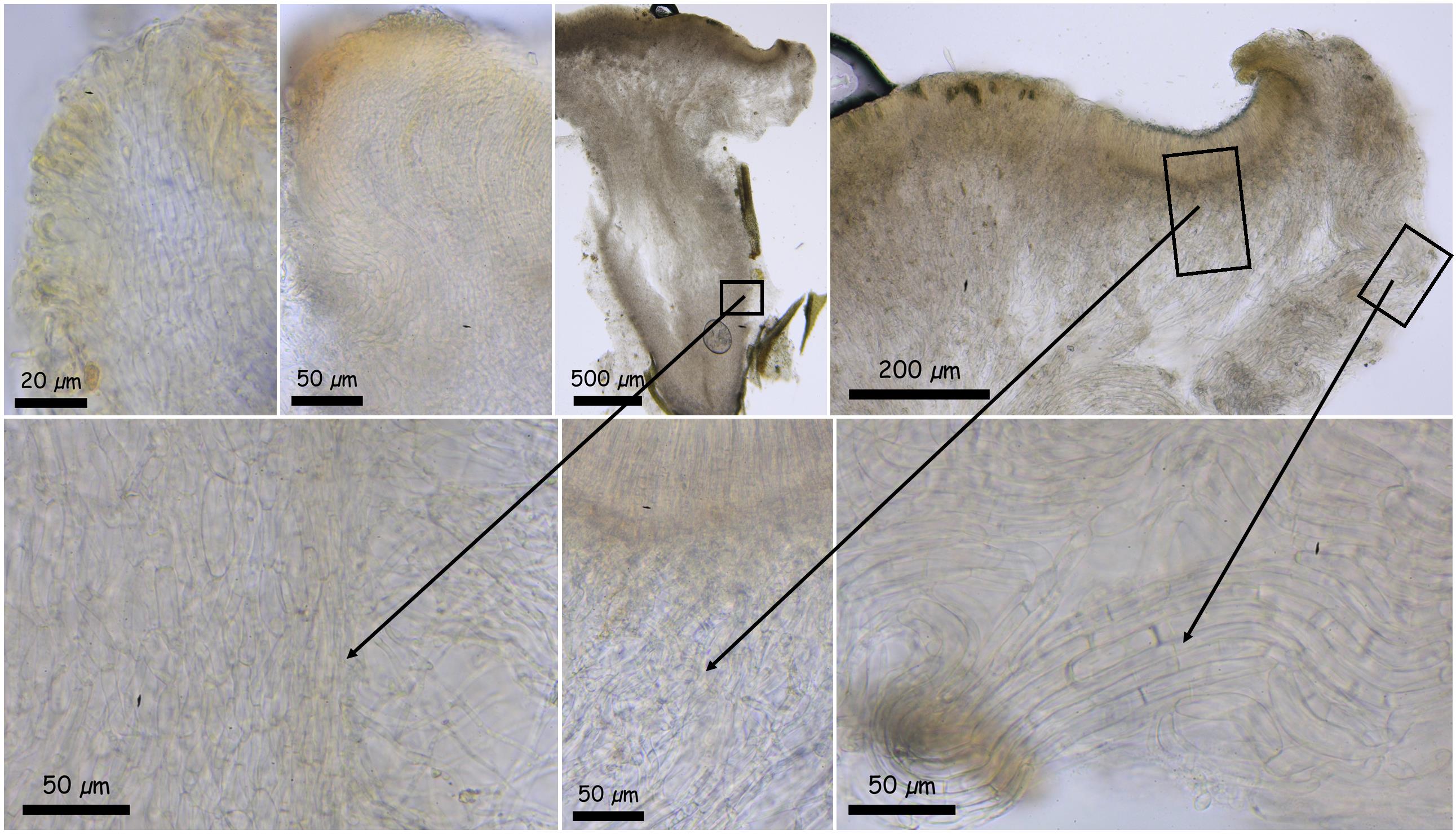
El excípulo ectal está compuesto por células de textura prismática y el excípulo medular es de textura intrincata.
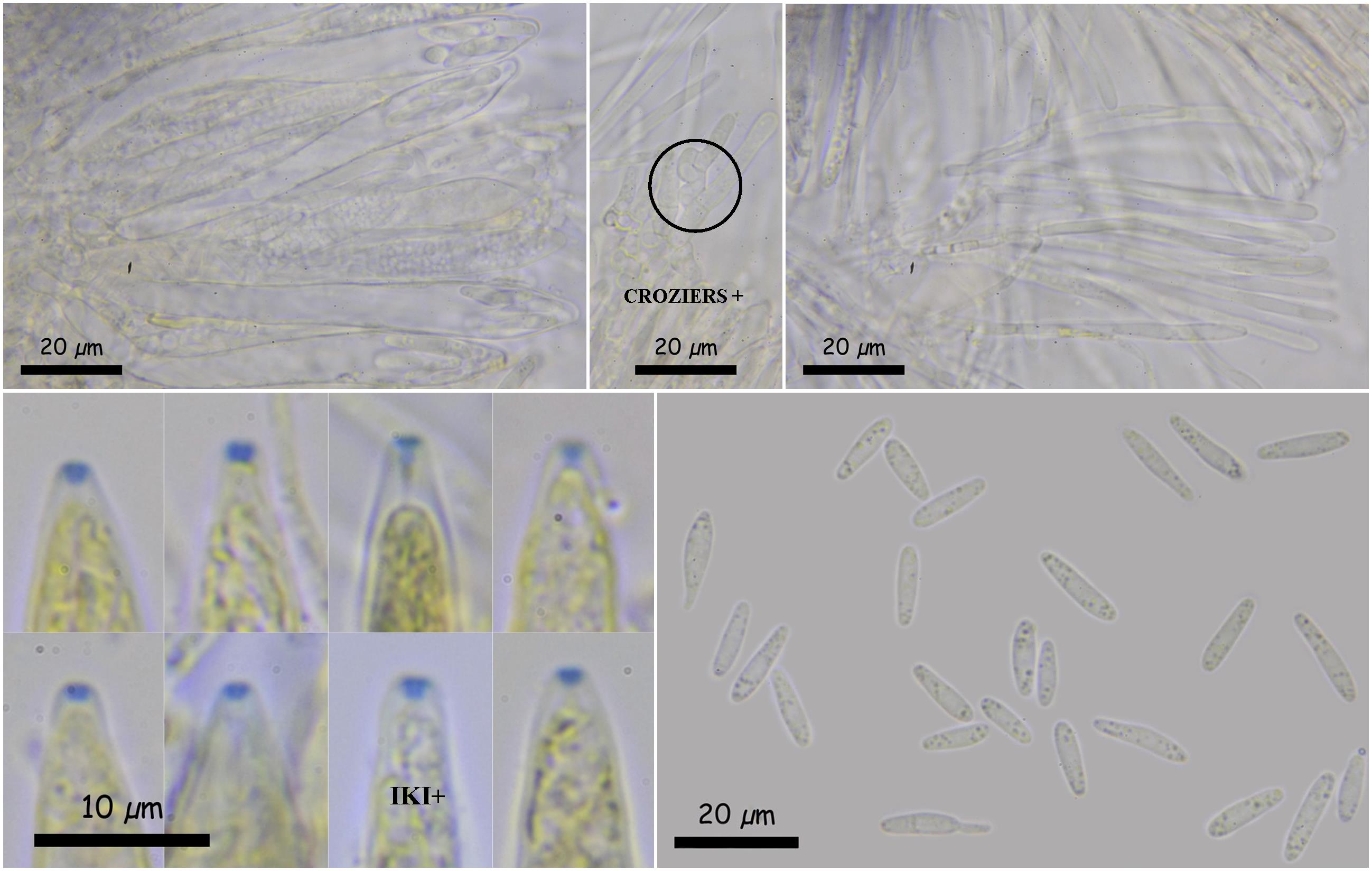
Ascas cilíndrico-claviformes, estrechándose en el ápice, de (83,4) 86,6 - 104 (115,6) × (8,8) 8,9 - 10,9 (11) µm; N = 13, Me = 97,3 × 9,9 µm, con el poro apical euamiloide de tipo Calycina y croziers en la base.
Esporas de (10,2) 11,1 - 15,8 (17,8) × (2,7) 2,9 - 3,6 (3,9) µm, Q = (3) 3,1 - 5,2 (6,2) ; N = 53, Me = 13,2 × 3,3 µm ; Qe = 4, cilíndricas, generalmente con un extremo algo más estrecho y algunas pequeñas gotitas de aceite en su interior, que cuando están hipermaduras tienen un septo transversal.
Las paráfisis son cilíndricas, bifurcadas en la base, poco o nada ensanchadas en el ápice, sin contenido vacuolar en su interior.
Creo que se trata de alguna Ombrophila, pero no me encaja nada.
Saludos.
Salvador.
 Ombrophila-sp-1--0001.jpg
 Ombrophila-sp-2--0001.jpg
 Ombrophila-sp-3--0001.jpg
Hans-Otto Baral,
24-02-2019 07:47

Re : Ombrophila sp
Hi Salvador
interesting fungus, but I do not have an idea o a genus. Surely no Ombrophila as there is no gel at all. I suppose the fungus is linked to the moss? The only idea I have is Bryoscyphus turbinatus which is not a Bryoscyphus but more similar to Roseodiscus.
I imagine that Danny Haelewaters is interested in this fungus, I will ask him.
Hope you kept the original of the wonderful photo of the croziers in case you want to publish at some time.
Zotto
interesting fungus, but I do not have an idea o a genus. Surely no Ombrophila as there is no gel at all. I suppose the fungus is linked to the moss? The only idea I have is Bryoscyphus turbinatus which is not a Bryoscyphus but more similar to Roseodiscus.
I imagine that Danny Haelewaters is interested in this fungus, I will ask him.
Hope you kept the original of the wonderful photo of the croziers in case you want to publish at some time.
Zotto
Salvador Tello,
24-02-2019 08:28
Re : Ombrophila sp
Muchas gracias Zotto.
No había pensado en Bryoscyphus, buscaré alguna información sobre Bryoscyphus turbinatus.
Sí, estaba vinculado al musgo, crece sobre él.
Suelo hacer algunas láminas con las fotos, pero siempre conservo las originales.
Saludos.
Salvador.
No había pensado en Bryoscyphus, buscaré alguna información sobre Bryoscyphus turbinatus.
Sí, estaba vinculado al musgo, crece sobre él.
Suelo hacer algunas láminas con las fotos, pero siempre conservo las originales.
Saludos.
Salvador.
Hans-Otto Baral,
24-02-2019 10:04
Re : Ombrophila sp
At present I have turbinatus in Arachnoscypha, a probable misplacement, but I placed your fungus now also there. I also placed the unpublished genus Luteodiscus in Arachnopezizaceae because I saw there was a directory "turbinatus aff. yellowish" which should belong in Luteodiscus.
Salvador Tello,
24-02-2019 22:37
Re : Ombrophila sp
Gracias Zotto.
Ahora las he visto.
Ahora las he visto.