05-04-2026 20:40
 Robin Isaksson
Hi!Found i Japan on bark of Abies sp. Spores 35-4
06-04-2026 11:07
Louis DENYBonjour forum, Trouvé sur bois de feuillu très d
06-04-2026 08:15
 Lothar Krieglsteiner
some days ago, on the lower surface of leaf of Que
05-04-2026 22:46
Lothar Krieglsteiner
on wood of Ceratonia, Algarve, 3.4.2026.The color
31-03-2026 21:18
 Miguel Ángel Ribes
Good evening. oes anyone have the original descrip
31-03-2026 20:57
Stefan BlaserHello everybody, I hope somebody can help me with
Bonjour,
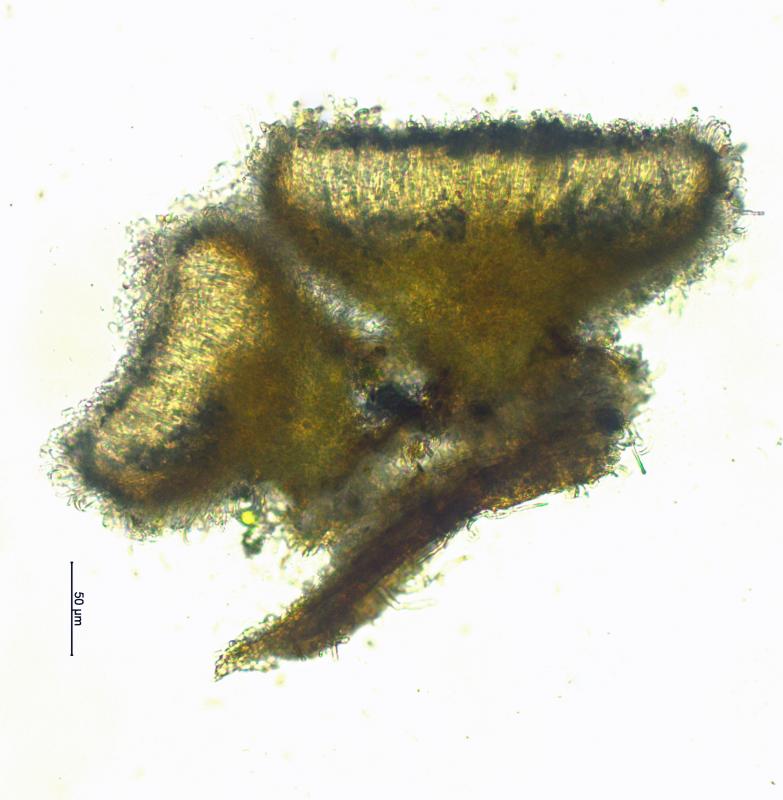
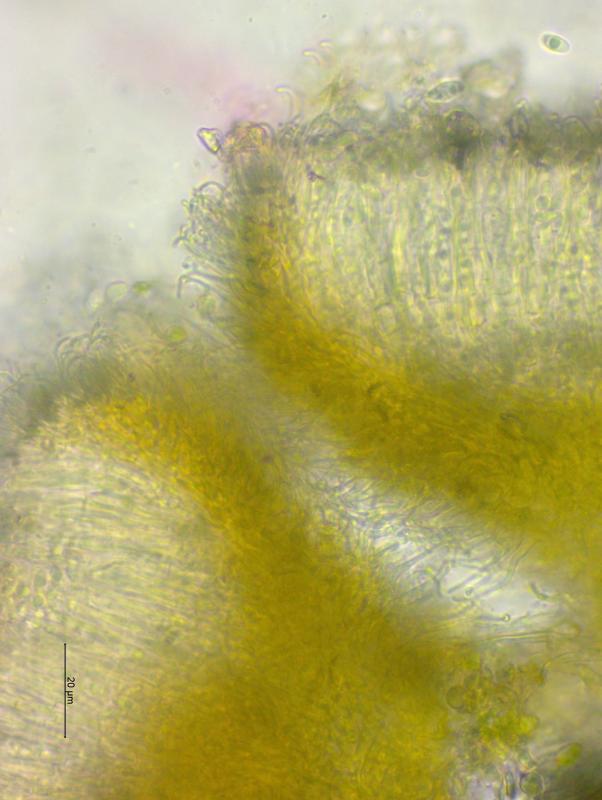
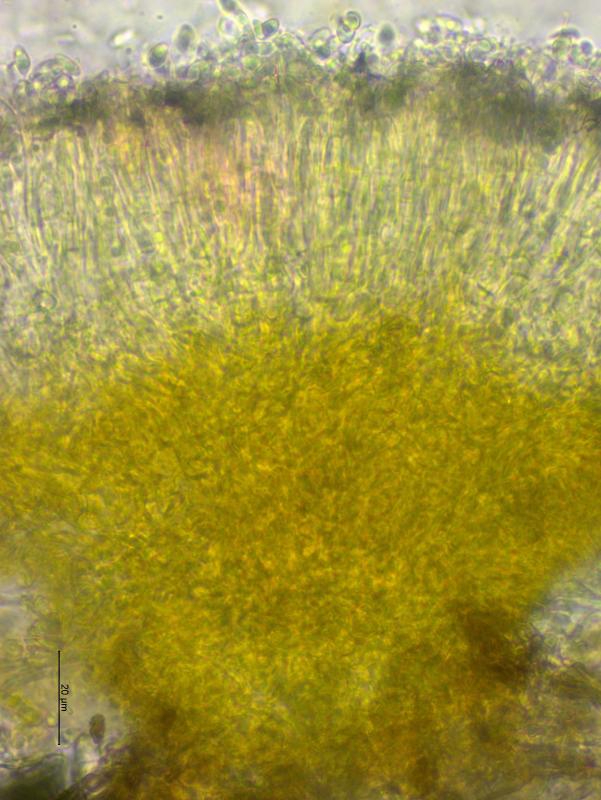
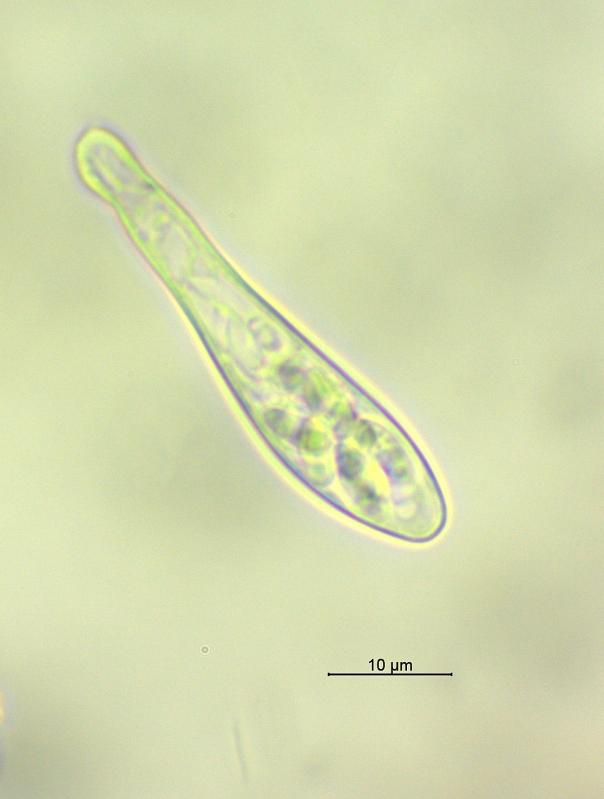
Récolté sur branche morte de lierre (Hedera/jardin/385m), apothécies 0.1-0.3mm de diamètre, surface externe couverte de petits poils en crochet, renflés à la base, hyménium beige, asques 28-44 x 7-9 µm, crochets+, IKI-, octosporés, spores ellipsoïdes 6.5-8 x 2.5-3 µm, lisses, hyalines, contenant quelques gouttes, les poils ne se dissolvent pas dans 3 % KOH.
Merci d'avance pour vos avis.
Elisabeth

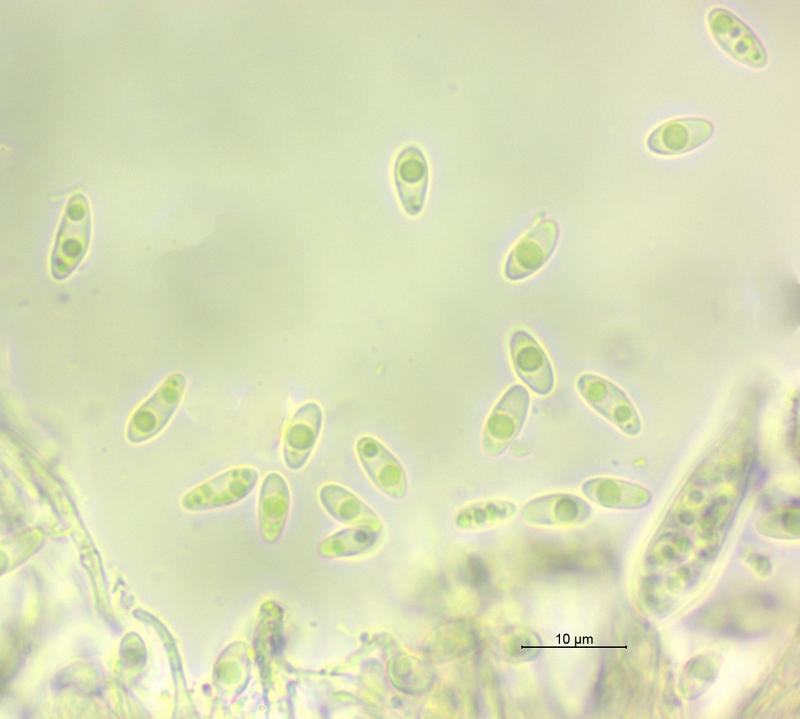
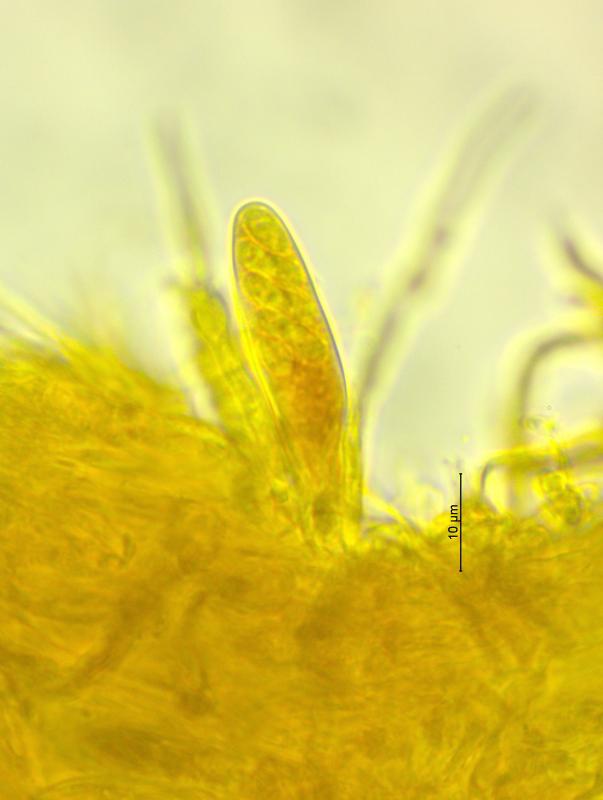

Amitiés,
Stip

I don't know U. eurotioides from my own experience but this golden-yellow intercellular substance seems to be in my present knowledge a feature of Hyalocrotus which has more species that are closer related to Unguiculariopsis.

And indeed, also Stip is right when comparing Hyalacrotes pseudopani, which I put in my eurotioides folder as a possible synonym.
There is an urgent need to obtain sequences of Unguiculella/Hyalacrotes. My guess is that they belong like Unguiculariopsis in Cordieritidaceae.
Zotto
@ Elisabeth, I will be happy to work with this collection too, it looks like if there are enough fruitbodies for DNA extraction.
ich finde deinen Baum nicht (der letzte ist von Juni 2018) und auch keine Mail. Aber ich habe eine Sequenz von Francois Valade von einer Unguiculella mit langen fadenförmigen Sporen, die in die Cordieritidaceae fällt. Ich war nicht sicher, ob es ein Helicogonium ist, und das ist auch nicht ganz ausgeschlossen, falls die Sequenz nur für die sterilen Elemente gilt. Aber es wäre gut, die mit deiner zu vergleichen, wie groß die Ähnlichkeit ist. Es ist ITS und LSU.
Zotto
Also the synonymous Dasyscypha campylotrichia on thistle (Carduus/Cirsium?) was described with very tiny apothecia (0.15-0.2 mm, spores 5 / 2), like eurotioides (0.2 mm, on Artemisia vulgaris and Anthriscus sylvestris, spores 5-8 / 2-2.5).
Urceolella pseudopani on indet. wood was described only with 0.3 mm diam. (spores 6-7.5 / 2-3).
So you think this is difference enough?
And what when it grows on Rubus fruticosus?
In my folder I have various samples which partly do not support the idea. E.g., 19.IX.2017 on Epilobium: 0.2-0.45 mm. - 21.I.2019 on Cytisus: 0.1-0.2 mm. - HB 8053 on Fagus: 0.08-0.13 mm. - But: HB 7786b on ?Fraxinus: 0.4-0.8 mm.
Raitviirs statement of amyloid asci in eurotioides is weird. Is it simply an error? I never saw an amyloid reaction in this group.
Zotto
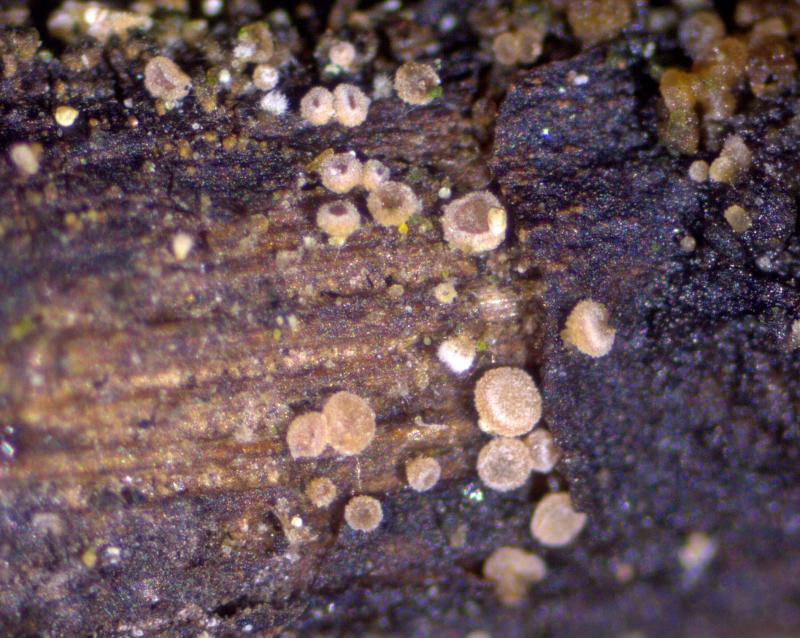
the most destinctive feature besides the consistence of the fruitbodies lies in the excipular intercellular yellow gel for pseudopani I think. There is too much overlap in measurements, I attach 2 macro-photos from the 2 lowlandcollections. They were 0,1 mm
Stip
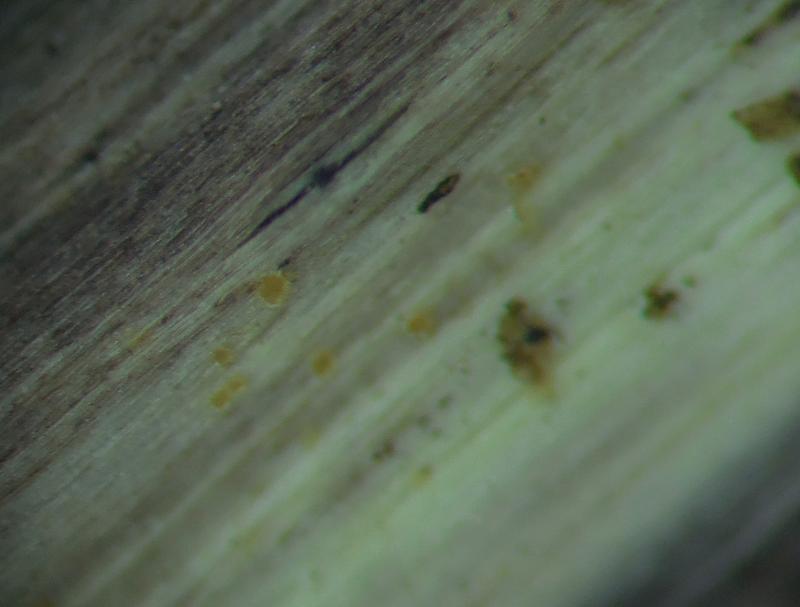
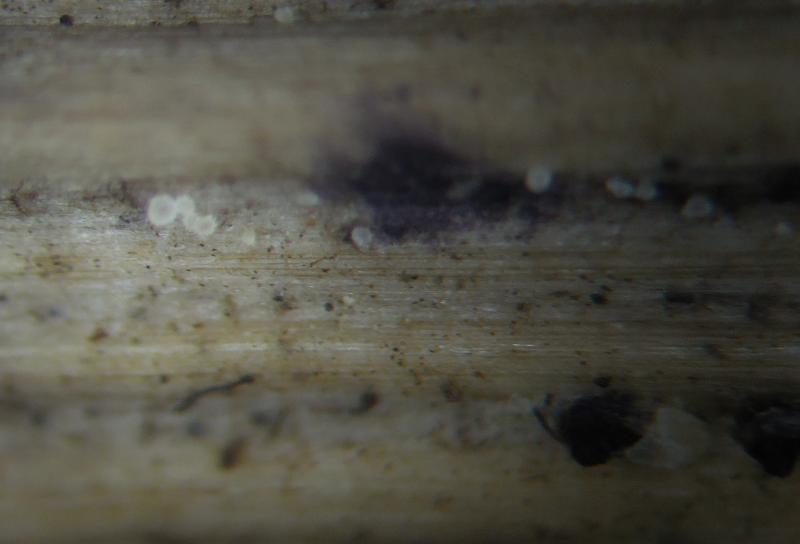
The yellow exudate may be a good character. It can also be brownish (see HB 7641b).
But data on the excipular colour in samples on herbs are rare in my folder, and from apothecial colour it is not clear at all.
Will be time to gain a sequence of your lowland forms.
Zotto
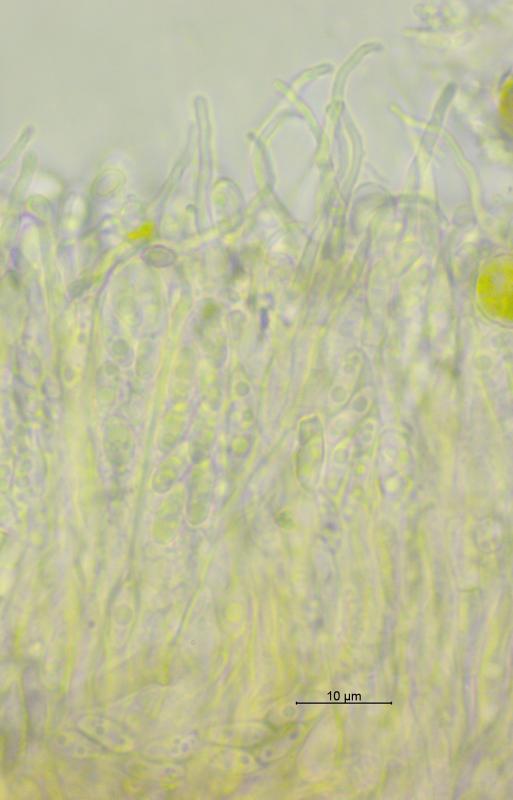
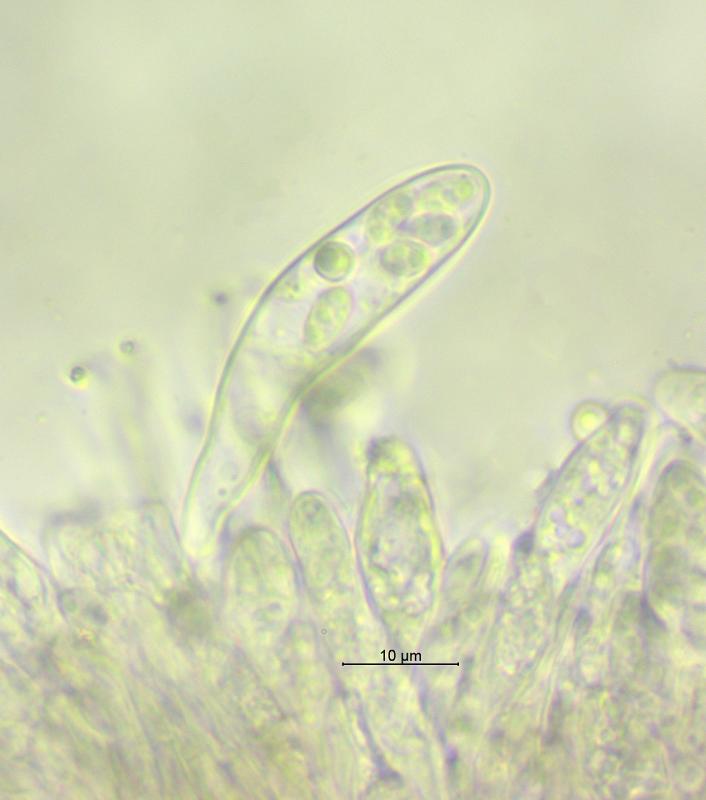
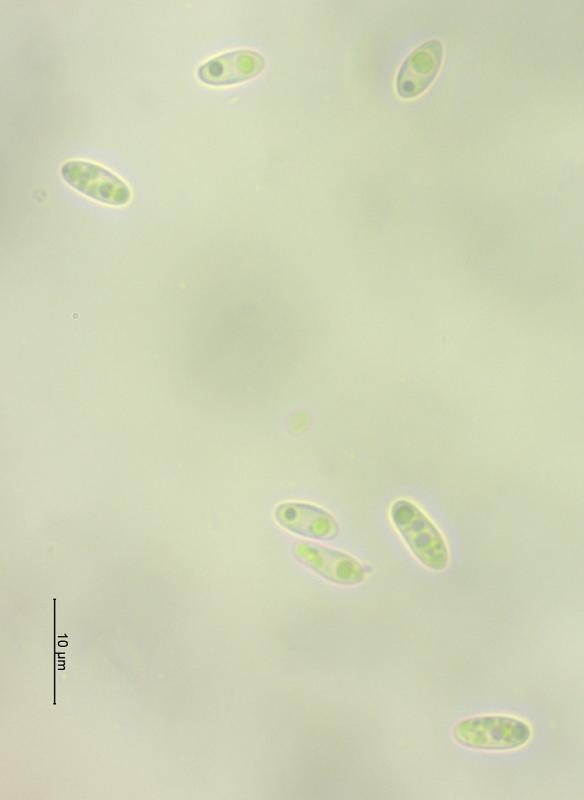
Anbei weitere Photos der Paraphysen und der ein- bis multigutulen Sporen, vielleicht doch parisitiert.
Elisabeth