
05-04-2026 22:46
 Lothar Krieglsteiner
on wood of Ceratonia, Algarve, 3.4.2026.The color
15-05-2026 13:33
Sylvie Le GoffBonjour à tousJe serais très reconnaissante enve
16-03-2011 14:31
roman vargas albertoHi. I would like some opinion about this Peziza
14-05-2026 05:36
Ethan CrensonHi all, I haven't paid much attention to Lachnu
10-05-2026 23:17
 Andreas Gminder
Hello,today we found in a moist steep decidous for
11-05-2026 12:32
 Bernard CLESSE
Pourriez-vous m'aider à identifier cette héloti
13-05-2026 15:26
 François Freléchoux
Bonjour,Voici une récolte faite il y a quelques j
12-05-2026 15:41
 Nicolas VAN VOOREN
Dear Ascolovers, especially interested in Pezizale
13-05-2026 12:05
 Thierry Blondelle
Bonjour à tous,J'aimerais avoir confirmation de c
28-04-2026 20:07
Lothar Krieglsteiner
... on twig in the air at standing Ceratonia siliq
White Hymenoscyphus
Juuso Äikäs,
03-08-2020 20:40
The apos were fairly tough and yellowing.
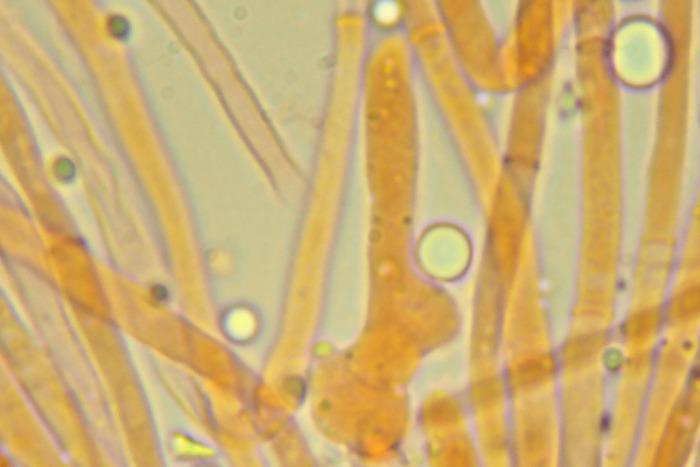
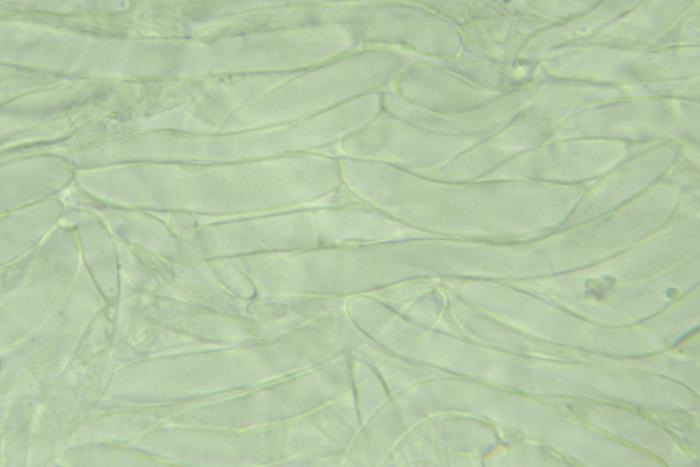
Asci with croziers, IKI+, paraphyses with VBs. If I interpreted correctly, the medullary excipulum is of textura intricata and ectal excipulum of textura prismatica.
Spores:
(15.7) 16.7 - 18.9 (20.5) × (4) 4.3 - 4.9 (5) µm
Q = (3.2) 3.7 - 4 (5.1) ; N = 20
Me = 17.8 × 4.6 µm ; Qe = 3.9
Might someone know what the species could be?
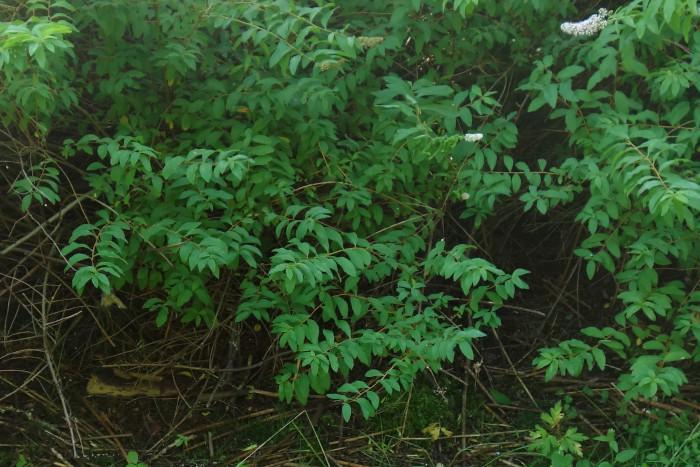
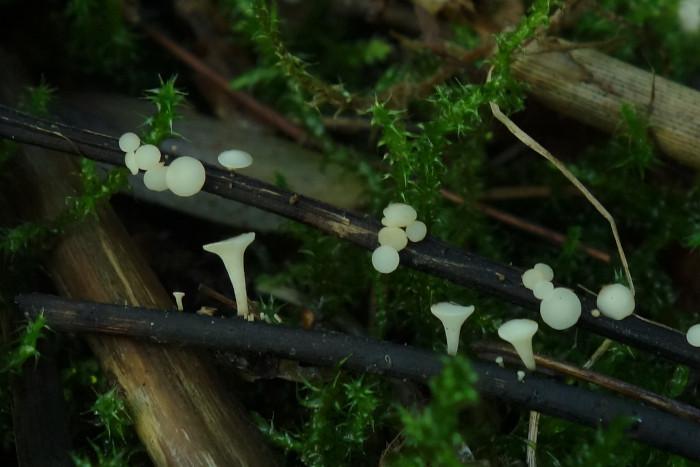
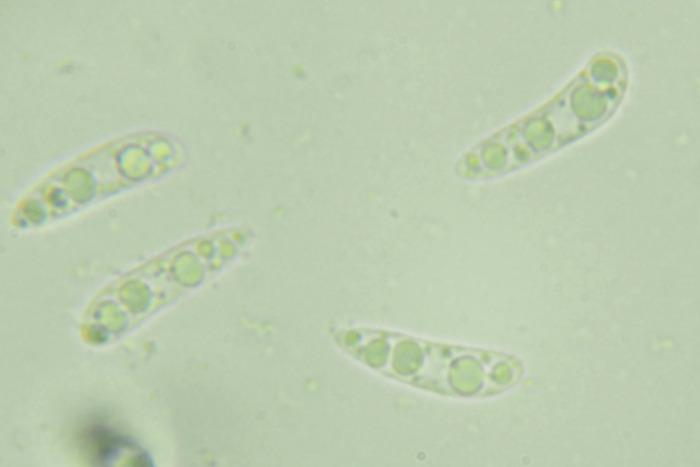
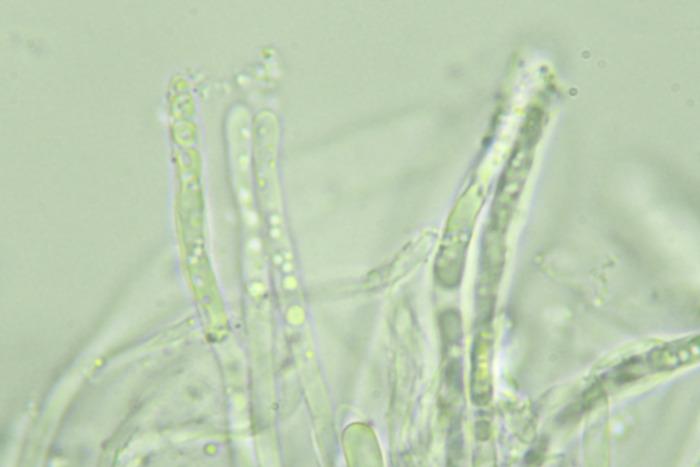


Hans-Otto Baral,
03-08-2020 20:43

Re : White Hymenoscyphus
Well, this is the most comkmon discomycete since about 20 years: H. fraxineus, cause of the ash dieback disease. Differs from H. fraxineus merely by having croziers.
Both on blackened Fraxinus petioles.
Enrique Rubio,
03-08-2020 20:51

Re : White Hymenoscyphus
Hi Zotto
Do you know if H. fraxineus has been found in Spain? I only see H.albidus.
Enrique
Do you know if H. fraxineus has been found in Spain? I only see H.albidus.
Enrique
Juuso Äikäs,
03-08-2020 20:58
Re : White Hymenoscyphus
Ok then, thank you! H. pseudoalbidus is apparently an older name for it. Fraxinus isn't at all common here and I'm not too familiar with it. I thought it would be more tree-like. Or maybe that's some other plant and the petioles came from a nearby tree?
Hans-Otto Baral,
03-08-2020 21:22
Re : White Hymenoscyphus
I am still unaware of Spanish record. Even in Poitou-Charente I am not sure.
Certainly these are Fraxdinus petioles. The transsect should be bilateral-symmetrical (flattened).
Enrique Rubio,
03-08-2020 21:28
Re : White Hymenoscyphus
It seems that Spanish ash trees are strong and still resist the advance of this fungus.
On the one hand I want to see the fungus, but on the other I don't.
Thanks, Zotto.
On the one hand I want to see the fungus, but on the other I don't.
Thanks, Zotto.
Hans-Otto Baral,
03-08-2020 21:35
Re : White Hymenoscyphus
I can hardly believe that. maybe the climate is not good for the fungus, or the Pyrenees form a barrier. But in Croatia it occurs since many years.
Enrique Rubio,
04-08-2020 00:43
Re : White Hymenoscyphus
It was just a joke.
Hans-Otto Baral,
04-08-2020 06:48
Re : White Hymenoscyphus
It is hard to believe but it seems that there is no rapid spread by birds etc. but only by wind via a few 100 m per year. The height of the Pyrenees should not be a reason because in the Alps it occurs up to the subalpine region.
Martin Bemmann,
04-08-2020 10:24

Re : White Hymenoscyphus
And what is worse: it jumps on Oleaceae other then Fraxinus:
as Phillyrea, native to mediterranian countries...
Regards
Martin
Enrique Rubio,
04-08-2020 11:20
Re : White Hymenoscyphus
That's very interesting.
Thank you, Martin.
Thank you, Martin.