
11-04-2026 13:34
Artem PtukhaHello, I am seeking assistance with the identific

11-04-2026 10:19
 Michel Hairaud
Chers amis d'Ascofrance , voici une très bonne no
11-04-2026 10:10
Michel Hairaud
Dear Ascofrance members, here is some very good ne
10-04-2026 23:22
Gernot FriebesHi,ascospores are 1- to 3-septate, approximately
10-04-2026 15:51
 William Slosse
Hello everyone, On 08/04/26, I found a growth sit
09-04-2026 15:25
Jac GelderblomOn bare soil between mosses Ifound an asco I deter
09-04-2026 13:55
Thomas Læssøehttps://svampe.databasen.org/observations/10589176
09-04-2026 10:12
Thomas Læssøehttps://svampe.databasen.org/observations/10587061
08-04-2026 20:33
 Vasileios Kaounas
Found 07-04-26, in Abies cephalonica. Diameter 1,

Hi All,
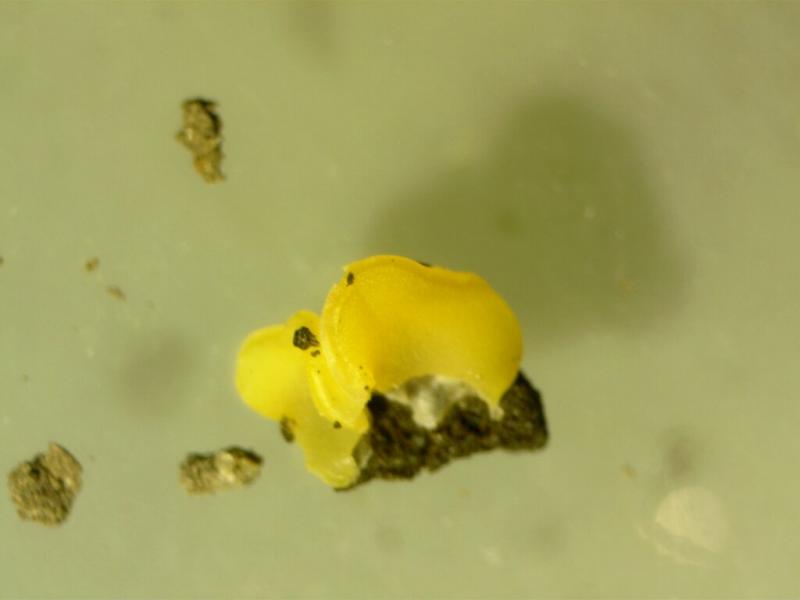
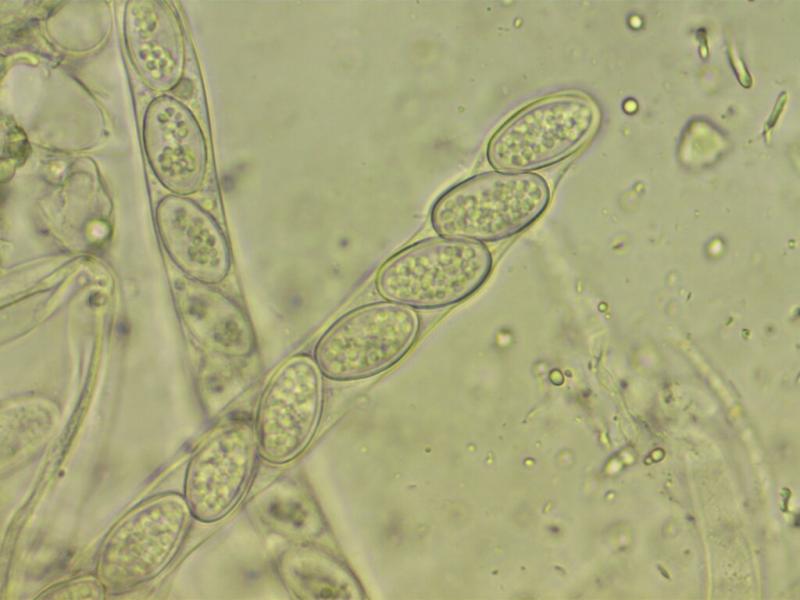
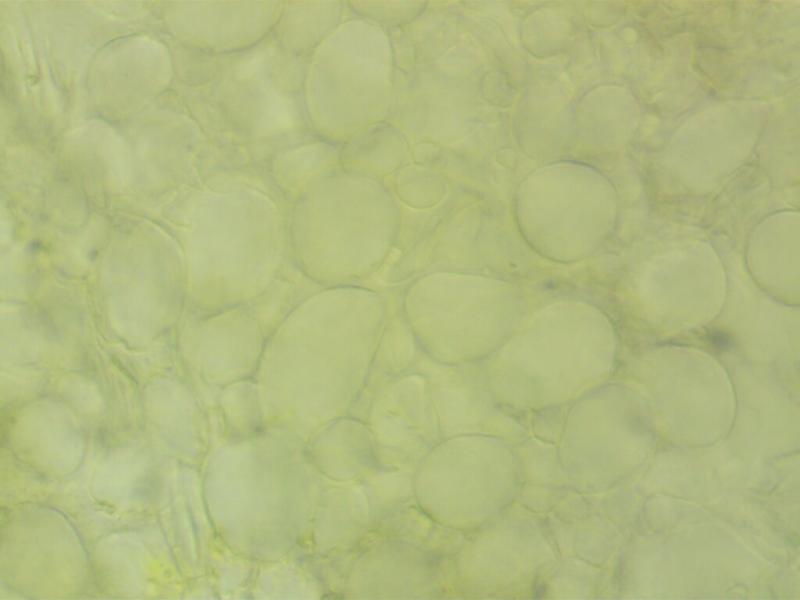
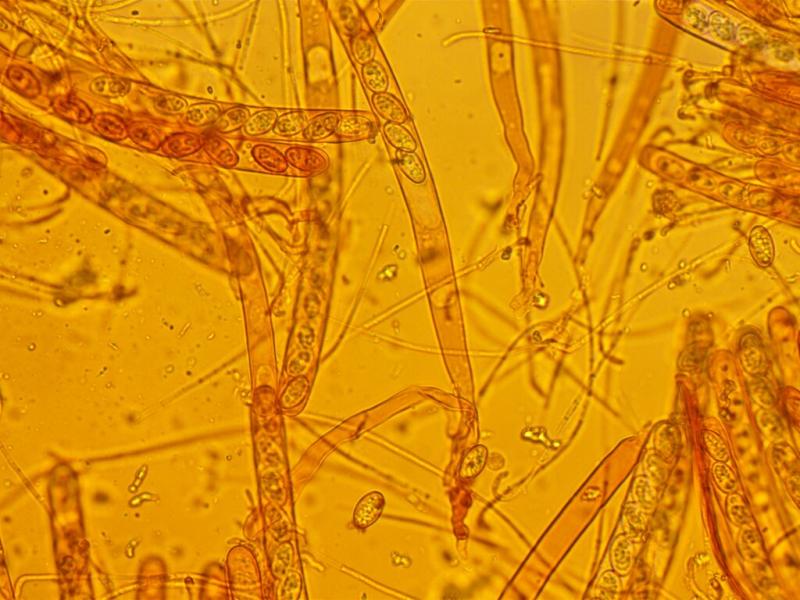
For a couple of months I have been finding yellow apothecia on bare damp soil in shrub borders of my garden. They are 1-3mm and bowl to disc shaped. The spores are usually multiguttulate and measure 15-21x9-10 and the cylindric asci are 200-280x10-13. No blueing in iodine was observed. Did not find croziers. The paraphyses are curved, septate and slightly swollen to 3 at the apex. A distinctive feature is that the paraphyses and ascus tips are glued together with yellowish amorphous matter. In Melzer's this disperses into yellow drops. Excipulum is a Textura Globosa. I think we are looking at an operculate disco but am struggling even to get to genus.
Thanks in advance,
Charles.
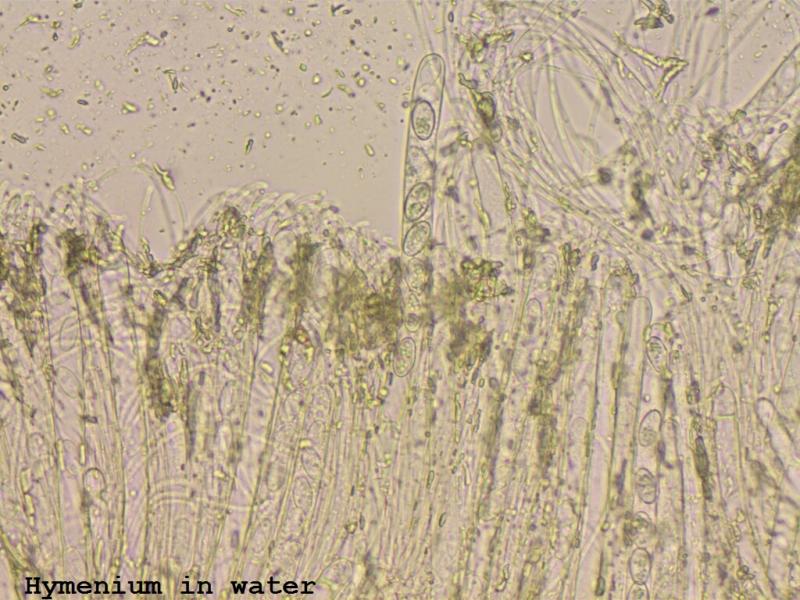
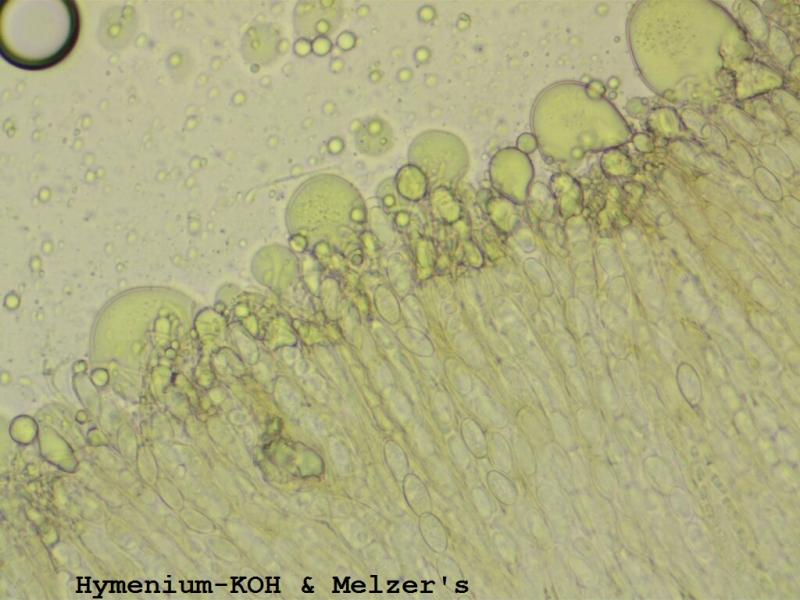
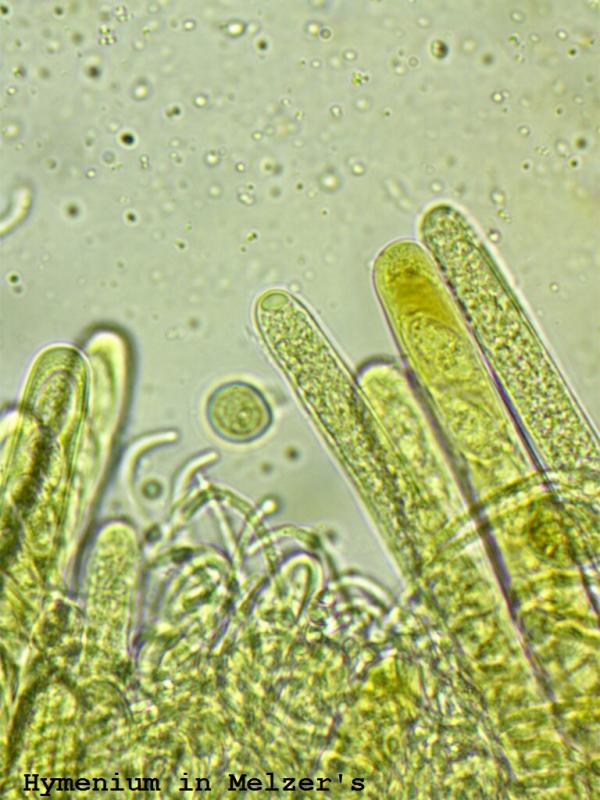


Cheilymenia I know without conspicuous contents of the spores (?).
Best regards, Lothar
Hi Chris,
Not aware any hairs. Also a bit small for C. vitellina
Cheers,
Charles.
Here is a slightly better photo of the apothecia, this time with sparse mosses, but in other spots there was no moss at all.
Charles.
I have received the suggestion of Boubovia/Pseudoboubovia from Marcel Vegas. I think I had ruled out Boubovia but I was unaware of Pseudoboubovia. It turns out that Pseudoboubovia benkertii, with its multiguttulate ascospores, is an excellent fit!
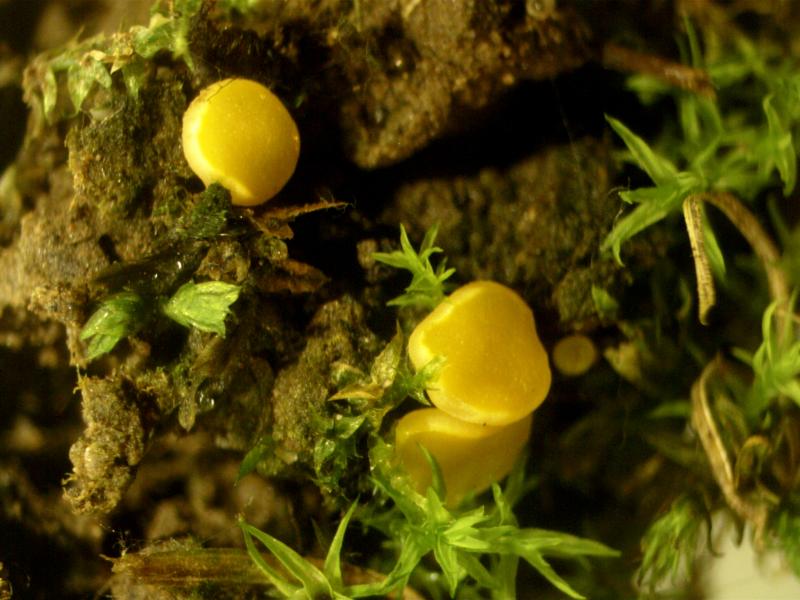
Hi Chris,
Wel, I always scan the soil surface when I'm gardening. Just in case! It turns out that this fungus is associated with my Cupressus hedge!
Yes, I think the genus might be new to Britain and I'll let Paul Cannon know.
Best wishes,
Charles.