
11-04-2026 15:45
 Zuzana Sochorová (Egertová)
Please, could anyone send me this paper?Moyne G.,
11-04-2026 13:34
Artem PtukhaHello, I am seeking assistance with the identific

11-04-2026 10:19
 Michel Hairaud
Chers amis d'Ascofrance , voici une très bonne no
11-04-2026 10:10
Michel Hairaud
Dear Ascofrance members, here is some very good ne
10-04-2026 23:22
Gernot FriebesHi,ascospores are 1- to 3-septate, approximately
10-04-2026 15:51
 William Slosse
Hello everyone, On 08/04/26, I found a growth sit
09-04-2026 15:25
Jac GelderblomOn bare soil between mosses Ifound an asco I deter
09-04-2026 13:55
Thomas Læssøehttps://svampe.databasen.org/observations/10589176
09-04-2026 10:12
Thomas Læssøehttps://svampe.databasen.org/observations/10587061
Ascobolus michaudii??
Joop van der Lee,
12-12-2020 12:30
 Found on cow dung.
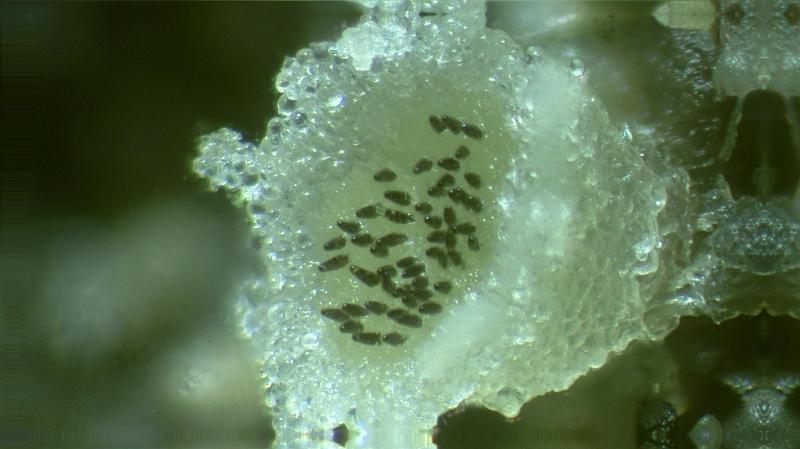
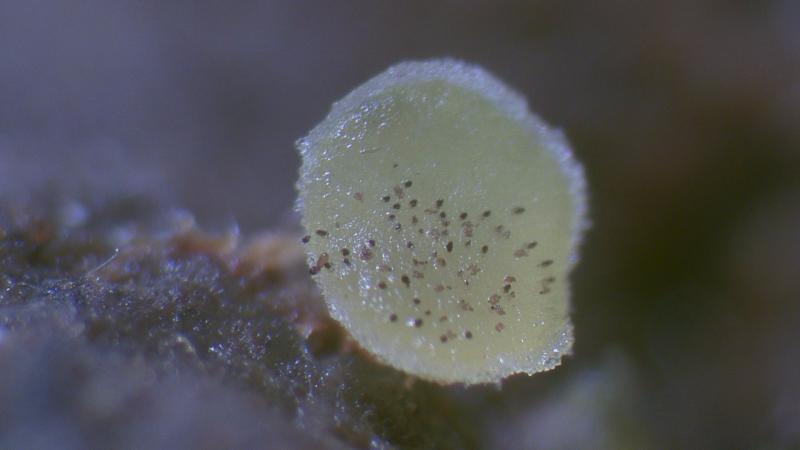
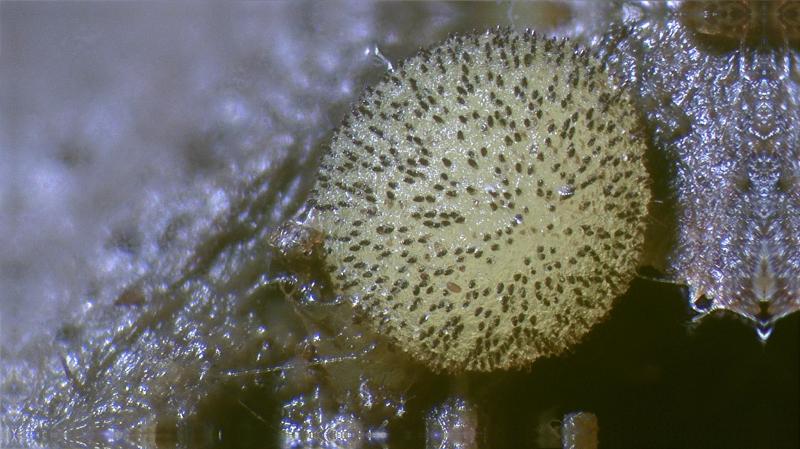
Apothecia: white cylindrical at first becoming more flat with a lemmon-yellow center and global cell on the edge showing ripe tips of asci.
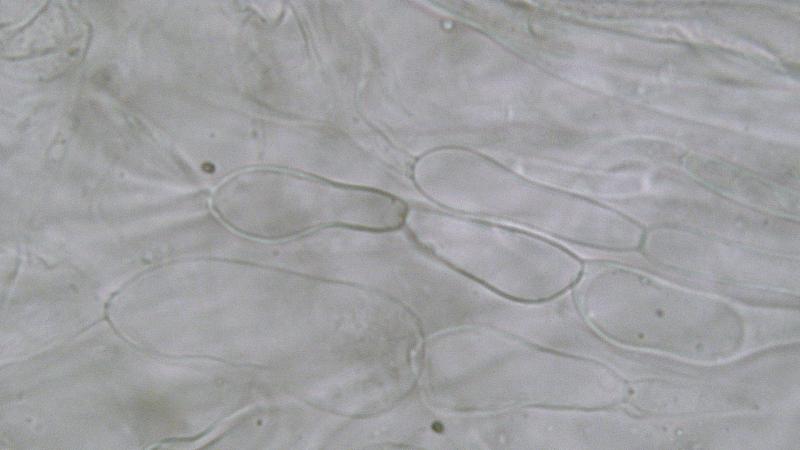
Excipilum: white covered with ellipsoid and angular cells.
Mature disks are yellow, flat at first with global cells on the edge becoming concave without the global cells.
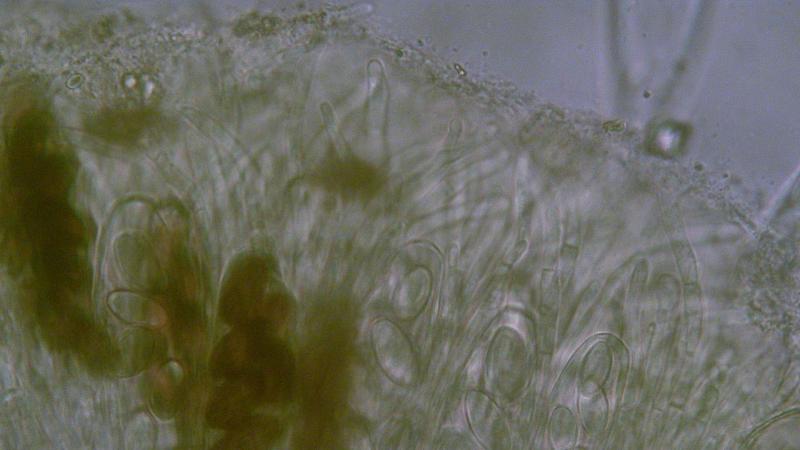
Paraphyses: septate, cylindrical, 2.2-5.1 um enlarging to 7.5-11.5 in some cases.
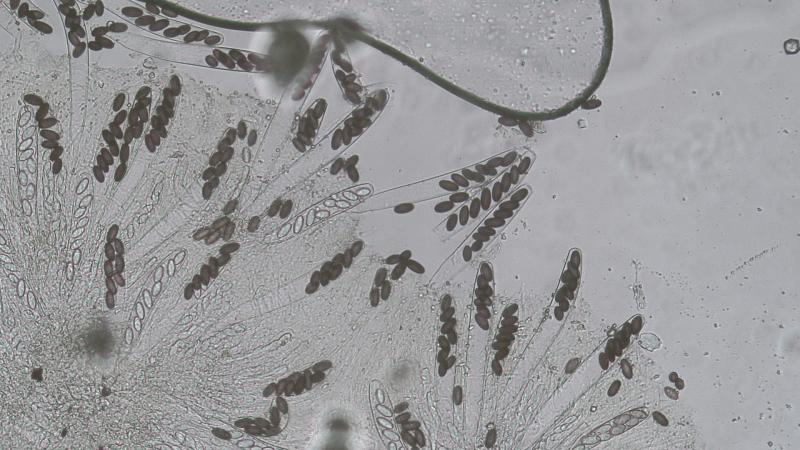
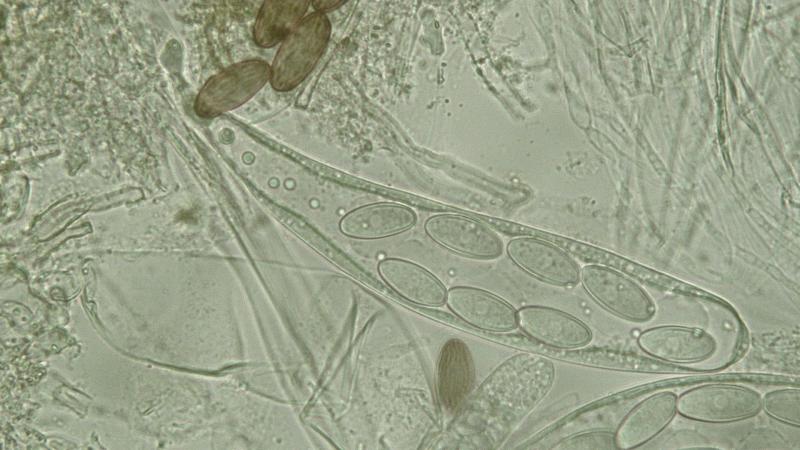
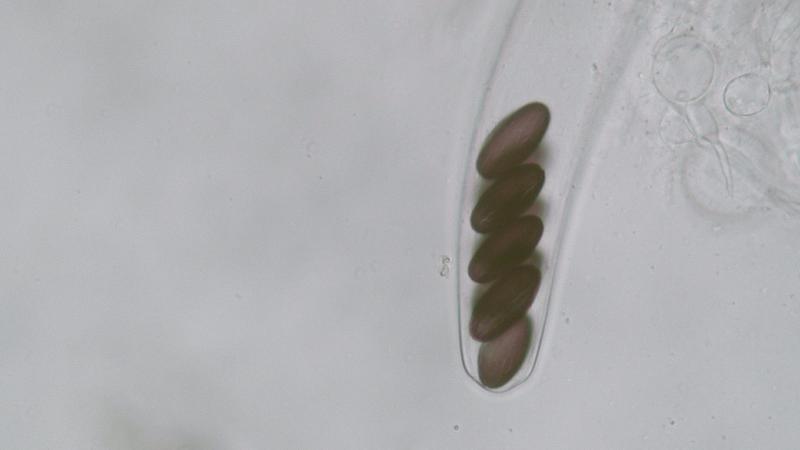
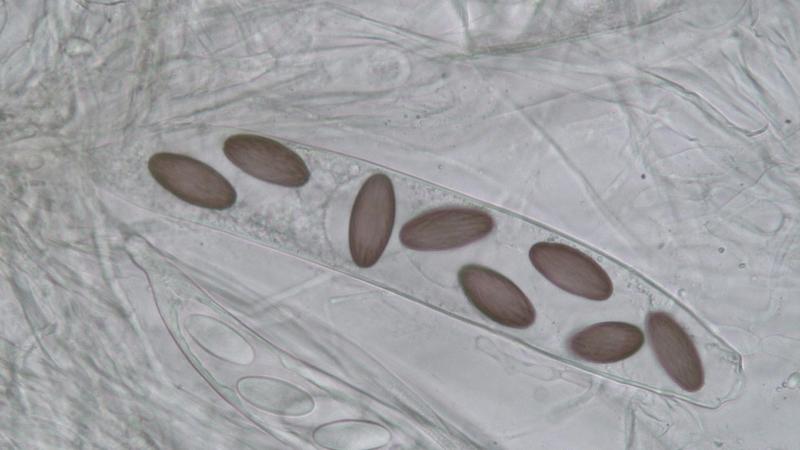
Asci: 8-spored, when enlarging in length with spores in line 222.5-240.5x21.5-27. When exanding in width in order to regroup the spores in two obliquely groups of 4 they measure 182.5-198.5x33-37 um.
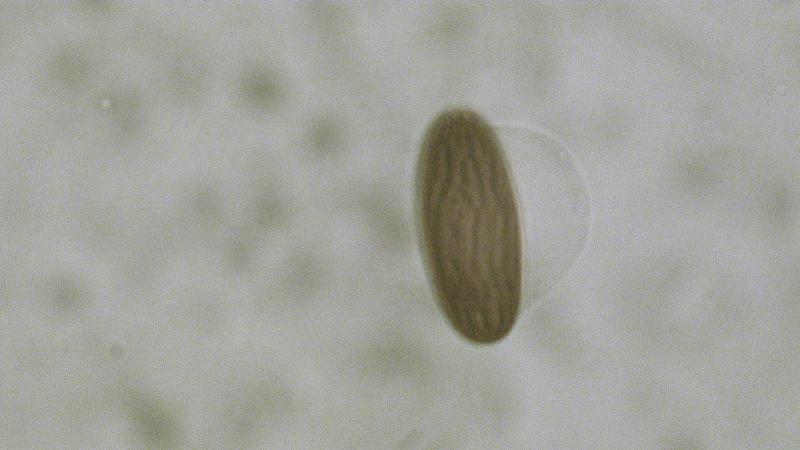
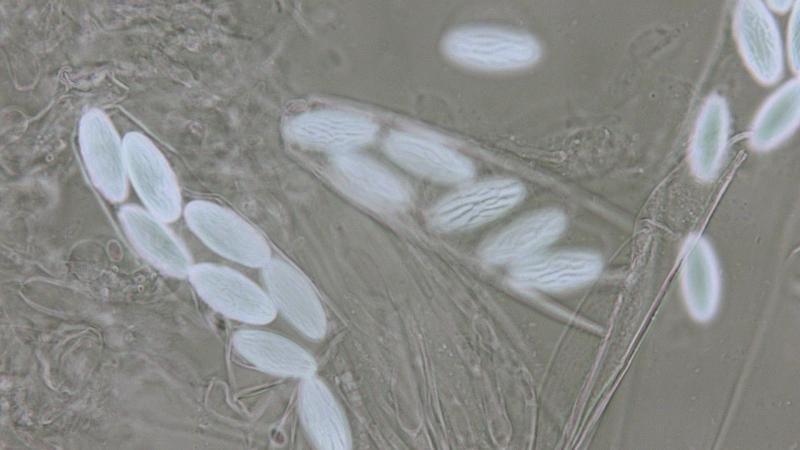
Uniseriate at first, finally biseriate, ellipsoid, hyaline at first and dark violet at maturity covered with a thick layer broken by irregular longitudinal furrows 20.5-23.5 (-27.5) um.
With a unilateral substance.
The last page of the enclosed documentation by Boudier gives an impression of the furrows in the spore layer.
Nice drawings for showing how it looks like in reality in the 19th century
Joop
 Ascobolus-michaudii-0001.pdf