
12-04-2026 12:22
 William Slosse
In a dune grassland in Oostduinkerke (Belgium), on
11-04-2026 15:45
 Zuzana Sochorová (Egertová)
Please, could anyone send me this paper?Moyne G.,
11-04-2026 13:34
Artem PtukhaHello, I am seeking assistance with the identific

11-04-2026 10:19
 Michel Hairaud
Chers amis d'Ascofrance , voici une très bonne no
11-04-2026 10:10
Michel Hairaud
Dear Ascofrance members, here is some very good ne
10-04-2026 23:22
Gernot FriebesHi,ascospores are 1- to 3-septate, approximately
10-04-2026 15:51
William Slosse
Hello everyone, On 08/04/26, I found a growth sit
09-04-2026 15:25
Jac GelderblomOn bare soil between mosses Ifound an asco I deter
09-04-2026 13:55
Thomas Læssøehttps://svampe.databasen.org/observations/10589176
Schizothecium
Joop van der Lee,
02-01-2021 21:32
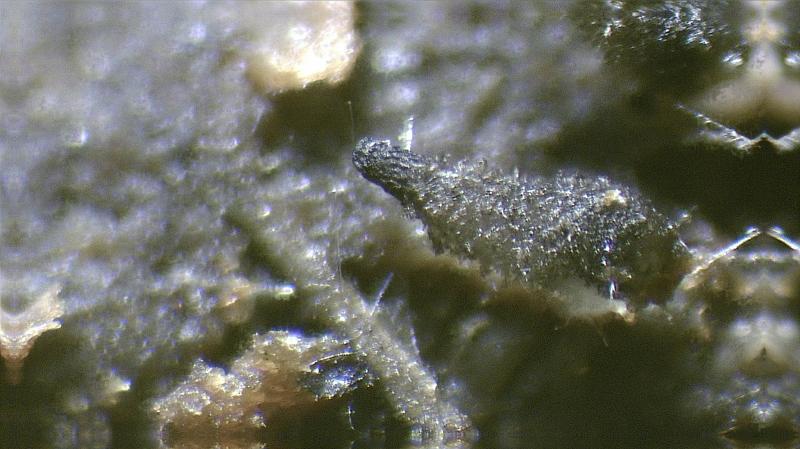
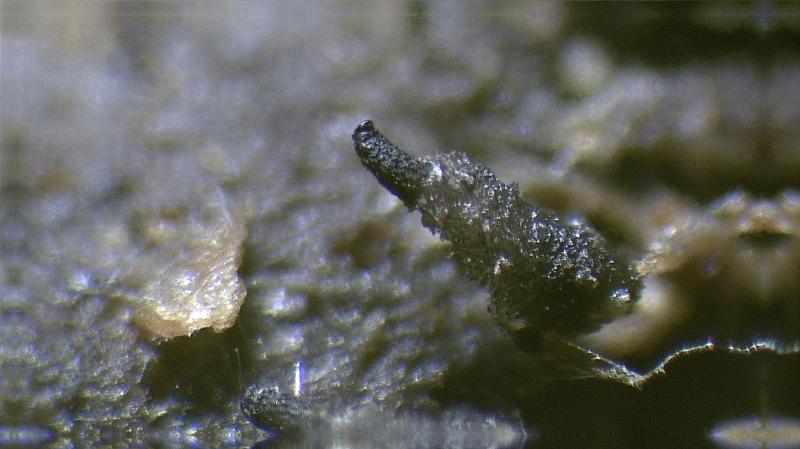
 Found on cow dung.
As far as measurements is concerned they do fall within ranges of S. conicum but I have not seen S. conicum with these long necks and tufs of agglutinated hairs near the base of the neck not forming a crown.
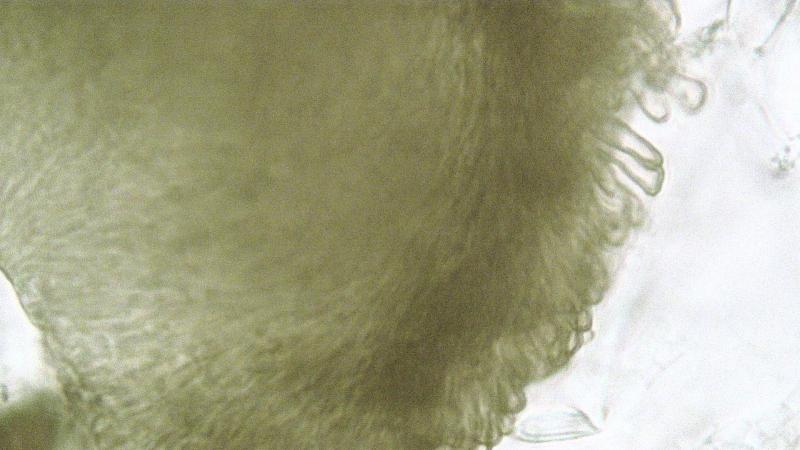
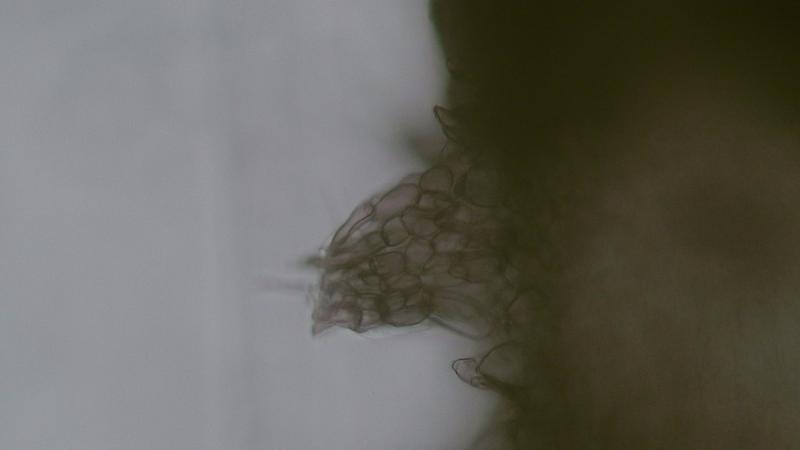
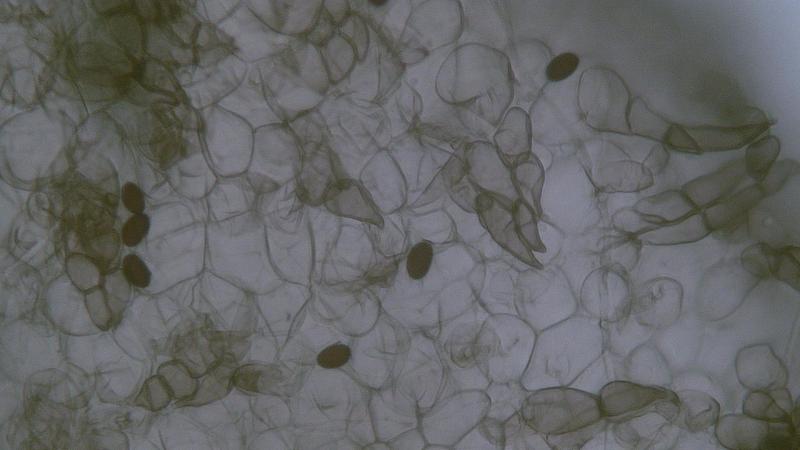
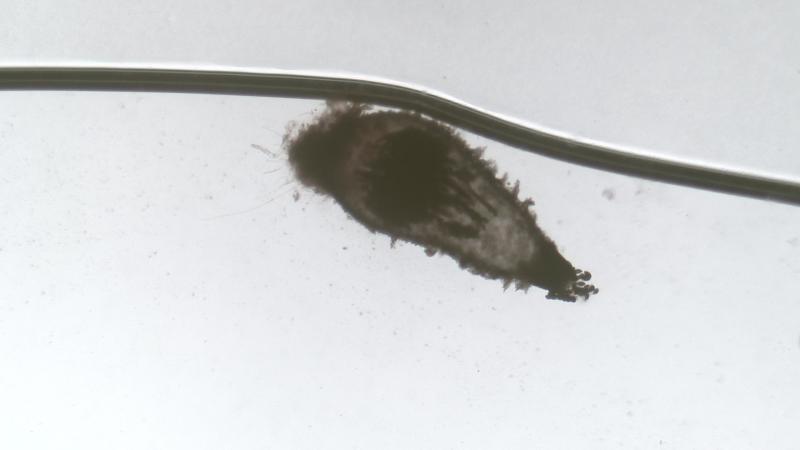
Perithecia: 340-377x129-144 um; neck 73-82x48-53 um, completely covered with single cells in longitudinal rows all the way up to the ostiole18.4x2.2 um; tuffs of agglutinated hairs near the base of the neck 62x47 um; single agglutinated hairs covering the rest of the body.
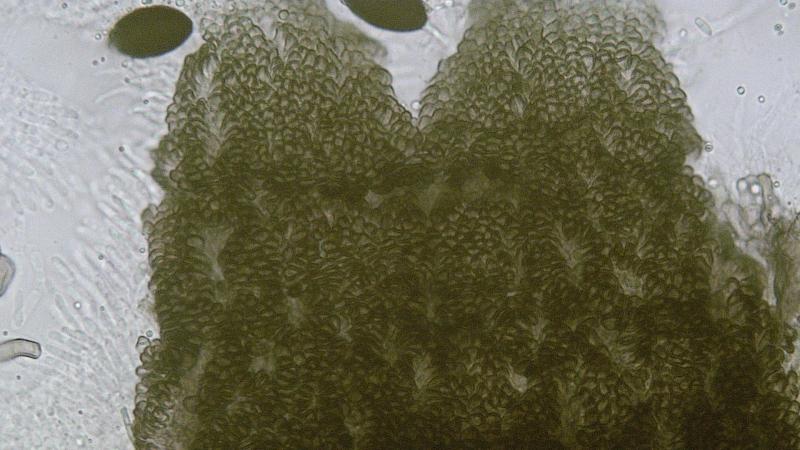
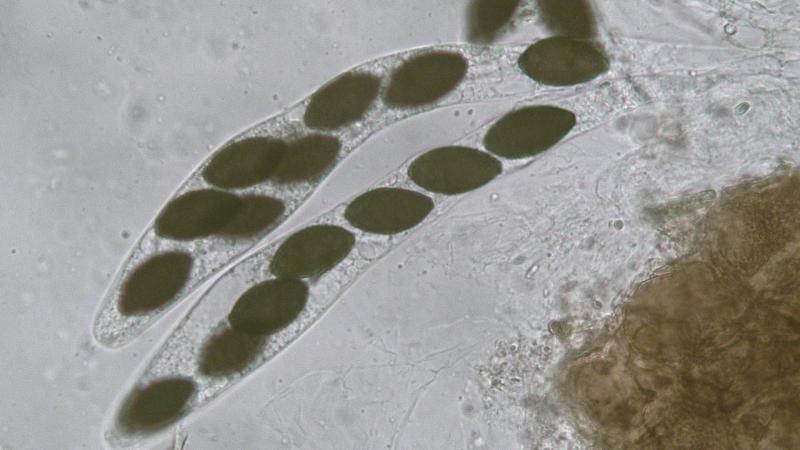
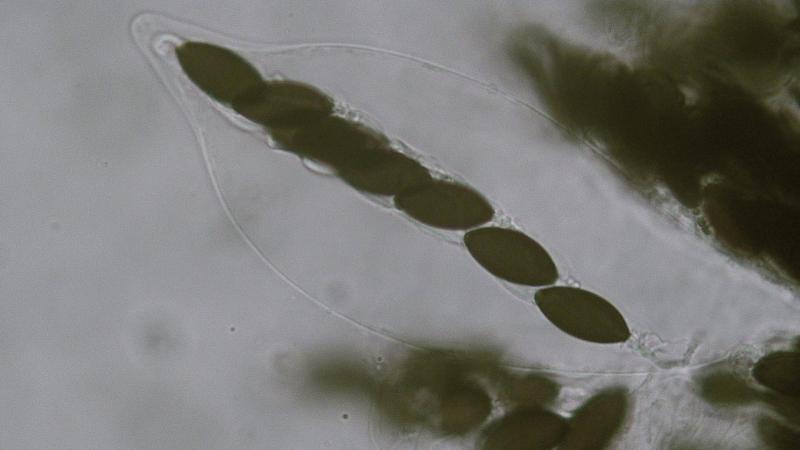
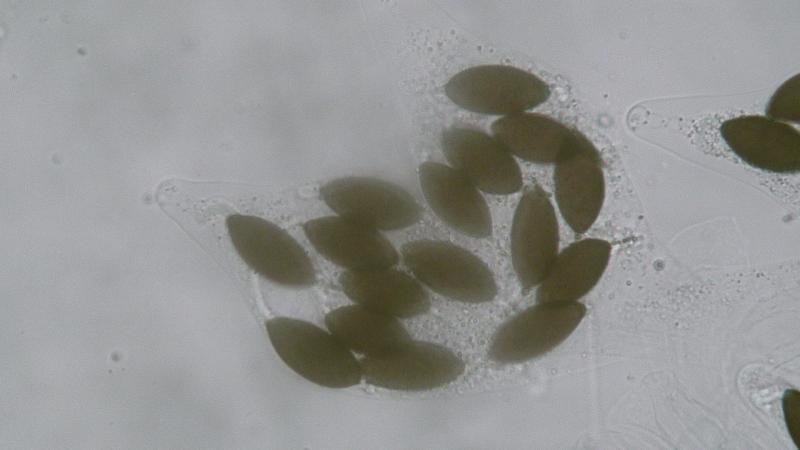
Asci: 8- spored; 215-222x17.5-18.5 expanding in width to 26.2-27.7 um near the apex, asci also expand to 78-82 um when still connected.
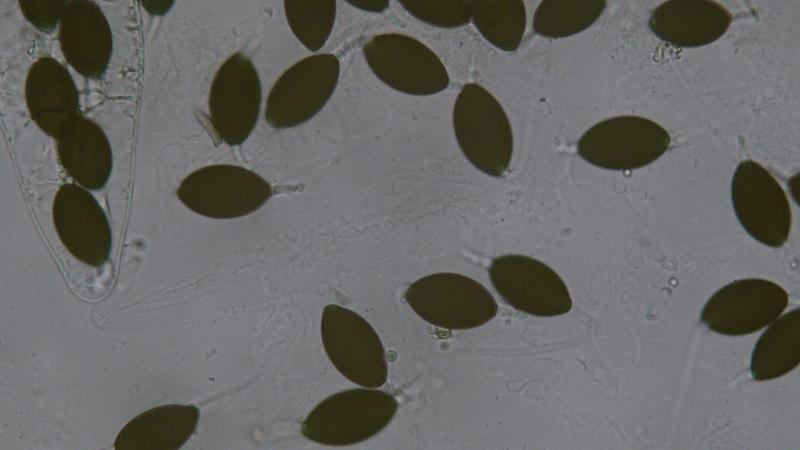
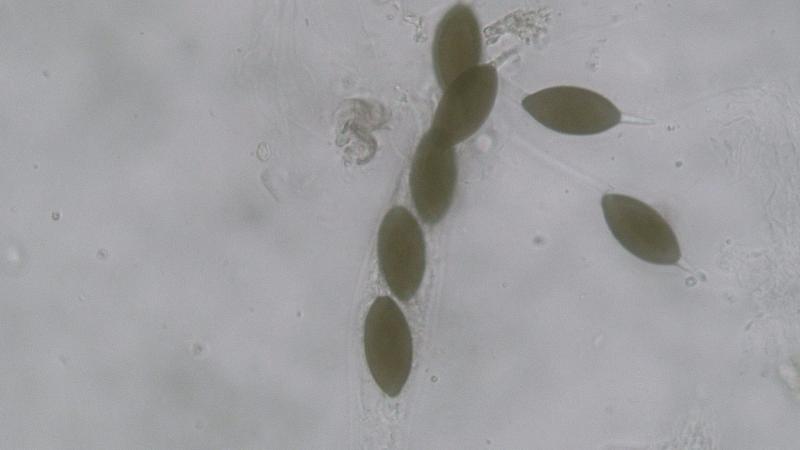
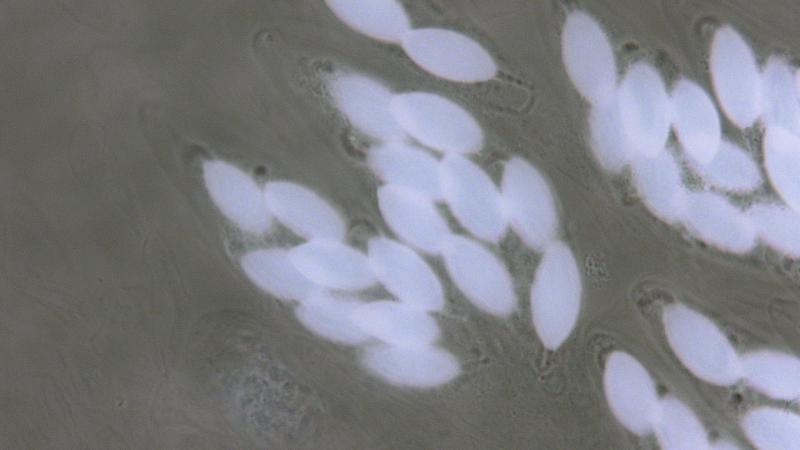
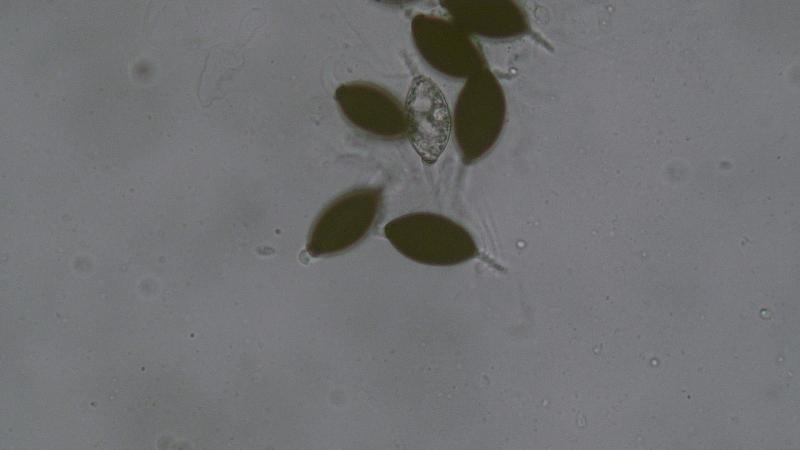
Spores: uniseriate; 26.3-28.5x12.2-15.2 um; pedicel 9.9-10.6x2.3-2.5 um; upper cauda 37-1.2 um; secundary cauda 19x1.9 um; 8 lateral cauda originate from the pedicel, 4 on each side 14.5x0.9 um, but they easily break off so the total of 8 caudae are not always visible (photo-13 3 on the left side & 2 incomplete on the right side)
But because these caudae are interconnected through the pedicel the break off point can be seen as dots when the pedicel is in the correct position (photo-14 5 spots of which the top one does not count that one belongs to the broken off secundary cauda)
Joop van der Lee,
03-01-2021 12:44
Re : Unknown Schizothecium
Problem solved.
Reading the documentation from C. Moreau in Encyclopédie mycologique XXV (1953) about the genus Pleurage in which P. curvula = (Schizothecium conicum) is explained extensively it becomes clear that the apperance of the perithecia is changing during its life cycle especially the length of the neck and the body.
So Norbert Heine was correct in his comments that this species has a large variety in its appearance. Having the correct documentation has been a big help but it takes some time to resolve the problem by digging into all available documentations at my disposal.
Joop
Reading the documentation from C. Moreau in Encyclopédie mycologique XXV (1953) about the genus Pleurage in which P. curvula = (Schizothecium conicum) is explained extensively it becomes clear that the apperance of the perithecia is changing during its life cycle especially the length of the neck and the body.
So Norbert Heine was correct in his comments that this species has a large variety in its appearance. Having the correct documentation has been a big help but it takes some time to resolve the problem by digging into all available documentations at my disposal.
Joop
 C.-Moreau-0001.pdf