25-03-2026 15:06
 Bernard CLESSE
Bonjour à toutes et tous,Pourriez-vous me confirm
25-03-2026 13:54
 Enrique Rubio
Does anyone know where I could download Paoletti's
25-03-2026 10:35
Hulda Caroline HolteHello,I collected this species growing on a dead b
24-03-2026 19:59
 William Slosse
Hello everyone,On 23/03/26, I found the following
21-03-2026 15:13
Lepista ZacariasHello everyone, Does any one know of any literatu
24-03-2026 21:37
Elisabeth StöckliBonsoir,Sur bois (tronc) très pourri de conifère
24-03-2026 21:07
Ethan CrensonHello all, A friend collected this asco in a wood
23-03-2026 20:16
 Miguel Ángel Ribes
Good eveningI'm unable to identify this Coprotus o
24-03-2026 15:44
Åge OterhalsI hope someone can confirm the name of this collec

Eutypa sparsa?
Mirek Gryc,
14-10-2021 12:50
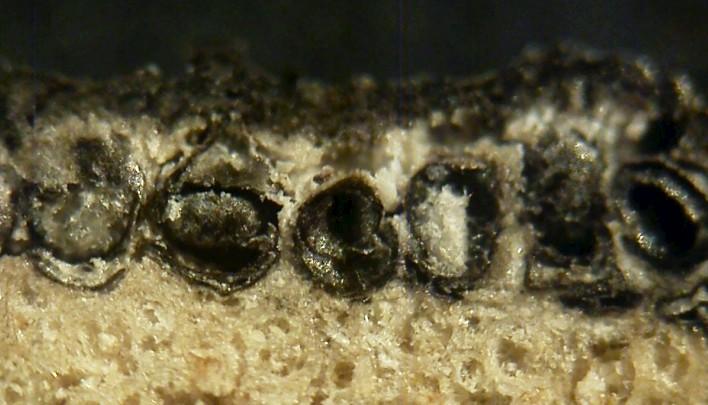
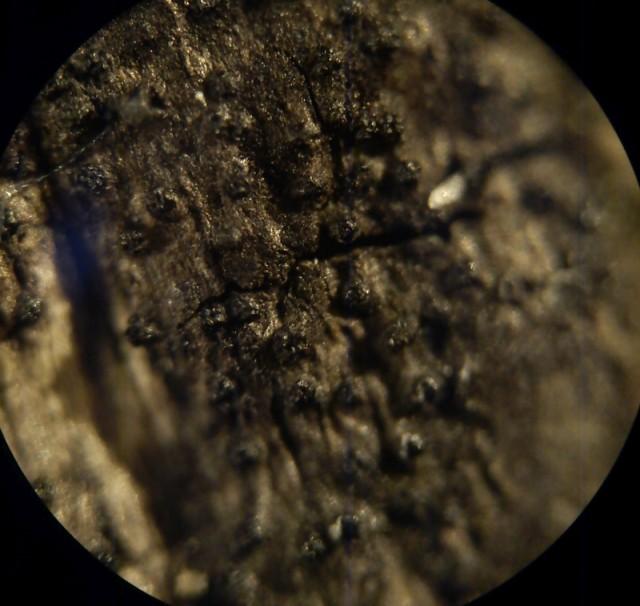
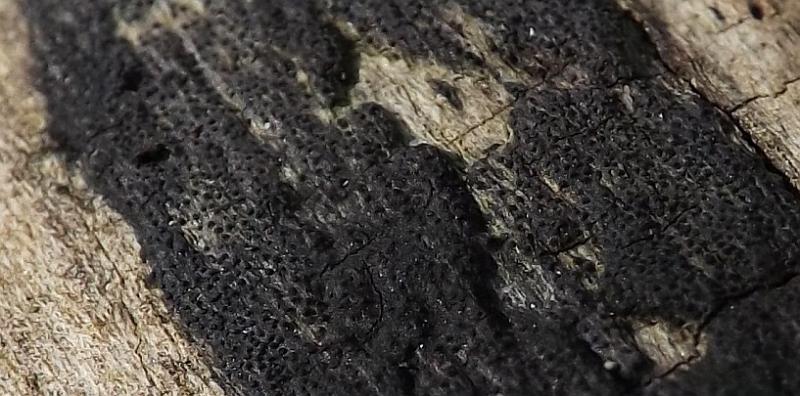
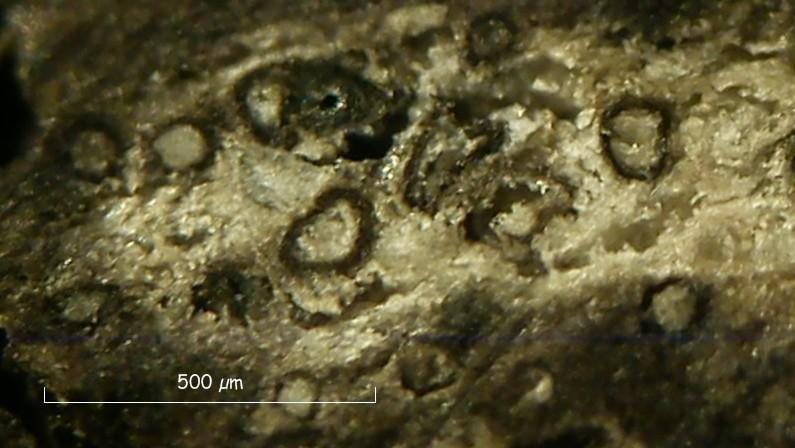
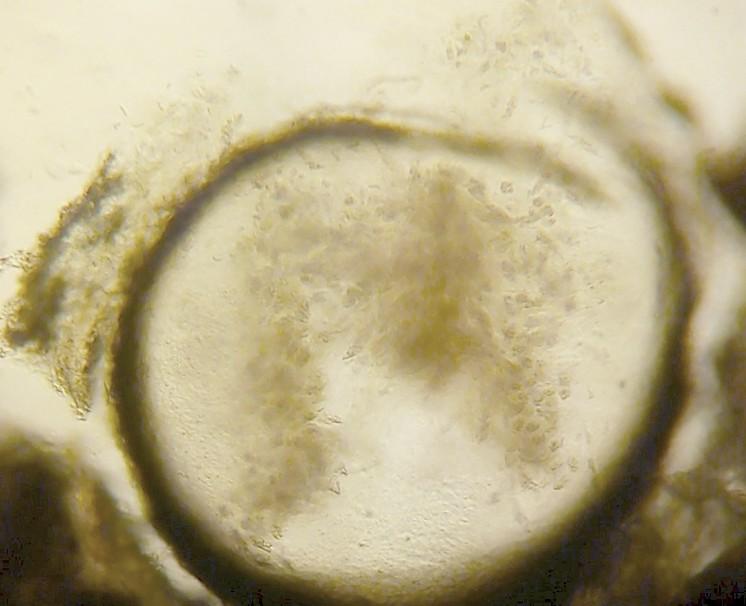
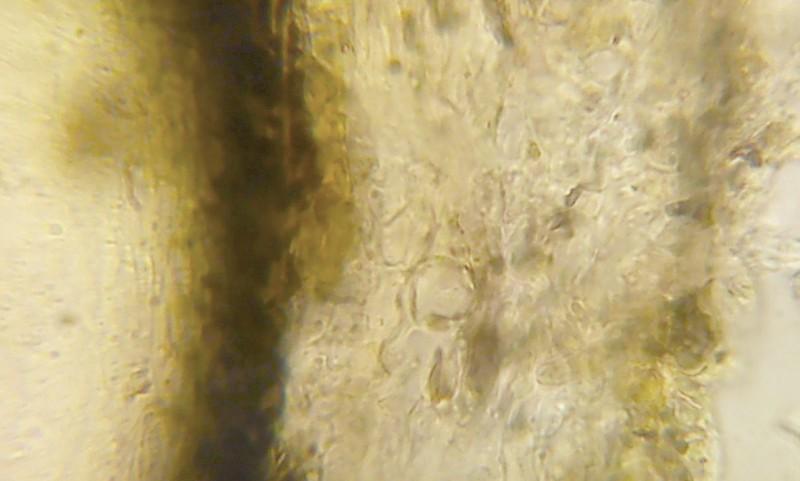
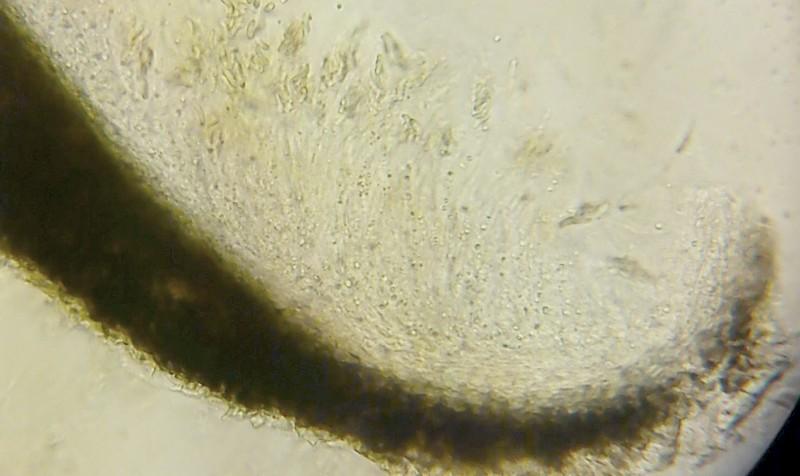
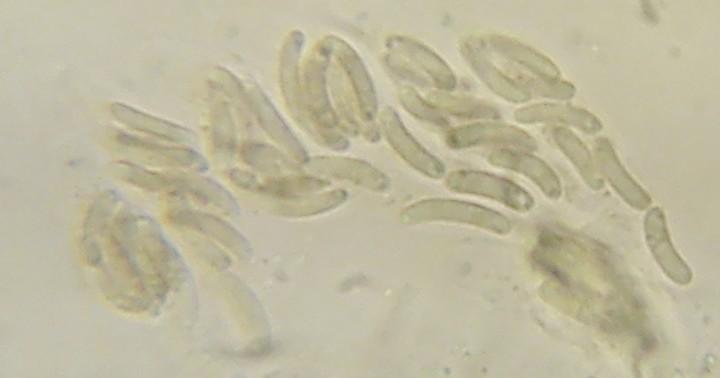
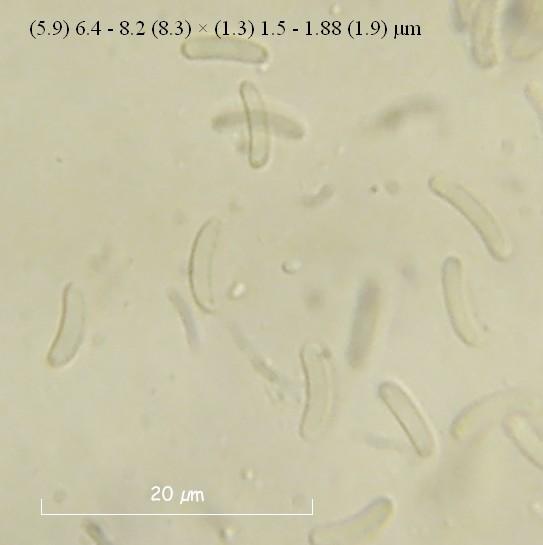
This is my first genre from this kind so I am asking for understanding. I tried to show all relevant features in the pictures.
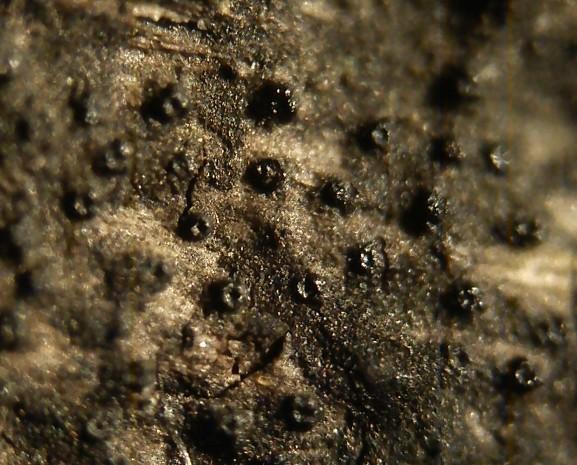
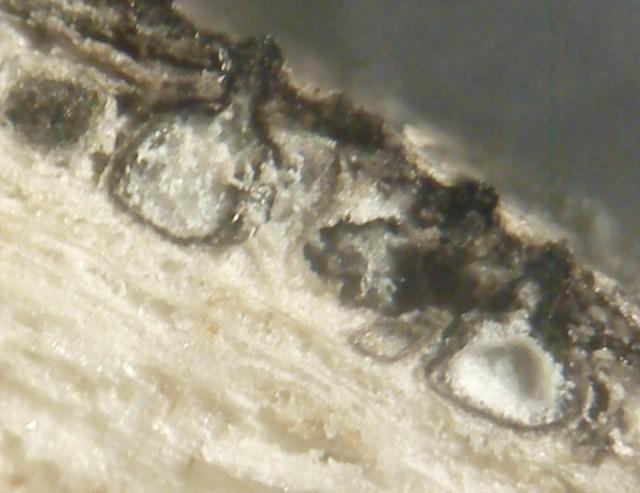
Ascomata grew on Fraxinus sp.
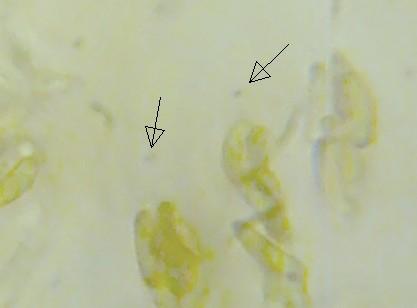
Reaction to negative iodine.
Features match the Eutypa sparsa but I have not found information to grow on Fraxinus. From what I read to his basic substrate is: Populus and Salix.
Any aid is welcome.
regards
Mirek
Eduard Osieck,
14-10-2021 15:31
Re : Eutypa sparsa?
Hi Mirek
On Fraxinus the occurrence of E. leptoplaca is more likely although this species shows an amyloid apical ring (but difficult to see, cf. http://www.ascofrance.com/search_forum/27030).
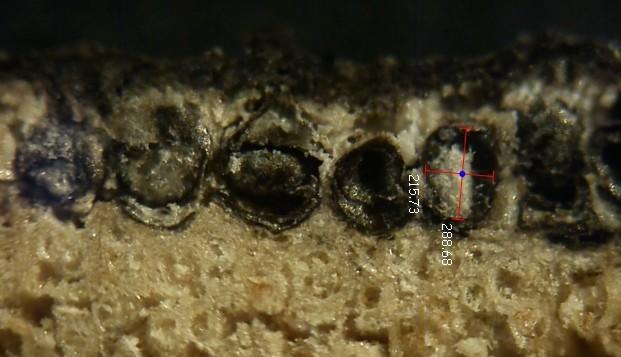
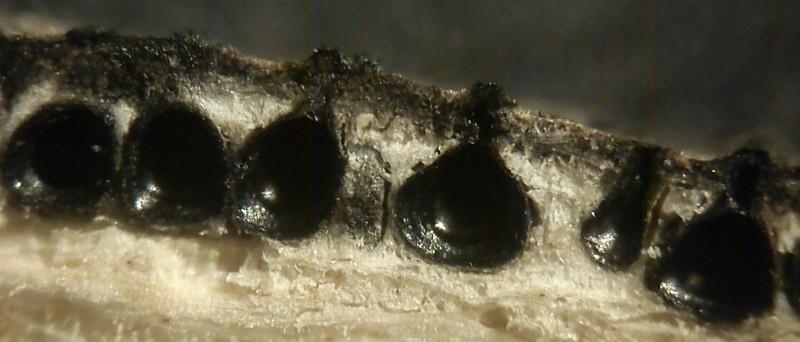
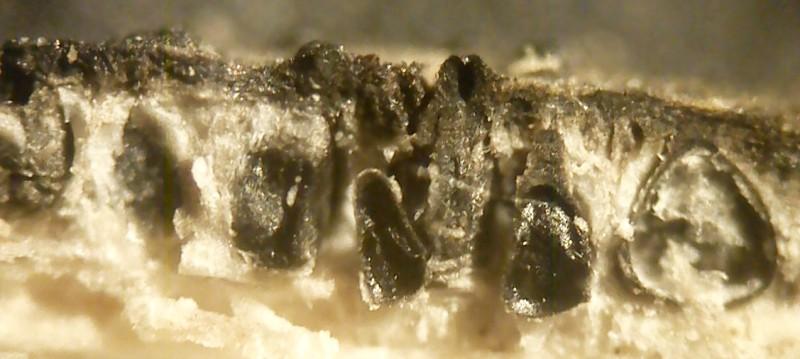
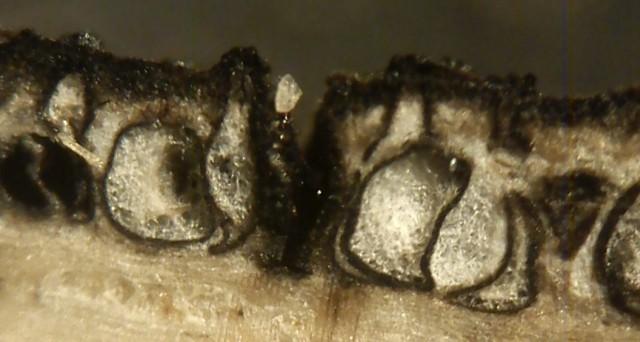
For proper identification some more features are needed: cross section through the stroma (cf. 8th photo in an earlier topic: http://www.ascofrance.com/search_forum/37352), diameter of perithecia, and diameter of papillae (aka ostioles in the key of Rappaz 1987).
Eduard
Mirek Gryc,
14-10-2021 20:46
Re : Eutypa sparsa?
Hi Eduard
This is not an easy to microscopy. The more greater I had a problem with taking photos with my imperfect equipment.
However, you have to believe that after processing samples in KOH saw a beautiful blue reaction.
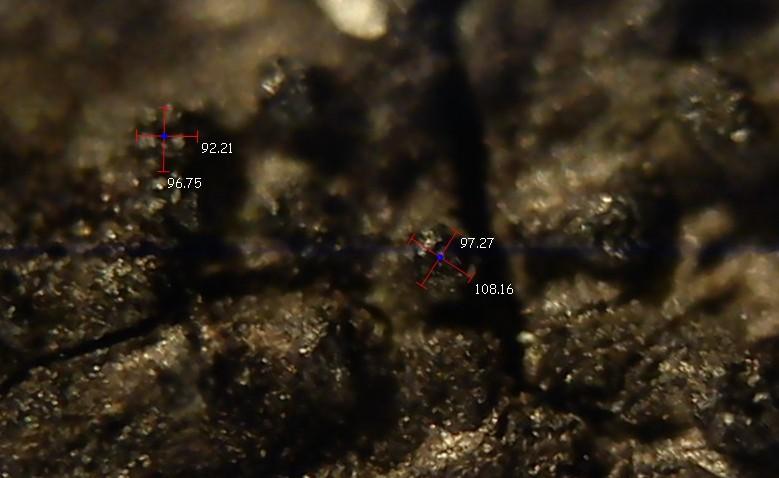
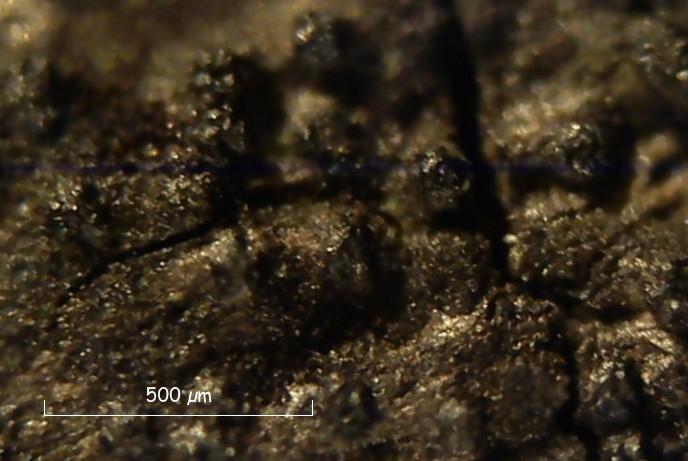
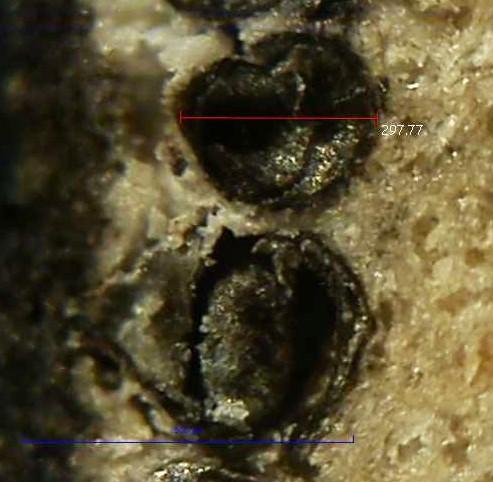
I showed a few measurements in the pictures.
Diameter of papillae <100µm
Diameter of perithecia <300 µm
I think these features confirm your type but because of the lack of experience I would prefer to hear the opinion of more experienced people.
I place a few more images.
Thank you for tips and help.
regards
Mirek
This is not an easy to microscopy. The more greater I had a problem with taking photos with my imperfect equipment.
However, you have to believe that after processing samples in KOH saw a beautiful blue reaction.
I showed a few measurements in the pictures.
Diameter of papillae <100µm
Diameter of perithecia <300 µm
I think these features confirm your type but because of the lack of experience I would prefer to hear the opinion of more experienced people.
I place a few more images.
Thank you for tips and help.
regards
Mirek