
31-05-2026 10:35
Hulda Caroline HolteHello,I collected this species growing on a rather
30-05-2026 21:12
Philippe PELLICIERSur branche de mélèze (Larix) près de la neige,
25-05-2026 16:35
 Bernard CLESSE
Bonjour à toutes et tous,J'ai trouvé récemment,
29-05-2026 15:35
daniel FERREBonjour à tous,Je voudrais votre aide pour cette
28-05-2026 16:15
James MitchellHello,Does anyone have the original publication of
28-05-2026 11:06
Thomas Læssøehttps://svampe.databasen.org/observations/10596750
23-05-2026 11:44
 Charles Grapinet
Hello, I am having trouble identifying this copro
25-05-2026 16:44
François BartholomeeusenHi forum members,During an excursion organised by
26-05-2026 21:25
Dirk GerstnerHello everyone, I'm completely stumped by this li
26-05-2026 22:44
Ethan CrensonHi all, I think I have Incrucipulum capitatum her
 Good evening
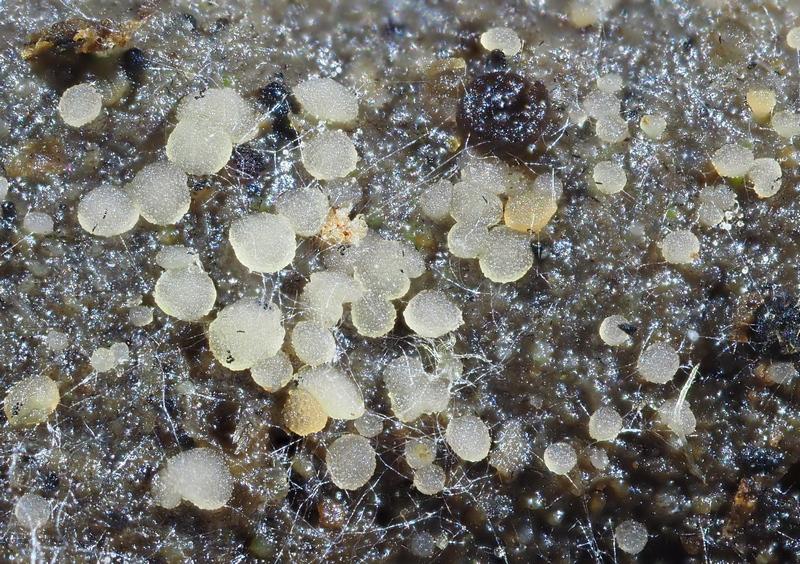
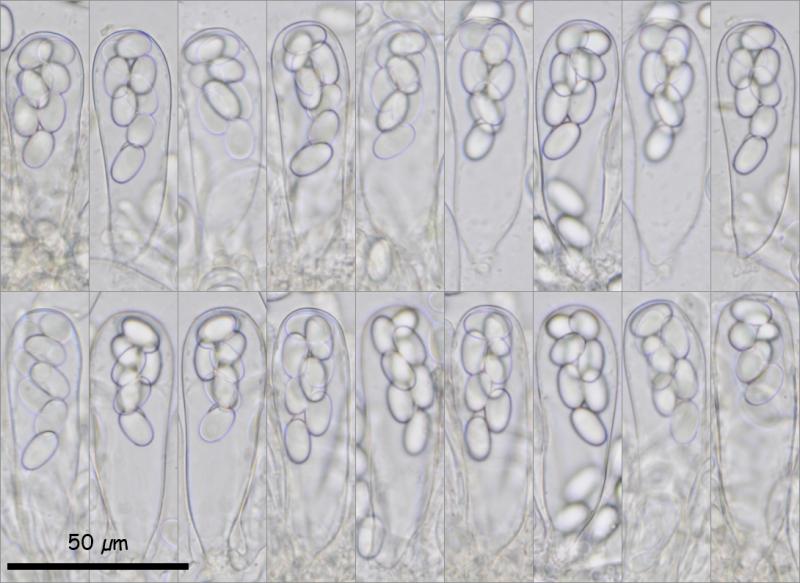
I'm unable to identify this Coprotus on cow dung, which was found next to C. leucopocillum. It have very similar characteristics to this species, but is much paler in color and has considerably smaller asci and spores. Matocec's keys lead me to C. disculus or C. dextrinoideus, but it doesn't fit either description.
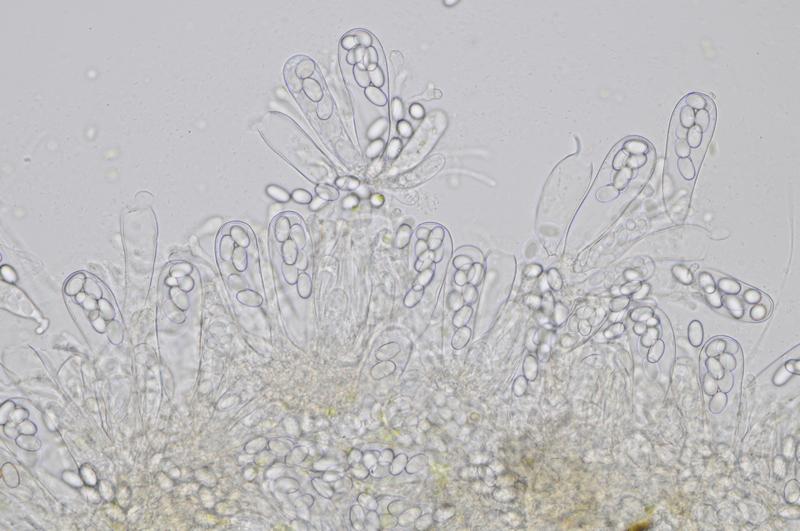
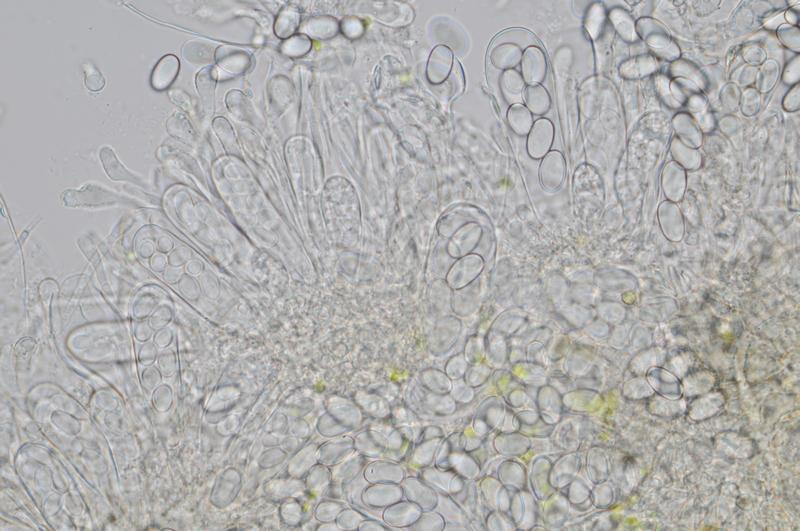
Asci short clavate, biseriate, (63,3) 67 - 76,8 (79,6) × (18,6) 20,4 - 23,4 (23,5) µm; Q = (2,9) 3 - 3,7 (3,8) ; N = 24; Me = 71,4 × 21,8 µm ; Qe = 3,3
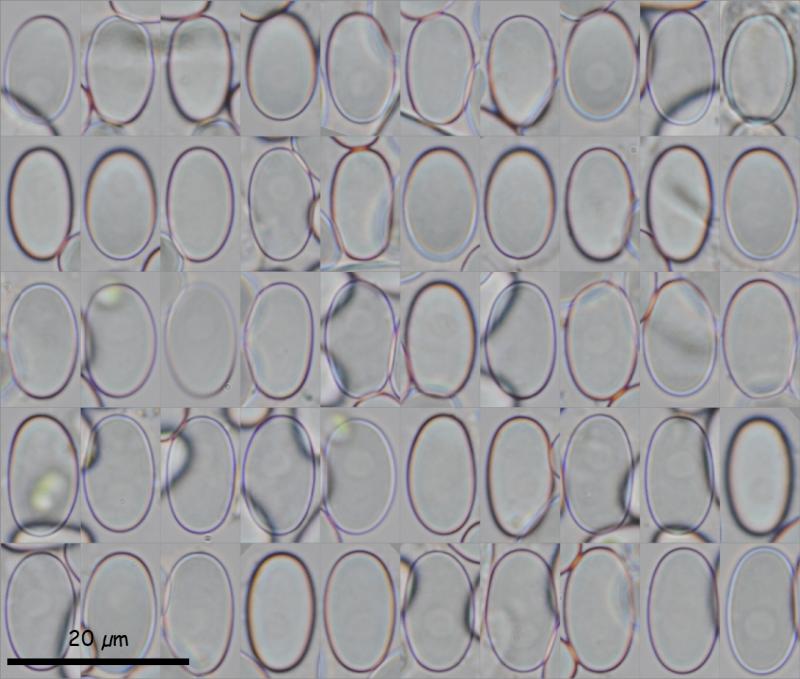
Spores ellipsoid, (11,1) 11,9 - 13,2 (14,4) × (6,9) 7,1 - 7,8 (8,2) µm; Q = (1,4) 1,6 - 1,8 (1,9) ; N = 96; Me = 12,6 × 7,5 µm ; Qe = 1,7
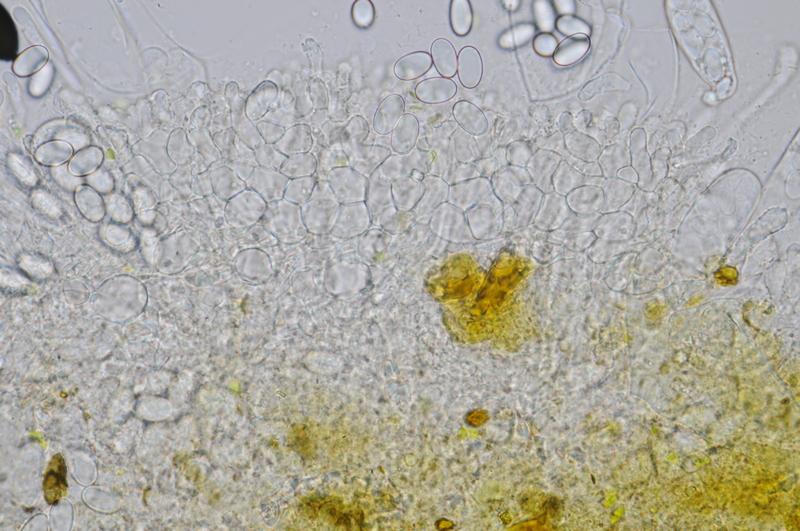
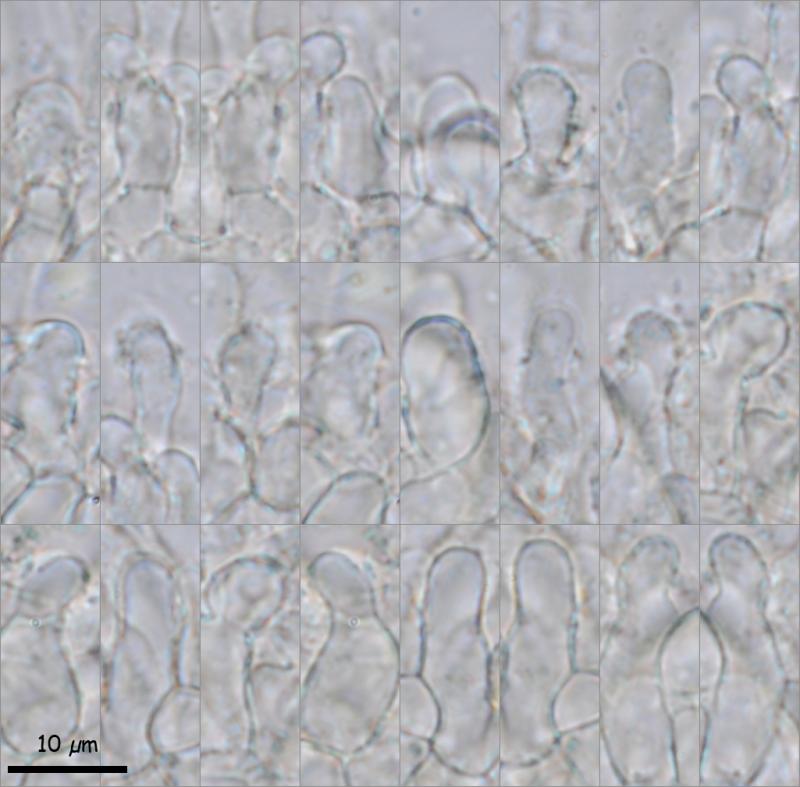
Marginal cells elongated, (9,4) 10,1 - 19,2 (21,4) × (3,4) 3,7 - 7,3 (7,8) µm; Q = (1,7) 1,9 - 4,2 (5,7) ; N = 24; Me = 14 × 5 µm ; Qe = 2,9
Paraphysis inflated at apex up to (4,8) 5,4 - 7,2 (7,5) µm; N = 23; Me = 6,4 µm
Thank you in advance.
Miguel Á. Ribes

Muchas gracias.
Reviewing the asci and spore measurements of all the species in Kusan and Matocec's key, I arrived at these three species based on spore size, but none of them quite fit:
* C. granuliformis, because its asci are much more clavate and smaller, measuring 38-60 x 14-30.
* C. disculus, because its asci are much more cylindrical.
* C. dextrinoideus, because its asci are much larger, measuring 80-125.
The only thing I can think of is that it might be something similar to C. leucopocillum, which was right next to these apothecia, but with an abnormal development.
Any suggestion?
Thank you in advance.
Miguel Á. Ribes