25-03-2026 15:06
 Bernard CLESSE
Bonjour à toutes et tous,Pourriez-vous me confirm
25-03-2026 13:54
 Enrique Rubio
Does anyone know where I could download Paoletti's
25-03-2026 10:35
Hulda Caroline HolteHello,I collected this species growing on a dead b
24-03-2026 19:59
 William Slosse
Hello everyone,On 23/03/26, I found the following
21-03-2026 15:13
Lepista ZacariasHello everyone, Does any one know of any literatu
24-03-2026 21:37
Elisabeth StöckliBonsoir,Sur bois (tronc) très pourri de conifère
24-03-2026 21:07
Ethan CrensonHello all, A friend collected this asco in a wood
23-03-2026 20:16
 Miguel Ángel Ribes
Good eveningI'm unable to identify this Coprotus o
24-03-2026 15:44
Åge OterhalsI hope someone can confirm the name of this collec

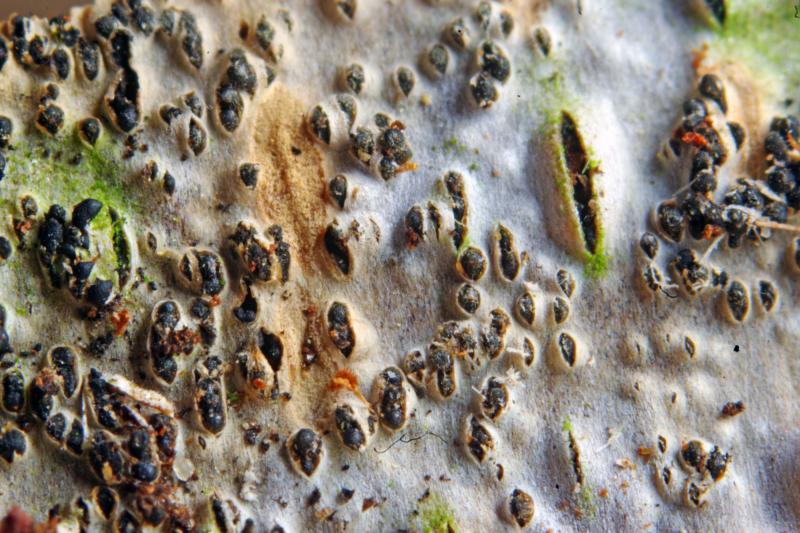
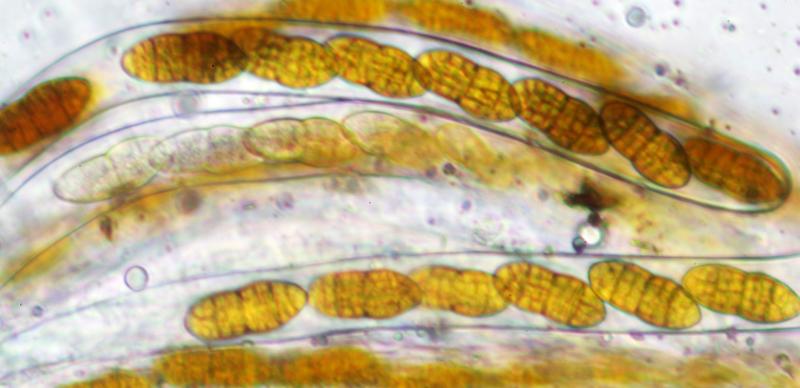
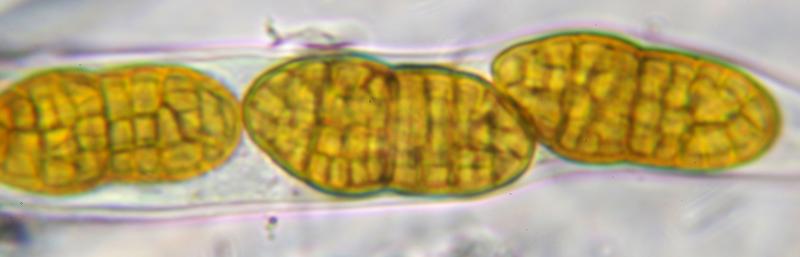
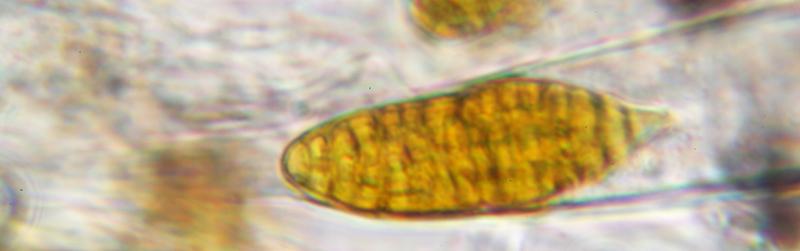
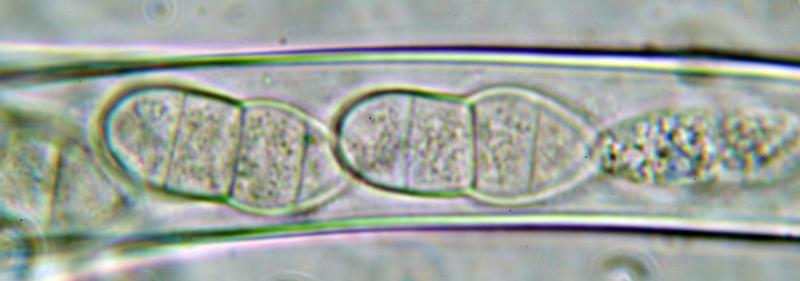
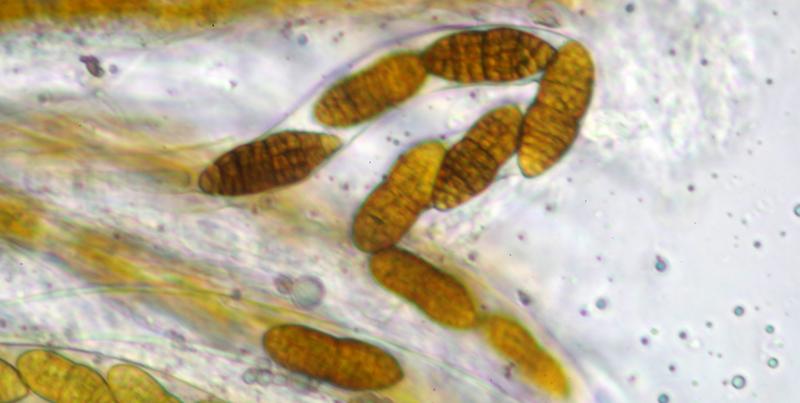
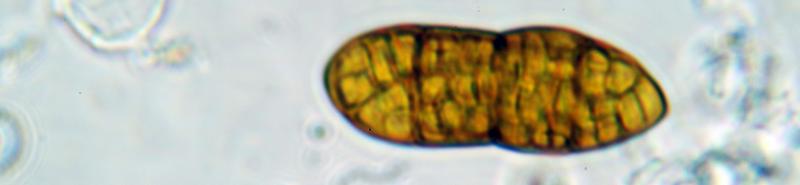
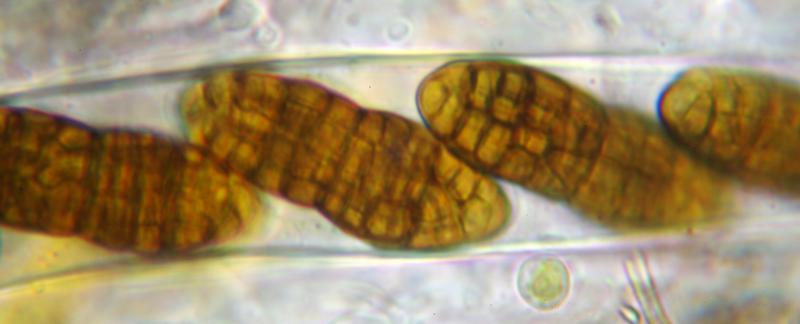
Ascomata developing under the bark (Betula), erumpent, up to 6 together. Ascomata black, globose to ellipsoid with slightly papillate ostioles. Asci about 270 x 18 mu, bitunicate and uniseriate. Ascospores 30-40 x 13-15 um, hyaline turning brownish, firstly one median septum, subsequently 3-septate and becoming golden yellow and muriform. End cells appear to remain paler. Presumed anamorph with hyaline, cylindric conidia with small guttules, about 3 x 1 um.
Little is known about Fenestella betulae described in 1883 by Saccardo. Berlese (1900) treated it as a synonym of F. princeps (= F. fenestrata) but the ascospores of F. betulae appear to much smaller. A modern description does not exist. Jaklitsch & Voglmayr (2020) could not include it in their recent treatment of the genus because of lack of fresh material.
It would be interesting if somebody has more information on this species.
Thanking in advance for help, Eduard