
14-05-2026 05:36
Ethan CrensonHi all, I haven't paid much attention to Lachnu
10-05-2026 23:17
 Andreas Gminder
Hello,today we found in a moist steep decidous for
16-03-2011 14:31
roman vargas albertoHi. I would like some opinion about this Peziza
11-05-2026 12:32
 Bernard CLESSE
Pourriez-vous m'aider à identifier cette héloti
13-05-2026 15:26
 François Freléchoux
Bonjour,Voici une récolte faite il y a quelques j
12-05-2026 15:41
 Nicolas VAN VOOREN
Dear Ascolovers, especially interested in Pezizale
13-05-2026 12:05
 Thierry Blondelle
Bonjour à tous,J'aimerais avoir confirmation de c
28-04-2026 20:07
 Lothar Krieglsteiner
... on twig in the air at standing Ceratonia siliq
27-04-2026 20:52
Lothar Krieglsteiner
Found on hanging tiwg of Olea europaea in dried-ou
11-05-2026 20:22
Lothar Krieglsteiner
on attached twig of standing Ficus caricaquite uns
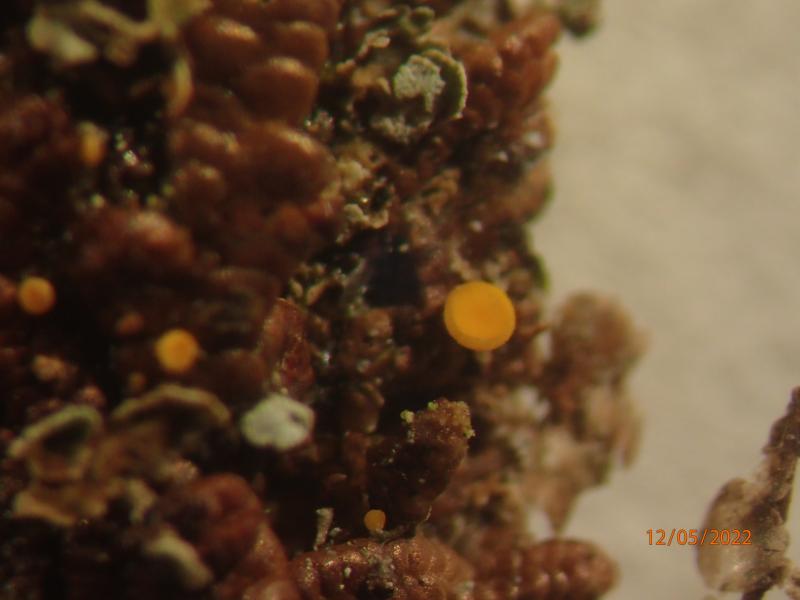
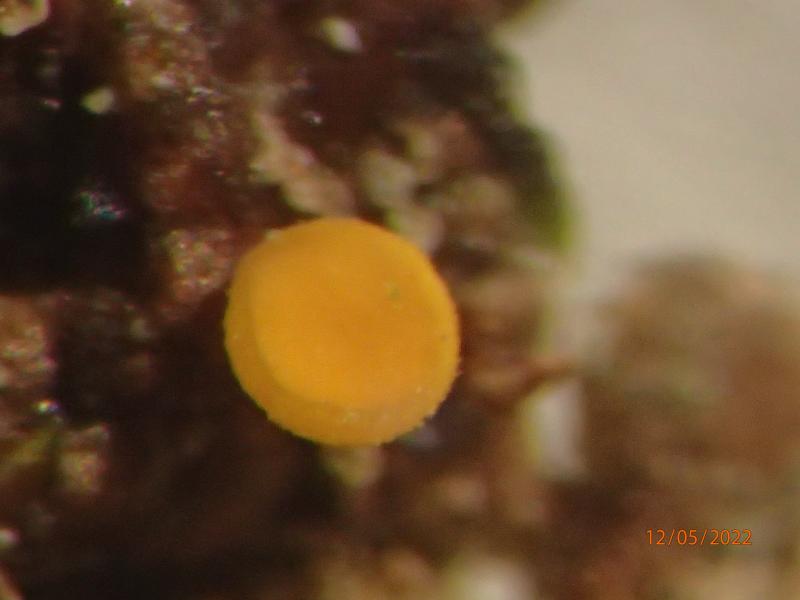
Yellow inoperculate on Frullania dilatata
Edvin Johannesen,
12-05-2022 17:27
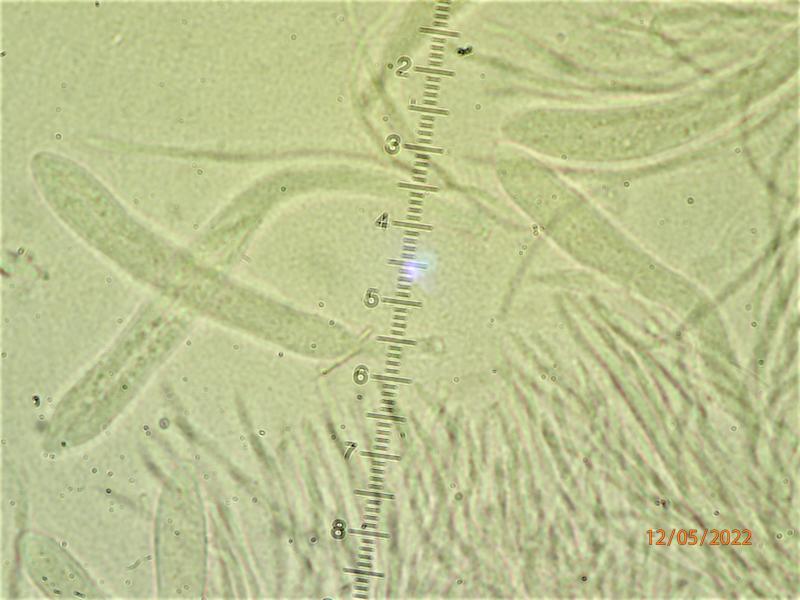
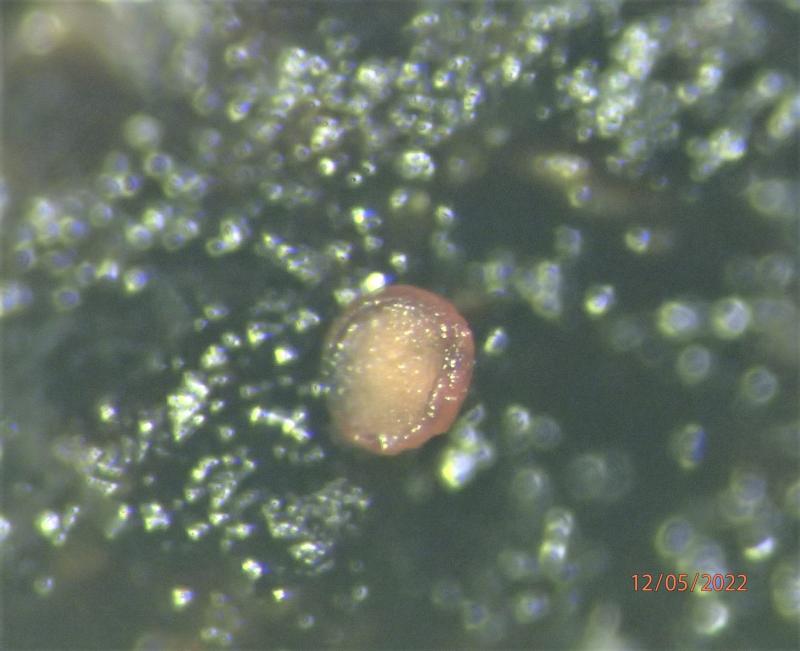
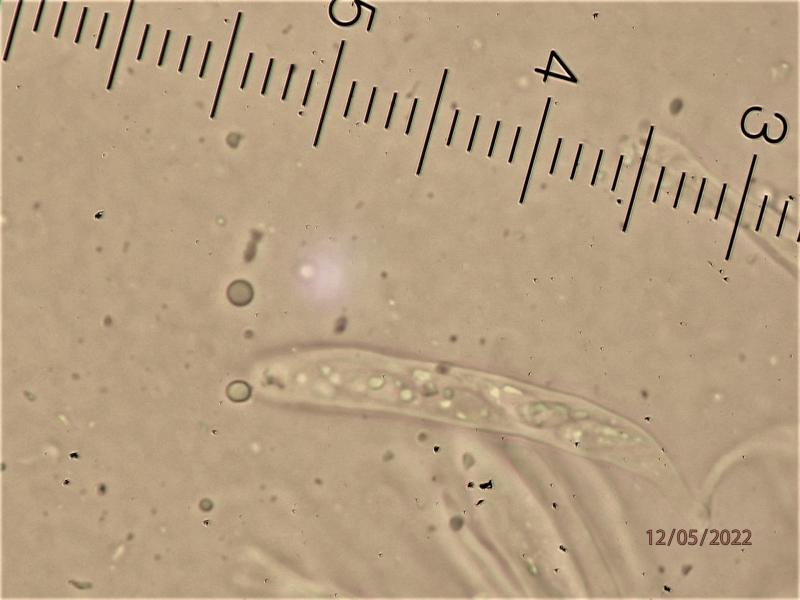
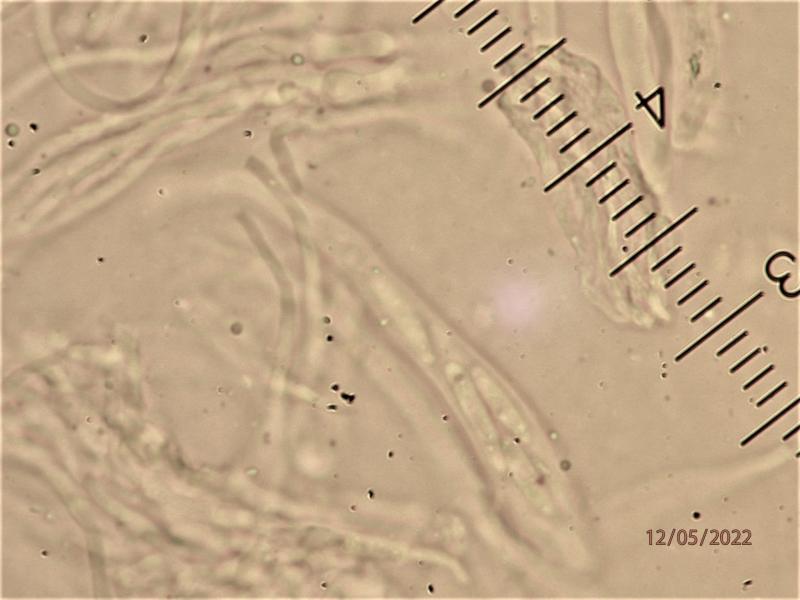
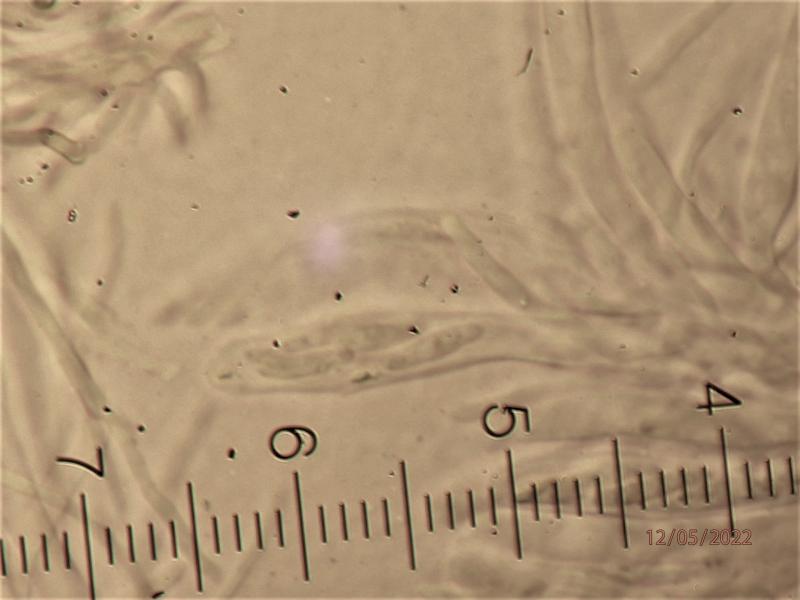
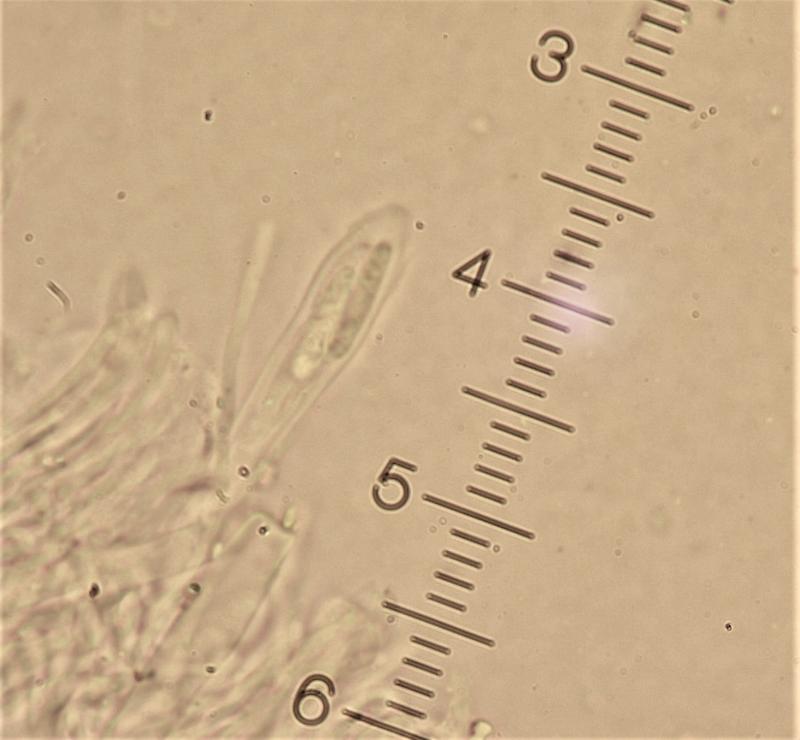
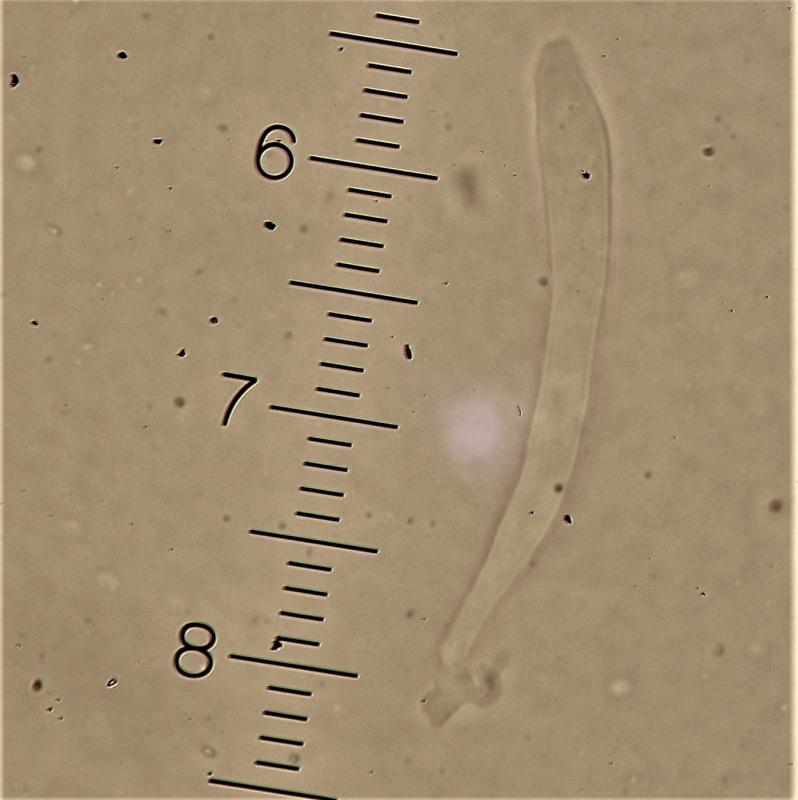
 Apothecia 0.2-0.5 mm in diam., slightly downy excipular surface. Asci ca. 45-60 x 6-7 microns, ascus tip IKI+ (blue) in Lugol, often curved, 8-spored and bi-seriate (as far as I can see- not many ripe asci). Released spores ellipsoid with somewhat pointed apices, multiguttulate (in KOH), aseptate, hyaline, ca 11-14 x 3 microns (all measures in KOH). Paraphyses numerous, filiform, 1-1.5 microns broad.
I have sacrificed only one medium-sized apothecium, so no in-depth study. My impression is that there are not so many yellow inoperculates on Frullania. Suggestions appreciated.
Thanks.
Hans-Otto Baral,
12-05-2022 18:08

Re : Yellow inoperculate on Frullania dilatata
As the spores are multiguttulate, Bryoscyphus turbinatus is excluded. So far I have no other idea. A pity that the elements are not alive, e.g. the paraphyses.
Lothar Krieglsteiner,
12-05-2022 19:07
Re : Yellow inoperculate on Frullania dilatata
unfortunately one cannot see much on the micro-pictures. But macroscopically it reminds me a bit of "Luteodiscus" or however these fungi will be called. The spores are perhaps too large for this, but as I said before: one cannot see much ...
Yours, Lothar
Yours, Lothar
Hans-Otto Baral,
12-05-2022 20:38
Re : Yellow inoperculate on Frullania dilatata
Good idea, Lothar! That should not be too difficult to check. A minute drop of 0.5-5% KOH on an apo should produce a pink colour when it is Luteodiscus.
Edvin Johannesen,
12-05-2022 22:57
Re : Yellow inoperculate on Frullania dilatata
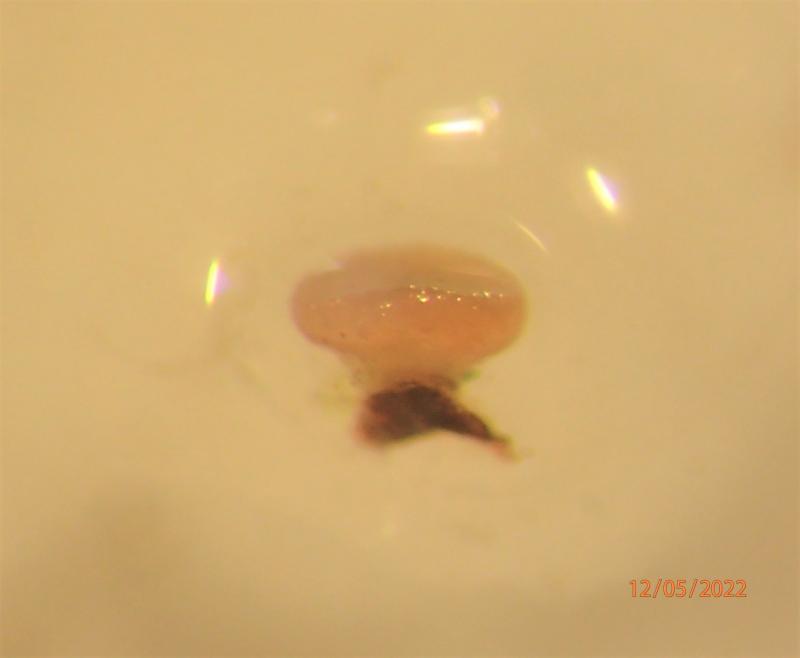
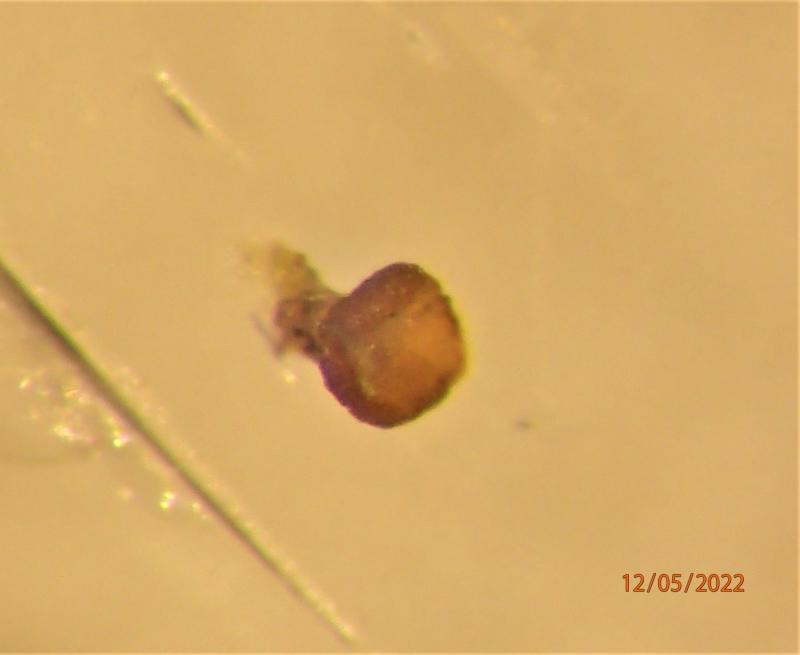
Thanks, guys. I have sacrificed one more and I think it is fair to say that it turned pink with a drop of KOH.
Edvin Johannesen,
12-05-2022 23:03
Re : Yellow inoperculate on Frullania dilatata
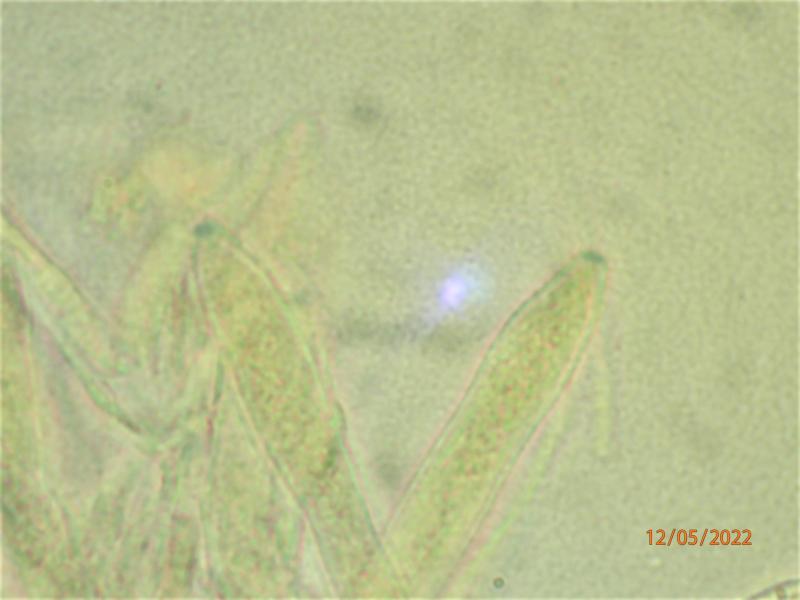
I tried to take better photos of spores (in asci). Hope it helps a bit. This is the KOH treated apo microscoped in a drop of water after rinsing. Scale in these photos are 2.5 microns between lines. It fits quite well what you have called Luteodiscus pleurozii. It seems this is still a provisional name.
Lothar Krieglsteiner,
13-05-2022 09:09
Re : Yellow inoperculate on Frullania dilatata
yes, Luteodiscus as well is a provisional name, too.
Hans-Otto Baral,
13-05-2022 12:16
Re : Yellow inoperculate on Frullania dilatata
Hi Edvin
what did you do with your dirty microscope? Splendid photos! I can only agree with Luteodiscus bryophilus, as we cal it at the moment. My folders represent totally only 2 species so far, one with IKI blue and one with IKI red asci.
Now I would be glad if you send me collection data. We have numerous collections in the list and map but yours would add to the puzzle.
Zotto
Edvin Johannesen,
13-05-2022 12:42
Re : Yellow inoperculate on Frullania dilatata
Ha ha! You are right that the microscope may need a cleanup, but I guess the improvement is largely bacause I had some more time :-)
I will send you the collection data per email.
Thanks again to both of you.
I will send you the collection data per email.
Thanks again to both of you.