
26-05-2026 22:44
Ethan CrensonHi all, I think I have Incrucipulum capitatum her
26-05-2026 21:25
Dirk GerstnerHello everyone, I'm completely stumped by this li
22-05-2026 14:44
 Lothar Krieglsteiner
in unripe condition citrine yellow, then soon fadi
25-05-2026 16:44
François BartholomeeusenHi forum members,During an excursion organised by
23-05-2026 11:44
 Charles Grapinet
Hello, I am having trouble identifying this copro
25-05-2026 16:35
 Bernard CLESSE
Bonjour à toutes et tous,J'ai trouvé récemment,
22-05-2026 13:29
Gernot FriebesHi,I am curious to hear your opinion on this mater
23-05-2026 18:57
Sylvie Le GoffBonjour à tousRécolté sur une branchette de Sal
22-05-2026 21:35
Steve ClementsBonjour, I expected this find on old wood on our
Tiny pinkish apothecia on Fagus bark
Edvin Johannesen,
25-11-2022 23:03
 Hello!
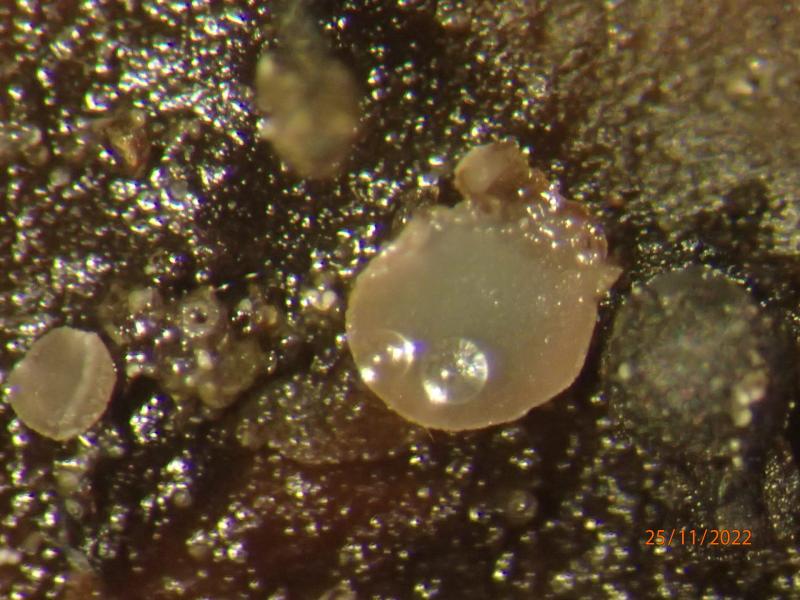
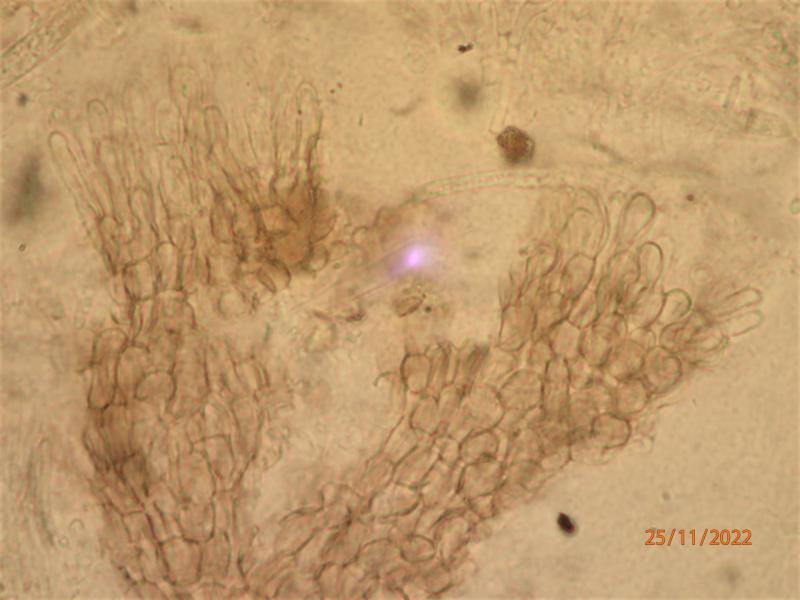
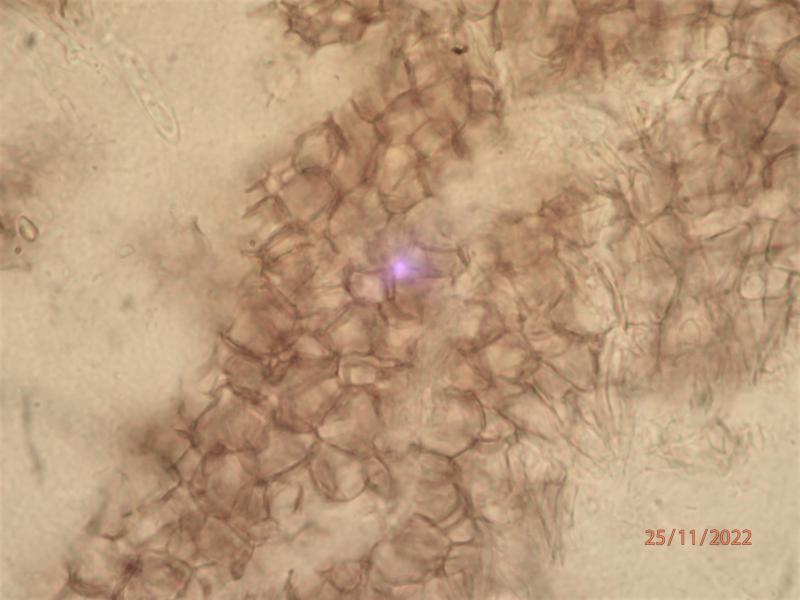
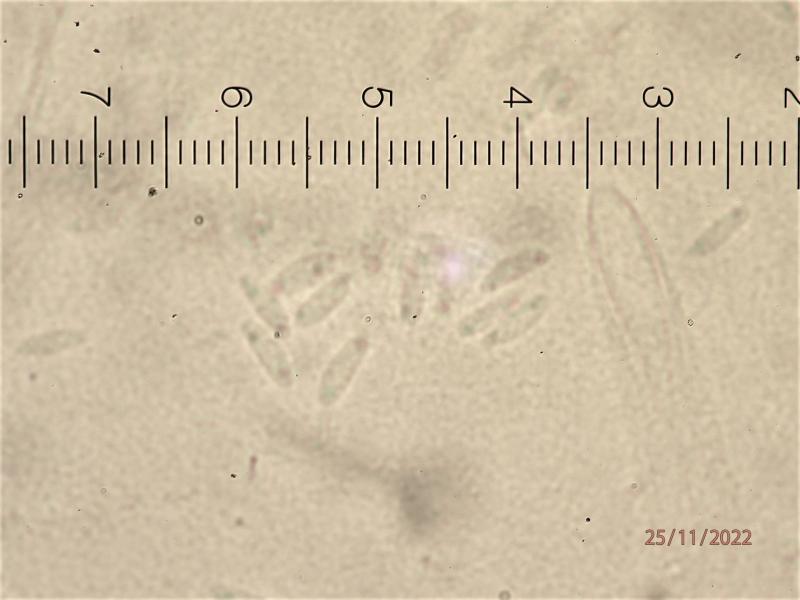
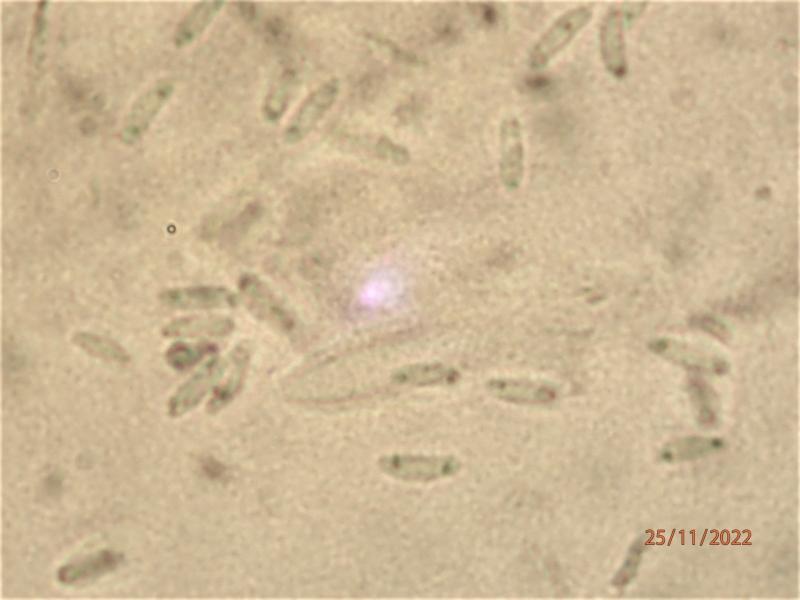
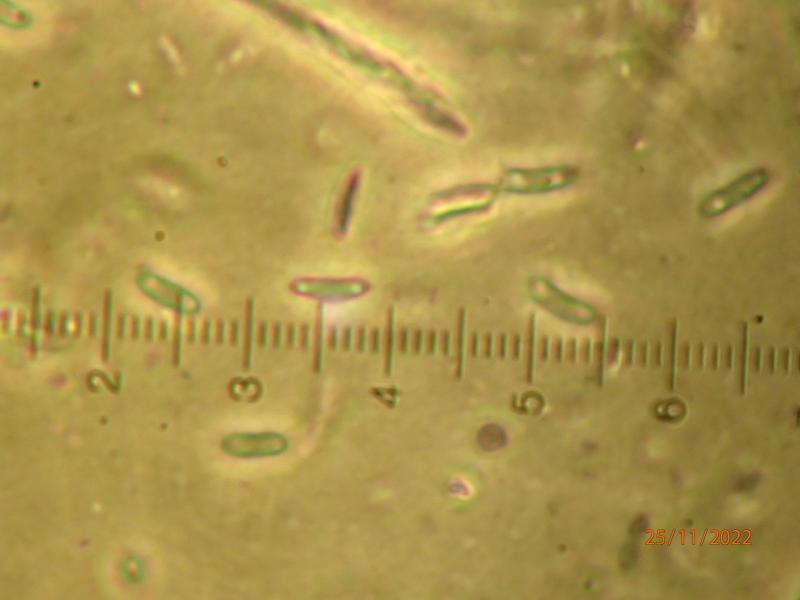
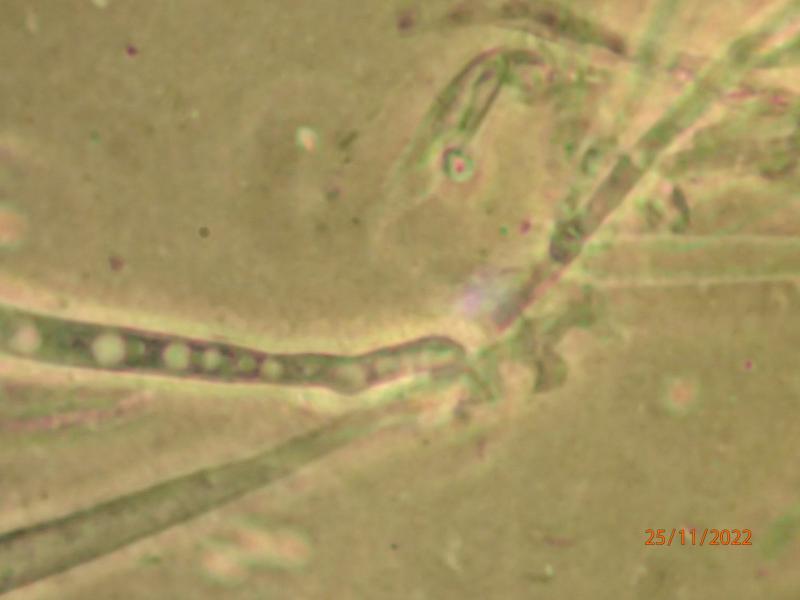
 These tiny (0.3-0.4 mm) greyish yellow/pinkish apos were found on thick bark, hidden under the thin outer bark of large rotting trunk of Fagus sylvatica lying on the ground. Attached to the substrate on a narrow, substipitate base. Outer surface with very short, pale protruding cells (appearing downy). Excipulum with large brownish, prismatic cells, gradually transitioning into paler, clavate cells towards the exterior. Asci IKI-, mostly ca. 50 x 5 microns, with croziers. Paraphyses cylindrical, without guttules, non-septate, 1.5 - 2 microns across. Spores elliptical, with a small guttule near each pole, ca. 5-6 x 1.5-2 microns.
Images from fresh material, in water.
Are we in Mollisia? Suggestions appreciated.
Thanks!



Hans-Otto Baral,
26-11-2022 09:29

Re : Tiny pinkish apothecia on Fagus bark
This could be Pyrenopeziza (Mollisia) caespiticia or alternatively Mollisia sublividula. The latter has yellowish VBs in te paraphyses which is probably not the case in your fungus.
Edvin Johannesen,
26-11-2022 12:34
Re : Tiny pinkish apothecia on Fagus bark
You're right - no yellowish VBs in the paraphyses. I have compared with P. caespiticia and that is indeed a good match. I have seen that species once before, but then immature apothecia in erumpent clusters. Thanks a lot!