
11-03-2026 17:36
 Michel Hairaud
Bonjour, Je cherche des indices pour cette réc
17-03-2026 10:40
 Martine Vandeplanque
Bonjour à tous.Chaque année en mars ou avril, il
17-03-2026 19:41
 Bernard CLESSE
Bonsoir à toutes et tous,Pourriez-vous m'aider à
12-03-2026 19:44
 Enrique Rubio
Hi to everybody.Can you give me any suggestions ab
17-03-2026 10:09
 François Freléchoux
Bonjour, Voici la description rapide d'un petit d
05-03-2026 10:07
Hulda Caroline HolteHello, I found and collected this species growing
12-03-2026 15:45
Åge OterhalsDear forum,I found this small discomycete on a ver
14-03-2026 13:51
 Thierry Blondelle
Hi everybody Under Quercus ilex, i hesitate to na
08-03-2026 14:05
Thierry Blondelle
Bonjour à tous,Sur 3 récoltes supposées de H. l
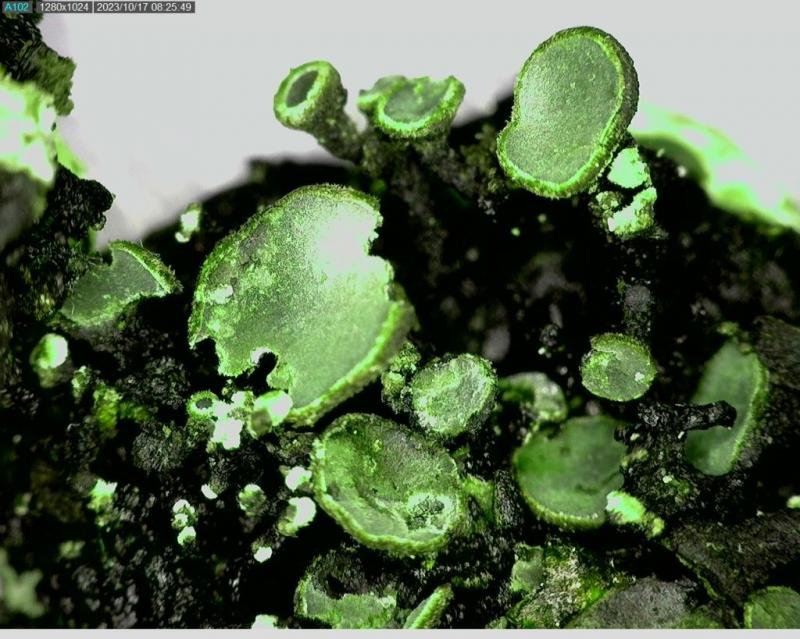

I agree that the Dinolite image renders the fungus in too light a shade, though I did already tweak it somewhat to improve it from the initial.
This was found by a 7 year old who was also with us on our NW Fungus Group foray, on Sunday 15th October; in a very rotten stump, probably Betula or Quercus.
The site is a Lancashire Wildlife Trust Reserve called Mere Sands Wood north of Liverpool.
The UK GR is SD 4470 1570, which is equivalent to Long. - 6.953; lat. 49.936.
I had kept some of the specimen for the time being. ..... ?
Kind regards,
John Watt

Sorry, I used the Brit Geol converter but forgot that on our usual OS maps the first digit is not shown in large type, so you're quite right with your Long and Latitude. Instead of that first numeral, the OS National Grid systems divides the country up into 100km grids which each have two identifying letters (SD in this case) to complement that first numeral.
I have had a good look at the fragment of wood and it does look like Quercus (robur likely).
The finder was young James Roberts (8 yr) .
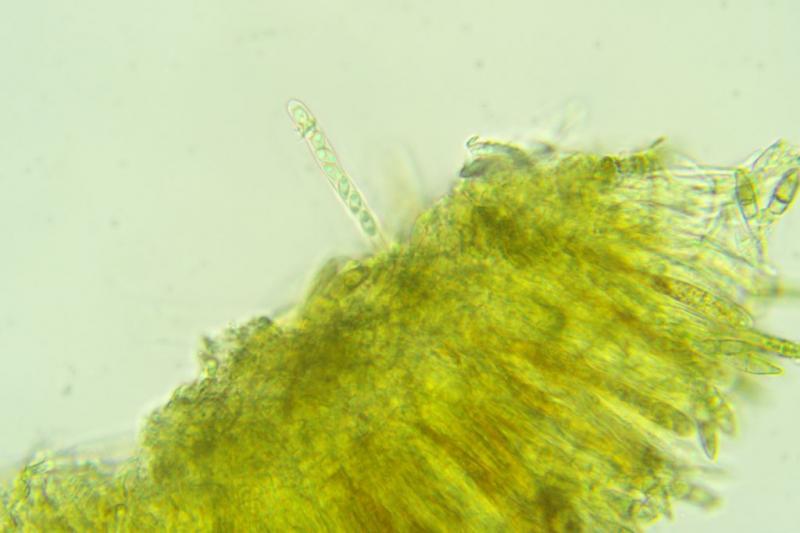
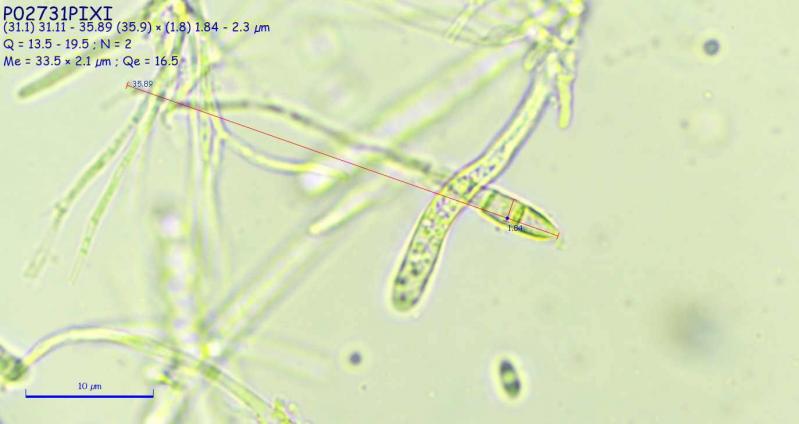
Thanks also for pointing out the Anamorph. I can have a look at that next time the microscope is out.